- Cat. No.
- A10491
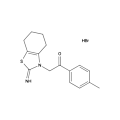
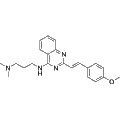
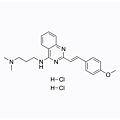
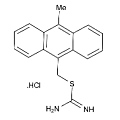
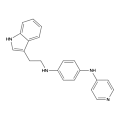
JNJ 26854165
JNJ-26854165 is one of p53-activating agents and synergizes with AraC or doxorubicin to induce p53-mediated apoptosis and may provide a novel therapeutic approach for the treatment of acute leukemias.
Search by product name, CAS, target or catalog number. Press Down Arrow to reach product suggestions, Tab to move between links, and Escape to close suggestions.
p53 activators and inhibitors act on the tumor suppressor p53, a transcription factor activated by cellular stress. In unstressed cells the ubiquitin ligase mouse double minute 2 (MDM2) keeps p53 levels low by promoting its degradation. RG7112 blocks the p53-MDM2 interaction, and SJ 172550 targets the related protein mouse double minute 4 (MDM4, also called MDMX). RITA binds p53 itself, while tenovin-1 and tenovin-6 raise cellular p53 levels. Tenovin-6 also inhibits the deacetylases sirtuin 1 and sirtuin 2 (SIRT1, SIRT2). Pifithrin-α hydrobromide works the other way, inhibiting p53-dependent transcription in cells exposed to genotoxic stress. Further compounds directed at MDM2 are listed in the neighboring MDM2 category.
JNJ-26854165 is one of p53-activating agents and synergizes with AraC or doxorubicin to induce p53-mediated apoptosis and may provide a novel therapeutic approach for the treatment of acute leukemias.
Synonyms: NSC652287; p53 Activator III
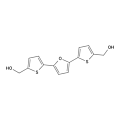
RITA, also referred to as NSC 652287, is a trycyclic thiophene derivative that binds to MDM2, disrupting the MDM2-p53 complex and subsequently activating p53 and inducing apoptosis.
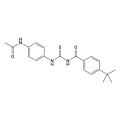
Tenovin-6 is a analog of tenovin-1. Tenovin-6 inhibits the protein deacetylase activities of purified human SIRT1, SIRT2, and SIRT3 in vitro with IC50 values of 21, 10, and 67 uM, respectively.
Pifithrin-beta is a small molecule inhibitor of p53.
SJ 172550 is the first MDMX inhibitor with EC50 of 0.84 uM; binds reversibly to MDMX and effectively kills retinoblastoma cells in which the expression of MDMX is amplified.
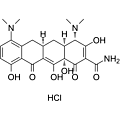
Minocycline hydrochloride is a broad-spectrum tetracycline antibiotic, acting by binding to the bacterial 30S ribosomal subunit and inhibiting protein synthesis.
Synonyms: RO5045337
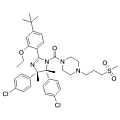
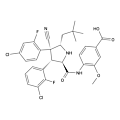
RG7112 is the first clinical small-molecule MDM2 inhibitor designed to occupy the p53-binding pocket of MDM2.
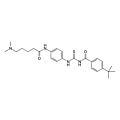
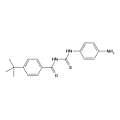
Tenovin-1 is a small molecule activator of p53 transcriptional activity that protects against MDM2-mediated p53 degradation.
Synonyms: NSC 303580
inhibits p53 binding to mitochondria by reducing its affinity for antiapoptotic proteins Bcl-2 and Bcl-XL.
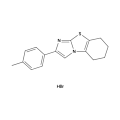
Pifithrin-α hydrobromide is a reversible inhibitor of p53-mediated apoptosis and p53-dependent gene transcription such as cyclin G, p21/waf1, and mdm2 expression.
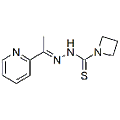
NSC 319726 is a potent and selective activator of mutant p53R175
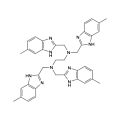
NSC348884 is a nucleolar phosphoprotein that displays several biological activities in ribosome biogenesis, cell proliferation, cytoplasmic/nuclear shuttle transportation, nucleic acid binding, ribonucleic cleavage, and centrosome duplication. NSC 348884 is a putative inhibitor of nucleophosmin (NPM). NSC 348884 inhibits NMP oligomer formation, up-regulates p53 and induces apoptosis.
NSC59984 induces mutant p53 protein degradation via MDM2 and the ubiquitin-proteasome pathway. The EC50 of NSC59984 in most cancer cells is significantly lower than those of normal cells, with EC50 of 8.38 uM for p53-null HCT116 cells.
CP 31398 has been shown to act as a stabilizing agent for p53, and to promotes activity of p53 in cancer cell lines.
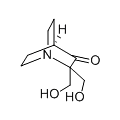
PRIMA-1 is a small molecule identified for its p53 reactivating effect.
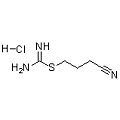
Synonyms: thioureidobutyronitrile
Kevetrin (thioureidobutyronitrile), is a water-soluble, small molecule and activator of the tumor suppressor protein p53, with potential antineoplastic activity.
Synonyms: RG-7388
Idasanutlin is a potent and selective p53-MDM2 inhibitor.
p53 and MDM2 proteins-interaction-inhibitor chiral is an inhibitor of the interaction between p53 and MDM2 proteins.
Synonyms: p53 inhibitor (racemic)
p53 and MDM2 proteins-interaction-inhibitor racemic is an inhibitor of the interaction between p53 and MDM2 proteins.
CP 31398 dihydrochloride, p53 stabilizing agent. Stabilizes the active conformation of p53 and promotes p53 activity in cancer cell lines with mutant or wild-type p53. Inhibits growth of small human tumor xenografts in vivo.
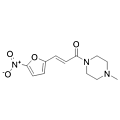
NSC 146109 hydrochloride is a cell-permeable, genotype-selective antitumor agent that activates p53-dependent transcription.
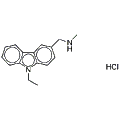
PhiKan 083, p53 stabilizing agent; preferentially binds mutated (Y220C) p53 over wild-type p53 at a site distinct from functional DNA/protein interaction regions.
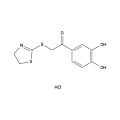
RETRA hydrochloride is an antitumor agent which inhibits tumor cell growth in a mutant p53- and p73-dependent manner in vitro and iin vivo.
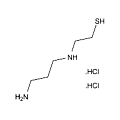
WR 1065, a dephosphorylated metabolite of amifostine (Ethyol), can protect against the immediate and delayed effects of radiation exposure.