- Cat. No.
- A22309
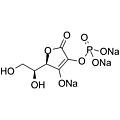
2-Phospho-L-ascorbic acid trisodium
Synonyms: L-Ascorbic acid 2-phosphate trisodium
2-Phospho-L-ascorbic acid trisodium acts as an antioxidant and a stimulator of hepatocyte growth factor (HGF) production.
Search by product name, CAS, target or catalog number. Press Down Arrow to reach product suggestions, Tab to move between links, and Escape to close suggestions.
Reactive oxygen species (ROS) modulators are antioxidants, scavengers and enzyme inhibitors for oxidative stress work. Superoxide, hydrogen peroxide and hydroxyl radicals arise mainly from the mitochondrial respiratory chain and from oxidase enzymes. Cells remove superoxide with superoxide dismutase, an enzyme activity first described in 1969. Acetylcysteine supplies cysteine for glutathione synthesis, and Mito-TEMPO is a superoxide scavenger targeted to mitochondria. Allopurinol inhibits xanthine oxidase, one enzymatic source of superoxide in tissues. Zinc protoporphyrin blocks heme oxygenase 1 (HO-1), whose induction forms part of the cellular defense against oxidative stress. Temoporfin works the other way, as a photosensitizer that generates ROS under light. Inhibitors of the superoxide-producing enzymes are listed under NADPH Oxidase.
Synonyms: L-Ascorbic acid 2-phosphate trisodium
2-Phospho-L-ascorbic acid trisodium acts as an antioxidant and a stimulator of hepatocyte growth factor (HGF) production.
Beta-Elemonic acid (3-Oxotirucallenoic Acid), a known triterpene isolated from Boswellia (Burseraceae), exhibits anti inflammatory effects.
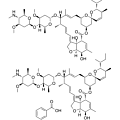
Synonyms: MK-244
Emamectin Benzoate (MK-244) is an orally active nervoussystem toxicant by binding g-aminobutyric (GABA) receptor in insects.
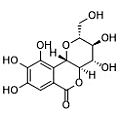
Synonyms: Demethylbergenin
Norbergenin, also known as Demethylbergenin, is the O-demethyl derivative of bergenin, the main component of Mallotus japonicus.It shows moderate antioxidant activity with IC(50)= 13 μM in DPPH radical scavenging and 32 μM in superoxide anion scavenging.
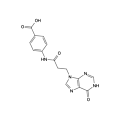
Leteprinim, also known as AIT-082 and SPI-205, is a neurotrophic agent potentially for the treatment of Alzheimer's disease, and spinal cord injury.
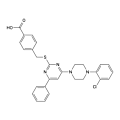
Synonyms: J 14,J-14
J14 is a reversible sulfiredoxin inhibitor with an IC50 of 8.1 μM. J14 induces oxidative stress (intracellular ROS accumulation) by inhibiting sulfiredoxin, leading to cytotoxicity and cancer cell death.
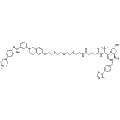
PROTAC NCOA4 Degrader-1 (Compound V3) is a highly potent PROTAC targeting NCOA4, with a DC₅₀ of 3 nM in HeLa cells. It functions as a ferroptosis inhibitor by reducing NCOA4 levels and lowering intracellular ferrous iron (Fe²⁺) concentrations. PROTAC NCOA4 Degrader-1 has demonstrated protective effects in a CCl₄-induced acute liver injury model, making it a valuable tool for studying ferroptosis and liver disease therapeutics.
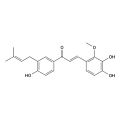
Licochalcone D is a naturally occurring flavonoid primarily found in the root of *Glycyrrhiza uralensis* (Chinese licorice). It functions as a potent and orally active inhibitor of the NF-κB p65 subunit, a key regulator of inflammation and cancer-related signaling pathways. Licochalcone D exhibits broad pharmacological properties, including antioxidant, anti-inflammatory, and anticancer activities, making it a promising candidate for research in inflammation-related diseases and oncology.
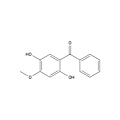
Cearoin is a bioactive compound that promotes both autophagy and apoptosis by inducing reactive oxygen species (ROS) production and activating the ERK signaling pathway. Through this dual mechanism, cearoin contributes to the regulation of cellular stress responses and programmed cell death. Its ability to modulate these processes makes it a valuable candidate for research in cancer biology and other diseases involving dysregulated autophagy or apoptosis.
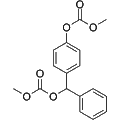
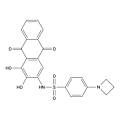
ACA-28 (compound 2a) is a potent modulator of the ERK MAPK signaling pathway that exerts anticancer effects through a unique mechanism involving ERK hyperactivation. Rather than inhibiting ERK activity directly, ACA-28 induces sustained ERK activation, which paradoxically triggers apoptosis in cancer cells. It demonstrates selective cytotoxicity, inhibiting the growth of melanoma cells (SK-MEL-28) with an IC₅₀ of 5.3 μM, while showing lower toxicity toward normal human melanocytes (NHEM), with an IC₅₀ of 10.1 μM. ACA-28's ability to exploit ERK signaling dysregulation for selective induction of apoptosis makes it a promising candidate for further development in cancer therapy, particularly in ERK-dependent malignancies.
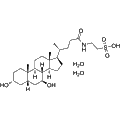
Synonyms: Tauroursodeoxycholic acid dihydrate; TUDCA dihydrate; UR 906 dihydrate
Tauroursodeoxycholate (Tauroursodeoxycholic acid; TDUCA) dihydrate is an inhibitor of endoplasmic reticulum (ER) stress that significantly downregulates pro-apoptotic molecules, including caspase-3 and caspase-12. Additionally, it suppresses ERK signaling, contributing to its cytoprotective and anti-apoptotic effects.
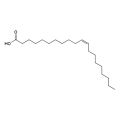
Synonyms: cis-11-Eicosenoic acid
Gondoic acid (cis-11-Eicosenoic acid) is a monounsaturated long-chain fatty acid found in various plant oils and nuts. It exhibits anti-inflammatory activity by reducing reactive oxygen species (ROS) production and inhibiting the PKCθ/ERK/STAT3 signaling pathway. Gondoic acid is also utilized as a raw material in medical applications and as a moisturizing agent in cosmetic formulations.
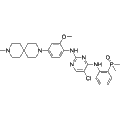
Synonyms: WX-0593
Iruplinalkib (WX-0593) is an orally active and selective ALK/ROS1 inhibitor that effectively blocks tyrosine autophosphorylation of ALK, mutant ALK, and EGFR, with IC50 values ranging from 5.38 to 16.74 nM. Additionally, it inhibits the transport activity of MATE1, MATE2K, P-gp, and BCRP. Iruplinalkib is under investigation for the treatment of non-small cell lung cancer (NSCLC).
HKB99 is an allosteric inhibitor of phosphoglycerate mutase 1 (PGAM1) that induces apoptosis and suppresses cell migration by inhibiting the formation of invasive pseudopodia. It increases oxidative stress, activates the JNK/c-Jun pathway, and downregulates AKT and ERK signaling. HKB99 is a promising compound for the study of non-small cell lung cancer (NSCLC).
Synonyms: Deferoxamine B; Deferriferrioxamine B; Deferrioxamine
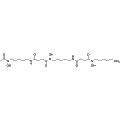
Deferoxamine (Deferoxamine B) is an iron chelator (binds to Fe(III) and many other metal cations), is widely used to reduce iron accumulation and deposition in tissues. Deferoxamine upregulates HIF-1α levels with good antioxidant activity. Deferoxamine also shows anti-proliferative activity, can induce apoptosis and autophagy in cancer cells. Deferoxamine can be used in studies of diabetes, neurodegenerative diseases as well as anti-cancer and anti-COVID-19.
Synonyms: Tin-protoporphyrin IX; Sn-Protoporphyrin; SnPPIX
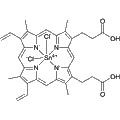
Tin protoporphyrin IX dichloride (SnPPIX) is a potent inhibitor of heme oxygenase-1 (HO-1), an enzyme involved in cellular stress responses and tumor progression. SnPPIX has been shown to sensitize pancreatic ductal adenocarcinoma (PDAC) tumors to chemotherapy in mouse models, enhancing therapeutic efficacy and supporting its potential use as a chemosensitizing agent in cancer treatment.
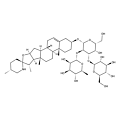
Solasonine is a naturally occurring steroidal glycoalkaloid isolated from *Solanum melongena* (eggplant), known for its anti-infective, anticancer, and neurogenesis-promoting properties. It acts as a ferroptosis inducer by disrupting the glutathione redox system through inhibition of glutathione peroxidase 4 (GPX4). By promoting ferroptotic cell death in hepatocellular carcinoma (HCC) cells, Solasonine serves as a valuable compound for investigating ferroptosis mechanisms and developing novel anticancer strategies.
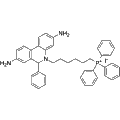
MitoSOX Red is a live cell fluorescent probe that specifically targets mitochondria and is cell membrane permeable. MitoSOX Red enters mitochondria and is oxidized by superoxide but not by other ROS or RNS generating systems. The oxidized MitoSOX Red then binds to nucleic acids in mitochondria/nucleus, producing strong red fluorescence. MitoSOX Red can be used as a fluorescent indicator to specifically detect superoxide. In addition, superoxide dismutase (SOD) can prevent the oxidation of MitoSOX Red. Excitation/emission wavelength: 510/580 nm.
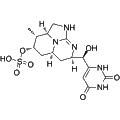
Cylindrospermopsin, a cyanotoxin, is a polycyclic uracil derivative containing guanidine and sulfate groups, which can inhibit protein synthesis and covalently modify DNA or RNA. Cylindrospermopsin induces hepatocellular hypertrophy, renal cellular hypertrophy, intracellular reactive oxygen species (ROS), DNA strand breaks, mitochondrial hyperpolarisation, ultrastructural damage, and altered gene expression in liver, kidney, and intestinal cells. Cylindrospermopsin can be used in research including hepatocellular carcinoma and water quality testing.
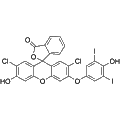
HKOH-1 is a sensitive green fluorescent probe designed for the selective detection of hydroxyl radicals (·OH) in living cells, utilizing a maximum excitation wavelength of 500 nm and an emission wavelength of 520 nm. This reagent enables researchers to monitor oxidative stress and assess cellular responses to reactive oxygen species. Its application is critical in studies related to redox biology, neurodegenerative diseases, and cancer research.
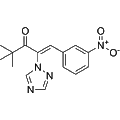
Nexinhib20 is a selective inhibitor of the Rab27a-JFC1 interaction (IC50: 2.6 μM) and Rac-1-GTP signaling. This compound effectively inhibits neutrophil exocytosis, adhesion, and β2 integrin activation, demonstrating significant anti-inflammatory properties. Nexinhib20 is suitable for research applications focused on systemic inflammation and myocardial ischemia-reperfusion injury.
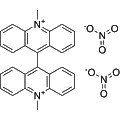
Synonyms: NSC-151912; L-6868
Lucigenin is a chemiluminescence probe primarily utilized for the detection of the endogenous superoxide anion radical (O2-). This compound exhibits high sensitivity and can also function as a chloride indicator, as its fluorescence is quenched in the presence of chloride ions. With excitation and emission wavelengths of 455 nm and 505 nm, respectively, Lucigenin serves as a valuable tool in studies involving reactive oxygen species and chloride ion interactions.
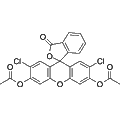
Synonyms: DCFH2-DA
2′,7′-Dichlorofluorescein diacetate (DCFH2-DA) is a cell-permeable fluorescent probe utilized for the detection of reactive oxygen species (ROS). It becomes fluorescent upon cleavage by intracellular esterases and subsequent oxidation, allowing for the assessment of oxidative stress levels in biological systems. This reagent is essential for studies in toxicology and cellular signaling, enabling researchers to monitor and evaluate oxidative phenomena in various experimental contexts.
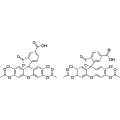
5(6)-Carboxy-2',7'-dichlorofluorescein diacetate is a cell-permeant fluorescent indicator that targets reactive oxygen species (ROS) within cells. This reagent is particularly useful for monitoring ROS generation in human neuronal-glial (HNG) cells during primary co-culture experiments. Its ability to penetrate cellular membranes makes it a valuable tool for evaluating oxidative stress and related biological processes.
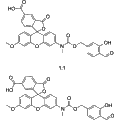
HKPerox-2 is a highly sensitive fluorescent probe specifically designed for the detection of hydrogen peroxide (H2O2) in live cells. It exhibits peak excitation and emission wavelengths at 520 nm and 543 nm, respectively, making it suitable for fluorescence microscopy applications. This reagent can be utilized to study oxidative stress and cellular signaling involving reactive oxygen species, enabling insights into various biological processes and disease mechanisms.