Proteasome

Proteasome inhibitors block the 26S proteasome, the protease complex that degrades ubiquitin-tagged proteins. Its 20S core carries caspase-like, trypsin-like and chymotrypsin-like active sites on β subunits with an N-terminal threonine. In 1994, peptide aldehydes including MG-132 were shown to block degradation of most cell proteins. The same inhibitors prevented generation of peptides for major histocompatibility complex (MHC) class I molecules. Lactacystin, a Streptomyces metabolite, modifies the catalytic threonine of specific subunits. Later chemotypes include the boronates bortezomib and ixazomib and the epoxyketones carfilzomib and epoxomicin, which bind irreversibly. ONX-0914 prefers low molecular mass polypeptide 7 (LMP7), a subunit of the immunoproteasome.

Items 101-125 of 129

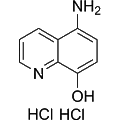
  • 5-Amino-8-hydroxyquinoline dihydrochloride
    Cat. No.
    A77349

    5-Amino-8-hydroxyquinoline dihydrochloride

    Synonyms: 5A8HQ dihydrochloride; 5AHQ dihydrochloride

    5-Amino-8-hydroxyquinoline dihydrochloride is a potent non-competitive inhibitor of the 20S proteasome. This compound effectively inhibits NF-κB activity, leading to apoptosis in cancer cells while exhibiting minimal cytotoxicity towards normal hematopoietic cells. Its unique properties make it a valuable tool for cancer research, particularly in studies related to leukemia and other malignancies.

    100 mg
    $25.00
    All 1 sizes
  • 20S Proteasome-IN-3
    Cat. No.
    A77351

    20S Proteasome-IN-3

    20S Proteasome-IN-3 is a potent inhibitor of the 20S proteasome β5 subunit, with an IC50 value of 1.64 μM. This compound exhibits significant anti-tumor proliferation activity, making it a valuable tool in cancer research. It is useful for studies investigating the role of proteasome inhibition in tumor biology and therapeutic applications.

    Out of stock

    All 3 sizes
  • Proteasome β2c/i-IN-1
    Cat. No.
    A77352

    Proteasome β2c/i-IN-1

    Proteasome β2c/i-IN-1 is a selective inhibitor of the human proteasome subunits β2c and β2i. This compound effectively impairs proteasome function, leading to the accumulation of ubiquitinated proteins. It is utilized in research applications focused on protein degradation pathways, cellular stress responses, and mechanisms of cancer development.

    Out of stock

    All 3 sizes
  • Z-LLF-CHO
    Cat. No.
    A77353

    Z-LLF-CHO

    Synonyms: Z-Leu-Leu-Phe-CHO

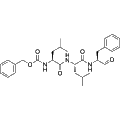
    Z-LLF-CHO (Z-Leu-Leu-Phe-CHO) is a potent inhibitor of the chymotrypsin-like activity of the proteasome, exhibiting an inhibition constant (Ki) of 460 nM. This compound also functions as an inhibitor of NF-κB nuclear translocation, making it valuable for studies involving immune response and inflammation. Research applications include investigations into proteolytic processes and the role of cytokines in various disease models.

    25 mg
    $1,275.00
    50 mg
    $1,625.00
    All 3 sizes
  • TIR-199
    Cat. No.
    A77354

    TIR-199

    TIR-199 is a selective dual proteasome inhibitor targeting the PSMB5 subunit of the constitutive proteasome and the PSMB8 subunit of the immunoproteasome. This compound exhibits significant cytotoxicity against various tumor cell lines, making it a valuable tool for cancer research. TIR-199 is particularly relevant for studies focused on multiple myeloma and the underlying mechanisms of proteasome inhibition in neoplastic cell death.

    Out of stock

    All 3 sizes
  • Davelizomib
    Cat. No.
    A77355

    Davelizomib

    Davelizomib is a potent proteasome inhibitor that exerts antineoplastic effects through the disruption of protein degradation pathways. By inhibiting the proteasome, it promotes the accumulation of pro-apoptotic factors and enhances the apoptotic response in cancer cells. This compound is primarily utilized in cancer research to explore therapeutic strategies against multiple myeloma and other malignancies.

    Out of stock

    All 3 sizes
  • Proteasome-IN-5
    Cat. No.
    A77356

    Proteasome-IN-5

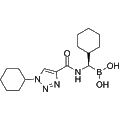
    Proteasome-IN-5 is a selective proteasome inhibitor that disrupts the ubiquitin-proteasome pathway, leading to the accumulation of polyubiquitinated proteins. This compound exhibits significant antitumor activity and is valuable in research related to cancer biology and neurodegenerative diseases. Proteasome-IN-5 can be utilized to study the role of proteasomal degradation in cellular processes and to explore potential therapeutic strategies targeting proteasome dysfunction.

    Out of stock

    All 3 sizes
  • LU-001i
    Cat. No.
    A77357

    LU-001i

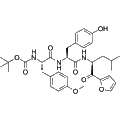
    LU-001i is a selective inhibitor of the proteasome β1i subunit (LMP2). While LU-001i exhibits minimal immunomodulatory effects as a standalone treatment, its combination with LMP7 inhibitors, such as PRN1126, enhances anti-inflammatory and immunomodulatory activities. This reagent is valuable for investigating the mechanisms underlying autoimmune diseases and developing targeted therapeutic strategies.

    Out of stock

    All 3 sizes
  • A-933548
    Cat. No.
    A77359

    A-933548

    A-933548 is a highly potent and selective inhibitor of calpain, demonstrating a Ki value of 18 nM. This compound's ability to modulate calpain activity makes it a valuable tool for research into neurodegenerative disorders, particularly Alzheimer's disease. Its specificity for calpain allows for detailed studies of calpain-mediated pathways and potential therapeutic interventions.

    25 mg
    $1,405.00
    50 mg
    $1,790.00
    All 3 sizes
  • Z-Gly-Pro-Phe-Leu-CHO
    Cat. No.
    A77361

    Z-Gly-Pro-Phe-Leu-CHO

    Synonyms: Z-GPFL-CHO

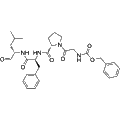
    Z-Gly-Pro-Phe-Leu-CHO is a tetrapeptide aldehyde that serves as a highly selective and potent inhibitor of the proteasome. It demonstrates significant inhibition with Ki values of 1.5 µM for branched-chain amino acid-preferring activities, 2.3 µM for small neutral amino acid-preferring activities, and 40.5 µM for chymotrypsin-like activities, with an IC50 of 3.1 µM for peptidyl-glutamyl peptide hydrolyzing activity. This compound is valuable for research applications focusing on proteasomal functions and related pathways in cellular processes.

    Out of stock

    All 3 sizes
  • NC-002
    Cat. No.
    A77362

    NC-002

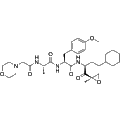
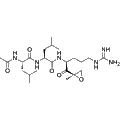
    NC-002 is a cell-permeable trypsin-like proteasome inhibitor that selectively targets the proteasome while sparing lysosomal cysteine proteases. This epoxyketone derivative of Leupeptin enhances the sensitivity of myeloma cells to Bortezomib and Carfilzomib, making it a valuable tool for cancer research. NC-002's unique mechanism offers potential insights into proteasome-related pathways and therapeutic strategies in oncology.

    Out of stock

    All 3 sizes
  • (+)-Catechin 3-gallate
    Cat. No.
    A77363

    (+)-Catechin 3-gallate

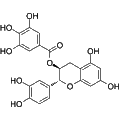
    (+)-Catechin 3-gallate is a polyphenolic compound that functions as a non-selective proteasome inhibitor. It demonstrates antitumor activity by inducing apoptosis and decreasing the levels of inflammatory cytokines. This agent is of significant interest in cancer research, particularly for breast and prostate cancers, as well as in the study of neurodegenerative diseases such as Alzheimer's.

    Out of stock

    All 3 sizes
  • Z-Leu-Leu-Tyr-COCHO
    Cat. No.
    A77364

    Z-Leu-Leu-Tyr-COCHO

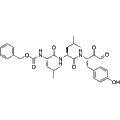
    Z-Leu-Leu-Tyr-COCHO is a potent proteasome inhibitor that specifically targets chymotrypsin-like activity, exhibiting a Ki value of 3.0 nM. This compound is effective in the modulation of protein degradation pathways, making it a valuable tool in studies related to cancer research and cellular stress responses. Its ability to inhibit proteasome activity provides insights into various biological processes and therapeutic mechanisms.

    Out of stock

    All 3 sizes
  • Bortezomib-pinanediol
    Cat. No.
    A77365

    Bortezomib-pinanediol

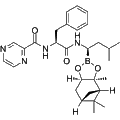
    Bortezomib-pinanediol is a prodrug of Bortezomib, functioning primarily as a proteasome inhibitor. This compound effectively inhibits cell growth and is utilized in research focused on multiple myeloma. Its ability to modulate proteasomal activity makes it a valuable tool for investigating cancer cell regulation and therapeutic responses.

    25 mg
    $30.00
    50 mg
    $40.00
    All 6 sizes
  • JBIR-22
    Cat. No.
    A77366

    JBIR-22

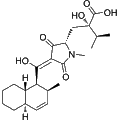
    JBIR-22 is a proteasome inhibitor that specifically targets the homodimer of the proteasome assembly factor 3, disrupting its protein-protein interactions. This disruption leads to significant cytotoxic effects on human cervical cancer cell lines, demonstrating its potential as a therapeutic agent in oncology research. The stereochemical structure of JBIR-22 has been elucidated through total synthesis, supporting its further investigation in cancer studies.

    25 mg
    $2,285.00
    50 mg
    $2,935.00
    All 3 sizes
  • SAP2-IN-1
    Cat. No.
    A77368

    SAP2-IN-1

    SAP2-IN-1 is a potent inhibitor of secreted aspartic protease 2 (SAP2), characterized by an IC50 value of 0.92 μM. This compound serves as a virulence factor inhibitor, making it valuable for studying the role of SAP2 in pathogenesis. Due to its unique mechanism, SAP2-IN-1 can be utilized in research focused on infectious diseases and the mechanisms of microbial virulence.

    25 mg
    $1,275.00
    50 mg
    $1,625.00
    All 3 sizes
  • INVA8001
    Cat. No.
    A77370

    INVA8001

    Synonyms: ASB17061

    INVA8001 is a highly selective and orally active chymase inhibitor, demonstrating significant potency with IC50 values of 0.02 μM for human chymase and 0.03 μM for mouse mast cell proteinase 4 (mMCP-4). This compound exhibits remarkable selectivity over related serine proteases, with IC50 values of 3.4 μM for bovine α-chymotrypsin and 32.1 μM for human cathepsin G, showcasing over 1000-fold selectivity. INVA8001 has been shown to inhibit mast cell activity in a mouse model of primary sclerosing cholangitis (PSC), leading to improved bile duct pathology and reduced bile stasis, thus highlighting its potential anti-inflammatory and anti-fibrotic applications in research.

    Out of stock

    All 3 sizes
  • LMP7/LMP2-IN-1
    Cat. No.
    A77372

    LMP7/LMP2-IN-1

    LMP7/LMP2-IN-1 is a potent inhibitor of the immunoproteasome subunits LMP7 and LMP2, exhibiting IC50 values of 257 nM and 10 nM, respectively. This compound effectively reduces antibody production and downregulates B cells in the germinal centers of the spleen as well as plasma cells in NP-OVA-immunized mice. LMP7/LMP2-IN-1 is valuable for research into autoimmune diseases and the modulation of immune responses.

    Out of stock

    All 3 sizes
  • Phepropeptin B
    Cat. No.
    A77373

    Phepropeptin B

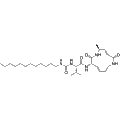
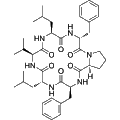
    Phepropeptin B is a proteasome inhibitor that demonstrates a potent inhibitory effect with an IC50 of 11 μg/mL. This microbial secondary metabolite plays a crucial role in the regulation of protein degradation, making it a valuable tool in studies related to cancer research and cellular processes involving proteostasis. Its application extends to exploring the mechanisms of diseases where proteasome activity is dysregulated.

    Out of stock

    All 3 sizes
  • Cerpegin
    Cat. No.
    A77374

    Cerpegin

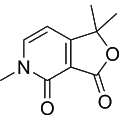
    Cerpegin is a potent inhibitor of the 20S proteasome, which plays a critical role in the degradation of ubiquitinated proteins. This compound exhibits significant biological activities including anti-inflammatory, analgesic, and antiulcer effects, making it a valuable tool in research focused on proteasome-related pathways and therapeutic applications. Its mechanism of action allows for exploration in models of neuroprotection and various inflammatory conditions.

    Out of stock

    All 3 sizes
  • Phepropeptin D
    Cat. No.
    A77375

    Phepropeptin D

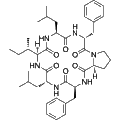
    Phepropeptin D is a microbial secondary metabolite that functions as a proteasome inhibitor, exhibiting an IC50 of 7.8 μg/mL. This compound plays a significant role in the regulation of protein degradation pathways, making it valuable for studies related to cellular proteostasis and cancer research. Its ability to modulate proteasome activity positions Phepropeptin D as a useful tool for investigating therapeutic strategies targeting proteasome-mediated pathways.

    Out of stock

    All 3 sizes
  • JBJ-08-178-01
    Cat. No.
    A77377

    JBJ-08-178-01

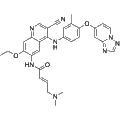
    JBJ-08-178-01 is a selective tyrosine kinase inhibitor targeting mutant forms of the human epidermal growth factor receptor 2 (HER2). It demonstrates significant antitumor activity by reducing both the kinase activity and protein levels of HER2 through the induction of proteasomal degradation. This compound holds potential for research applications in non-small-cell lung cancer, providing insights into therapeutic mechanisms against HER2-driven malignancies.

    25 mg
    $1,275.00
    50 mg
    $1,625.00
    All 3 sizes
  • 4-Nitrochalcone
    Cat. No.
    A77378

    4-Nitrochalcone

    Synonyms: 2-(4-Nitrobenzylidene)acetophenone

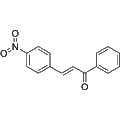
    4-Nitrochalcone serves as a proteasome inhibitor, specifically targeting the proteasomal degradation pathway. It effectively inhibits the activity of NF-κB induced by TNFα, making it a valuable tool for studying inflammatory processes and signaling pathways. This compound is utilized in research focused on cancer, neurodegenerative diseases, and other conditions where proteasome activity plays a critical role.

    Out of stock

    All 3 sizes
  • Phepropeptin A
    Cat. No.
    A77380

    Phepropeptin A

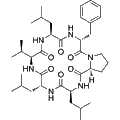
    Phepropeptin A is a microbial secondary metabolite that functions as a potent proteasome inhibitor, exhibiting an IC50 of 21 μg/mL. This compound is valuable for research applications focusing on the regulation of protein degradation pathways. Phepropeptin A can be utilized in studies aimed at understanding the role of proteasomal inhibition in cellular processes and disease models, particularly in cancer research and neurodegenerative disorders.

    Out of stock

    All 3 sizes
  • Phepropeptin C
    Cat. No.
    A77381

    Phepropeptin C

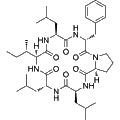
    Phepropeptin C is a proteasome inhibitor with a reported IC50 of 12.5 μg/mL. This microbial secondary metabolite disrupts protein degradation pathways, leading to the accumulation of regulatory proteins and altered cellular responses. Its ability to modulate proteasome activity makes it a valuable tool for research into cancer biology and other diseases characterized by dysregulated protein homeostasis.

    Out of stock

    All 3 sizes

Items 101-125 of 129

Added to your cart

View Cart Checkout

    Loading...