- Cat. No.
- A11172
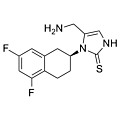
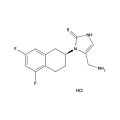
Nepicastat HCl
Synonyms: RS-25560-197; SYN117
Nepicastat hydrochloride is an inhibitor of dopamine beta-hydroxylase, an enzyme that catalyzes the conversion of dopamine to norepinephrine.
Search by product name, CAS, target or catalog number. Press Down Arrow to reach product suggestions, Tab to move between links, and Escape to close suggestions.
Hydroxylase inhibitors block enzymes that add hydroxyl groups to amino acids, amines, steroids or proteins. The section is a mixed set that covers several unrelated enzymes. Tryptophan hydroxylase (TPH) starts serotonin synthesis, with TPH1 in the gut and TPH2 in the brain; LP-533401 and telotristat etiprate inhibit it. Dopamine beta-hydroxylase (DBH) converts dopamine to norepinephrine and is blocked by nepicastat HCl. Hypoxia-inducible factor (HIF) prolyl hydroxylases are oxygen-dependent dioxygenases that mark HIF for degradation; DMOG inhibits this group. Ro 61-8048 targets kynurenine 3-monooxygenase (KMO), and metyrapone inhibits steroid 11-beta-hydroxylase in cortisol synthesis.
Synonyms: RS-25560-197; SYN117
Nepicastat hydrochloride is an inhibitor of dopamine beta-hydroxylase, an enzyme that catalyzes the conversion of dopamine to norepinephrine.
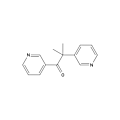
Metyrapone is an inhibitor of cytochrome P450-mediated ω/ω-1 hydroxylase activity and CYP11B1.
Ro 61-8048 is a potent and competitive kynurenine 3-hydroxylase inhibitor (Ki = 4.8 nM, IC50 = 37 nM).
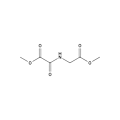
Synonyms: Dimethyloxaloyl glycine
DMOG is a cell permeable, competitive inhibitor of HIF-PH. It acts to stabilize HIF-1α expression at normal oxygen tensions in cultured cells, at concentrations between 0.1 and 1 mM.
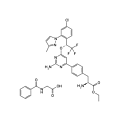
Synonyms: LX 1032; LX 1606 Hippurate
LX 1606 hippurate is an orally bioavailable, small-molecule, tryptophan hydroxylase (TPH) inhibitor with potential antiserotonergic activity.
Synonyms: RS-25560-197; SYN-117
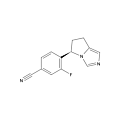
Nepicastat is an inhibitor of dopamine beta-hydroxylase, an enzyme that catalyzes the conversion of dopamine to norepinephrine.
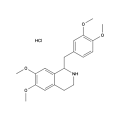
Tetrahydropapaverine, one of the TIQs and an analogue of salsolinol and tetrahydropapaveroline, has been reported to have neurotoxic effects on dopamine neurons.
Collagen proline hydroxylase inhibitor is a collagen proline hydroxylase inhibitor.
LX-1031 is a potent, orally available tryptophan 5-hydroxylase (TPH) inhibitor that reduces serotonin (5-HT) synthesis peripherally.
Synonyms: LX1606; LX 1606 ethyl
LX 1606 is an orally bioavailable, small-molecule, tryptophan hydroxylase (TPH) inhibitor with potential antiserotonergic activity.
Synonyms: LCI-699
Osilodrostat (LCI699) is a potent inhibitor of human 11β-hydroxylase and aldosterone synthase with IC50 values of 2.5 and 0.7 nM, respectively.
Synonyms: LP-778902
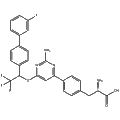
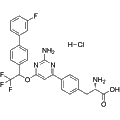
Telotristat (LP-778902) is a potent tryptophan hydroxylase inhibitor with an in vivo IC50 of 0.028 μM.
ACT-678689 is a potent inhibitor of tryptophan hydroxylase (TPH), exhibiting an IC50 value of 8 nM. This compound plays a critical role in the modulation of serotonin synthesis, making it valuable for research in neuropharmacology and the study of mood disorders. Its selective inhibition of TPH allows for in-depth investigation into serotonin-related pathways and their physiological implications.
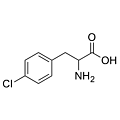
Synonyms: Fenclonine; PCPA; CP-10188
4-Chloro-DL-phenylalanine is a selective and irreversible inhibitor of tryptophan hydroxylase, a rate-limiting enzyme in the biosynthesis of serotonin (5-HYDROXYTRYPTAMINE).
Synonyms: KAR5417
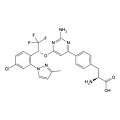
Rodatristat (KAR5417) is a potent tryptophan hydroxylase 1 (TPH1) and TPH2 inhibitor with IC50s value of 33 nM and 7 nM, respectively, and shows robust reduction of intestinal serotonin (5-HT) levels in mice.
Synonyms: JTZ-951
Enarodustat is a potent and orally active factor prolyl hydroxylase inhibitor, with an EC50 of 0.22 μM; Enarodustat has entered clinical trial for renal anemia.
Synonyms: KAR5585
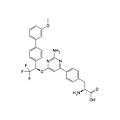
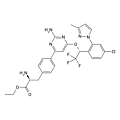
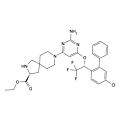
Rodatristat ethyl (KAR5585) is a first-in-class oral tryptophan hydroxylase 1 (TPH1) Inhibitor with nanomolar in vitro potency. Rodatristat ethyl reduces the level of 5-HT and significantly reduces pulmonary arterial hypertension (PAH).
Synonyms: 4-Chloro-DL-phenylalanine methyl ester hydrochloride
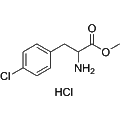
PCPA methyl ester hydrochloride is a reversible inhibitor of tryptophan hydroxylase, an enzyme critical for serotonin (5-HT) synthesis. This compound effectively crosses the blood-brain barrier, leading to a reduction in central 5-HT availability. It is widely utilized in research to investigate the role of serotonin in various physiological and pathological processes.
LP-533401 hydrochloride is an inhibitor of tryptophan hydroxylase 1, a key enzyme in serotonin biosynthesis. By modulating serotonin production in the gut, this compound serves as a valuable tool for investigating the role of serotonin in gastrointestinal physiology and associated disorders. Its applications extend to understanding the pathophysiology of conditions related to serotonin dysregulation, including mood disorders and gastrointestinal diseases.
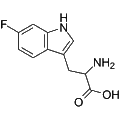
6-Fluorotryptophan is a competitive inhibitor of tryptophan hydroxylase, an enzyme crucial for serotonin synthesis. This compound has demonstrated significant effects on sleep disruption in animal models, particularly in rats with chronic EEG electrode implantation. Its application in research includes studies on serotonin-related disorders and the modulation of sleep patterns, providing insights into the neurochemical mechanisms underlying these processes.
TPT-004 is a selective inhibitor of tryptophan hydroxylases (TPH), demonstrating IC50 values of 77 nM and 16 nM for TPH1 and TPH2, respectively. This compound exhibits strong selectivity for TPH1, targeting the production of serotonin. TPT-004 has been shown to effectively reduce peripheral serotonin levels and inhibit colorectal tumor growth in preclinical mouse models, making it a valuable tool in cancer and serotonin-related research.
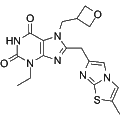
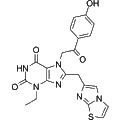
TPH1-IN-1 is a xanthine derivative that functions as a specific inhibitor of tryptophan hydroxylase 1 (TPH1), exhibiting an IC50 value of 110.1 nM. This compound demonstrates robust in vitro activity and is stable in liver microsomes, making it a valuable tool for studies targeting serotonin biosynthesis. TPH1-IN-1 effectively inhibits adipocyte differentiation in T3-L1 cells, highlighting its potential applications in metabolic research and related therapeutic investigations.
Out of stock
All 3 sizes
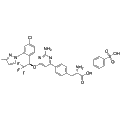
Telotristat besilate is a potent inhibitor of tryptophan hydroxylase, exhibiting an in vivo IC50 of 0.028 μM. This compound effectively modulates serotonin synthesis, making it a valuable tool for research on serotonin-related disorders and other neurochemical pathways. Its application extends to studies investigating the regulation of mood, gastrointestinal function, and tumor activity in carcinoid syndrome.