- Cat. No.
- A19360
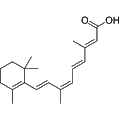
β-Apo-13-carotenone
Synonyms: D'Orenone
β-Apo-13-carotenone (D'Orenone) is a naturally occurring β-apocarotenoid functioned as an antagonist of RXRα.
Search by product name, CAS, target or catalog number. Press Down Arrow to reach product suggestions, Tab to move between links, and Escape to close suggestions.
Retinoid receptor ligands act on retinoic acid receptors (RARs) and retinoid X receptors (RXRs). Both are nuclear receptors with α, β and γ subtypes that bind DNA as RAR-RXR heterodimers and regulate gene transcription. A receptor for the morphogen retinoic acid was identified in 1987 as a member of the nuclear receptor family. In 1990 a second receptor responding to retinoic acid, later named RXRα, revealed a distinct retinoid pathway. Tretinoin, the all-trans form of retinoic acid, activates RARs, while tamibarotene and AM 580 favor RARα and CD 437 favors RARγ. Adapalene, tazarotene, acitretin and fenretinide are synthetic retinoids, whereas bexarotene is a ligand selective for RXRs.
Synonyms: D'Orenone
β-Apo-13-carotenone (D'Orenone) is a naturally occurring β-apocarotenoid functioned as an antagonist of RXRα.
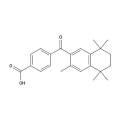
LG-100064 is a retinoid-X-receptor (RXR) agonist, with EC50s of 330 nM, 200 nM, and 260 nM for RXRα, RXRβ and RXRγ; LG-100064 can be used in the research of cancer.
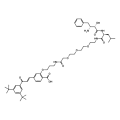
PROTAC RAR Degrader-1 comprises a cIAP1 ligand binding group, a linker and a RAR ligand binding group. PROTAC RAR Degrader-1 is an RAR degrader.
LY2955303 is a potent and selective retinoic acid receptor gamma (RARγ) antagonist with a Ki of 1.09 nM.
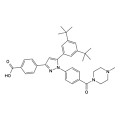
UVI 3003 is a highly selective antagonist of retinoid X receptor (RXR), and inhibits xenopus and human RXRα in Cos7 cells, with IC50s of 0.22 and 0.24 μM, respectively.
AC-55649 is a potent, highly isoform-selective agonist of human RARβ2 receptor, with a pEC50 of 6.9.
AGN 194078 is a selective RARα agonist with a Kd and EC50 of 3 and 112 nM, respectively.
Synonyms: CD5789
Trifarotene (CD5789) is a retinoic acid receptor (RAR) agonist with Kdapp of 2, 15 and 500 nM for RARγ, RARβ and RARα, respectively.
Synonyms: R115866
Talarozole (R115866) is an oral systemic all-trans retinoic acid metabolism blocking agent (RAMBA) which increases intracellular levels of endogenous all-trans retinoic acid (RA). Talarozole inhibits both CYP26A1 and CYP26B1 with IC50s of 5.4 and 0.46 nM, respectively.
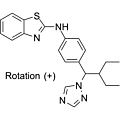
(+)-Talarozole is a potent inhibitor of retinoic acid metabolism extracted from patent WO 1997049704 A1.
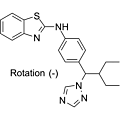
(-)-Talarozole is a potent inhibitor of retinoic acid metabolism extracted from patent WO 1997049704 A1.
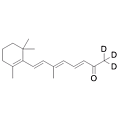
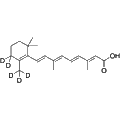
β-Apo-13-carotenone D3 is the deuterium labeled β-Apo-13-carotenone. β-Apo-13-carotenone (D'Orenone) is a naturally occurring β-apocarotenoid functioned as an antagonist of RXRα.
Synonyms: BMS-189453
BMS453 (BMS-189453), a synthetic retinoid, is a RARβ agonist and a RARα/RARγ antagonist.
ZSH-2208 is a retinoic acid A analog that exhibits potent antitumor activity against tumor regenerative stem cells (TRCs) in esophageal squamous cell carcinoma (ESCC). Its mechanism of action involves the RARγ–TNFAIP3 signaling pathway.
Synonyms: AGN 190205; BASF-46928
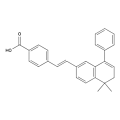
EC23 is a retinoid analogue that acts as a retinoic acid receptor (RAR) agonist. This compound prompts neuronal differentiation, making it a valuable tool for studying neurodevelopmental processes and related disorders. Its stability enhances its suitability for various biological assays and research applications in the field of neurobiology.
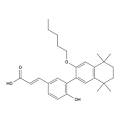
K-8012 is a potent RXRa antagonist, with an IC50 of approximately 9.2 μM for inhibiting 9-cis-retinoic acid-induced Gal4-RXRa-LBD trans-activation. This compound demonstrates enhanced anticancer activity compared to sulindac in an RXRa-dependent manner. K-8012 effectively inhibits the tRXRa-mediated PI3K/AKT signaling pathway, promoting apoptosis and suppressing AKT activation by disrupting the interaction between tRXRa and p85α. These properties make K-8012 valuable for research in cancer biology and signaling pathways.
Synonyms: Alitretinoin
9-cis-Retinoic acid is a potent RAR/RXR agonist derived from vitamin A. It plays a critical role in inducing apoptosis and regulating the cell cycle, exhibiting significant anticancer, anti-inflammatory, and neuroprotective activities. This compound is valuable for research applications aimed at understanding retinoid signaling and its implications in various biological processes and diseases.
HX531 is an orally active antagonist of the retinoid X receptor (RXR), demonstrating an IC50 of 18 nM. This compound effectively upregulates the p53-p21Cip1 pathway while counteracting the anti-apoptotic effects of trans-retinoic acid (t-RA). HX531 is characterized by its potential applications in anti-obesity, anti-diabetic, and anti-melanoma research, making it a valuable tool for investigating metabolic and cancer-related pathways.
Ro 41-5253 is a selective antagonist of the retinoic acid receptor alpha (RARα). It effectively binds to RARα without promoting transcriptional activity or influencing RAR/RXR heterodimerization and DNA binding. This compound demonstrates significant inhibition of cancer cell proliferation and can induce apoptosis, highlighting its potential as an antitumor agent in cancer research applications.
ZSH-512 is a potent inhibitor of retinoic acid receptor gamma (RARγ). It demonstrates significant antiproliferative effects by inducing apoptosis in cancer cells, while concurrently downregulating key stemness markers such as CD133, NANOG, SOX2, and EPCAM. With its strong anticancer activity, ZSH-512 is a valuable tool for investigating therapeutic strategies in colorectal cancer research.
Out of stock
All 3 sizes
HX630 is a potent retinoic acid X receptor (RXR) agonist that effectively induces apoptosis and exhibits significant anti-tumor activity. It is particularly valuable in the study of Cushing's disease and related tumorigenic processes. Research applications include elucidating the mechanisms of RXR activation and its therapeutic potential in cancer treatments.
CD1530 is a selective agonist of retinoic acid receptor gamma (RARγ) with notable antibacterial properties. It effectively decreases the phosphorylation of Smad1/5/8 and overall Smad levels, leading to a reduction in β-catenin, MMP9 protein, and reactive oxygen species (ROS) levels. CD1530 is utilized in research focusing on orthopedic conditions, such as heterotopic ossification and Achilles tendon injuries, as well as muscle disorders related to fatty infiltration.
Synonyms: Vitamin A acid-d5; all-trans-Retinoic acid-d5; ATRA-d5
Retinoic acid-d5 is a deuterium-labeled derivative of retinoic acid, functioning as a selective retinoic acid receptor (RAR) agonist. It is crucial for cellular processes such as growth, differentiation, and organogenesis, demonstrating IC50 values of 14 nM for RARα, β, and γ subtypes. Additionally, retinoic acid-d5 interacts with the peroxisome proliferator-activated receptor β/δ (PPARβ/δ) with a Kd of 17 nM and inhibits the transcription factor Nrf2 through RARα activation. This compound is essential for studies involving retinoid signaling and cell differentiation.
Synonyms: LGD1069 d4
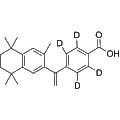
Bexarotene-d4 is a deuterium-labeled analog of Bexarotene, functioning as a selective retinoid X receptor (RXR) agonist. This compound is primarily utilized in the treatment of cutaneous T-cell lymphoma, demonstrating significant biological activity in modulating RXR signaling pathways. Its isotopic labeling facilitates research applications in pharmacokinetics and metabolism studies of RXR-targeted therapies.
Synonyms: RAR ligand 1
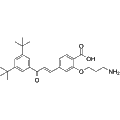
Ch55-O-C3-NH2 is a selective ligand for retinoic acid receptors (RAR) and retinoid X receptors (RXR). This compound demonstrates the ability to effectively modulate RAR signaling pathways, facilitating research into their role in gene expression and developmental processes. Ch55-O-C3-NH2 can also be utilized in the synthesis of SNIPERs by binding to cIAP1 ligand Bestatin through a linker, supporting studies in targeted protein degradation and therapeutic applications.
Out of stock
All 3 sizes