- Cat. No.
- A10232
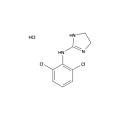
Clonidine hydrochloride
Clonidine is classified as a centrally acting alpha adrenergic agonist.Clonidine acts centrally as an imidazoline receptor agonist.
Search by product name, CAS, target or catalog number. Press Down Arrow to reach product suggestions, Tab to move between links, and Escape to close suggestions.
Imidazoline receptor ligands act on the I1, I2 and I3 binding sites for imidazoline compounds. Imidazoline receptors were proposed when clonidine-like compounds were found to lower blood pressure through brainstem sites distinct from α2-adrenergic receptors. I1 sites take part in central blood pressure control, and I2 sites are linked to monoamine oxidase. I3 sites in pancreatic β cells are involved in the regulation of insulin secretion. Moxonidine hydrochloride and rilmenidine phosphate are listed as I1 agonists, and AGN 192403 as an I1 antagonist. Idazoxan hydrochloride blocks α2-adrenergic receptors and binds I2 sites, as does BU226 hydrochloride, while KU14R is an I3 antagonist. Clonidine hydrochloride and guanabenz acetate act mainly at α2-adrenergic receptors and are also listed under Adrenergic Receptors.
Clonidine is classified as a centrally acting alpha adrenergic agonist.Clonidine acts centrally as an imidazoline receptor agonist.
Synonyms: Tenaxum; HYPERIUM
Rilmenidine is a second-generation imidazoline-α2 adrenergic agonist.
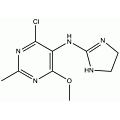
Moxonidine is a new-generation centrally-acting antihypertensive drug. It may have a role when thiazides, beta-blockers, ACE inhibitors and calcium channel blockers are not appropriate or have failed to control blood pressure. In addition, it demonstrates favourable effects on parameters of the insulin resistance syndrome, apparently independent of blood pressure reduction.
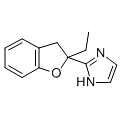
Synonyms: (+/-)-Idazoxan Monohydrochloride; RX 781094; RX 781094A
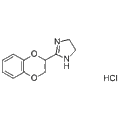
Idazoxan hydrochloride is an α2-AR adrenoceptor antagonist and potential I2 imidazoline receptor agonist. Also displays I1 imidazoline receptor antagonist activity. (pKi values are 5.90, 7.22, 8.01, 7.43, and 7.7 for I1, I2, α 2A, α2B, and α 2C receptors respectively).
Synonyms: Moxonidine hydrochloride CP; Moxonidine HCL; BDF-5895 HCL
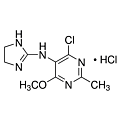
Moxonidine hydrochloride is a centrally acting antihypertensive agent.
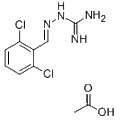
Guanabenz acetate is an a2A-AR adrenergic agonist and IGRS (imidazoline I2 binding site) selective ligand.
KU14R is an antagonist of the pancreatic β-cell atypical imidazoline binding site (putative I3 receptor). KU14R has also been shown to selectively block efaroxan-induced insulin secretion.
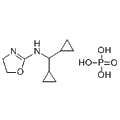
Rilmenidine Phosphate is a selective I(1) imidazoline receptor agonist.
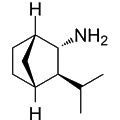
Synonyms: BRD4780 hydrochloride
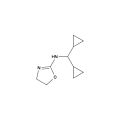
AGN 192403 hydrochloride is a potent and selective antagonist of the imidazoline-1 receptor, exhibiting a Ki value of 42 nM. This compound functions as a TMED9 inhibitor and demonstrates protective effects against oxidative and mitochondrial inhibitor-induced cytotoxicity in astrocytes. Additionally, AGN 192403 hydrochloride reduces the proliferation and migration of differentiated glioma tumor cells, making it a valuable tool for research related to glioma tumors and various neurological diseases.
Synonyms: BRD4780
AGN 192403 is a potent and selective imidazoline-1 receptor antagonist with a Ki value of 42 nM. This compound also acts as a TMED9 inhibitor and demonstrates protective effects against oxidative and mitochondrial inhibitor-induced cytotoxicity in astrocytes. Additionally, AGN 192403 inhibits the proliferation and migration of differentiated glioma tumor cells. It is a valuable reagent for research related to glioma tumors and various neurological diseases.
Out of stock
All 3 sizes
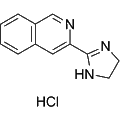
BU226 hydrochloride is a selective ligand for imidazoline 2 (I2) receptors, exhibiting a binding affinity with a Ki value of 1.4 nM for I2 receptors and an IC50 of 534.5 nM for I1 receptors. This compound plays a significant role in the investigation of antidepressant mechanisms. Its specificity makes it a valuable tool for research aimed at understanding the neurological effects and therapeutic potential of imidazoline receptor modulation.
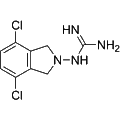
Aganodine is a guanidine compound that functions as an imidazoline receptor activator. It plays a significant role in modulating neurotransmitter release by inhibiting electrically evoked [3H]-norepinephrine release from presynaptic sites. This compound is valuable for research applications focused on cardiovascular physiology and neuropharmacology, providing insights into imidazoline receptor signaling pathways.