- Cat. No.
- A12314
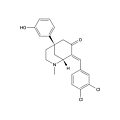
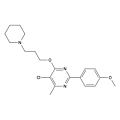
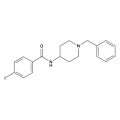
4-IBP
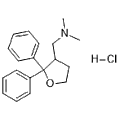
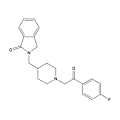
4-IBP is a selective ς1 agonist with a high level of affinity for the ς1 receptor (Ki = 1.7 nM) and a moderate affinity for the ς2 receptor (Ki = 25.2 nM) .
Search by product name, CAS, target or catalog number. Press Down Arrow to reach product suggestions, Tab to move between links, and Escape to close suggestions.
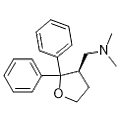
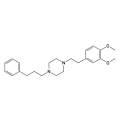
Sigma receptor ligands bind sigma-1 and sigma-2 receptors, two unrelated proteins that are not G protein-coupled. The sigma-1 receptor was cloned in 1996 and resembles a yeast sterol isomerase more than any known mammalian receptor. It resides mainly in the endoplasmic reticulum, and its 2016 crystal structure showed a trimer with one transmembrane helix per protomer. The gene for the sigma-2 receptor was identified in 2017 as transmembrane protein 97 (TMEM97). Cutamesine (SA4503) dihydrochloride, 4-IBP and pentoxyverine citrate are sigma-1 agonists, whereas S1RA and BD-1047 2HBr are sigma-1 antagonists. Siramesine is a sigma-2 agonist, and UMB24 a sigma-2 antagonist.
4-IBP is a selective ς1 agonist with a high level of affinity for the ς1 receptor (Ki = 1.7 nM) and a moderate affinity for the ς2 receptor (Ki = 25.2 nM) .
Synonyms: Lu 28-179
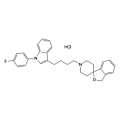
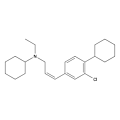
Siramesine Hydrochloride is a selective sigma-2 receptor agonist, which has been shown to trigger cell death of cancer cells and to exhibit a potent anticancer activity in vivo.
Synonyms: E52862; MR390
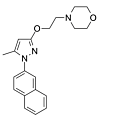
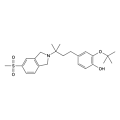
S1RA is a selective sigma-1 receptor antagonist, with a reported binding affinity of Ki = 17.0 ± 7.0 nM, selective over the sigma-2 receptor and against a panel of other 170 receptors, enzymes, transporters and ion channels.
Synonyms: AGY-94806; Cutamesine; SA4503 dihydrochloride
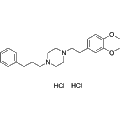
SA4503 is a selective sigma 1 receptor(ς1R) agonist; high affinity for the sigma 1 receptor subtype labeled by (+)-[3H]pentazocine (IC50 = 17.4 +/- 1.9 nM); 100-fold less affinity for the sigma 2 receptor.
Synonyms: Lu 28-179
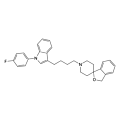
Anti-cancer agent siramesine is a lysosomotropic detergent that induces cytoprotective autophagosome accumulation.
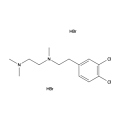
Synonyms: BD 1047 dihydrobromide
BD-1047 2HBr is a selective functional antagonist of sigma receptors, shows antipsychotic activity in animal models predictive of efficacy in schizophrenia.
CB-184 is a useful tools for characterization of sigma 2 receptors.
Synonyms: (S,R)-Noscapine
Noscapine is an orally administrable drug used worldwide for cough suppression, primarily mediated by its sigma receptor agonist activity, and possess anticancer activity.
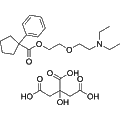
Synonyms: Carbetapentane citrate
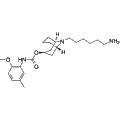
Pentoxyverine citrate is a sigma-1 receptor agonist that effectively crosses the blood-brain barrier. With binding affinities of 41 nM for σ1, it demonstrates potent antitussive, anticonvulsant, and spasmolytic activities. This compound is utilized in research for its ability to inhibit bronchial interceptor activity, attenuate cough reflex, relax bronchial smooth muscle, and reduce airway resistance, making it valuable in the study of respiratory conditions.
Synonyms: Anavex-273
Anavex2-73 is a muscarinic/moderate sigma1 receptor agonist that alleviated the scopolamine- and dizocilpine-induced learning impairments. CAS: 195615-83-9 (Free base) 195615-84-0 (HCl)
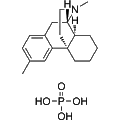
Dimemorfan phosphate is a selective sigma 1 receptor agonist, known for its significant antitussive properties. This compound has been explored in research for its potential therapeutic effects on cough suppression and its implications in neurological disorders. Its pharmacological profile makes Dimemorfan phosphate a valuable tool for studies investigating sigma receptor functions and related signaling pathways.
Synonyms: HPN-100; trade name: Ravicti.
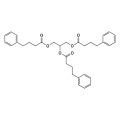
Glycerol phenylbutyrate is a sigma-2 (ς2) receptor ligand, with a pKi of 8.02.
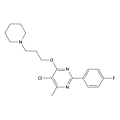
Sigma-1 receptor antagonist 3 (compound135) is a potent and selective Sigma-1 (σ1) receptor antagonist with a Ki of 1.14 nM.
Sigma-1 receptor antagonist 2 is a potent and selective sigma 1 receptor (??1 R) antagonist with Kis of 3.88 and 1288 nM for ??1 and ??2 receptor, respectively.
E1R is a novel positive allosteric modulator of sigma-1 receptors.
Sigma-LIGAND-1 is a selective sigma receptor ligand, has receptor IC50s of 16 nM at the DTG site, 19 nM at the PPP site, and a Ki of 4000 nM at the dopamine D2 receptor.
Sigma-2 receptor antagonist 1 is a sigma-2 (σ-2) receptor antagonist.
Synonyms: CYR-101; MIN-101; MT-210
Roluperidone, also known as MIN-101, CYR-101, and MT-210, is a 5-HT2A and sigma 2 receptor antagonist potentially for the treatment of schizophrenia.
Synonyms: AE-37; AVex-73; Anavex-2-73
Blarcamesine, also known as AVex-73 and AE-37, is a muscarinic M1 agonist potentially for the treatment of Alzheimer's disease. It is an ς receptor ligand.
Synonyms: SA4503; AGY 94806
Cutamesine (SA4503; AGY-94806) is a selective sigma 1 receptor(??1R) agonist; high affinity for the sigma 1 receptor subtype labeled by (+)-[3H]pentazocine (IC50= 17.4±1.9 nM); 100-fold less affinity for the sigma 2 receptor.
Synonyms: 1,3-Di-o-tolylguanidine; DTG
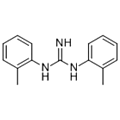
Ditolylguanidine (1,3-Di-o-tolylguanidine) is an agonist of sigma receptor (??1/??2 receptor).
SR-31747 free base is a sigma ligand with immunosuppressive and anti-inflammatory properties.
SV119 is a potent sigma-2 (σ₂) receptor ligand, exhibiting a binding affinity with a Ki value of approximately 5-10 nM. This compound promotes apoptosis in diverse human cancer cell lines through the activation of caspase-3 and induces mitochondrial depolarization, highlighting its potential in cancer therapy. SV119 also demonstrates the ability to enhance the efficacy of chemotherapeutic agents like Paclitaxel, increasing their cytotoxic effects on tumor cells. In preclinical mouse xenograft models, SV119 has been shown to significantly inhibit tumor growth, making it a valuable tool for researching cancers, including breast, prostate, and pancreatic malignancies.
Out of stock
All 3 sizes
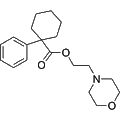
PRE-084 is a selective agonist of the σ1 receptor (S1R), exhibiting an IC50 of 44 nM. This compound demonstrates significant neuroprotective effects and enhances motor function and motor neuron survival in murine models. Additionally, PRE-084 has been shown to mitigate myocardial ischemia-reperfusion injury in rat models through the activation of the Akt-eNOS signaling pathway, highlighting its potential for various therapeutic applications in neurological and cardiac research.