PSMA

PSMA ligands bind prostate-specific membrane antigen (PSMA), a cell-surface glutamate carboxypeptidase. A complementary DNA encoding PSMA was cloned in 1993 from a human prostate carcinoma cell line. In 1996 the protein was shown to act as a hydrolase with the substrate and inhibitor profile of a neuropeptidase that cleaves N-acetylaspartylglutamate. The enzyme is also known as glutamate carboxypeptidase II and folate hydrolase 1 (FOLH1). Many compounds here carry a urea-linked glutamate motif that fits the active site, coupled to a chelator or labeling group. PSMA-11 carries a chelator for gallium-68, while PSMA-1007 and piflufolastat are fluorinated ligands. tert-Butyl-DCL is a protected inhibitor intermediate, and PSMA-ALB-56 adds an albumin-binding group.

Items 26-43 of 43

  • PDI2
    Cat. No.
    A65449

    PDI2

    Synonyms: PSMA-DOTA-PEI2

    PDI2 (PSMA-DOTA-PEI2) is a prostate-specific membrane antigen (PSMA) ligand that functions as a tumor retention agent and imaging agent while reducing renal uptake. It selectively binds to PSMA on prostate cancer cells, facilitating entry through clathrin-dependent endocytosis, which results in increased tumor retention and decreased renal accumulation. PDI2 is valuable for research in prostate cancer and castration-resistant metastatic prostate cancer, particularly in the context of SPECT diagnostic imaging and radiotheranostics.

    Out of stock

    All 3 sizes
  • MIP-1095
    Cat. No.
    A65450

    MIP-1095

    Synonyms: RPS-001

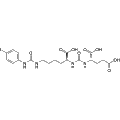
    MIP-1095 is a potent inhibitor of prostate-specific membrane antigen (PSMA), specifically targeting its glutamate carboxypeptidase activity with a Ki of 0.24 nM. This compound is valuable in research applications focused on prostate cancer, facilitating studies on PSMA's role in tumor progression and its potential as a therapeutic target. MIP-1095 is essential for the development of PSMA-targeted diagnostics and therapeutics.

    25 mg
    $1,275.00
    50 mg
    $1,625.00
    All 3 sizes
  • PSMA-IN-4
    Cat. No.
    A65451

    PSMA-IN-4

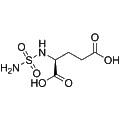
    PSMA-IN-4 is a potent inhibitor of prostate-specific membrane antigen (PSMA), exhibiting an IC50 value of 1.2 μM. This compound effectively interferes with PSMA activity, making it a valuable tool in research focused on prostate cancer diagnostics and therapeutics. Its specificity and potency support investigations into PSMA's role in tumor biology and its potential as a therapeutic target.

    Out of stock

    All 3 sizes
  • Capromab
    Cat. No.
    A65452

    Capromab

    Capromab is a monoclonal antibody targeting the intracellular domain of prostate-specific membrane antigen (PSMA). It exhibits specificity for necrotic cells with compromised membranes and does not undergo internalization upon binding. Capromab is utilized in research focused on prostate cancer, aiding in studies related to tumor progression and targeted therapies.

    Out of stock

    All 3 sizes
  • PSMA ligand 3
    Cat. No.
    A65453

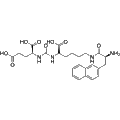
    PSMA ligand 3

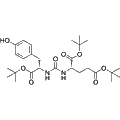
    PSMA Ligand 3 is a ligand specifically targeting Prostate-Specific Membrane Antigen (PSMA). Its primary function is to bind to PSMA, facilitating the detection and imaging of prostate cancer cells. This compound is valuable in cancer research, particularly in the study of prostate cancer diagnostics and therapy.

    Out of stock

    All 3 sizes
  • PSMA binder-3
    Cat. No.
    A65454

    PSMA binder-3

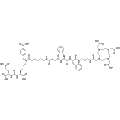
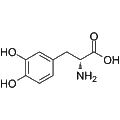
    PSMA binder-3 is a selective binder for Prostate-Specific Membrane Antigen (PSMA), a key target in prostate cancer research. This high-affinity ligand exhibits strong binding capabilities that facilitate the study of PSMA's role in tumor biology and therapeutic targeting. It is an essential tool for applications in imaging and drug development related to prostate cancer.

    Out of stock

    All 3 sizes
  • PSMA-trillium
    Cat. No.
    A65455

    PSMA-trillium

    Synonyms: Felivotide mopaxetan

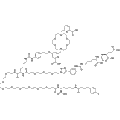
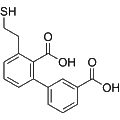
    PSMA-trillium is a PSMA-targeting compound that features a PSMA binder, a Macropa chelating molecule, and a pharmacokinetics modifier. This non-radioactive derivative of Actinium-225-PSMA-Trillium (BAY 3563254) offers enhanced PSMA targeting and optimized pharmacokinetic properties. PSMA-trillium effectively binds to Ac via the Macropa chelator and serves as a potent inhibitor of metastatic castration-resistant prostate cancer (mCRPC). It is a valuable tool for research into targeted therapies for prostate cancer.

    Out of stock

    All 3 sizes
  • BQ0413
    Cat. No.
    A65456

    BQ0413

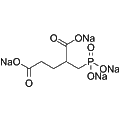
    BQ0413 is a potent PSMA tracer with a dissociation constant (KD) of 89 pM, demonstrating strong affinity for the prostate-specific membrane antigen. This compound exhibits efficient cellular uptake and a notable internalization rate of 44% in PC3-pip cells, making it suitable for research applications in tumor imaging. When radiolabeled with 99mTc, BQ0413 serves as an effective imaging agent for prostate cancer in preclinical studies.

    Out of stock

    All 3 sizes
  • PSMA-N5
    Cat. No.
    A65457

    PSMA-N5

    PSMA-N5 is a potent PSMA ligand, exhibiting a Ki value of 0.71 nM. This compound serves as a PET radiotracer specifically for imaging prostate cancer, facilitating the visualization of tumors. PSMA-N5 is valuable for research applications in prostate cancer and other malignancies associated with prostate-specific membrane antigen.

    Out of stock

    All 3 sizes
  • PSMA-IN-2
    Cat. No.
    A65458

    PSMA-IN-2

    PSMA-IN-2 is a potent inhibitor of Prostate-Specific Membrane Antigen (PSMA) with a Ki value of 1.07 nM. This compound exhibits promising in vivo near-infrared (NIR) imaging properties at an emission wavelength of 1088 nm and an excitation wavelength of 808 nm. PSMA-IN-2 is particularly applicable in NIRII image-guided tumor resection surgeries in models of PSMA-positive tumors, making it a valuable tool for cancer research and therapeutic interventions.

    Out of stock

    All 3 sizes
  • PSMA-IN-3
    Cat. No.
    A65459

    PSMA-IN-3

    PSMA-IN-3 is a high-affinity inhibitor of Prostate-Specific Membrane Antigen (PSMA), demonstrating an IC50 value of 13 nM. This compound is particularly relevant for the development of 18F-labeled radioligands for positron emission tomography (PET) imaging to detect PSMA expression in prostate cancer. Researchers can utilize PSMA-IN-3 for studies aimed at advancing diagnostic imaging and therapeutic strategies in oncology.

    Out of stock

    All 3 sizes
  • DCFBC
    Cat. No.
    A65460

    DCFBC

    DCFBC is a potent prostate-specific membrane antigen (PSMA) inhibitor, primarily utilized for small animal positron emission tomography (PET) imaging applications. Labeled with fluorine-18, [18F]DCFBC demonstrates preferential uptake in PSMA-expressing tumors, particularly in PIP tumors, while showing minimal uptake in FLU tumors. Additionally, while high accumulation in the kidneys and bladder is observed, the washout of radioactivity is faster compared to PIP tumors. This specificity positions [18F]DCFBC as a valuable tool for studying prostate cancer and assessing PSMA-targeted therapies.

    Out of stock

    All 3 sizes
  • (R)-Zadavotide guraxetan
    Cat. No.
    A65461

    (R)-Zadavotide guraxetan

    Synonyms: (R)-PSMA I&T; (R)-PNT-2002

    (R)-Zadavotide guraxetan is a potent inhibitor of prostate-specific membrane antigen (PSMA), exhibiting significant antitumor activity. It is primarily utilized in research focused on prostate cancer, contributing to the understanding of targeted therapeutic approaches. This compound serves as a valuable tool for investigating the role of PSMA in cancer biology and evaluating efficacy in preclinical studies.

    Out of stock

    All 3 sizes
  • PSMA-MAL-5
    Cat. No.
    A65462

    PSMA-MAL-5

    PSMA-MAL-5 is a prostate-specific membrane antigen (PSMA) ligand that covalently binds to Cys466 of the PSMA protein. This compound demonstrates significant biological activity, including high radiostability and tumor uptake when labeled with 177Lu and 225Ac. PSMA-MAL-5 is also effective in inhibiting tumor growth, making it suitable for applications in SPECT/CT imaging and radionuclide therapy for prostate cancer.

    Out of stock

    All 3 sizes
  • PSMA precursor-1
    Cat. No.
    A65463

    PSMA precursor-1

    PSMA precursor-1 is a key intermediate in the synthesis of prostate-specific membrane antigen (PSMA) ligands and fluorescent probes. It is utilized for the detection of PSMA in prostate cancer cell lines, specifically LNCaP and PC3. This compound plays a significant role in the development of targeted imaging agents and therapeutic strategies for prostate cancer research.

    1 mg
    $45.00
    5 mg
    $140.00
    All 3 sizes
  • D-Dopa
    Cat. No.
    A69590

    D-Dopa

    Synonyms: 3-Hydroxy-D-tyrosine

    D-Dopa (3-Hydroxy-D-tyrosine) is a potent, non-competitive allosteric inhibitor of glutamate carboxypeptidase II (GCPII), demonstrating an IC50 of 200 nM. This compound is known to elevate brain dopamine levels and induce turning behavior in rat models. Additionally, D-Dopa shows inhibitory effects against severe fever with thrombocytopenia syndrome (SFTS) virus infection. It serves as a valuable reagent for research applications in neurological diseases and viral infections.

    25 mg
    $35.00
    50 mg
    $45.00
    All 5 sizes
  • E2072
    Cat. No.
    A69591

    E2072

    E2072 is a selective, orally active competitive inhibitor of glutamate carboxypeptidase II (GCPII) with a Ki value of 10 nM. This compound has demonstrated efficacy in alleviating established thermal hyperalgesia in a rat model of chronic constriction injury. Additionally, E2072 has been shown to prevent oxaliplatin-induced reductions in nerve conduction velocity and amplitude in mice. It is suitable for research applications focused on neuropathic pain and neuropathy.

    25 mg
    $1,530.00
    50 mg
    $1,950.00
    All 3 sizes
  • 2-PMPA sodium
    Cat. No.
    A69596

    2-PMPA sodium

    Synonyms: 2-(Phosphonomethyl)pentanedioic acid sodium

    2-PMPA sodium is a potent inhibitor of glutamate carboxypeptidase II (GCPII) with an IC50 of 0.0003 μM. This compound effectively blocks the hydrolysis of N-acetylaspartylglutamate (NAAG), thereby modulating glutamate levels within the brain and influencing neurovascular coupling. Due to its specific action on GCPII, 2-PMPA sodium is valuable for investigating neurological diseases and understanding their underlying mechanisms. However, it is noted for its limited permeability across the blood-brain barrier, which may inform experimental design in related research.

    5 mg
    $65.00
    10 mg
    $100.00
    All 5 sizes

Items 26-43 of 43

Added to your cart

View Cart Checkout

    Loading...