Endogenous Metabolite

Endogenous metabolites are small molecules made by the body's own metabolism, such as amino acids and steroids. They are used as metabolomics standards, as enzyme substrates and as tools to probe how metabolic pathways are regulated. L-Citrulline, an intermediate of the urea cycle, is also formed when nitric oxide synthase produces nitric oxide. 17-Hydroxyprogesterone is a steroid intermediate on the route to cortisol. Prostaglandin E1 represents the eicosanoids, a group of lipid mediators derived from fatty acids. Nicotinamide riboside chloride is a precursor of nicotinamide adenine dinucleotide (NAD+), the cofactor used by sirtuins.

Items 26-41 of 41

  • Levophencynonate
    Cat. No.
    A73745

    Levophencynonate

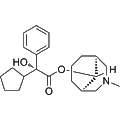
    Levophencynonate is an endogenous metabolite that functions as a muscarinic receptor antagonist, exhibiting notable anticholinergic activity. Its biological properties make it an important compound for the assessment of concentrations in human plasma during medical research. High-performance liquid chromatography tandem mass spectrometry (HPLC-MS/MS) has been utilized to analyze levophencynonate, demonstrating good specificity and linearity for reliable quantitative evaluations.

    25 mg
    $1,275.00
    50 mg
    $1,625.00
    All 3 sizes
  • YM-44781 free acid
    Cat. No.
    A73776

    YM-44781 free acid

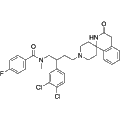
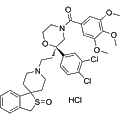
    YM-44781 free acid is a potent antagonist targeting neuropeptide receptors, specifically the NK(1) and NK(2) receptors. It demonstrates strong binding affinity for the NK(2) receptor (pKi = 9.94) and noteworthy affinity for the NK(1) receptor (pKi = 9.09). This compound has been shown to significantly inhibit bladder contractions induced by selective NK(1) receptor agonists, making it a valuable tool in research focused on neuropeptide signaling and bladder function.

    Out of stock

    All 3 sizes
  • R892
    Cat. No.
    A73799

    R892

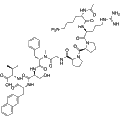
    R892 is a selective bradykinin B1 receptor antagonist that demonstrates significant antagonistic activity with pA2 values of 8.8 and 8.6 for human and rabbit B1 receptors, respectively. With an ID50 of 2.8 nM for B1 receptors and >600 nM for B2 receptors, R892 exhibits a strong selectivity profile and lacks agonistic properties. Furthermore, R892 is resistant to degradation by aminopeptidase and kininase II (ACE), showcasing its metabolic stability. This compound serves as a valuable tool for research applications investigating bradykinin receptor signaling and related physiological functions.

    1 mg
    $145.00
    All 1 sizes
  • VPC32183
    Cat. No.
    A73809

    VPC32183

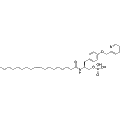
    VPC32183 is a competitive antagonist of the LPA1 and LPA3 receptors. This compound effectively inhibits lipid phosphatase 1 (LPP1), leading to a reduction in the activation of ERK(1/2) by dioctanoic acid diglyceride (DGPP 8:0). By decreasing LPP1 expression, VPC32183 further diminishes DGPP 8:0-induced ERK(1/2) activation, suggesting its potential role in positively regulating cell signaling pathways. This pharmacological profile makes VPC32183 a valuable tool for studying LPA receptor-mediated signaling in various biological contexts.

    25 mg
    $1,530.00
    50 mg
    $1,950.00
    All 3 sizes
  • MRS4458
    Cat. No.
    A73814

    MRS4458

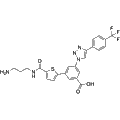
    MRS4458 is a selective antagonist of the P2Y14 receptor, demonstrating significant anti-inflammatory activity. This compound effectively modulates neutrophil motility, contributing to its therapeutic potential in inflammatory conditions. Designed through molecular dynamic simulations, MRS4458 exhibits optimized shape and complementarity with the receptor. Its biological efficacy has been validated using fluorescence assays, confirming a robust antagonistic effect against the target receptor.

    25 mg
    $1,530.00
    50 mg
    $1,950.00
    All 3 sizes
  • Iomazenil
    Cat. No.
    A73821

    Iomazenil

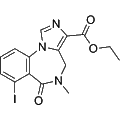
    Iomazenil is a benzodiazepine receptor antagonist that exhibits partial inverse agonist activity. It serves as a valuable tool for evaluating the binding potential of central benzodiazepine receptors in the cerebral cortex, thereby providing insights into neuronal function within viable tissue. Research indicates that Iomazenil may enhance cognitive function in adult patients suffering from ischemic cerebral pathology following indirect revascularization surgery, as evidenced by its ability to restore benzodiazepine receptor binding potential in the affected hemisphere observed through brain SPECT imaging.

    1 mg
    $65.00
    5 mg
    $195.00
    All 6 sizes
  • CS-003
    Cat. No.
    A73836

    CS-003

    CS-003 is a potent triple neurokinin receptor antagonist, targeting NK1, NK2, and NK3 receptors with Ki values of 2.3 nM, 0.54 nM, and 0.74 nM, respectively, in human tissues. It demonstrates superior inhibitory activity against guinea pig neurokinin receptors as well, with Ki values of 5.2 nM, 0.47 nM, and 0.71 nM. CS-003 significantly inhibits inositol phosphate formation related to the neurokinin signaling of substance P, neurokinin A, and neurokinin B. Furthermore, it effectively reduces citric acid-induced cough, exhibiting enhanced activity compared to selective neurokinin receptor antagonists, making it valuable for research in neurogenic respiratory disorders.

    25 mg
    $2,285.00
    50 mg
    $2,935.00
    All 3 sizes
  • Benanserin hydrochloride
    Cat. No.
    A73909

    Benanserin hydrochloride

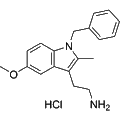
    Benanserin hydrochloride is a serotonin receptor antagonist that modulates psychopharmacological activity. It is utilized in research to investigate specific behavioral responses and to assess drug effects, particularly through the measurement of muscle movement and reaction time. This compound is effective for monitoring physiological changes in muscle function and provides reliable bioassay parameters for experimental applications in pharmacology and neuroscience.

    1 mg
    $20.00
    25 mg
    $1,275.00
    All 4 sizes
  • GSK-1562590
    Cat. No.
    A74028

    GSK-1562590

    GSK-1562590 is a high-affinity antagonist of the uropeptide-II receptor, demonstrating notable selectivity. This compound exhibits significant antagonistic activity across various biological assays and maintains prolonged receptor binding. GSK-1562590 effectively inhibits human urinary peptide-II-induced aortic contraction in rat models, with effects persisting for a minimum of 24 hours. Its properties make it a valuable tool for investigating the role of uropeptide-II in cardiovascular physiology and related metabolic research.

    25 mg
    $1,405.00
    50 mg
    $1,790.00
    All 3 sizes
  • Stearoyl Serotonin
    Cat. No.
    A74236

    Stearoyl Serotonin

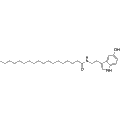
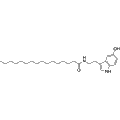
    Stearoyl serotonin is a hybrid compound designed to target the endogenous metabolite systems and is structurally derived from arachidonoyl serotonin. This compound is investigated for its ability to function as a dual antagonist of fatty acid amide hydrolase (FAAH) and the TRPV1 channel, which are critical pathways in the modulation of pain. Preliminary studies suggest that modifications to the arachidonoyl structure, such as the introduction of an 18-carbon stearoyl moiety, may influence TRPV1 channel activity; replacement with saturated fatty acids has demonstrated significant inhibition of capsaicin-induced activation. This positions stearoyl serotonin as a potential candidate for research into pain mechanisms and therapeutic applications.

    5 mg
    $125.00
    10 mg
    $205.00
    All 5 sizes
  • (+/-)-Adomeglivant
    Cat. No.
    A74260

    (+/-)-Adomeglivant ((+/-)-LY2409021)

    Synonyms: (+/-)-LY2409021

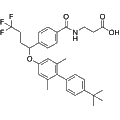
    (+/-)-Adomeglivant is a selective glucagon receptor antagonist that exerts hypoglycemic effects by inhibiting glucagon signaling. This compound is effective in lowering blood glucose levels in both healthy individuals and patients with type 2 diabetes. Its use has been associated with a reduction in fasting and postprandial glucose, alongside a reversible increase in aminotransferases. The potential of (+/-)-Adomeglivant as an inhibitory approach in the management of type 2 diabetes merits further investigation in clinical studies to fully assess its benefits and risks.

    25 mg
    $1,655.00
    50 mg
    $2,115.00
    All 3 sizes
  • (+)-Adomeglivant
    Cat. No.
    A74285

    (+)-Adomeglivant (d-Adomeglivant)

    Synonyms: (+)-LY2409021; d-Adomeglivant

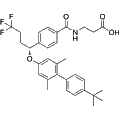
    (+)-Adomeglivant is a selective antagonist of the glycogenotropin receptor, exhibiting significant glucose-lowering activity. Its ability to effectively reduce fasting blood glucose levels makes it a valuable tool for studying hyperglycemia mechanisms in type 2 diabetes. Additionally, the antagonistic properties of (+)-Adomeglivant may complicate assessments of the metabolic effects associated with postprandial hyperglycemia, providing insights into the intricacies of metabolic regulation in diabetic conditions.

    25 mg
    $1,405.00
    50 mg
    $1,790.00
    All 3 sizes
  • Glutamic acid diethyl ester
    Cat. No.
    A74295

    Glutamic acid diethyl ester

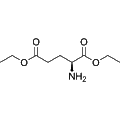
    Glutamic acid diethyl ester acts as a glutamate antagonist and functions as an endogenous metabolite. This compound is utilized in biochemical research to investigate the mechanisms of glutamate signaling. Additionally, it serves as a precursor for the synthesis of various derivatives and exhibits potential industrial applications. Its unique properties position it as a valuable reagent in compound development efforts.

    25 mg
    $1,275.00
    50 mg
    $1,625.00
    All 3 sizes
  • PMX 53 monoacetate
    Cat. No.
    A74497

    PMX 53 monoacetate

    Synonyms: 3D53 monoacetate

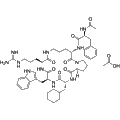
    PMX 53 monoacetate is a potent orally active antagonist of CD88 (C5aR), primarily inhibiting C5a-induced neutrophil myeloperoxidase release and chemotactic activity. It demonstrates an IC50 of 20 nM for myeloperoxidase release and 75 nM for chemotaxis, making it an effective tool for studying neutrophil responses. Additionally, PMX 53 monoacetate acts as an agonist of MrgX2, further broadening its potential applications in research involving inflammatory processes and pain signaling pathways.

    1 mg
    $90.00
    5 mg
    $210.00
    All 7 sizes
  • OT-730
    Cat. No.
    A74539

    OT-730

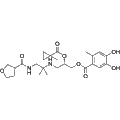
    OT-730 is a selective beta-blocker prodrug that targets endogenous metabolites involved in ocular disease pathways. This compound is primarily utilized in research focused on understanding the mechanisms of ocular disorders and the potential therapeutic interventions therein. Its unique pharmacological profile makes it a valuable tool for investigating the role of beta-adrenergic signaling in eye health and disease.

    1 mg
    $155.00
    5 mg
    $395.00
    All 5 sizes
  • Palmitoyl serotonin
    Cat. No.
    A74631

    Palmitoyl serotonin

    Synonyms: PA-5HT

    Palmitoyl serotonin is a hybrid molecule designed as an antagonist of fatty acid amide hydrolase (FAAH). This compound demonstrates the ability to inhibit L-3,4-dihydroxyphenylalanine-induced abnormal involuntary movements, making it a valuable tool for studying movement disorders. Palmitoyl serotonin holds potential for advancing research in Parkinson's disease and related neurological conditions.

    1 mg
    $50.00
    5 mg
    $125.00
    All 5 sizes

Items 26-41 of 41

Added to your cart

View Cart Checkout

    Loading...