
- Cat. No.
- A19094
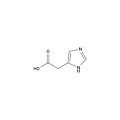
Imidazoleacetic acid
Synonyms: Imidazolyl-4-acetic acid
Imidazoleacetic acid is an endogenous ligand that stimulates imidazole receptors.
In stock
View Details
Search by product name, CAS, target or catalog number. Press Down Arrow to reach product suggestions, Tab to move between links, and Escape to close suggestions.
Endogenous metabolites are small molecules made by the body's own metabolism, such as amino acids and steroids. They are used as metabolomics standards, as enzyme substrates and as tools to probe how metabolic pathways are regulated. L-Citrulline, an intermediate of the urea cycle, is also formed when nitric oxide synthase produces nitric oxide. 17-Hydroxyprogesterone is a steroid intermediate on the route to cortisol. Prostaglandin E1 represents the eicosanoids, a group of lipid mediators derived from fatty acids. Nicotinamide riboside chloride is a precursor of nicotinamide adenine dinucleotide (NAD+), the cofactor used by sirtuins.
Synonyms: Imidazolyl-4-acetic acid
Imidazoleacetic acid is an endogenous ligand that stimulates imidazole receptors.

(-)-(S)-Equol is a high affinity ligand for estrogen receptor β with a Ki of 0.73 nM.
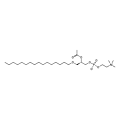
Synonyms: PAF (C16)
C16-PAF (PAF (C16)) is a phospholipid mediator and a potent platelet-activating factor that functions as a ligand for the PAF G-protein-coupled receptor (PAFR). It exhibits anti-apoptotic effects by inhibiting caspase-dependent cell death through PAFR activation. C16-PAF is a strong activator of the MAPK and MEK/ERK signaling pathways and is known to induce increased vascular permeability.
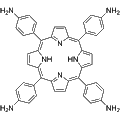
Meso-tetrakis(4-aminophenyl)porphyrin is a porphyrin derivative that serves as a versatile ligand in biochemical research. It exhibits strong interactions with metal ions and has been investigated for its potential applications in photodynamic therapy and as a biosensor for detecting endogenous metabolites. Additionally, its unique structural properties make it a useful tool in studying various biological processes and developing new therapeutic strategies.
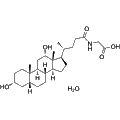
Glycodeoxycholic acid monohydrate is an endogenous metabolite that functions as a nuclear receptor ligand. It plays a significant role in modulating bile acid homeostasis and has implications in metabolic processes. This compound can be utilized in research studies focusing on liver function, metabolism, and signaling pathways related to nuclear receptors.
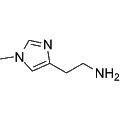
1-Methylhistamine is an endogenous metabolite of histamine, primarily acting as a selective ligand for the histamine H1 receptor. It plays a significant role in various physiological processes, including neurotransmission and immune response modulation. This compound is commonly used in research applications focused on studying histamine-related pathways and the effects of histamine signaling in different biological contexts.
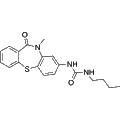
Synonyms: CID 16016685
SR-4995 is a selective ligand for α-β-hydrolase domain-containing 5 (ABHD5), promoting lipolysis through the activation of adipose triglyceride lipase (ATGL). By displacing ABHD5 from its inhibitory interaction with perilipin-1 (PLIN1) and perilipin-5 (PLIN5), SR-4995 enhances lipid mobilization in adipose and muscle tissues. This compound is valuable for research exploring metabolic regulation and the mechanisms of lipolysis beyond PKA-dependent signaling pathways.
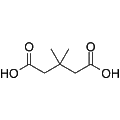
3,3-Dimethylglutaric acid is an endogenous metabolite that plays a role in metabolic pathways associated with branched-chain fatty acids. It is occasionally detected in human urine and serves as a useful ligand for the synthesis of metal complexes. Its applications are relevant in biochemical research focused on metabolism and the exploration of metal-ligand interactions.

Synonyms: Cortisol 21-sulfate sodium
Cortisol sulfate sodium, a metabolite of cortisol, functions as a specific ligand for intracellular transcortin. This compound plays a significant role in the regulation of steroid hormone activity and is utilized in research applications focused on steroid metabolism and endocrine signaling. Its ability to modulate hormone availability makes it valuable for studies on glucocorticoid signaling and related physiological processes.
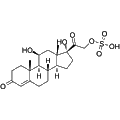
Synonyms: Cortisol 21-sulfate
Cortisol sulfate, also known as Cortisol 21-sulfate, is an endogenous metabolite of cortisol. As a specific ligand for intracellular transcortin, it plays a crucial role in regulating corticosteroid activity within the body. This compound is instrumental in research applications focused on stress response, glucocorticoid signaling, and metabolic pathways related to endocrine function.
Out of stock
All 3 sizes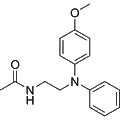
UCM765 is a selective ligand for the MT2-type melatonin receptor, exhibiting hypnotic, analgesic, and anxiolytic activities. Its partial agonist properties make it a valuable compound for pharmacological research. Structural modifications of UCM765 can enhance its water solubility and metabolic stability, potentially increasing its bioavailability. The compound's biological effects have been substantiated in rat models, indicating its promise for further exploration in pharmacological studies.
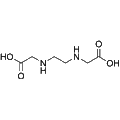
Synonyms: N,N-Ethylenediglycine
Ethylenediaminediacetic acid (EDDA) serves as a key ligand, effectively enhancing the antiproliferative activities of metal complexes. These complexes demonstrate significant antiproliferative effects in the MCF-7 cancer cell line and exhibit the capacity to interact with DNA, as analyzed through circular dichroism (CD) and electron paramagnetic resonance (EPR) spectroscopy. Additionally, EDDA and its metal complexes can induce cell cycle arrest at the G(0)/G(1) phase, highlighting their potential application in cancer research. Structural analysis of EDDA contributes valuable insights into its biological mechanisms and interactions.
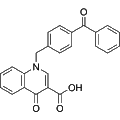
MIPS1455 is a light-activated ligand that targets the M1 muscarinic acetylcholine receptor, exhibiting irreversible binding at the allosteric site. This compound demonstrates significant potential in modulating receptor activity, with applications in researching cognitive deficits and allosteric interactions. MIPS1455 may serve as a valuable molecular tool for further exploration of receptor pharmacology and related therapeutic implications.
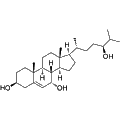
Synonyms: (3β,7α,24S)-Cholest-5-ene-3,7,24-triol
7α,24(S)-Dihydroxycholesterol is an endogenous metabolite that functions as a selective ligand for liver X receptors (LXR), specifically binding to the ligand binding domains of both LXRα and LXRβ. This compound plays a significant role in cholesterol metabolism and homeostasis, making it valuable for research applications in lipid biology and metabolic disorders. Its synthesis involves a series of transformations starting from E-α,β-enone and using Arsonium ylide and J-tert-butyldimethylsilyloxy-bisnor-5-cholenaldehyde.
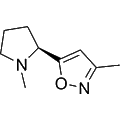
ABT-418 is a selective ligand for neuronal nicotinic acetylcholine receptors, primarily targeting cognitive enhancement. It has been shown to improve spatial memory and reduce spatial discrimination deficits, particularly following ventricular damage. ABT-418 holds potential for research applications in attention deficit disorder and related cognitive impairments.
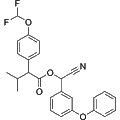
Flucythrinate is a synthetic pyrethroid that exerts its effects primarily through binding to the vitamin D nuclear receptor (VDR), exhibiting a binding affinity score of -11.0 kcal/mol. This compound possesses endocrine suppressive properties and has been suggested as a multi-target ligand capable of interacting with various proteins implicated in breast cancer. Flucythrinate's efficacy in binding site prediction and affinity estimation has been validated through rigorous screening methods, making it a valuable reagent for research in cancer biology and endocrine disruption studies.
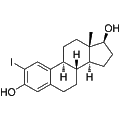
2-Iodoestradiol is a potent ligand for human sex hormone binding globulin (SHBG) with a high binding affinity, demonstrating competition with dihydrotestosterone at the same site on SHBG. Its binding affinity constant at physiological pH and 37 degrees Celsius is 2.4 x 10^9 M^-1, surpassing that of SHBG itself. Additionally, 2-Iodoestradiol can bind to serum albumin, although with reduced affinity. The radioisotope 125I-derivative of this compound is commonly employed in studies investigating the binding dynamics of human SHBG, making it a valuable tool for biological research applications.