AChE

Acetylcholinesterase (AChE) inhibitors block the enzyme that breaks down acetylcholine at cholinergic synapses. By ending acetylcholine signaling within milliseconds, AChE controls transmission in the brain and at the neuromuscular junction. The 1991 crystal structure of AChE from Torpedo californica showed the active site at the base of a deep, narrow gorge. AChE also has non-catalytic roles, which broaden its interest beyond synaptic transmission. Inhibitors here include donepezil hydrochloride and galanthamine hydrobromide, which are reversible inhibitors. The carbamates rivastigmine tartrate and neostigmine bromide, used in studies of cholinergic signaling and neurodegeneration, are also listed.

Items 626-650 of 663

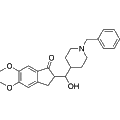
  • Donepezil impurity 22
    Cat. No.
    B10475

    Donepezil impurity 22

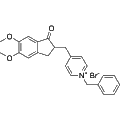
    Donepezil impurity 22 is a known impurity associated with the cholinesterase inhibitor Donepezil. It serves as a valuable reference standard for the analysis and characterization of Donepezil formulations. This reagent is relevant for quality control and method validation in pharmaceutical research, ensuring the integrity and purity of therapeutic compounds.

    Out of stock

    All 3 sizes
  • Donepezil impurity 18
    Cat. No.
    B10720

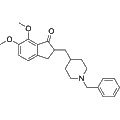
    Donepezil impurity 18

    Donepezil impurity 18 is a chemical impurity associated with Donepezil, a reversible inhibitor of acetylcholinesterase. It serves as a crucial reference standard for assessing the purity and quality of Donepezil formulations in pharmaceutical research. This impurity may also aid in investigations into the stability and degradation pathways of Donepezil, facilitating improved drug development processes.

    Out of stock

    All 3 sizes
  • Donepezil impurity 11
    Cat. No.
    B10721

    Donepezil impurity 11

    Donepezil impurity 11 is a chemical impurity associated with Donepezil, a cholinesterase inhibitor used in the treatment of Alzheimer's disease. This impurity is relevant for quality control and analysis in pharmaceutical research, as it may affect the efficacy and safety profile of the primary compound. The identification and quantification of such impurities are essential for ensuring compliance with regulatory standards and enhancing the reliability of drug formulations.

    Out of stock

    All 3 sizes
  • Rivastigmine impurity 13
    Cat. No.
    B10794

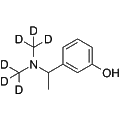
    Rivastigmine impurity 13

    Synonyms: Rivastigmine impurity D

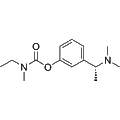
    Rivastigmine impurity 13, also known as Rivastigmine impurity D, is a characterized impurity associated with Rivastigmine, a cholinesterase inhibitor primarily used in the treatment of Alzheimer's disease and other dementias. This impurity may be utilized in quality control and analytical studies to assess the purity and composition of Rivastigmine formulations. Its presence highlights the importance of monitoring drug impurities to ensure safety and efficacy in pharmaceutical products.

    Out of stock

    All 3 sizes
  • Phoxim
    Cat. No.
    B11451

    Phoxim

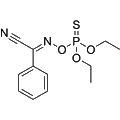
    Phoxim is an organic phosphorus pesticide that primarily targets acetylcholinesterase, leading to the inhibition of cholinergic transmission. It exhibits potent insecticidal and acaricidal activity, making it effective against a variety of agricultural pests. Phoxim is commonly employed in agricultural research to explore pest control mechanisms and the effects of chemical exposure on agricultural ecosystems.

    Out of stock

    All 3 sizes
  • Fenthion-d6
    Cat. No.
    B11467

    Fenthion-d6

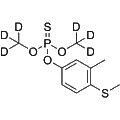
    Fenthion-d6 is a deuterated form of the organophosphorus insecticide Fenthion. This compound primarily targets the enzyme acetylcholinesterase, leading to the inhibition of cholinergic neurotransmission. Fenthion-d6 is valuable in chemical research for studying insecticide metabolism and environmental analysis. It is especially useful for tracing metabolic pathways and understanding pesticide behavior in various biological systems.

    1 mg
    $180.00
    5 mg
    $560.00
    All 3 sizes
  • Propetamphos
    Cat. No.
    B11475

    Propetamphos

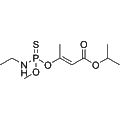
    Propetamphos is an organophosphorus insecticide that primarily targets acetylcholinesterase, disrupting normal neurotransmission in insects. This compound exhibits significant cytotoxic effects and induces oxidative stress, contributing to its insecticidal activity. Propetamphos is commonly used in research studies focused on insect physiology, toxicology, and the development of pest control strategies.

    50 mg
    $140.00
    All 1 sizes
  • Isochlorthion
    Cat. No.
    B11539

    Isochlorthion

    Synonyms: OMS 214; Dicapthon; ENT 17035

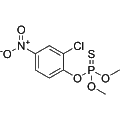
    Isochlorothion is an organic phosphorus pesticide that acts primarily through the inhibition of acetylcholinesterase, leading to increased levels of acetylcholine in synaptic clefts. This mechanism results in heightened neurotoxicity, making it effective in agricultural applications for pest control. Isochlorothion is commonly utilized in research to study the effects of organophosphates on environmental systems and human health.

    25 mg
    $1,275.00
    50 mg
    $1,625.00
    All 3 sizes
  • Aspon
    Cat. No.
    B11575

    Aspon

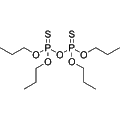
    Aspon is an organophosphorus insecticide that primarily targets the nervous systems of insects by inhibiting acetylcholinesterase activity. It demonstrates significant biological activity in pest control applications and can also serve as a phosphorus source for various bacteria, promoting microbial growth and metabolism. This dual functionality makes Aspon valuable for both entomological studies and microbiological research.

    Out of stock

    All 3 sizes
  • Formothion
    Cat. No.
    B11578

    Formothion

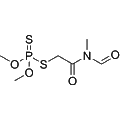
    Formothion is an organophosphate insecticide that primarily targets the nervous system of insects, inhibiting acetylcholinesterase activity. This compound exhibits strong insecticidal properties, making it an effective agent in agricultural pest control. Additionally, Formothion's persistence in the environment following biomass burning provides a valuable opportunity to study pesticide dynamics and their ecological impact.

    Out of stock

    All 3 sizes
  • Chlorethoxyfos
    Cat. No.
    B11593

    Chlorethoxyfos

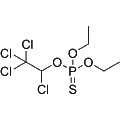
    Chlorethoxyfos is an organophosphate pesticide that acts primarily by inhibiting acetylcholinesterase, leading to an accumulation of acetylcholine at synaptic junctions. Its biological activity makes it effective in agricultural applications for pest control. Chlorethoxyfos undergoes oxidative transformation to form its more active oxon derivative in chlorinated laboratory water, which enhances its efficacy in targeted pest management strategies.

    Out of stock

    All 3 sizes
  • Tebupirimfos
    Cat. No.
    B11596

    Tebupirimfos

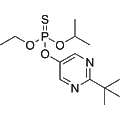
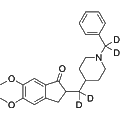
    Tebupirimfos is a potent insecticide that acts as an acetylcholinesterase inhibitor, disrupting neurotransmission in insects. Its primary mechanism involves the irreversible inhibition of the enzyme, leading to paralysis and death in targeted pest species. Tebupirimfos is commonly utilized in agricultural applications to manage various insect populations effectively, ensuring crop protection and yield stability.

    Out of stock

    All 3 sizes
  • Fensulfothion oxon
    Cat. No.
    B11603

    Fensulfothion oxon

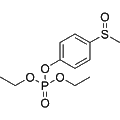
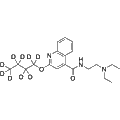
    Fensulfothion oxon is a pesticide characterized by its sulfoxide group, which acts as a potent inhibitor of acetylcholinesterase. This inhibition disrupts the normal breakdown of acetylcholine, leading to increased neurotransmitter levels and subsequent toxic effects on target pests. Its primary applications include agricultural pest control and research into the mechanisms of pesticide action and environmental impact.

    50 mg
    $510.00
    All 1 sizes
  • Demeton-O-methyl
    Cat. No.
    B11613

    Demeton-O-methyl

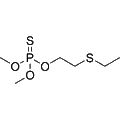
    Demeton-O-methyl is an organophosphate insecticide that functions by inhibiting acetylcholinesterase, leading to the accumulation of acetylcholine at synaptic junctions, ultimately causing paralysis and death in targeted insect pests. This compound is widely utilized in agricultural research to study pest control strategies and the effects of organophosphate exposure on non-target organisms. Its effectiveness and mode of action make it a valuable reagent for entomological studies and pesticide development.

    5 mg
    $55.00
    10 mg
    $90.00
    All 4 sizes
  • Desethyl(methyl)carbamic acid rivastigmine-d6
    Cat. No.
    B12324

    Desethyl(methyl)carbamic acid rivastigmine-d6

    Desethyl(methyl)carbamic acid rivastigmine-d6 is a deuterium-labeled analogue of Desethyl(methyl)carbamic acid rivastigmine, targeting acetylcholinesterase. This stable isotope is utilized in pharmacokinetic studies and metabolic tracing, providing insights into the mechanism of action and distribution of rivastigmine in biological systems. Its incorporation in experimental designs enhances the understanding of cholinergic therapies in neurodegenerative diseases.

    Out of stock

    All 3 sizes
  • Aldicarb sulfoxide-d3
    Cat. No.
    B13564

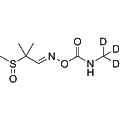
    Aldicarb sulfoxide-d3

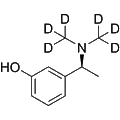
    Aldicarb sulfoxide-d3 is a deuterium-labeled metabolite of Aldicarb that serves as a valuable tool in chemical research. This compound primarily targets glutathione-linked enzymes, demonstrating significant inhibitory effects on cholinesterase (ChE) and carboxylesterase (CaE) pathways, with IC50 values of 10 μM in zebrafish models. Its utility extends to studies on metabolic pathways and enzyme interactions, contributing to a deeper understanding of neuroactive compounds and their biological implications.

    1 mg
    $575.00
    All 1 sizes
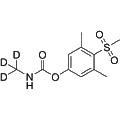
  • Methiocarb sulfone-d3
    Cat. No.
    B13612

    Methiocarb sulfone-d3

    Methiocarb sulfone-d3 is a stable isotope-labeled variant of Methiocarb sulfone, which serves as an effective inhibitor of acetylcholinesterase. This compound is utilized in biological research for pharmacokinetic studies, providing insights into the metabolism and behavior of mothiocarb sulfone in various biological systems. Its deuterated form enhances the precision of quantitative analysis in mass spectrometry.

    Out of stock

    All 3 sizes
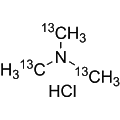
  • Trimethylammonium chloride-13C3
    Cat. No.
    B13987

    Trimethylammonium chloride-13C3

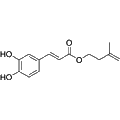
    Trimethylammonium chloride-13C3 is a stable isotope-labeled compound that serves as a valuable tool in metabolic studies. As an endogenous metabolite, it inhibits deacetylation processes and acts as a non-competitive inhibitor of acetylcholinesterase. This reagent is essential for research applications involving metabolic pathway analysis and enzyme inhibition assays.

    1 mg
    $45.00
    5 mg
    $110.00
    All 2 sizes
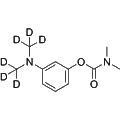
  • Nor neostigmine-d6
    Cat. No.
    B14314

    Nor neostigmine-d6

    Nor neostigmine-d6 is a stable isotope-labeled analog of Nor neostigmine, specifically incorporating deuterium atoms. This compound is primarily used as a tracer in pharmacokinetic studies and metabolic pathway analysis involving cholinesterase inhibitors. It facilitates the investigation of drug interactions and the mechanistic understanding of its biological effects in both in vitro and in vivo settings.

    Out of stock

    All 3 sizes
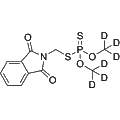
  • Phosmet-d6
    Cat. No.
    B14427

    Phosmet-d6

    Phosmet-d6 is a deuterated stable isotope of Phosmet, a widely used organophosphate insecticide. Its primary mechanism is the inhibition of acetylcholinesterase, leading to accumulation of acetylcholine and disruption of neurological function in pests. Phosmet-d6 is utilized in environmental and toxicological studies, providing valuable insights into residue analysis and metabolic pathways of pesticides in various biological systems.

    1 mg
    $45.00
    5 mg
    $225.00
    All 2 sizes
  • Donepezil-d4
    Cat. No.
    B15568

    Donepezil-d4

    Synonyms: E2020-d4 free base

    Donepezil-d4 is a deuterium-labeled analog of Donepezil, a potent and selective acetylcholinesterase (AChE) inhibitor that exhibits IC50 values of 8.12 nM for bovine AChE and 11.6 nM for human AChE. This stable isotope is primarily utilized in pharmacokinetic studies and metabolic research to trace the compound's bioavailability and metabolic pathways in biological systems. Donepezil-d4 serves as a valuable tool for elucidating the pharmacological effects of AChE inhibition in various neurological studies.

    Out of stock

    All 3 sizes
  • Dibucaine-d9
    Cat. No.
    B15617

    Dibucaine-d9

    Synonyms: Cinchocaine-d9

    Dibucaine-d9 is a deuterium-labeled derivative of dibucaine, a potent sodium channel inhibitor. It serves as a selective inhibitor of pseudocholinesterase (SChE), making it valuable for studying cholinergic signaling. This isotope-labeled compound is particularly useful in pharmacokinetic studies and metabolic profiling, providing insights into drug metabolism and safety evaluation in chemical research.

    Out of stock

    All 3 sizes
  • Rivastigmine metabolite-d6
    Cat. No.
    B15695

    Rivastigmine metabolite-d6

    Synonyms: NAP 226-90-d6

    Rivastigmine metabolite-d6 is a stable isotope-labeled analog of Rivastigmine, designed for use in pharmacokinetic studies and metabolic research. This compound retains the pharmacological profile of Rivastigmine while enabling precise tracking and quantification in biological systems. It is particularly useful in studies assessing drug metabolism and pharmacodynamics, providing valuable insights into the metabolic pathways of cholinesterase inhibitors.

    1 mg
    $300.00
    10 mg
    $2,285.00
    All 2 sizes
  • 3-Methyl-3-butenyl (E)-Caffeate
    Cat. No.
    B19042

    3-Methyl-3-butenyl (E)-Caffeate

    3-Methyl-3-butenyl (E)-Caffeate is a caffeic acid ester compound known for its antioxidant and anticholinesterase activities. This compound, derived from Algerian propolis, can be utilized in research aimed at understanding its potential neuroprotective properties and its role in combating oxidative stress. Its diverse biological activities make it a valuable reagent for studies focused on natural product chemistry and pharmacological applications.

    Out of stock

    All 3 sizes
  • Buphanidrine
    Cat. No.
    B19623

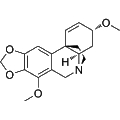
    Buphanidrine

    Buphanidrine is an acetylcholinesterase (AChE) inhibitor with an IC50 of 52.8 μM. This compound, isolated from Brunsvigia josephinae, demonstrates significant potential in the study of neurodegenerative diseases, particularly Alzheimer's disease. Its ability to modulate cholinergic signaling makes it a valuable tool for understanding the pathophysiology of cognitive decline and exploring therapeutic strategies.

    Out of stock

    All 3 sizes

Items 626-650 of 663

Added to your cart

View Cart Checkout

    Loading...