mAChR

Muscarinic acetylcholine receptors (mAChRs) are a class of G protein-coupled receptors (GPCRs) found in the central and peripheral nervous systems, as well as in various other tissues and organs throughout the body. These receptors are named after muscarine, a natural alkaloid compound found in certain mushrooms, which was one of the first substances discovered to activate them.

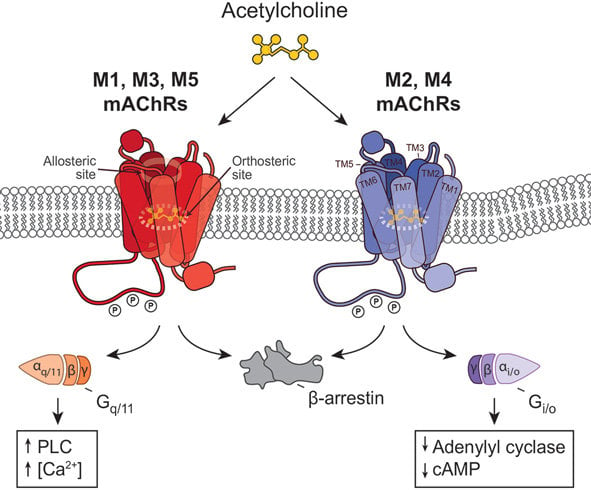
There are five subtypes of muscarinic receptors, designated as M1 through M5, each with distinct tissue distribution and functions. Here's an overview of their roles:

  • M1 Receptors: Predominantly found in the central nervous system, particularly in regions associated with cognitive functions. Activation of M1 receptors is linked to memory and learning.
  • M2 Receptors: Found in the heart, where they play a crucial role in regulating heart rate and cardiac contractility. Activation of M2 receptors slows heart rate and reduces the force of cardiac contractions.
  • M3 Receptors: Present in smooth muscle tissues, such as those in the gastrointestinal tract, urinary bladder, and bronchial airways. Activation of M3 receptors leads to smooth muscle contraction.
  • M4 Receptors: Distributed mainly in the central nervous system and involved in modulating neurotransmitter release. Their role in cognition and neuropsychiatric disorders is of interest.
  • M5 Receptors: Located in certain areas of the brain and implicated in the modulation of dopamine release. Research suggests they may be relevant to Parkinson's disease and addiction.

Muscarinic receptors are activated by the neurotransmitter acetylcholine and play a vital role in regulating a wide range of physiological processes, including heart rate, smooth muscle contraction, glandular secretion, and neurotransmitter release. They are targets for various drugs, including anticholinergic agents, which block their activity, and drugs used to treat conditions like bradycardia and neurodegenerative disorders.

Understanding the functions and regulation of muscarinic acetylcholine receptors is essential for developing therapies that modulate their activity and for advancing our knowledge of how they contribute to various physiological and pathological processes in the body.

Items 351-375 of 399

  • AQ-RA 721
    Cat. No.
    A61514

    AQ-RA 721

    AQ-RA 721 is a selective muscarinic acetylcholine receptor (mAChR) antagonist that exhibits a differential affinity for the M2 and M4 receptor subtypes. This compound is valuable for studying muscarinic receptor diversity and function, facilitating research into receptor pharmacology and potential therapeutic applications. It can be employed in investigations into central nervous system activities and cardiovascular regulation, contributing to a better understanding of muscarinic signaling pathways.

    25 mg
    $1,275.00
    50 mg
    $1,625.00
    All 3 sizes
  • Sabcomeline
    Cat. No.
    A61515

    Sabcomeline

    Synonyms: SB-202026; Memric

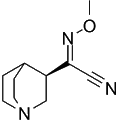
    Sabcomeline is a selective partial agonist of the muscarinic M1 receptor, known for its ability to enhance cognitive function. This compound holds promise for research applications related to Alzheimer's disease, where modulation of the M1 receptor may assist in ameliorating cognitive deficits. Its functional selectivity makes Sabcomeline a valuable tool for investigating the role of muscarinic receptors in neurodegenerative disorders.

    25 mg
    $3,085.00
    50 mg
    $4,805.00
    All 3 sizes
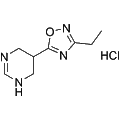
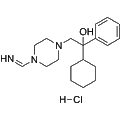
  • trans-Cevimeline hydrochloride
    Cat. No.
    A61516

    trans-Cevimeline hydrochloride

    Synonyms: AF102A hydrochloride

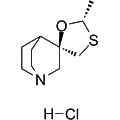
    Trans-Cevimeline hydrochloride is a selective M1 cholinergic agonist, known for its potential in modulating cholinergic neurotransmission. This compound exhibits significant biological activity relevant to neurodegenerative conditions, particularly Alzheimer's disease. Researchers can utilize trans-Cevimeline hydrochloride to investigate its effects on cognitive function and cholinergic signaling pathways.

    1 mg
    $475.00
    10 mg
    $3,870.00
    All 2 sizes
  • AE9C90CB
    Cat. No.
    A61517

    AE9C90CB

    AE9C90CB is a selective antagonist of the M3 muscarinic receptor, exhibiting a high affinity with a pKi value of 9.90. This compound is 20-fold more selective for M3 compared to the M2 muscarinic receptor, making it a valuable tool for studying M3 receptor-mediated signaling pathways. AE9C90CB is suitable for research applications investigating the role of M3 muscarinic receptors in various physiological and pathological processes.

    Out of stock

    All 3 sizes
  • CDD0102 hydrochloride
    Cat. No.
    A61518

    CDD0102 hydrochloride

    CDD0102 Hydrochloride is a potent agonist of the M1 muscarinic acetylcholine receptor (mAChR). This compound exhibits significant biological activity in modulating cholinergic signaling, making it valuable for research into neurological disorders and cognitive function. Its application extends to studying M1 receptor-related pathways and developing potential treatments for conditions such as Alzheimer's disease and schizophrenia.

    1 mg
    $560.00
    5 mg
    $1,475.00
    All 2 sizes
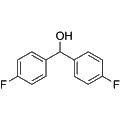
  • 4,4-Difluorobenzhydrol
    Cat. No.
    A61519

    4,4-Difluorobenzhydrol

    Synonyms: Bis(4-fluorophenyl)methanol

    4,4-Difluorobenzhydrol serves as a precursor for a muscarinic acetylcholine receptor (mAChR) antagonist, with potential applications in neuroscience research. Its derivative, 4,4-Difluorobenzhydrol Carbamate, can selectively target the M1 receptor subtype. This specificity makes 4,4-Difluorobenzhydrol an important compound for studying the physiological roles of mAChRs and developing therapeutics for related disorders.

    1 g
    $20.00
    25 g
    $25.00
    All 5 sizes
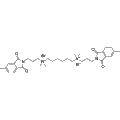
  • Dimethyl-W84 dibromide
    Cat. No.
    A61521

    Dimethyl-W84 dibromide

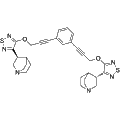
    Dimethyl-W84 dibromide is a modulator of M2 muscarinic acetylcholine receptors. This compound exhibits significant regulatory activity on mAChRs, making it a valuable tool in the study of nervous system functions and disorders. Its application in research can help elucidate the role of acetylcholine signaling in various neurological conditions.

    1 mg
    $100.00
    5 mg
    $255.00
    All 2 sizes
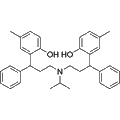
  • Tolterodine dimer
    Cat. No.
    A61523

    Tolterodine dimer

    Tolterodine dimer acts as a muscarinic acetylcholine receptor (mAChR) antagonist. It serves as an impurity of Tolterodine, a compound known for its potent activity against mAChRs. This reagent is primarily utilized in research applications aimed at investigating cholinergic signaling pathways and evaluating potential therapeutic strategies for bladder control and related disorders.

    0.5 mg
    $25.00
    1 mg
    $45.00
    All 2 sizes
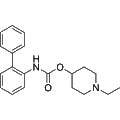
  • Revatropate
    Cat. No.
    A61524

    Revatropate

    Synonyms: UK-112166

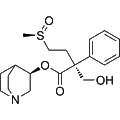
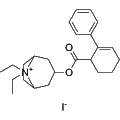
    Revatropate is a potent muscarinic antagonist primarily targeting M1 and M3 receptors with significantly greater inhibitory effects compared to the M2 subtype. This compound is valuable in the investigation of urge urinary incontinence and functional bowel disorders, facilitating research into the modulation of cholinergic signaling in these conditions.

    25 mg
    $1,275.00
    50 mg
    $1,625.00
    All 3 sizes
  • NNC 11-1607
    Cat. No.
    A61525

    NNC 11-1607

    NNC 11-1607 is a selective agonist for the M1 and M4 subtypes of muscarinic acetylcholine receptors (mAChR). It effectively inhibits Forskolin-stimulated cAMP accumulation in human M2 and M4 mAChR-expressing Chinese hamster ovary cells. This compound shows potential for investigating central nervous system disorders, including Alzheimer’s disease and schizophrenia, making it a valuable tool for related research applications.

    Out of stock

    All 3 sizes
  • Desiodomethyl 4-DAMP
    Cat. No.
    A61526

    Desiodomethyl 4-DAMP

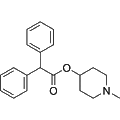
    Desiodomethyl 4-DAMP is a selective antagonist of muscarinic receptors, inhibiting acetylcholine-mediated signaling. This compound is utilized in various pharmacological studies to investigate the role of muscarinic receptors in physiological processes and disease models. Its application extends to research involving neurotransmission, cognitive function, and potential therapeutic interventions for conditions linked to cholinergic dysregulation.

    1 mg
    $30.00
    All 1 sizes
  • Atropine oxide hydrochloride
    Cat. No.
    A61529

    Atropine oxide hydrochloride

    Synonyms: Atropine oxidation hydrochloride

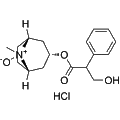
    Atropine oxide hydrochloride is a competitive antagonist of muscarinic acetylcholine receptors, including M1, M2, M3, M4, and M5. It demonstrates key biological activity in antagonizing acetylcholine's effects, making it valuable in research focused on neurotransmission and receptor signaling. This reagent is particularly significant for studies involving the therapeutic applications in specific nerve agent and pesticide poisonings.

    5 mg
    $70.00
    10 mg
    $110.00
    All 5 sizes
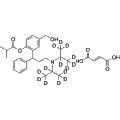
  • rac-Fesoterodine-d14 fumarate
    Cat. No.
    A61532

    rac-Fesoterodine-d14 fumarate

    Rac-Fesoterodine-d14 fumarate is a stable isotope-labeled version of the racemic muscarinic receptor antagonist Fesoterodine. It exhibits competitive inhibition across multiple mAChR subtypes, with pKivalues of 8.0, 7.7, 7.4, 7.3, and 7.5 for M1, M2, M3, M4, and M5 receptors, respectively. This compound is primarily utilized in research applications focusing on the pharmacological characterization and monitoring of overactive bladder treatments.

    Out of stock

    All 3 sizes
  • DAC 5945
    Cat. No.
    A61533

    DAC 5945

    DAC 5945 is a potent muscarinic antagonist primarily targeting M1 and M2 receptors, exhibiting pKi values of 8.3 and 7.52, respectively. Its selectivity for the airways over cardiac tissue makes it a valuable compound for research related to respiratory disorders. DAC 5945 can be employed in investigations of airway smooth muscle modulation and in studies aimed at understanding the role of muscarinic receptors in various physiological and pathological processes.

    25 mg
    $1,275.00
    50 mg
    $1,625.00
    All 3 sizes
  • Revefenacin impurity 4
    Cat. No.
    A61534

    Revefenacin impurity 4

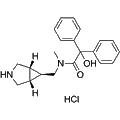
    Revefenacin impurity 4 is an intermediate compound associated with Revefenacin, targeting the human M3 muscarinic acetylcholine receptor. This impurity demonstrates significant binding affinity with a Ki value of 55 nM, highlighting its potential as a pharmacological agent. It is useful for research applications involving muscarinic receptor modulation and the study of cholinergic signaling pathways.

    Out of stock

    All 3 sizes
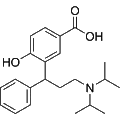
  • (Rac)-5-Carboxy tolterodine
    Cat. No.
    A61537

    (Rac)-5-Carboxy tolterodine

    (Rac)-5-Carboxy tolterodine is an inactive metabolite of the muscarinic acetylcholine receptor antagonist Tolterodine. It serves as a valuable control in studies involving muscarinic receptors, particularly in the context of acetylcholine modulation. This compound is useful for researchers investigating the pharmacokinetics and metabolic pathways of Tolterodine and related drugs.

    1 mg
    $200.00
    5 mg
    $615.00
    All 3 sizes
  • LG50643
    Cat. No.
    A61540

    LG50643

    LG50643 is a selective antagonist of the M3 muscarinic receptor, exhibiting a high binding affinity with a pKi of 8.64. This compound plays a significant role in research related to neuropharmacology and the modulation of cholinergic signaling pathways. Its ability to inhibit M3 receptor activity makes it valuable for studying various physiological processes and the potential therapeutic effects related to muscarinic receptor dysfunction.

    25 mg
    $1,780.00
    50 mg
    $2,280.00
    All 3 sizes
  • 5-Hydroxymethyl tolterodine formate
    Cat. No.
    A61541

    5-Hydroxymethyl tolterodine formate

    Synonyms: PNU-200577 formic

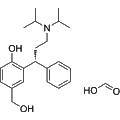
    5-Hydroxymethyl tolterodine formate is a potent antagonist of muscarinic acetylcholine receptors (mAChR). This active metabolite, derived from tolterodine and fesoterodine through the action of CYP2D6 and plasma esterases respectively, has significant implications in the study of urinary disorders. Researchers can utilize 5-Hydroxymethyl tolterodine formate in pharmacological investigations of cholinergic signaling and its effects on smooth muscle activity, contributing to the understanding of treatment options for overactive bladder and related conditions.

    1 mg
    $550.00
    All 1 sizes
  • Alvameline maleate
    Cat. No.
    A61542

    Alvameline maleate

    Synonyms: Lu 25-109 maleate

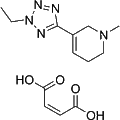
    Alvameline maleate is a muscarinic acetylcholine receptor (mAChR) antagonist with selective activity at the M2 and M3 subtypes, while acting as a partial agonist for the M1 subtype. This compound has demonstrated the ability to competitively inhibit contractions in human detrusor muscle induced by ammonium chloride and electrical field stimulation, highlighting its potential for applications in bladder function regulation. Furthermore, alvameline maleate has shown promise in enhancing cognitive function following traumatic brain injury in rodent models, making it a valuable tool for research in both urology and neuropharmacology.

    25 mg
    $2,410.00
    50 mg
    $3,765.00
    All 3 sizes
  • Temiverine hydrochloride
    Cat. No.
    A61543

    Temiverine hydrochloride

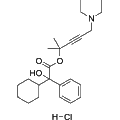
    Temiverine hydrochloride is a mAChR antagonist exhibiting anticholinergic activity. This compound is also a versatile click chemistry reagent, featuring an alkyne group that enables the copper-catalyzed azide-alkyne cycloaddition (CuAAC) with azide-containing molecules. Its applications extend to chemical biology, facilitating the development of novel therapeutics and biochemical probes.

    1 mg
    $140.00
    5 mg
    $355.00
    All 6 sizes
  • Ambutonium bromide
    Cat. No.
    A61544

    Ambutonium bromide

    Synonyms: BL700

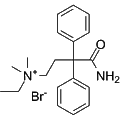
    Ambutonium bromide is a selective antagonist of the muscarinic acetylcholine receptors (mAChRs). By inhibiting the action of acetylcholine, it plays a significant role in modulating cholinergic signaling pathways. This compound is primarily utilized in research applications aimed at studying the effects of mAChR inhibition in various physiological and pathological contexts.

    10 mg
    $415.00
    25 mg
    $1,275.00
    All 4 sizes
  • ENS-163 phosphate
    Cat. No.
    A61545

    ENS-163 phosphate

    Synonyms: ENS 213-163; Sandoz ENS 163 phosphate; Thiopilocarpine phosphate

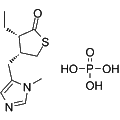
    ENS-163 phosphate is a selective muscarinic acetylcholine receptor (mAChR) M1 agonist. It exhibits significant biological activity by modulating M1 receptor signaling pathways, which are implicated in cognitive processes. This compound is valuable for research applications related to neuropsychological disorders and the exploration of potential therapeutic targets in Alzheimer's disease and other cognitive impairments.

    25 mg
    $1,275.00
    50 mg
    $1,625.00
    All 3 sizes
  • Rispenzepine
    Cat. No.
    A61546

    Rispenzepine

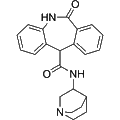
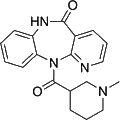
    Rispenzepine is an antimuscarinic compound that selectively antagonizes M1 and M3 muscarinic acetylcholine receptors (mAChRs). This compound exhibits significant biological activity in modulating cholinergic signaling pathways, making it valuable for research on neurological disorders and other conditions influenced by mAChR activity. Its specific receptor selectivity positions Rispenzepine as a useful tool in studies focused on receptor function and the development of therapeutic interventions.

    25 mg
    $1,275.00
    50 mg
    $1,625.00
    All 3 sizes
  • Muscarine tosylate
    Cat. No.
    A61547

    Muscarine tosylate

    Synonyms: (+)-Muscarine tosylate

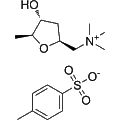
    Muscarine tosylate is a potent agonist of the muscarinic acetylcholine receptors (mAChRs). This compound selectively stimulates the parasympathetic nervous system, leading to various physiological effects. Muscarine tosylate is widely utilized in research applications focusing on neuropharmacology and the modulation of cholinergic signaling pathways.

    Out of stock

    All 3 sizes
  • N-Desethyloxybutynin hydrochloride
    Cat. No.
    A61553

    N-Desethyloxybutynin hydrochloride

    N-Desethyloxybutynin hydrochloride is an active metabolite of Oxybutynin, primarily targeting muscarinic acetylcholine receptors (mAChRs). This compound demonstrates significant binding affinity in isolated human bladder and parotid gland tissues, with pKi values of 8.2 and 8.7, respectively. It is useful in research exploring bladder function, salivary secretion, and the pharmacological effects of anticholinergic agents.

    1 mg
    $160.00
    5 mg
    $720.00
    All 2 sizes

Items 351-375 of 399

Added to your cart

View Cart Checkout

    Loading...