Chelators & Bifunctional Chelators

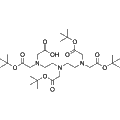
Chelators and bifunctional chelators bind metal ions through several donor atoms of one molecule. The coordinating groups hold the ion in a ring structure, which lowers its free concentration and changes its redox behavior and availability. Calcium-selective chelators such as BAPTA buffer intracellular calcium in cell biology and electrophysiology experiments. Iron chelators form the largest group here and include HBED, deferitazole, VK-28 and CN128 hydrochloride, used in studies of iron metabolism and oxidative stress. Penicillamine and succimer bind copper, lead and other heavy metals through thiol and amine donors. Bifunctional chelators add a reactive group for coupling to peptides or proteins, as in DTPA-tetra (t-Bu ester), a protected form of diethylenetriaminepentaacetic acid (DTPA).

Items 51-75 of 155

  • Maleimide-DTPA
    Cat. No.
    A41685

    Maleimide-DTPA

    Synonyms: MDTPA

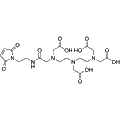
    Maleimide-DTPA is a bifunctional chelator that enables the conjugation of peptides with radionuclides for targeted imaging and therapeutic applications. The maleimide group allows for selective attachment to thiol-containing biomolecules, facilitating the stable chelation of indium-111 (111In). This compound demonstrates high stability when complexed with peptides in biological environments, making it a valuable tool for medical imaging and development of radionuclide conjugates. Its utility in peptide labeling enhances research in nuclear medicine and targeted radiotherapy.

    Out of stock

    All 3 sizes
  • NH2-NODAGA TFA
    Cat. No.
    A41686

    NH2-NODAGA TFA

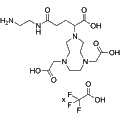
    NH2-NODAGA TFA is a bifunctional chelator designed for the coordination of radionuclides, facilitating the development of radionuclide conjugates (RDCs). It can be reacted with diethyl squarate in a 0.5M phosphate buffer at room temperature, yielding NODAGA.SA, which effectively targets the L-lysine urea-L-glutamate (KuE) moiety associated with prostate-specific membrane antigen (PSMA). The complex NODAGA.SA.KuE demonstrates the ability to bind [68]Ga, making it valuable for positron emission tomography (PET) imaging in research involving NMRInu/nu nude mice with LNCaP tumors.

    5 mg
    $150.00
    10 mg
    $250.00
    All 5 sizes
  • DTPA-tetra(tBu)ester
    Cat. No.
    A41692

    DTPA-tetra(tBu)ester

    DTPA-tetra(tBu)ester is a bifunctional chelator that effectively forms stable complexes with radionuclides. This compound is utilized in various applications, including targeted medical imaging and therapeutic strategies, due to its ability to selectively bind biomolecules. Its properties make it valuable for research in the fields of radiopharmaceutical development and molecular imaging.

    5 mg
    $55.00
    10 mg
    $90.00
    All 5 sizes
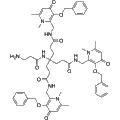
  • THP(Bz)3-NH2
    Cat. No.
    A41696

    THP(Bz)3-NH2

    THP(Bz)3-NH2 is a bifunctional chelator that exhibits the capability to form stable complexes with radionuclides. This compound is designed for applications in targeted medical imaging and therapeutic modalities, allowing for specific interaction with biomolecules. Its effective binding properties make it a valuable tool in the development of radionuclide conjugates for research in radiochemistry and molecular imaging.

    Out of stock

    All 3 sizes
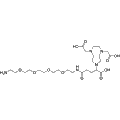
  • NH2-PEG4-NODA-GA
    Cat. No.
    A41698

    NH2-PEG4-NODA-GA

    NH2-PEG4-NODA-GA is a bifunctional chelator that features the NODA moiety, enabling effective binding to various radionuclides. This compound is instrumental in the development of radionuclide drug conjugates (RDCs), which can selectively target specific biomolecules for applications in medical imaging and targeted therapy. Its design facilitates enhanced stability and functionality, making it a valuable tool in radiopharmaceutical research.

    Out of stock

    All 3 sizes
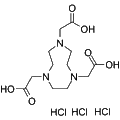
  • NOTA trihydrochloride
    Cat. No.
    A41701

    NOTA trihydrochloride

    NOTA trihydrochloride is a bifunctional chelator (BFC) that serves as a macrocyclic derivative of NOTA designed for tumor pre-targeting applications. This compound facilitates the conjugation of peptides and radionuclides, making it a valuable tool in cancer research and diagnostic imaging. Its ability to form stable complexes enhances its utility in various bioconjugation strategies, particularly in the development of targeted therapies.

    Out of stock

    All 3 sizes
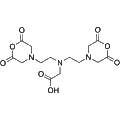
  • DTPA anhydride
    Cat. No.
    A41706

    DTPA anhydride

    DTPA anhydride is a bifunctional chelator that effectively reacts with amino groups, particularly lysine residues, in proteins to form stable amide bonds. This compound also facilitates the binding of radionuclides for the synthesis of radionuclide-labeled drug conjugates (RDCs). RDCs are designed for specific targeting of biomolecules, making them valuable tools in medical imaging and therapeutic applications.

    1 g
    $20.00
    5 g
    $40.00
    All 6 sizes
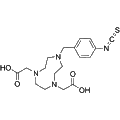
  • NCS-MP-NODA
    Cat. No.
    A41708

    NCS-MP-NODA

    Synonyms: NODA-Bz-SCN

    NCS-MP-NODA (NODA-Bz-SCN) is a bifunctional chelator designed to specifically bind to the labeled peptide DK222, targeting PD-L1 with high affinity. This reagent facilitates the synthesis of fluorinated radioactive analogs, such as [18/19F]DK222, using the aluminum fluoride method. [18F]DK222 enables in vivo quantification of PD-L1 expression through PET imaging in various xenograft cancer models, making it a valuable tool for cancer research and immunotherapy studies.

    Out of stock

    All 3 sizes
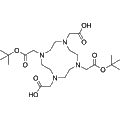
  • DOTA-bis(tert-butyl)ester
    Cat. No.
    A41709

    DOTA-bis(tert-butyl)ester

    DOTA-bis(tert-butyl)ester serves as a bifunctional chelator that facilitates the binding of radionuclides, making it essential for the preparation of radionuclide conjugates (RDCs). It can be conjugated with various salts to yield different metal chelators, such as DOTA-MN2, which can be radiolabeled with [67]Ga-citrate. In biological studies, [(67)Ga-DOTA-MN2] demonstrates stability in phosphate buffer solution and mouse plasma over a 24-hour period, exhibiting high tumor uptake and rapid plasma clearance in NFSa tumor models. This compound is a valuable tool for SPECT and PET imaging applications.

    100 mg
    $140.00
    250 mg
    $225.00
    All 3 sizes
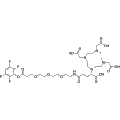
  • Guraxetan-NH-PEG3-TFP ester
    Cat. No.
    A41710

    Guraxetan-NH-PEG3-TFP ester

    Guraxetan-NH-PEG3-TFP ester is a chelating agent-linker conjugate utilized in the synthesis of radiopharmaceuticals. This compound facilitates the attachment of metal ions for imaging applications, promoting targeted delivery and enhancing the specificity of tracers in molecular imaging studies. Its unique structure allows for effective conjugation to biomolecules, making it a valuable tool in the development of novel therapeutic and diagnostic agents.

    Out of stock

    All 3 sizes
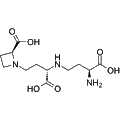
  • Nicotianamine
    Cat. No.
    A42410

    Nicotianamine

    Nicotianamine is an iron-chelating agent that plays a crucial role in metal nutrition and homeostasis in flowering plants. It serves as a key biosynthetic precursor for phytosiderophores, facilitating iron transport within the plant. Additionally, nicotianamine exhibits angiotensin-converting enzyme (ACE) inhibitory activity, with IC50 values of 76 nM and 59 nM for recombinant human ACE2 and ACE, respectively. This compound is valuable for research investigating iron metabolism and the physiological effects of metal ions in plants.

    0.5 mg
    $415.00
    1 mg
    $670.00
    All 3 sizes
  • Quin-2AM
    Cat. No.
    A43724

    Quin-2AM

    Synonyms: Quin-2 acetoxymethyl ester

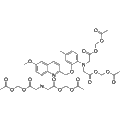
    Quin-2AM is a fluorescent calcium chelator designed to detect intracellular calcium ions with high affinity and specificity. This compound exhibits excellent sensitivity and low cytotoxicity, making it suitable for live-cell imaging. Upon entering the cell through the enhanced acetylmethyl ester form, Quin-2AM is cleaved by intracellular esterases, allowing it to effectively bind calcium ions and emit strong fluorescence, thereby facilitating quantitative studies in calcium signaling and related biological processes.

    1 mg
    $415.00
    All 1 sizes
  • 5,5'-Dimethyl BAPTA tetrapotassium
    Cat. No.
    A43839

    5,5'-Dimethyl BAPTA tetrapotassium

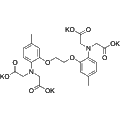
    5,5'-Dimethyl BAPTA tetrapotassium is a water-soluble extracellular metal chelator primarily targeting calcium ions. This compound exhibits relative selectivity in binding calcium, making it useful for studies investigating calcium-dependent processes and signaling pathways. Its ability to effectively chelate divalent metal ions aids in elucidating the roles of calcium in various biological systems and experimental models.

    Out of stock

    All 3 sizes
  • 5,5'-Dibromo BAPTA tetrapotassium
    Cat. No.
    A43840

    5,5'-Dibromo BAPTA tetrapotassium

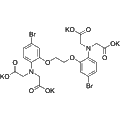
    5,5'-Dibromo BAPTA tetrapotassium is a potent calcium chelator targeting intracellular and extracellular calcium ion concentrations. This reagent is instrumental in the investigation of calcium signaling and physiological processes, providing researchers with the ability to manipulate calcium levels within various experimental settings. Its buffering capabilities make it suitable for a wide range of biological studies focused on calcium dynamics.

    Out of stock

    All 3 sizes
  • 5-Nitro BAPTA tetramethyl ester
    Cat. No.
    A43841

    5-Nitro BAPTA tetramethyl ester

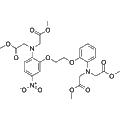
    5-Nitro BAPTA tetramethyl ester is a potent calcium chelator that effectively modulates intracellular calcium levels. It is utilized in the synthesis of two-photon probes, enabling real-time imaging and monitoring of calcium ion fluctuations and calcium waves in liver tissues at depths of 100-300 μm over extended durations of 1100-4000 seconds. Additionally, when combined with the fluorescent compound 2-Me-substituted TM, it can be employed to create a red fluorescent probe known as CaTM-2 AM, enhancing its utility in calcium-related biological research.

    Out of stock

    All 3 sizes
  • 8-Hydroxyquinoline hemisulfate
    Cat. No.
    A46590

    8-Hydroxyquinoline hemisulfate

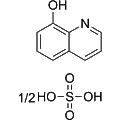
    Synonyms: 8-Quinolinol hemisulfate

    8-Hydroxyquinoline hemisulfate is a monoprotic bidentate chelating agent that exhibits notable antiseptic, disinfectant, and pesticidal properties. It functions as a transcription inhibitor, making it useful in studies involving gene expression regulation and molecular biology applications. This compound is commonly employed in research focused on metal ion chelation and various biochemical assays.

    100 mg
    $20.00
    500 mg
    $25.00
    All 5 sizes
  • Ethylenediaminetetraacetic acid disodium dihydrate
    Cat. No.
    A47901

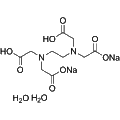
    Ethylenediaminetetraacetic acid disodium dihydrate

    Synonyms: EDTA disodium dihydrate

    Ethylenediaminetetraacetic acid disodium dihydrate is a metal chelator that effectively binds bivalent and trivalent metal cations, such as calcium. With notable antibacterial, anti-inflammatory, antioxidant, and anticoagulant properties, this compound mitigates metal ion-catalyzed oxidative damage to proteins and helps maintain a reducing environment during protein purification. Additionally, it demonstrates potential therapeutic effects in liver fibrosis and is applicable in research related to coronary artery disease and neurological disorders.

    500 mg
    $20.00
    1 g
    $25.00
    All 3 sizes
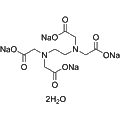
  • Ethylenediaminetetraacetic acid tetrasodium
    Cat. No.
    A48091

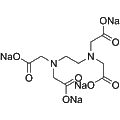
    Ethylenediaminetetraacetic acid tetrasodium

    Synonyms: EDTA tetrasodium

    Ethylenediaminetetraacetic acid tetrasodium (EDTA tetrasodium) is a potent metal chelator that binds to bivalent and trivalent metal cations, including calcium. This compound exhibits various biological activities, including antibacterial, anti-inflammatory, antioxidant, and anticoagulant effects. EDTA tetrasodium mitigates metal ion-catalyzed oxidative damage to proteins and supports a reducing environment during protein purification processes. Its application extends to research in liver fibrosis, coronary artery disease, and neurological disorders, making it a valuable tool in biochemical studies.

    50 g
    $20.00
    100 g
    $25.00
    All 2 sizes
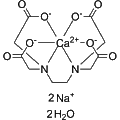
  • Ca(II)-EDTA disodium dihydrate
    Cat. No.
    A48098

    Ca(II)-EDTA disodium dihydrate

    Synonyms: Calcium disodium EDTA dihydrate

    Ca(II)-EDTA disodium dihydrate is a metal chelating agent that effectively binds divalent metal ions. This compound exhibits bactericidal activity against periodontal pathogens, including Aggregatibacter actinomycetemcomitans, Prevotella intermedia, and Porphyromonas gingivalis. Additionally, it serves as an effective chelating antidote in cases of lead and cadmium poisoning, making it a valuable reagent in toxicology and microbiological research.

    1 g
    $35.00
    5 g
    $90.00
    All 3 sizes
  • Ethylenediaminetetraacetic acid sodium hydrate
    Cat. No.
    A48601

    Ethylenediaminetetraacetic acid sodium hydrate

    Synonyms: EDTA sodium hydrate

    Ethylenediaminetetraacetic acid sodium hydrate is a metal chelator that effectively binds to bivalent and trivalent metal cations, including calcium. It exhibits significant biological activities such as antibacterial, anti-inflammatory, antioxidant, anti-hypercalcemic, and anticoagulant properties. This compound is particularly useful in mitigating metal ion-catalyzed oxidative damage to proteins, thus facilitating the maintenance of a reducing environment during protein purification. Ethylenediaminetetraacetic acid sodium hydrate is also investigated for its potential therapeutic effects in studies related to liver fibrosis, coronary artery disease, and neurological disorders.

    1 mg
    $20.00
    100 g
    $25.00
    All 3 sizes
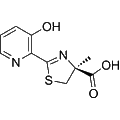
  • Desferriferrithiocin
    Cat. No.
    A53061

    Desferriferrithiocin

    Synonyms: CGP 23841A

    Desferriferrithiocin is an iron chelator that effectively inhibits the growth of Plasmodium falciparum in a dose-dependent manner. This compound's primary mechanism involves sequestering iron, thereby disrupting the pathogen's growth and survival. Desferriferrithiocin is valuable for research applications focused on malaria biology and the development of antimalarial therapeutics.

    1 mg
    $50.00
    5 mg
    $160.00
    All 4 sizes
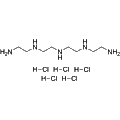
  • Tetraethylenepentamine pentahydrochloride
    Cat. No.
    A53715

    Tetraethylenepentamine pentahydrochloride

    Tetraethylenepentamine pentahydrochloride is a potent copper chelator, primarily targeting metal ions to facilitate their removal from biological systems. This compound enhances urinary excretion of copper, making it valuable in research focused on copper metabolism disorders and related toxicological studies. Its ability to bind copper ions is critical for investigations into therapies for conditions associated with copper overload.

    25 mg
    $35.00
    50 mg
    $40.00
    All 6 sizes
  • Cuprizone
    Cat. No.
    A70054

    Cuprizone

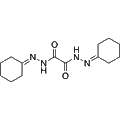
    Cuprizone is a copper chelator that forms a distinct blue complex with copper (II), making it useful for colorimetric detection of trace copper levels. It is employed in animal models to induce schizophrenia-like behaviors, enabling the study of psychiatric conditions. Cuprizone primarily affects copper-dependent enzymes, such as superoxide dismutase 1 (SOD1) and cytochrome oxidase, leading to oxidative stress and increased dopamine levels in brain regions like the medial prefrontal cortex (PFC). This reagent is valuable for research involving neurobiology and oxidative stress mechanisms.

    100 mg
    $20.00
    500 mg
    $25.00
    All 5 sizes
  • Tetrasodium glutamate diacetate (46% in water)
    Cat. No.
    A71823

    Tetrasodium glutamate diacetate (46% in water)

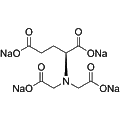
    Tetrasodium glutamate diacetate (46% in water) is a biodegradable chelating agent that interacts with metal ions, enhancing antibacterial efficacy in various applications. Its primary function is to improve the effectiveness of multifunctional additives in cosmetic formulations. This chelating agent provides significant advantages in maintaining product stability and efficacy by minimizing the adverse effects of metal ions. It is commonly utilized in cosmetic and personal care products to ensure optimal performance.

    1 mg
    $20.00
    5 g
    $25.00
    All 6 sizes
  • Phytic acid hexasodium
    Cat. No.
    A74413

    Phytic acid hexasodium

    Synonyms: Inositol hexaphosphate hexasodium; SNF472

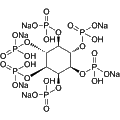
    Phytic acid hexasodium, an effective chelating agent, functions primarily by binding multivalent metal ions, notably zinc, calcium, and iron. This compound exhibits significant antioxidative, neuroprotective, and anti-inflammatory properties, and also inhibits the enzyme xanthine oxidase (XO), a major source of superoxide. Its versatile biological activity makes phytic acid hexasodium valuable in various research applications, particularly in studies focused on oxidative stress and inflammation.

    0.5 mg
    $110.00
    1 mg
    $205.00
    All 4 sizes

Items 51-75 of 155

Added to your cart

View Cart Checkout

    Loading...