- Cat. No.
- A10337
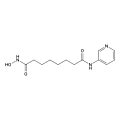
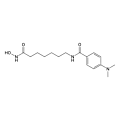
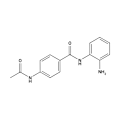
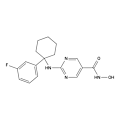
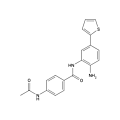
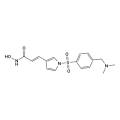
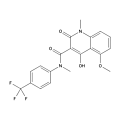
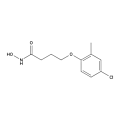
Droxinostat
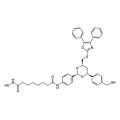
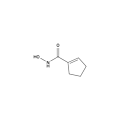
Droxinostat is a selective inhibitor of HDAC3, HDAC6, and HDAC8 that shows comparable inhibition of HDAC6 and HDAC8 with IC50 = 2.47 and 1.46 μmol/L, respectively.
Search by product name, CAS, target or catalog number. Press Down Arrow to reach product suggestions, Tab to move between links, and Escape to close suggestions.
Histone deacetylase (HDAC) inhibitors block enzymes that remove acetyl groups from histones and other proteins. Deacetylation compacts chromatin and generally represses transcription, so HDAC inhibitors are widely used to study gene regulation. Trichostatin A was characterized in 1990 as a specific inhibitor of mammalian histone deacetylase. The first mammalian HDAC was cloned in 1996 and found to be related to the yeast transcriptional regulator Rpd3p. Isoform-selective tools include entinostat for HDAC1 and HDAC3, and Tubastatin A HCl for HDAC6, a microtubule-associated deacetylase. Broad-spectrum hydroxamates such as vorinostat and panobinostat, together with the cyclic depsipeptide romidepsin, complete the range.
Droxinostat is a selective inhibitor of HDAC3, HDAC6, and HDAC8 that shows comparable inhibition of HDAC6 and HDAC8 with IC50 = 2.47 and 1.46 μmol/L, respectively.
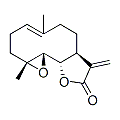
Synonyms: (-)-Parthenolide
Parthenolide ((-)-Parthenolide) is a sesquiterpene lactone which occurs naturally in the plant feverfew (Tanacetum parthenium).
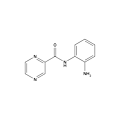
Synonyms: NSC-696085
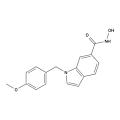
Pyroxamide (NSC 696085) is a potent inhibitor of affinity-purified HDAC1 and causes the accumulation of acetylated core histones in MEL cells cultured with the agent.
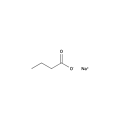
Sodium butyrate (NaB, Butanoic acid sodium salt), sodium salt of butyric acid, is a histone deacetylase inhibitor and competitively binds to the zinc sites of class I and II histone deacetylases (HDACs).
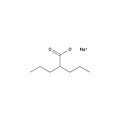
Synonyms: Sodium Valproate
Valproic acid sodium salt (Sodium Valproate) is an HDAC inhibitor, with IC50 in the range of 0.5 and 2 mM, also inhibits HDAC1 (IC50, 400 μM), and induces proteasomal degradation of HDAC2.
Synonyms: 1,3-Dimethylxanthine; Theo-24
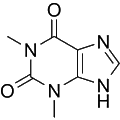
Theophylline, a potent phosphodiesterase (PDE) inhibitor, primarily targets PDE3, leading to relaxation of airway smooth muscle and enhanced bronchodilation. This compound also functions as an adenosine receptor antagonist and exhibits anti-inflammatory properties by elevating IL-10 levels and inhibiting NF-κB translocation into the nucleus. Additionally, Theophylline has been shown to induce apoptosis in certain cell types. Its applications are particularly relevant in the research of asthma and chronic obstructive pulmonary disease (COPD).
Tubacin (tubulin acetylation inducer) is a highly potent and selective, reversible, cell-permeable HDAC6 inhibitor with an IC50 of 4 nM.
PCI-34051 is a specific and potent histone deacetylase 8 (HDAC8) inhibitor, with >200-fold selectivity over the other HDAC isoforms.
HDAC-IN-2 is a selective inhibitor of histone deacetylase 4 (HDAC4) with a notable affinity for Class IIa enzymes. This compound is a valuable research tool for the investigation of epigenetic regulation and the modulation of gene expression. It is particularly suitable for high-throughput screening applications and can aid in the development of novel therapeutic strategies targeting HDAC-mediated pathways.
Synonyms: Histone Deacetylase Inhibitor III,MS344
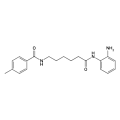
M344 is a potent inhibitor of HDAC with IC50 of 100 nM and able to induce cell differentiation.
BG45 is an HDAC class I inhibitor with selectivity for HDAC3 (IC50 = 289 nM). It inhibits HDAC1, HDAC2, and HDAC6 with greatly reduced potency (IC50s = 2, 2.2, and >20 μM, respectively).
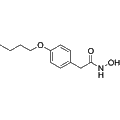
Synonyms: Bufexamic acid
Bufexamac is a nonsteroidal anti-inflammatory drug (NSAID) that functions as a dual inhibitor of class IIb histone deacetylases—HDAC6 and HDAC10—as well as leukotriene A4 hydrolase (LTA4H). It exhibits binding affinities (K\_d) of 0.53 µM for HDAC6 and 0.22 µM for HDAC10. Through its dual inhibitory activity, Bufexamac combines epigenetic modulation with anti-inflammatory effects, making it a valuable compound for research in inflammation, immune regulation, and HDAC-related pathologies.
Synonyms: ACY1215
ACY-1215 selectively targets and binds to HDAC6, thereby disrupting the Hsp90 protein chaperone system through hyperacetylation of Hsp90 and preventing the subsequent aggresomal protein degradation.
Synonyms: CI-994; Acetyldinaline; Goe 5549; G? 5549. PD 123654
CI-994 is a histone deacetylase (HDAC) inhibitor and induces histone hyperacetylation in living cells.
Synonyms: SHP-141
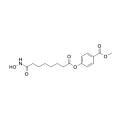
Remetinostat (SHP-141) is a hydroxamic acid-based inhibitor of histone deacetylase enzymes (HDAC) which is under development for the treatment of cutaneous T-cell lymphoma.
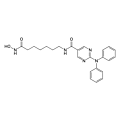
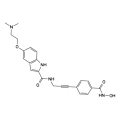
CRA-026440 is a potent, broad-spectrum HDAC inhibitor.
Synonyms: CXD 101
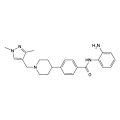
CXD101 is a class I-selective HDAC inhibitor (HDAC1 (IC50, 63 nM), HDAC2 (IC50, 570 nM), HDAC3 (IC50, 550 nM). CXD101 has no activity against HDAC class II.
ACY-775 is a potent and selective inhibitor of the of histone deacetylase 6 (HDAC6) with an IC50 of 7.5 nM.
BRD-6929 (Cpd-60) is a brain-penetrant, selective inhibitor of HDAC1 and HDAC2 (IC50= 1 and 8 nM), extracted from patent US2018360927.
Synonyms: 4SC-201; RAS2410
Resminostat, also known as RAS2410, is a potent inhibitor of histone deacetylase (HDAC) classes I and II. It binds to and inhibits HDACs leading to an accumulation of highly acetylated histones.
Synonyms: ABR-215050
Tasquinimod is an orally active antiangiogenic agent by allosterically inhibiting HDAC4 signalling.
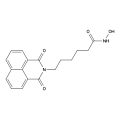
Scriptaid is an HDAC inhibitor (histone deacetylase).
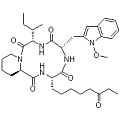
Apicidin is a a potent histone deacetylases (HDAC) inhibitor with potential anticancer activity.
BRD9757 is a highly potent and selective HDAC6 inhibitor with an IC50 of 30 nM toward HDAC6.
Synonyms: RGFP109
RG2833 ( is a brain-penetrant HDAC inhibitor with IC50 of 60 nM and 50 nM for HDAC1 and HDAC3.