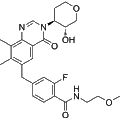
mAChR

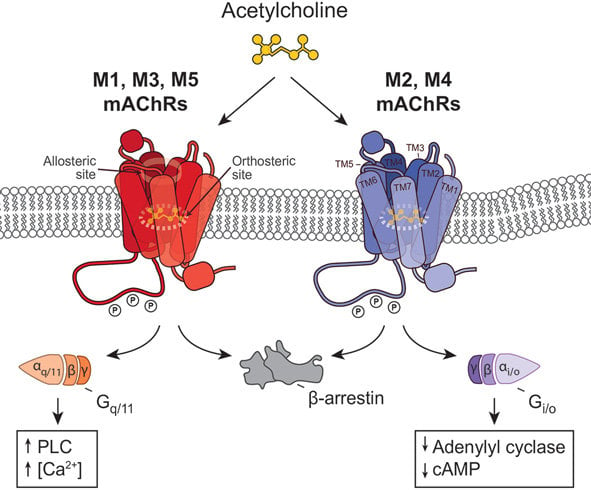
Muscarinic acetylcholine receptors (mAChRs) are a class of G protein-coupled receptors (GPCRs) found in the central and peripheral nervous systems, as well as in various other tissues and organs throughout the body. These receptors are named after muscarine, a natural alkaloid compound found in certain mushrooms, which was one of the first substances discovered to activate them.

There are five subtypes of muscarinic receptors, designated as M1 through M5, each with distinct tissue distribution and functions. Here's an overview of their roles:

  • M1 Receptors: Predominantly found in the central nervous system, particularly in regions associated with cognitive functions. Activation of M1 receptors is linked to memory and learning.
  • M2 Receptors: Found in the heart, where they play a crucial role in regulating heart rate and cardiac contractility. Activation of M2 receptors slows heart rate and reduces the force of cardiac contractions.
  • M3 Receptors: Present in smooth muscle tissues, such as those in the gastrointestinal tract, urinary bladder, and bronchial airways. Activation of M3 receptors leads to smooth muscle contraction.
  • M4 Receptors: Distributed mainly in the central nervous system and involved in modulating neurotransmitter release. Their role in cognition and neuropsychiatric disorders is of interest.
  • M5 Receptors: Located in certain areas of the brain and implicated in the modulation of dopamine release. Research suggests they may be relevant to Parkinson's disease and addiction.

Muscarinic receptors are activated by the neurotransmitter acetylcholine and play a vital role in regulating a wide range of physiological processes, including heart rate, smooth muscle contraction, glandular secretion, and neurotransmitter release. They are targets for various drugs, including anticholinergic agents, which block their activity, and drugs used to treat conditions like bradycardia and neurodegenerative disorders.

Understanding the functions and regulation of muscarinic acetylcholine receptors is essential for developing therapies that modulate their activity and for advancing our knowledge of how they contribute to various physiological and pathological processes in the body.

Items 226-250 of 399

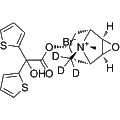
  • Tiotropium-d3 bromide
    Cat. No.
    A61369

    Tiotropium-d3 bromide

    Synonyms: BA679 BR-d3

    Tiotropium-d3 bromide is a deuterium-labeled variant of Tiotropium bromide, a selective antagonist of muscarinic acetylcholine receptors (mAChRs). By inhibiting acetylcholine binding, it prevents the opening of ligand-gated ion channels, leading to bronchial dilation. This compound is primarily used in pharmacological studies related to respiratory disorders and can be utilized in isotopic labeling experiments to investigate drug metabolism and pharmacokinetics.

    0.5 mg
    $300.00
    All 1 sizes
  • TD-6301
    Cat. No.
    A61370

    TD-6301

    TD-6301 is a potent antagonist of the M2 and M4 muscarinic receptors, demonstrating high selectivity and strong affinity for the human M2 receptor (Ki = 0.36 nM). This compound effectively inhibits volume-induced bladder contractions (ID50 = 0.075 mg/kg), making it a valuable tool in the study of overactive bladder conditions. Its specificity for bladder tissues presents opportunities for targeted therapeutic research in urology and related fields.

    Out of stock

    All 3 sizes
  • VU6016235
    Cat. No.
    A61371

    VU6016235

    VU6016235 is a selective positive allosteric modulator of the M4 muscarinic acetylcholine receptor (mAChR). It demonstrates notable in vivo inhibitory potency in animal models of psychosis, indicating potential therapeutic applications in neuropsychiatric disorders. This compound may be valuable for researchers investigating the modulation of cholinergic signaling and its effects on behavior and cognition.

    25 mg
    $1,780.00
    50 mg
    $2,280.00
    All 3 sizes
  • Telenzepine
    Cat. No.
    A61372

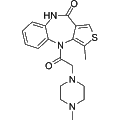
    Telenzepine

    Telenzepine is an antimuscarinic agent that selectively targets muscarinic receptors, demonstrating binding affinities with Kis of 0.94 nM for M1 mAChR and 17.8 nM for M2 mAChR. It effectively inhibits synaptic transmission induced by muscarinic or M1 receptor agonists, resulting in a reduction of extracellular slow excitatory postsynaptic potentials with an EC50 of 38 nM and slow inhibitory postsynaptic potentials with an EC50 of 253 nM. This compound is valuable for research in neuropharmacology and the study of cholinergic signaling pathways.

    25 mg
    $1,275.00
    50 mg
    $1,625.00
    All 3 sizes
  • Desalkylquazepam
    Cat. No.
    A61373

    Desalkylquazepam

    Synonyms: N-Desmethylquazepam

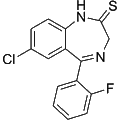
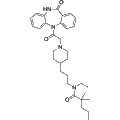
    Desalkylquazepam, a precursor in the synthesis of triazolobenzodiazepines, is recognized for its role as a mAChR modulator with an EC50 value of 0.317 µM. This compound is utilized in research related to the development of therapeutic agents targeting benzodiazepine receptors. Its biological activity makes it a valuable reagent for studies exploring anxiety, sedation, and other central nervous system disorders.

    1 mg
    $215.00
    5 mg
    $655.00
    All 2 sizes
  • L-Hyoscyamine sulfate hydrate
    Cat. No.
    A61374

    L-Hyoscyamine sulfate hydrate

    Synonyms: Daturine sulfate hydrate

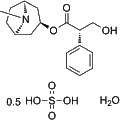
    L-Hyoscyamine sulfate hydrate is a potent and competitive antagonist of muscarinic acetylcholine receptors (mAChR). As a naturally occurring tropane alkaloid, it exhibits significant biological activity by inhibiting mAChR-mediated signaling pathways. This compound is primarily utilized in pharmacological research and studies related to the modulation of synaptic transmission, making it valuable for investigating various physiological and pathological processes.

    Out of stock

    All 3 sizes
  • VU6002703
    Cat. No.
    A61375

    VU6002703

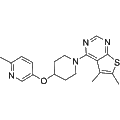
    VU6002703 is a positive allosteric modulator (PAM) of the M4 muscarinic acetylcholine receptor (mAChR), exhibiting an EC50 of 0.6 μM for human M4. This compound is designed for research into neuropsychiatric disorders and rare genetic conditions affecting the central nervous system (CNS). Its ability to penetrate the blood-brain barrier makes it a valuable tool for studying the modulation of cholinergic signaling in various models of CNS diseases.

    Out of stock

    All 3 sizes
  • Solifenacin D5 hydrochloride
    Cat. No.
    A61376

    Solifenacin D5 hydrochloride

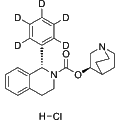
    Solifenacin D5 hydrochloride is a deuterium-labeled derivative of Solifenacin hydrochloride, acting as a muscarinic receptor antagonist. With pKis of 7.6, 6.9, and 8.0 for M1, M2, and M3 receptors respectively, it is effective in modulating receptor activity. This compound is primarily utilized in pharmacological research related to bladder control and the treatment of overactive bladder conditions.

    1 mg
    $325.00
    10 mg
    $1,805.00
    All 3 sizes
  • VU6007678
    Cat. No.
    A61377

    VU6007678

    VU6007678 is a muscarinic acetylcholine receptor enhancer that primarily acts as a potentiator of acetylcholine signaling. This compound enhances receptor activity at human M1, M3, and M5, as well as rat M1, M3, M4, and M5 muscarinic acetylcholine receptors. VU6007678 is a valuable tool for research investigations into Alzheimer's disease, schizophrenia, and ischemic stroke, facilitating studies of cognitive function and neuropharmacology.

    Out of stock

    All 3 sizes
  • Bibn 140
    Cat. No.
    A61378

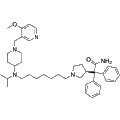
    Bibn 140

    Bibn 140 is a pyridine derivative that acts as a selective antagonist of the M2 muscarinic acetylcholine receptor (mAChR), exhibiting high affinity with a Ki value of 12 nM. This compound is primarily utilized in research exploring cholinergic signaling and its implications in neurological disorders. Its specificity for the M2 subtype over the M1 receptor positions it as a valuable tool for studying M2 receptor-related biological processes.

    25 mg
    $1,275.00
    50 mg
    $1,625.00
    All 3 sizes
  • Milameline hydrochloride
    Cat. No.
    A61379

    Milameline hydrochloride

    Synonyms: CI 979 hydrochloride; RU 35926 hydrochloride

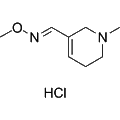
    Milameline hydrochloride is a nonselective, partial agonist of muscarinic receptors, demonstrated to enhance cognitive function. It exhibits comparable affinity across various human muscarinic receptor subtypes, with IC50 values of 1.3 µM for M1, 1.1 µM for M2, 1.5 µM for M3, and 1.9 µM for M4 receptors. Milameline hydrochloride produces both central and peripheral cholinergic effects and effectively reverses cognitive deficits induced by scopolamine. This compound serves as a valuable tool for research related to Alzheimer's disease and cognitive impairment.

    25 mg
    $1,275.00
    50 mg
    $1,625.00
    All 3 sizes
  • (S)-Vamicamide
    Cat. No.
    A61380

    (S)-Vamicamide

    Synonyms: (S)-FK-176

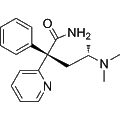
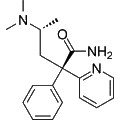
    (S)-Vamicamide is a selective antagonist of the muscarinic acetylcholine receptors (mAChRs). This compound exhibits notable anticholinergic activity, making it useful for studies related to neurotransmission and receptor signaling pathways. Its application extends to research in conditions influenced by cholinergic modulation, such as cognitive disorders and movement disorders.

    1 mg
    $95.00
    5 mg
    $240.00
    All 7 sizes
  • Pirenzepine-d8 dihydrochloride
    Cat. No.
    A61382

    Pirenzepine-d8 dihydrochloride

    Synonyms: LS 519-d8 dihydrochloride; Pirenzepin-d8 dihydrochloride; Gastrozepin-d8 dihydrochloride

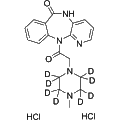
    Pirenzepine-d8 dihydrochloride is a deuterium-labeled derivative of Pirenzepine, a selective antagonist of the M1 muscarinic acetylcholine receptor (mAChR). This compound exhibits significant biological activity by inhibiting gastric acid secretion and alleviating muscle spasms, making it valuable for research in peptic ulcers. Additionally, Pirenzepine-d8 demonstrates anti-proliferative effects in cancer cell lines, contributing to its use in cancer research applications.

    1 mg
    $470.00
    All 1 sizes
  • M1/M4 muscarinic agonist 3
    Cat. No.
    A61383

    M1/M4 muscarinic agonist 3

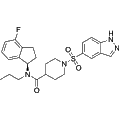
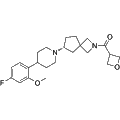
    M1/M4 Muscarinic Agonist 3 is a selective agonist for the M1 and M4 muscarinic acetylcholine receptors (mAChRs), exhibiting EC50 values of 31 nM and 9.3 nM, respectively. This compound is instrumental in the investigation of cholinergic signaling pathways and has potential applications in neurological research, particularly in the study of cognitive function and memory modulation. Its efficacy in activating M1/M4 receptors makes it a valuable tool for studying muscarinic receptor pharmacology.

    Out of stock

    All 3 sizes
  • Vamicamide
    Cat. No.
    A61384

    Vamicamide

    Synonyms: FK-176

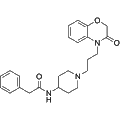
    Vamicamide is a competitive antagonist of muscarinic acetylcholine receptors (mAChRs) that functions by inhibiting the binding of mAChR agonists, thereby preventing contractions induced by cholinergic nerve stimulation. It demonstrates significant anti-bladder spasm effects, exhibiting a pA2 value of 6.82 in bladder tissue. Vamicamide is valuable for research in the study of neurological diseases and disorders related to bladder dysfunction.

    1 mg
    $180.00
    5 mg
    $440.00
    All 4 sizes
  • AZD-9164 bromide
    Cat. No.
    A61385

    AZD-9164 bromide

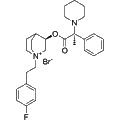
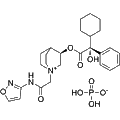
    AZD-9164 bromide is a long-acting antagonist of the muscarinic M3 receptor. It demonstrates significant potential for modulating airway smooth muscle contraction and has applications in the study of respiratory diseases, including chronic obstructive pulmonary disease (COPD) and asthma. Researchers may utilize AZD-9164 bromide to explore mechanisms underlying bronchoconstriction and to develop targeted therapies for these conditions.

    25 mg
    $1,275.00
    50 mg
    $1,625.00
    All 3 sizes
  • HTL-9936
    Cat. No.
    A61386

    HTL-9936

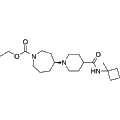
    HTL-9936 is a selective agonist of the M1 muscarinic acetylcholine receptor (M1-mAChR), which plays a crucial role in cognitive function and memory. This compound demonstrates potential therapeutic effects in the context of neurodegenerative disorders, particularly Alzheimer's disease. HTL-9936 is a valuable tool for researchers investigating cholinergic signaling pathways and developing novel treatments for cognitive decline.

    Out of stock

    All 3 sizes
  • Ethybenztropine
    Cat. No.
    A61388

    Ethybenztropine

    Synonyms: Ponalid; UK 738

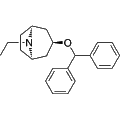
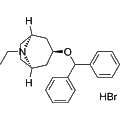
    Ethybenztropine is a muscarinic receptor blocker, functioning primarily as an anticholinergic agent. It inhibits the action of acetylcholine at muscarinic receptors, thereby exerting antihistaminergic effects. This compound is utilized in research applications that explore cholinergic signaling pathways and the role of muscarinic receptors in various biological processes.

    25 mg
    $1,275.00
    50 mg
    $1,625.00
    All 3 sizes
  • L-(-)-Neopterin
    Cat. No.
    A61389

    L-(-)-Neopterin

    Synonyms: L-erythro-Neopterin

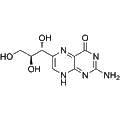
    L-(-)-Neopterin (L-erythro-Neopterin) is a competitive antagonist of cholinergic receptors, mitigating the inhibitory effects of pteridine diuretics on the growth of Crithidia fasciculata. This compound is valuable in studies investigating nervous system functions and purine metabolism, providing insights into neurochemical pathways and potential therapeutic applications.

    25 mg
    $1,275.00
    All 1 sizes
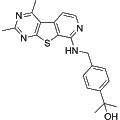
  • VU6052254
    Cat. No.
    A61390

    VU6052254

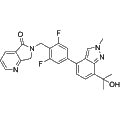
    VU6052254 is a selective, potent positive allosteric modulator of the muscarinic M1 acetylcholine receptor, exhibiting an EC50 of 59 nM. This compound demonstrates no activity on M2-5 receptors, ensuring specificity in its mechanism of action. VU6052254 enhances memory recognition and effectively reverses cognitive impairments induced by scopolamine at a minimum effective dose of 1 mg/kg. It is a valuable tool for researching neurological disorders, including Alzheimer's disease, facilitating investigations into cognitive enhancement strategies.

    Out of stock

    All 3 sizes
  • Ethybenztropine hydrobromide
    Cat. No.
    A61391

    Ethybenztropine hydrobromide

    Synonyms: Ponalid hydrobromide; UK 738 hydrobromide

    Ethybenztropine hydrobromide is a muscarinic receptor blocker with notable antiparkinsonian activity. This anticholinergic agent functions to alleviate symptoms associated with Parkinson's disease, potentially enhancing dopaminergic signaling by acting as a dopamine reuptake inhibitor. It is widely utilized in research exploring therapeutic strategies for managing Parkinson’s disease and related movement disorders.

    25 mg
    $1,275.00
    50 mg
    $1,625.00
    All 3 sizes
  • (Rac)-Sabcomeline
    Cat. No.
    A61392

    (Rac)-Sabcomeline

    Synonyms: (Rac)-SB-202026; (Rac)-Memric

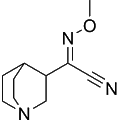
    (Rac)-Sabcomeline is a selective agonist for M1 and M4 muscarinic acetylcholine receptors (mAChRs), providing a valuable resource for investigating neurological disorders, particularly schizophrenia. Its activation of mAChRs can facilitate insights into cholinergic signaling pathways and their implications in neuropsychiatric conditions. This compound supports research into the development of therapeutic strategies targeting muscarinic receptors in the treatment of various cognitive and mood disorders.

    1 mg
    $95.00
    2 mg
    $140.00
    All 8 sizes
  • Muscarinic M3 receptor antagonist-2
    Cat. No.
    A61393

    Muscarinic M3 receptor antagonist-2

    Muscarinic M3 receptor antagonist-2 is a selective antagonist of the muscarinic M3 receptor, crucial in mediating various physiological responses. This compound demonstrates potency in inhibiting M3 receptor activity, making it valuable for research into disorders related to cholinergic signaling and smooth muscle contraction. Its application is particularly relevant in studies focused on airway diseases, gastrointestinal motility, and other conditions associated with M3 receptor dysregulation.

    Out of stock

    All 3 sizes
  • Lu AE51090
    Cat. No.
    A61395

    Lu AE51090

    Lu AE51090 is a selective agonist of the muscarinic M1 receptor, designed to penetrate the blood-brain barrier. This compound activates the human M1 receptor with an EC50 of 61 nM and demonstrates minimal activity at M2 to M5 receptors. Lu AE51090 has been shown to produce procognitive effects in murine models and is relevant for research into Alzheimer’s disease and cognitive impairments associated with schizophrenia.

    1 mg
    $65.00
    5 mg
    $160.00
    All 6 sizes
  • M1 mAChR modulator-1
    Cat. No.
    A61397

    M1 mAChR modulator-1

    M1 mAChR modulator-1 is a positive allosteric modulator of the muscarinic M1 receptor (mAChR1). It enhances gastrointestinal motility and facilitates defecation in mouse models, exhibiting low permeability to the central nervous system. This compound is valuable for research focused on gastrointestinal disorders, particularly constipation.

    5 mg
    $400.00
    10 mg
    $660.00
    All 3 sizes

Items 226-250 of 399

Added to your cart

View Cart Checkout

    Loading...