mAChR

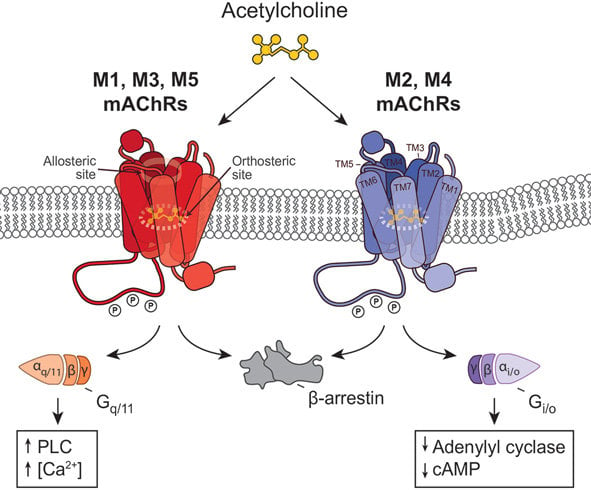
Muscarinic acetylcholine receptors (mAChRs) are a class of G protein-coupled receptors (GPCRs) found in the central and peripheral nervous systems, as well as in various other tissues and organs throughout the body. These receptors are named after muscarine, a natural alkaloid compound found in certain mushrooms, which was one of the first substances discovered to activate them.

There are five subtypes of muscarinic receptors, designated as M1 through M5, each with distinct tissue distribution and functions. Here's an overview of their roles:

  • M1 Receptors: Predominantly found in the central nervous system, particularly in regions associated with cognitive functions. Activation of M1 receptors is linked to memory and learning.
  • M2 Receptors: Found in the heart, where they play a crucial role in regulating heart rate and cardiac contractility. Activation of M2 receptors slows heart rate and reduces the force of cardiac contractions.
  • M3 Receptors: Present in smooth muscle tissues, such as those in the gastrointestinal tract, urinary bladder, and bronchial airways. Activation of M3 receptors leads to smooth muscle contraction.
  • M4 Receptors: Distributed mainly in the central nervous system and involved in modulating neurotransmitter release. Their role in cognition and neuropsychiatric disorders is of interest.
  • M5 Receptors: Located in certain areas of the brain and implicated in the modulation of dopamine release. Research suggests they may be relevant to Parkinson's disease and addiction.

Muscarinic receptors are activated by the neurotransmitter acetylcholine and play a vital role in regulating a wide range of physiological processes, including heart rate, smooth muscle contraction, glandular secretion, and neurotransmitter release. They are targets for various drugs, including anticholinergic agents, which block their activity, and drugs used to treat conditions like bradycardia and neurodegenerative disorders.

Understanding the functions and regulation of muscarinic acetylcholine receptors is essential for developing therapies that modulate their activity and for advancing our knowledge of how they contribute to various physiological and pathological processes in the body.

Items 251-275 of 399

  • YM-58790 free base
    Cat. No.
    A61399

    YM-58790 free base

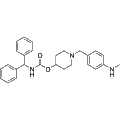
    YM-58790 free base is a potent antagonist of the muscarinic acetylcholine receptors (mAChR), specifically targeting the M3 subtype with a Ki value of 15 nM, along with M1 and M2 subtypes at 28 nM and 260 nM, respectively. This compound demonstrates significant inhibitory effects on bladder pressure during reflexly-evoked rhythmic contractions in rat studies. YM-58790 free base is used in research focused on neuropharmacology and the modulation of cholinergic signaling pathways, particularly in relation to bladder function and potential therapeutic applications in urological disorders.

    1 mg
    $50.00
    5 mg
    $110.00
    All 5 sizes
  • Homatropine hydrochloride
    Cat. No.
    A61400

    Homatropine hydrochloride

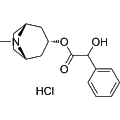
    Homatropine hydrochloride is an anticholinergic agent that primarily targets muscarinic acetylcholine receptors. It effectively induces pupil dilation and exerts cycloplegic effects, making it valuable in ophthalmologic studies. Additionally, it demonstrates antitussive properties, contributing to research in respiratory conditions. This compound is suitable for investigations into eye diseases and cough-related disorders.

    Out of stock

    All 3 sizes
  • Arecaidine-propargyl ester tosylate
    Cat. No.
    A61401

    Arecaidine-propargyl ester tosylate

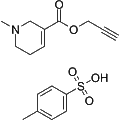
    Arecaidine-propargyl ester tosylate acts as a potent agonist of muscarinic acetylcholine receptors (mAChR). Its primary biological activity includes stimulation of mAChR, which is critical for neuropharmacological research and studies related to the central nervous system. This compound is useful for exploring the role of muscarinic signaling in various physiological processes and developing potential therapeutic strategies targeting mAChR pathways.

    50 mg
    $1,605.00
    All 1 sizes
  • Muscarinic M3 receptor antagonist-1
    Cat. No.
    A61402

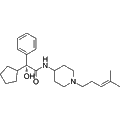
    Muscarinic M3 receptor antagonist-1

    Muscarinic M3 receptor antagonist-1 functions as an antagonist of the muscarinic acetylcholine receptor M3. It plays a crucial role in the study of inflammatory and obstructive airway diseases, providing insights into potential therapeutic interventions. This reagent aids in the exploration of M3 receptor-mediated pathways and their implications in respiratory conditions.

    Out of stock

    All 3 sizes
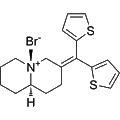
  • Tiquizium bromide
    Cat. No.
    A61403

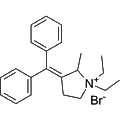
    Tiquizium bromide

    Synonyms: HSR-902

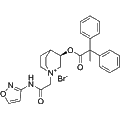
    Tiquizium bromide is a nonselective muscarinic antagonist that acts as an atropine-type spasmolytic agent. It effectively inhibits the development of gastric and duodenal lesions, while also inducing mydriasis and reducing salivation induced by pilocarpine. This compound is useful in pharmacological studies aimed at exploring muscarinic receptor modulation and its physiological effects.

    Out of stock

    All 3 sizes
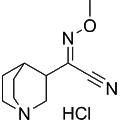
  • (Rac)-Sabcomeline hydrochloride
    Cat. No.
    A61404

    (Rac)-Sabcomeline hydrochloride

    Synonyms: (Rac)-SB-202026 hydrochloride; (Rac)-Memric hydrochloride

    (Rac)-Sabcomeline hydrochloride is a selective agonist of the M1 muscarinic acetylcholine receptor (mAChR). It exhibits potential neuroprotective effects and is of significant interest in research related to Alzheimer's disease and cognitive disorders. This compound is utilized in studies aimed at understanding the role of muscarinic receptors in synaptic plasticity and memory function.

    1 mg
    $155.00
    5 mg
    $355.00
    All 6 sizes
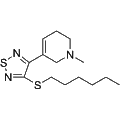
  • Tazomeline
    Cat. No.
    A61405

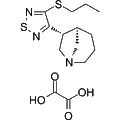
    Tazomeline

    Tazomeline is a selective agonist of the M1 muscarinic receptor, demonstrating significant inhibitory effects on twitch height in the rabbit vas deferens with an IC50 of 0.001 nM. This compound is primarily utilized in research focused on neuropsychiatric disorders, offering insights into the modulation of cholinergic signaling and potential therapeutic applications.

    1 mg
    $50.00
    5 mg
    $130.00
    All 7 sizes
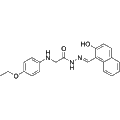
  • (E/Z)-VU0029767
    Cat. No.
    A61406

    (E/Z)-VU0029767

    (E/Z)-VU0029767 is an allosteric modulator of M1 muscarinic acetylcholine receptors (mAChRs), enhancing receptor activity by increasing agonist affinity. This compound exhibits distinct properties across various experimental conditions, including its interaction with mutant M1 receptors and effects on downstream signaling pathways. (E/Z)-VU0029767 is employed in research to explore mAChR function and develop therapeutic strategies targeting related neurological disorders.

    25 mg
    $1,275.00
    50 mg
    $1,625.00
    All 3 sizes
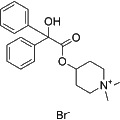
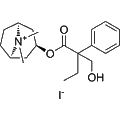
  • Parapenzolate bromide
    Cat. No.
    A61407

    Parapenzolate bromide

    Parapenzolate bromide is an orally active antagonist of muscarinic acetylcholine receptors (mAChRs). As an anticholinergic agent, it demonstrates antispasmodic properties, making it useful for studies related to gastrointestinal motility and smooth muscle relaxation. This compound is valuable in research applications focusing on the modulation of cholinergic signaling and its effects on various physiological processes.

    25 mg
    $1,800.00
    50 mg
    $2,285.00
    All 3 sizes
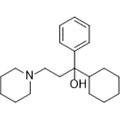
  • Trihexyphenidyl
    Cat. No.
    A61408

    Trihexyphenidyl

    Trihexyphenidyl is a selective M1 muscarinic receptor antagonist, with an IC50 of 3.7 nM for rat cerebral cortex M1 receptors. It modulates cholinergic activity, effectively countering acetylcholine supersensitivity in neural pathways. Trihexyphenidyl is utilized in research for Parkinson's disease and demonstrates efficacy in improving movement disorders, as well as inhibiting vagally-induced bradycardia and vasodilation. Its inhibition of McN-A-343-induced pressor responses highlights its potential in studying neurophysiological effects.

    Out of stock

    All 3 sizes
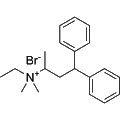
  • Emepronium bromide
    Cat. No.
    A61410

    Emepronium bromide

    Emepronium bromide is a muscarinic receptor ligand that acts as an antispasmodic agent for the bladder, exhibiting an IC50 of 236 nM. This compound is valuable for research focused on bladder diseases, allowing for the exploration of muscarinic receptor mechanisms and the development of therapeutic strategies targeting bladder dysfunction.

    25 mg
    $1,275.00
    50 mg
    $1,625.00
    All 3 sizes
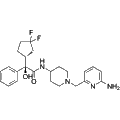
  • MK-0969
    Cat. No.
    A61411

    MK-0969

    MK-0969 is an M3 muscarinic acetylcholine receptor antagonist. It exhibits biological activity relevant to the modulation of smooth muscle tone, making it useful in the study of conditions such as chronic obstructive pulmonary disease and urinary incontinence. Researchers can employ MK-0969 to investigate the therapeutic potential of M3 receptor inhibition in respiratory and urological disorders.

    Out of stock

    All 3 sizes
  • Ilmetropium iodide
    Cat. No.
    A61412

    Ilmetropium iodide

    Ilmetropium iodide is an anticholinergic agent that selectively antagonizes M-cholinergic receptors in bronchial smooth muscle. This selective blockade effectively reduces or prevents bronchoconstriction triggered by cholinergic stimuli and various bronchospasm-inducing factors. With a superior strength and selectivity compared to other anticholinergics, ilmetropium iodide is a valuable tool in respiratory research and the development of novel therapeutic strategies for conditions like asthma and COPD.

    5 mg
    $25.00
    10 mg
    $40.00
    All 6 sizes
  • Sintropium bromide
    Cat. No.
    A61413

    Sintropium bromide

    Sintropium bromide is a muscarinic acetylcholine receptor (mAChR) antagonist that exerts notable anticholinergic effects. Its primary biological activity includes alleviating pain and reducing muscle spasms, making it a valuable tool for research in pain management and neuromuscular studies.

    25 mg
    $1,275.00
    All 1 sizes
  • (Rac)-AF710B
    Cat. No.
    A61415

    (Rac)-AF710B

    (Rac)-AF710B is a potent allosteric agonist targeting M1 muscarinic and σ1 receptors. This compound exhibits selective interactions that are valuable for elucidating the role of these receptors in neurological pathways. Its application in research focuses primarily on Alzheimer's disease, making it a significant reagent for studying potential therapeutic strategies.

    1 mg
    $160.00
    5 mg
    $390.00
    All 6 sizes
  • VU6009453
    Cat. No.
    A61416

    VU6009453

    VU6009453 is a positive allosteric modulator (PAM) of the M4 muscarinic acetylcholine receptor (mAChR), exhibiting an EC50 of 383 nM. This compound effectively enhances M4 receptor activity and is valuable for research focused on neurological disorders. Its ability to penetrate the blood-brain barrier makes it a pertinent tool in studies investigating potential therapeutic strategies for conditions related to M4 mAChR function.

    Out of stock

    All 3 sizes
  • PTAC oxalate
    Cat. No.
    A61418

    PTAC oxalate

    PTAC oxalate is a selective ligand for muscarinic receptors, functioning as a partial agonist at M2 and M4 receptors while acting as an antagonist at M1, M3, and M5 receptors, with Ki values ranging from 0.2 to 2.8 nM in CHO cells. This compound demonstrates significant biological activity by alleviating mechanical allodynia associated with neuropathic pain and exhibiting potential antidepressant effects. PTAC oxalate serves as a valuable tool for research into muscarinic receptor function and the development of therapeutics for pain and mood disorders.

    25 mg
    $1,530.00
    50 mg
    $1,950.00
    All 3 sizes
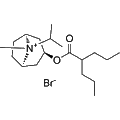
  • Prifinium bromide
    Cat. No.
    A61419

    Prifinium bromide

    Prifinium bromide is an antimuscarinic agent that acts by selectively inhibiting muscarinic acetylcholine receptors. It exhibits antispasmodic and antiemetic effects, making it useful in the management of gastrointestinal disorders. This compound is relevant for research applications involving smooth muscle relaxation and the modulation of vomiting reflex pathways.

    100 mg
    $20.00
    200 mg
    $25.00
    All 6 sizes
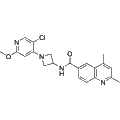
  • M4 mAChR Modulator-2
    Cat. No.
    A61420

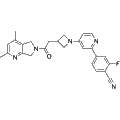
    M4 mAChR Modulator-2

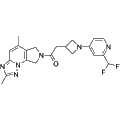
    M4 mAChR Modulator-2 is a selective positive allosteric modulator (PAM) of the M4 muscarinic acetylcholine receptor (M4 mAChR) with an EC50 of 513 nM. This compound exhibits a high degree of target selectivity, demonstrating minimal affinity for non-target receptors, such as D1R/D2R/D3R, various 5-HT subtypes, opioid receptors, and M1/M2 receptors. M4 mAChR Modulator-2 is effective in reversing hyperlocomotion induced by Dizocilpine (MK-801) in murine models and is utilized in research focused on schizophrenia.

    Out of stock

    All 3 sizes
  • J-104129
    Cat. No.
    A61422

    J-104129

    J-104129 is a selective antagonist of the M3 muscarinic receptor, exhibiting a Ki value of 4.2 nM. This compound demonstrates significant bronchodilatory effects, making it useful in studying respiratory disorders. Its oral bioactivity supports its application in pharmacological research focusing on muscarinic receptor modulation.

    25 mg
    $1,275.00
    50 mg
    $1,625.00
    All 3 sizes
  • Muscarinic M4 modulator-1
    Cat. No.
    A61423

    Muscarinic M4 modulator-1

    Muscarinic M4 modulator-1 is a positive allosteric modulator of the M4 muscarinic receptor. It enhances receptor activity with allosteric potencies indicated by EC50 values of 14 nM in CHO-K1 cells and 3 nM in HEK293 cells. This compound exhibits antipsychotic-like effects, making it a valuable tool for research into psychiatric and neurological disorders.

    Out of stock

    All 3 sizes
  • Methacholine iodide
    Cat. No.
    A61424

    Methacholine iodide

    Synonyms: Acetyl-β-methylcholine iodide

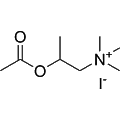
    Methacholine iodide is a potent agonist of the muscarinic-3 (M3) receptor. By directly stimulating acetylcholine receptors on smooth muscle, it induces bronchoconstriction and airway narrowing. Methacholine iodide is particularly effective for assessing bronchial hyperresponsiveness (BHR) and is utilized as a diagnostic tool in evaluating airway hyperreactivity in patients with asthma-like symptoms and normal resting expiratory flow rates.

    25 mg
    $1,275.00
    50 mg
    $1,625.00
    All 3 sizes
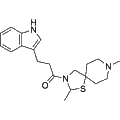
  • ML169
    Cat. No.
    A61425

    ML169

    Synonyms: VU0405652

    ML169 is a potent and selective positive allosteric modulator (PAM) of the M1 muscarinic acetylcholine receptor (mAChR), demonstrating an EC50 of 1.38 µM. This compound exhibits significant brain penetrance and is a valuable tool for research in Alzheimer's disease. Its modulation of M1 mAChR enhances cholinergic signaling, making it an important probe for studying cognitive function and potential therapeutic strategies in neurodegenerative disorders.

    5 mg
    $190.00
    25 mg
    $1,275.00
    All 4 sizes
  • BTM-1042
    Cat. No.
    A61426

    BTM-1042

    BTM-1042 is a selective muscarinic acetylcholine receptor (mAChR) inhibitor with notable antispasmodic properties. It effectively inhibits electrical stimulation-induced contraction in the guinea pig ileum and demonstrates a dose-dependent reduction in spontaneous movement of the rabbit stomach. BTM-1042 displays similar activity to atropine in blocking muscarinic receptors while having a minimal impact on other receptor types. Additionally, it suppresses ileal responses triggered by nicotine and 5-hydroxytryptamine, highlighting its potential utility in gastrointestinal research applications and studies related to smooth muscle contraction modulation.

    25 mg
    $1,275.00
    50 mg
    $1,625.00
    All 3 sizes
  • Fesoterodine-d7 fumarate
    Cat. No.
    A61427

    Fesoterodine-d7 fumarate

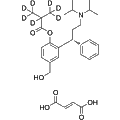
    Fesoterodine-d7 fumarate is a deuterium-labeled derivative of Fesoterodine fumarate, serving as a stable isotope for research applications. Fesoterodine fumarate acts as a competitive antagonist of muscarinic acetylcholine receptors (mAChRs), demonstrating non-subtype selectivity with pKi values of 8.0, 7.7, 7.4, 7.3, and 7.5 for M1, M2, M3, M4, and M5, respectively. It is primarily utilized in studies related to overactive bladder (OAB) and provides valuable insight into muscarinic receptor function and pharmacology.

    Out of stock

    All 3 sizes

Items 251-275 of 399

Added to your cart

View Cart Checkout

    Loading...