PROTAC Degrader

PROTAC degraders recruit an E3 ubiquitin ligase to a target protein so that the proteasome degrades it. Each proteolysis-targeting chimera (PROTAC) links a target-binding ligand to an E3 ligase ligand through a chemical linker. The approach was first described in 2001, and later work showed that small-molecule PROTACs can act catalytically, removing several target copies per molecule. Examples include the bromodomain and extra-terminal (BET) degraders dBET1, MZ1 and ARV-771, and the estrogen receptor degrader ERD-308. Degraders of anti-apoptotic proteins, such as PROTAC Mcl1 degrader-1, are also listed.

Items 626-650 of 824

  • XF056-132 free base
    Cat. No.
    A57862

    XF056-132 free base

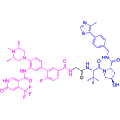
    XF056-132 free base is a potent WDR5 (WD40 repeat domain protein 5) degrader that utilizes the proteolysis-targeting chimeric (PROTAC) mechanism. This compound effectively promotes the selective degradation of WDR5, which is implicated in various cancers and transcriptional regulation processes. XF056-132 serves as a valuable tool for research into targeted protein degradation and its therapeutic potential in oncological studies.

    Out of stock

    All 3 sizes
  • MS40
    Cat. No.
    A57865

    MS40

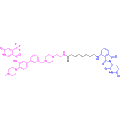
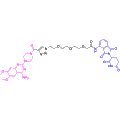
    MS40 is a WDR5 PROTAC degrader with a Kd of 125 nM, which facilitates the ubiquitination and subsequent degradation of the WDR5 protein. The degradation of WDR5 causes the dissociation of the MLL/KMT2A complex from chromatin, leading to reduced levels of H3K4me2. This compound is instrumental in investigating the mechanistic pathways involved in primary leukemia.

    Out of stock

    All 3 sizes
  • α1A-AR Degrader 9c
    Cat. No.
    A58221

    α1A-AR Degrader 9c

    α1A-AR Degrader 9c is a selective, reversible degrader specifically targeting the α1A-adrenergic receptor (α1A-AR) through the proteasomal degradation pathway. It demonstrates significant biological activity, inhibiting the proliferation of PC-3 cells with an IC50 value of 6.12 μM. This compound is valuable for research applications in prostate cancer, providing insights into the therapeutic potential of α1A-AR degradation in oncology studies.

    5 mg
    $735.00
    All 1 sizes
  • LUF7996
    Cat. No.
    A59586

    LUF7996

    LUF7996 is a potent CCR2 PROTAC degrader that selectively targets and degrades CCR2 with a DC50 value of 2.6 μM. This compound effectively engages with the E3 ligase cereblon, promoting sustained and concentration-dependent degradation of CCR2 via the lysosomal pathway. LUF7996 is particularly valuable for research applications involving the inhibition of monocyte migration in vitro, facilitating studies in inflammation and immune response modulation.

    Out of stock

    All 3 sizes
  • PROTAC(H-PGDS)-7
    Cat. No.
    A63068

    PROTAC(H-PGDS)-7

    PROTAC(H-PGDS)-7 is a targeted protein degradation agent that selectively degrades hematopoietic prostaglandin D synthase (H-PGDS). With a DC50 value of 17.3 pM, it demonstrates potent biological activity in modulating the levels of H-PGDS. This compound is valuable for research applications involving the role of H-PGDS in inflammatory processes and may assist in elucidating therapeutic strategies for related diseases.

    0.5 mg
    $65.00
    1 mg
    $130.00
    All 7 sizes
  • PROTAC(H-PGDS)-8
    Cat. No.
    A63235

    PROTAC(H-PGDS)-8

    PROTAC(H-PGDS)-8 is a targeted protein degradation compound that specifically degrades hematopoietic prostaglandin D synthase (H-PGDS) with an IC50 of 0.14 μM. This PROTAC molecule facilitates the ubiquitination and subsequent proteasomal degradation of H-PGDS, making it a valuable tool for investigating the role of H-PGDS in various biological processes. Research applications include studies on inflammation, pain mechanisms, and other pathophysiological conditions where H-PGDS is implicated.

    2 mg
    $375.00
    All 1 sizes
  • RP03707
    Cat. No.
    A63530

    RP03707

    RP03707 is a potent PROTAC degrader targeting KRASG12D. By forming a ternary complex with KRASG12D and the CRBN E3 ligase, RP03707 facilitates the ubiquitination and subsequent proteasomal degradation of KRASG12D. This compound demonstrates significant inhibitory effects on the growth of KRASG12D-positive tumor cells, making it an essential tool for research in cancer biology and targeted therapy development.

    5 mg
    $1,435.00
    10 mg
    $2,350.00
    All 3 sizes
  • PROTAC K-Ras Degrader-3
    Cat. No.
    A63536

    PROTAC K-Ras Degrader-3

    PROTAC K-Ras Degrader-3 is a powerful PROTAC compound designed to target and degrade K-Ras, demonstrating a DC50 of ≤ 1 nM in SW620 KRAS G12D cells and a GI50 of ≤ 10 nM for inhibiting SW620 3D cell growth. This compound is particularly valuable in cancer research, especially for studying non-small-cell lung cancer (NSCLC). Its unique design incorporates a K-RAS ligand, a Cereblon ligand, and a linker, facilitating targeted degradation and offering insights into K-Ras-related pathways.

    1 mg
    $465.00
    5 mg
    $1,195.00
    All 5 sizes
  • IPS-06061
    Cat. No.
    A63554

    IPS-06061

    IPS-06061 is a molecular glue degrader that targets the KRAS G12D mutant through the formation of a ternary complex with CRBN. This compound effectively degrades KRAS G12D with a DC50 value of less than 500 nM, demonstrating significant anti-tumor efficacy. It serves as a valuable tool for research into targeted therapies for cancers driven by KRAS mutations.

    5 mg
    $375.00
    10 mg
    $630.00
    All 5 sizes
  • ACBI-4
    Cat. No.
    A63560

    ACBI-4

    ACBI-4 is a selective PROTAC degrader targeting the active state of KRAS (KRAS(on)). This compound exhibits significant anti-proliferative effects and effectively degrades various KRAS mutants, including KRASG12R, in cancer cell models. ACBI-4 is valuable for research applications focused on understanding KRAS-mediated signaling pathways and developing targeted cancer therapies.

    1 mg
    $2,400.00
    5 mg
    $6,150.00
    All 3 sizes
  • PROTAC pan-KRAS degrader-1
    Cat. No.
    A63583

    PROTAC pan-KRAS degrader-1

    PROTAC pan-KRAS degrader-1 targets pan-KRAS mutations, facilitating the degradation of various KRAS variants, including G12D, G12C, G12V, and G13D. This compound exhibits potent activity against the G12D mutation in AGS cells, achieving a DC50 of 1.1 nM and a maximum degradation efficacy (Dmax) of 95%. PROTAC pan-KRAS degrader-1 is a valuable tool for investigating diseases associated with KRAS mutations and amplifications, particularly in cancer types such as breast, bladder, and gastric cancer.

    1 mg
    $1,295.00
    5 mg
    $3,280.00
    All 3 sizes
  • PROTAC K-Ras Degrader-2
    Cat. No.
    A63618

    PROTAC K-Ras Degrader-2

    PROTAC K-Ras Degrader-2 is a selective PROTAC degrader designed to target pan-KRAS mutants, exhibiting an IC50 of ≤200 nM against KRAS G12V and RAF1. This compound effectively degrades KRAS G12D in SW620 cells with a DC50 of ≤200 nM and inhibits cell growth in 3D cultures at an IC50 of ≤20 nM. PROTAC K-Ras Degrader-2 is a valuable tool for investigating therapeutic strategies in colorectal cancer research.

    5 mg
    $1,560.00
    10 mg
    $2,395.00
    All 3 sizes
  • KRAS G12C degrader-1
    Cat. No.
    A63626

    KRAS G12C degrader-1

    KRAS G12C degrader-1 is a potent degrader targeting the KRAS G12C mutation, exhibiting a DC50 of less than 100 nM. This compound functions as a chaperone-mediated protein degrader (CHAMP), leveraging HSP90 to promote the degradation of KRAS G12C. It is invaluable for cancer research, particularly in studies aimed at delineating the impact of KRAS mutations on tumorigenesis and therapeutic resistance.

    Out of stock

    All 3 sizes
  • PROTAC SOS1 degrader-5
    Cat. No.
    A63641

    PROTAC SOS1 degrader-5

    PROTAC SOS1 degrader-5 is a potent PROTAC compound that targets SOS1 for ubiquitin-proteasome mediated degradation. It exhibits strong biological activity, demonstrated by a DC50 value of 13 nM and an IC50 of 5 nM in inhibiting the proliferation of NCI-H358 cells. This reagent is valuable for research applications investigating the role of SOS1 in cancer biology and provides insights into targeted protein degradation strategies.

    Out of stock

    All 3 sizes
  • KRAS degrader-1
    Cat. No.
    A63651

    KRAS degrader-1

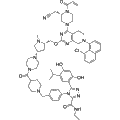
    KRAS degrader-1 is a selective KRAS degrader that induces targeted proteolysis of KRAS proteins via the autophagy-lysosomal degradation pathway. This compound demonstrates robust biological activity in modulating KRAS signaling, making it a valuable tool for research into KRAS-driven cancers. Its application in understanding the dynamics of protein degradation could provide insights into therapeutic strategies for targeting KRAS-dependent malignancies.

    Out of stock

    All 3 sizes
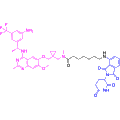
  • PROTAC SOS1 degrader-7
    Cat. No.
    A63663

    PROTAC SOS1 degrader-7

    PROTAC SOS1 degrader-7 is a targeted degradation compound designed to selectively degrade SOS1, a critical regulator in tumorigenesis. This PROTAC exhibits anti-tumor activity by promoting the ubiquitination and subsequent proteasomal degradation of SOS1. It is useful for researchers investigating the effects of SOS1 inhibition in cancer models and exploring potential therapeutic strategies for malignancies involving aberrant SOS1 signaling pathways.

    Out of stock

    All 3 sizes
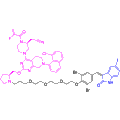
  • KRAS ligand 5
    Cat. No.
    A63665

    KRAS ligand 5

    KRAS ligand 5 is a target protein ligand utilized in the development of PROTAC K-Ras Degrader-3. This compound specifically facilitates the degradation of KRAS mutated proteins, making it a vital tool for research focused on targeted protein degradation. It is particularly relevant in studies addressing KRAS-related oncogenesis and potential therapeutic applications in cancer treatment.

    25 mg
    $2,000.00
    50 mg
    $2,630.00
    All 3 sizes
  • PROTAC SOS1 degrader-6
    Cat. No.
    A63680

    PROTAC SOS1 degrader-6

    PROTAC SOS1 degrader-6 is a targeted degradative compound designed to selectively degrade the SOS1 protein through a PROTAC mechanism. By utilizing a ligand for SOS1, an E3 ubiquitin ligase ligand, and an effective linker, this reagent enhances the efficacy of KRASG12C inhibitors. Its application is primarily in the study of KRAS-driven cancers and the exploration of protein homeostasis through targeted protein degradation pathways.

    Out of stock

    All 3 sizes
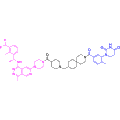
  • PROTAC SOS1 degrader-9
    Cat. No.
    A63712

    PROTAC SOS1 degrader-9

    PROTAC SOS1 degrader-9 is a PROTAC (Proteolysis Targeting Chimeras) compound designed for targeted degradation of the SOS1 protein. It employs a specific ligand to bind SOS1, linking it to an E3 ligase for ubiquitination and subsequent proteasomal degradation. This compound is useful in research applications focused on elucidating SOS1's role in cellular signaling pathways and its implications in disease contexts such as cancer.

    Out of stock

    All 3 sizes
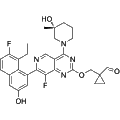
  • (4S)-PROTAC SOS1 degrader-1
    Cat. No.
    A63719

    (4S)-PROTAC SOS1 degrader-1

    (4S)-PROTAC SOS1 degrader-1 is a selective degrader targeting SOS1 through the PROTAC mechanism. This compound effectively reduces the expression of phosphorylated ERK (pERK) and levels of RAS-GTP in a dose-dependent manner, making it a valuable tool for studying RAS signaling. Its ability to significantly inhibit tumor growth in vivo underscores its potential applications in cancer research and therapy.

    Out of stock

    All 3 sizes
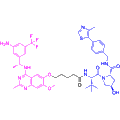
  • PROTAC K-Ras Degrader-6
    Cat. No.
    A63721

    PROTAC K-Ras Degrader-6

    PROTAC K-Ras Degrader-6 is a cereblon-based KRAS PROTAC degrader that effectively targets and promotes the degradation of KRAS proteins. With a DC50 of ≤100 nM, it exhibits significant anticancer activity, making it a valuable tool for research in cancer biology. This compound is particularly relevant for studies focusing on KRAS-driven malignancies and the development of targeted therapies that leverage the ubiquitin-proteasome system.

    Out of stock

    All 3 sizes
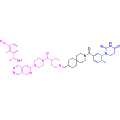
  • LC-2 epimer
    Cat. No.
    A63734

    LC-2 epimer

    LC-2 epimer is a differential isomer of LC-2, functioning as a PROTAC degrader. This compound selectively targets mutant KRAS through its unique linkage of a von Hippel-Lindau (VHL) E3 ligase ligand and the KRAS inhibitor MRTX849. LC-2 epimer is intended for research applications focused on targeted protein degradation and the study of KRAS-related pathways in cancer.

    1 mg
    $1,585.00
    All 1 sizes
  • PROTAC SOS1 degrader-10
    Cat. No.
    A63737

    PROTAC SOS1 degrader-10

    PROTAC SOS1 Degrader-10 is a novel PROTAC compound designed to target and degrade the son of sevenless 1 (SOS1) protein via a cereblon (CRBN) and proteasome-dependent pathway. It effectively reduces SOS1 levels in KRAS mutant cancer cell lines, including SW620, A549, and DLD-1, with DC50 values of 2.23, 1.85, and 7.53 nM, respectively. In addition to inducing degradation, PROTAC SOS1 Degrader-10 also inhibits cell proliferation in these models, displaying IC50 values of 36.7, 52.2, and 107 nM. Furthermore, it inhibits ERK phosphorylation, highlighting its potential role in cancer research and therapeutic applications targeting the RAS signaling pathway.

    Out of stock

    All 3 sizes
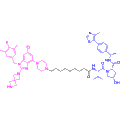
  • PROTAC SOS1 degrader-3
    Cat. No.
    A63754

    PROTAC SOS1 degrader-3

    PROTAC SOS1 degrader-3 is a targeted protein degradation compound that selectively promotes the degradation of SOS1 via the ubiquitin-proteasome pathway. This degrader exhibits potent activity in downregulating SOS1, a key player in RAS signaling pathways. It is useful for researchers studying the roles of SOS1 in cancer biology and therapeutic interventions that disrupt aberrant signaling associated with this target.

    Out of stock

    All 3 sizes
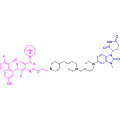
  • PROTAC SOS1 degrader-8
    Cat. No.
    A63755

    PROTAC SOS1 degrader-8

    PROTAC SOS1 degrader-8 is a PROTAC-based molecule designed to target and degrade the SOS1 protein. By utilizing a specific SOS1 ligand, a linker, and an E3 ligase ligand, this compound promotes the ubiquitination and subsequent proteasomal degradation of SOS1. Its primary biological activity involves the modulation of downstream signaling pathways associated with oncogenic processes. This reagent is suitable for research applications focused on elucidating the role of SOS1 in cancer biology and exploring novel therapeutic strategies.

    Out of stock

    All 3 sizes
Items 626-650 of 824

Added to your cart

View Cart Checkout

    Loading...