- Cat. No.
- A11801
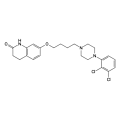
Aripiprazole
Synonyms: Abilify
Aripiprazole is a human 5-HT1A receptor partial agonist with a Ki of 4.2 nM.
Search by product name, CAS, target or catalog number. Press Down Arrow to reach product suggestions, Tab to move between links, and Escape to close suggestions.
5-HT receptor agonists and antagonists act on receptors for serotonin, also called 5-hydroxytryptamine (5-HT). Serotonin receptors are classified into seven families, 5-HT1 to 5-HT7, and most of them are G protein-coupled receptors. The 5-HT3 receptor is the exception, a serotonin-gated ion channel whose structure was reported in 1991. These receptors regulate mood, sleep, appetite, vascular tone and gut motility, so they are studied across neuroscience and physiology. Ligands in this category include WAY-100635, a 5-HT1A antagonist, and eletriptan hydrobromide, a 5-HT1B/1D agonist. Prucalopride, an agonist at the 5-HT4 receptor, is also listed.
Synonyms: Abilify
Aripiprazole is a human 5-HT1A receptor partial agonist with a Ki of 4.2 nM.
Synonyms: BW-311C90; 311C90
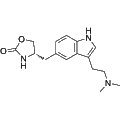
Zolmitriptan is a selective partial agonist of the 5-HT1B and 5-HT1D receptors, demonstrating high affinity with Ki values of 5.01 nM and 0.63 nM, respectively. It effectively crosses the blood-brain barrier, making it a valuable tool in migraine research. This compound is primarily utilized for studying the pathophysiology of migraines and developing targeted therapeutic interventions.
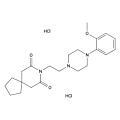
BMY 7378 is a 5-HT1A partial agonist and high affinity α1D adrenoceptor antagonist.
Synonyms: SM 3997
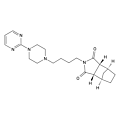
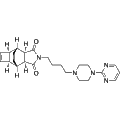
Tandospirone is a partial agonist at 5HT1A receptors. It significantly reduces haloperidol-induced bradykinesia in a dose-dependent manner.
Synonyms: SM-3997 citrate
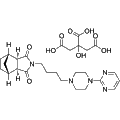
Tandospirone citrate is a selective partial agonist of the 5-HT1A receptor, exhibiting a binding affinity with a Ki value of 27 nM. It demonstrates significant selectivity over other serotonin and adrenergic receptors, including SR-2, SR-1C, α1, α2, D1, and D2, with Ki values ranging from 1300 to 41000 nM. This compound is primarily used in research related to psychiatric disorders and anxiety management, making it a valuable tool for exploring serotonergic pathways and their implications in mental health.
Synonyms: MKC-733; DDP-733
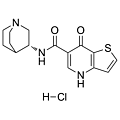
Pumosetrag Hydrochloride (MKC-733; DDP-733) is an orally available 5-HT3 partial agonist developed for the treatment of irritable bowel syndrome and gastroesophageal reflux disease.
Synonyms: PF-4995274; PF4995274.
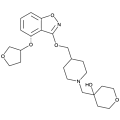
PF-04995274 is a partial agonist of the serotonin (5-HT) receptor subtypes 5-HT4A, 5-HT4B, 5-HT4D, and 5-HT4E (Kis = 0.36, 0.46, 0.15, and 0.32 nM, respectively, in a radioligand binding assay).1 It increases cAMP levels in HEK293 cells expressing 5-HT4A, 5-HT4B, 5-HT4D, and 5-HT4E receptors (EC50s = 0.47, 0.36, 0.37, and 0.26 nM, respectively, for the human recombinant receptors). PF-04995274 decreases scopolamine-induced increases in the distance traveled in the Morris water maze in rats when administered at a dose of 0.032 mg/kg.
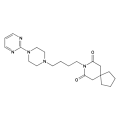
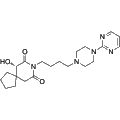
Buspirone is an orally active anxiolytic agent that acts as a partial agonist at 5-HT1A receptors and an antagonist at dopamine D2 autoreceptors. It is commonly used in the research and treatment of generalized anxiety disorder (GAD), offering anxiolytic effects without the sedative or dependence-forming properties of benzodiazepines.
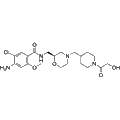
Minesapride is a selective partial agonist of the serotonin 4 (5-HT4) receptor. It promotes gastrointestinal peristalsis and enhances colonic transport by activating these receptors. Additionally, Minesapride effectively increases bowel movements and may alleviate visceral allergic reactions. This compound is utilized in research related to constipation-type irritable bowel syndrome (IBS-C).
Synonyms: EPT
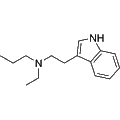
Ethylpropyltryptamine (EPT) acts as a partial agonist at the 5-HT2A receptor, influencing serotonergic signaling pathways. This compound exhibits psychoactive properties and is of interest in research exploring the effects of serotonin receptor modulation on behavior and cognition. EPT may serve as a valuable tool for investigating the mechanisms underlying various neuropsychiatric conditions.
Synonyms: WY-47846
Zalospirone is a cyclic imide and a partial agonist of the 5-HT1A receptor. It exhibits antidepressant-like activity, making it a valuable candidate for research into mood disorders. Its mechanism of action may provide insights into neuropharmacology and potential therapeutic applications in the treatment of depression.
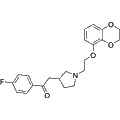
(Rac)-S 16924 is a partial agonist of the 5-HT1A receptor. This compound modulates signaling by stabilizing the receptor in its G-protein-coupled state, influencing intracellular signaling pathways linked to the 5-HT1A receptor. (Rac)-S 16924 is particularly valuable for investigating the role of the 5-HT1A receptor in mental health disorders, including schizophrenia.
Synonyms: BAY Vq 7813
Revospirone is a partial agonist of the 5-HT1A receptor, exhibiting a Ki value of 2 nmol/L. This compound effectively inhibits adenylate cyclase activity with an IC50 of 124 nmol/L. Revospirone is utilized in research applications targeting neuropharmacology and may aid in studying anxiety and mood disorders through its influence on serotonergic signaling pathways.
Out of stock
All 3 sizes
RS-64459-193 is a selective partial agonist of the 5-HT1A receptor, exhibiting a Ki of 24.9 nM. It demonstrates substantial affinity for additional serotonin receptors, including 5-HT2C, 5-HT2A, and 5-HT7, with pKi values of 6.87, 7.02, and 7.18, respectively. RS-64459-193 is characterized by minimal activity at the 5-HT3 receptor, making it a useful tool for studies focused on serotonin signaling pathways and potential therapeutics for disorders related to serotonergic dysregulation.
Synonyms: SL65.0155
Capeserod hydrochloride is a potent partial agonist of the 5-HT4(e) receptor, demonstrating a Ki value of 0.6 nM. This compound effectively stimulates cAMP production in cells expressing both 5-HT4(b) and 5-HT4(e) splice variants, with IC50 values of 244 nM and 29 nM, respectively. Capeserod hydrochloride is primarily utilized in research focused on cognitive enhancement, memory impairment, and dementia-related studies.
5-HT2CR agonist 1 is a selective partial agonist of the 5-HT2C receptor, displaying an effective maximum response (Emax) of 71.09% and an EC50 of 121.5 nM. This compound has been shown to exhibit specificity, with no activity towards 5-HT2A or 5-HT2B receptors. Furthermore, it demonstrates no recruitment activity for β-arrestin and minimal inhibition of hERG channels at 10 μM. This profile makes 5-HT2CR agonist 1 a valuable tool for research in neuropharmacology and receptor signaling pathways.
LY302148 is a partial agonist of the 5-HT1F receptor, demonstrating significant interaction with this target. In the [35S]GTPγS binding assay for human 5-HT1F receptors, it exhibits a potent EC50 value of 5.23 nM. This compound is of interest for research applications related to migraine pathophysiology and the potential development of therapeutic strategies.
Synonyms: WY-50324 hydrochloride; SEB-324 hydrochloride
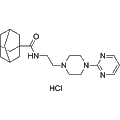
Adatanserin hydrochloride is a selective partial agonist of the 5-HT1A receptor, exhibiting high affinity with a Ki value of 1 nM. Additionally, it acts as a moderate affinity antagonist at the 5-HT2 receptor with a Ki of 73 nM. This compound demonstrates significant anxiolytic and antidepressant effects, making it valuable for research into anxiety and depression models.
RS-56812 is a partial agonist of the 5-HT3 receptor, known to significantly enhance colonic propulsive peristalsis. By indirectly promoting cholinergic neurotransmission, RS-56812 has also been shown to improve working memory performance in non-human primates. This compound is utilized in research investigating diarrheal disorders, colon motility, and cognitive impairments, including Alzheimer's disease.
Out of stock
All 3 sizes
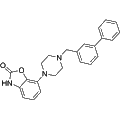
Bifeprunox is a potent partial agonist for the dopamine D2 receptor and the 5-HT1A receptor, exhibiting a pKi of 7.19 for cortex 5-HT1A and 8.83 for striatum D2. It demonstrates a pEC50 of 6.37 for hippocampus 5-HT1A. This compound is utilized in research related to antipsychotic mechanisms and is particularly relevant for studies focusing on schizophrenia.
(S)-PF-04995274 is a partial agonist of the 5-hydroxytryptamine receptor 4 (5-HT4R), acting to modulate serotonin signaling. This compound serves as an isomer of PF-04995274 and is utilized in research focused on gastrointestinal motility disorders and neurological applications. Its unique pharmacological profile makes it valuable in studies exploring serotonin receptor modulation.
Out of stock
All 3 sizes
LY 178210 is a selective partial agonist of the 5-HT1A receptor, exhibiting Ki values of 0.67 nM for 5-HT1A and 380 nM for 5-HT1D receptors, thereby demonstrating its specificity. Its minimal activity against α₂-adrenergic receptors, 5-HT₂, and other neurotransmitter receptors makes it a valuable tool in neuropharmacology. Additionally, LY 178210 effectively inhibits forskolin-stimulated cyclase activity, though with lower potency compared to full agonists like 8-OH-DPAT. This compound is significant for studies on serotonergic modulation, as it markedly reduces 5-hydroxyindoleacetic acid (5-HIAA) levels in the hypothalamus while increasing serum corticosterone concentrations.
Synonyms: YKP10811
Relenopride is a potent partial agonist of the 5-HT4 receptor, with a weak binding affinity for the 5-HT2B receptors (Ki = 31 nM). This compound exhibits significant biological activity in modulating gastrointestinal motility and is primarily utilized in research related to neuropharmacology and gastrointestinal disorders. Its selective action on the 5-HT4 receptor makes it a valuable tool for studying serotonin receptor pathways and their implications in various physiological functions.
Synonyms: OPC-34712 hydrochloride
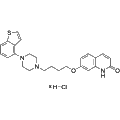
Brexpiprazole hydrochloride is an atypical antipsychotic agent that functions as a partial agonist at the human 5-HT1A and dopamine D2L receptors, exhibiting Kis of 0.12 nM and 0.3 nM, respectively. Additionally, it serves as a potent antagonist of the 5-HT2A receptor with a Ki of 0.47 nM. Brexpiprazole hydrochloride demonstrates significant antagonist activity at human noradrenergic α1B and α2C receptors, with Kis of 0.17 nM and 0.59 nM, respectively. This compound is primarily utilized in research exploring the treatment of psychiatric disorders, including schizophrenia and major depressive disorder.
BMS-442606 is an orally active 5-HT1A partial agonist that exhibits significant affinity for the serotonin receptor. Its biological activity positions it as a valuable tool for research focused on generalized anxiety disorder (GAD). BMS-442606 is instrumental in exploring the therapeutic potential of 5-HT1A modulation in anxiety-related conditions.