Protease-Activated Receptors (PAR)

Protease-activated receptor (PAR) ligands act on G protein-coupled receptors switched on by proteolytic cleavage. In 1991 cloning of the thrombin receptor, now PAR1, revealed a new mechanism of receptor activation. Thrombin cuts the N-terminal extracellular domain, and the newly exposed sequence binds the receptor itself as a tethered ligand. A second family member, PAR2, was cloned in 1994 and responds to trypsin. PAR1 and PAR4 carry thrombin signals in human platelets and endothelium, while PAR2 is studied in inflammation and pain. Vorapaxar and ML 161 inhibit PAR1, and BMS-986120 is a PAR4 antagonist. GB-88 and AZ3451 are PAR2 antagonists, whereas AC-264613 is a small-molecule PAR2 agonist.

2 Items

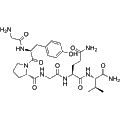
  • PAR-4 (1-6) amide (human)
    Cat. No.
    A63476

    PAR-4 (1-6) amide (human)

    PAR-4 (1-6) amide (human) is an N-terminal peptide fragment of protease-activated receptor 4 (PAR4) that acts as a platelet activator. This compound induces platelet aggregation, making it valuable for research involving hemostasis and thrombosis. It serves as a useful tool in studies aimed at understanding platelet function and the signaling pathways associated with cardiovascular diseases.

    5 mg
    $125.00
    10 mg
    $210.00
    All 2 sizes

2 Items

Added to your cart

View Cart Checkout

    Loading...