- Cat. No.
- A15914
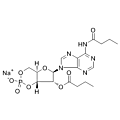
Bucladesine sodium (DBcAMP sodium)
Synonyms: Dibutyryl cAMP sodium; DBcAMP sodium
Dibutyryl-cAMP is a cell-permeable PKA activator by mimicing the action of endogenous cAMP.
Search by product name, CAS, target or catalog number. Press Down Arrow to reach product suggestions, Tab to move between links, and Escape to close suggestions.
Protein kinase A (PKA) inhibitors and activators act on the main kinase that relays cyclic nucleotide signals in cells. PKA was described in 1968 as an adenosine 3',5'-monophosphate-dependent protein kinase from rabbit skeletal muscle. The inactive enzyme is a tetramer of two regulatory and two catalytic subunits, and cyclic adenosine monophosphate (cAMP) binding releases the catalytic subunits. H 89 2HCl is a salt of H-89, an isoquinolinesulfonamide inhibitor reported in 1990. PKI 14-22 amide, myristoylated, is a cell-permeable peptide derived from the endogenous protein kinase inhibitor. Bucladesine sodium, a dibutyryl cAMP analog, activates PKA in intact cells instead. AT13148 inhibits PKA along with related kinases such as Akt, and further relatives are listed under Protein Kinase C (PKC).
Synonyms: Dibutyryl cAMP sodium; DBcAMP sodium
Dibutyryl-cAMP is a cell-permeable PKA activator by mimicing the action of endogenous cAMP.
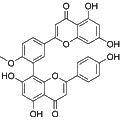
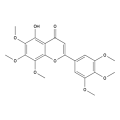
Bilobetin acts as a PPARα activator, enhancing lipid metabolism and insulin sensitivity. It effectively reduces blood lipid levels by promoting hepatic lipid uptake and oxidation, while decreasing triglyceride secretion and accumulation in tissues. Additionally, Bilobetin stimulates the phosphorylation and nuclear translocation of PPARα, resulting in increased cAMP levels and PKA activity. This compound is significant for research in metabolic disorders, particularly those related to insulin resistance and lipid regulation.
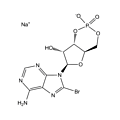
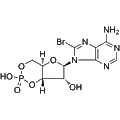
Synonyms: 8-Bromo-cAMP; sodium salt
8-Bromo-cAMP is a cell perbeable cyclic AMP (cAMP) analog and a PKA activator.
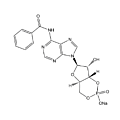
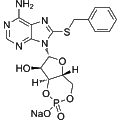
6-Bnz-cAMP is a PKA-selective activator. It regulates the PKA dependent signaling pathways.
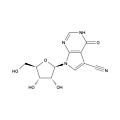
Synonyms: 7-CN-7-C-Ino
Jaspamycin (7-CN-7-C-Ino) is a potent activator of PKA, binding to the R site (PKAR), with an EC50 of 6.5 nM and Kd of 8 nM in Trypanosoma brucei. Jaspamycin (7-CN-7-C-Ino) does not bind with purified human PKARIα. Anti-parasite activity.
Gardenin A is an orally active synthetic polymethoxyflavone (PMF) analogue with neurotrophic properties, promoting neurite outgrowth and neuronal differentiation. It enhances neuritogenesis through activation of the MAPK/ERK, PKC, and PKA pathways, independent of TrkA and CREB signaling. Additionally, Gardenin A exhibits sedative, anxiolytic, antidepressant, and anticonvulsant effects, making it a promising compound for neurological and neuropsychiatric research.
Synonyms: 8-Br-Camp
8-Bromo-cAMP, a cyclic AMP analog, serves as a potent activator of cyclic AMP-dependent protein kinase (PKA). This compound demonstrates significant anti-proliferative and apoptotic effects in various cancer cell lines, making it a valuable tool for cancer research. Its role in modulating PKA activity provides insights into cellular signaling pathways and the mechanisms of tumorigenesis. 8-Bromo-cAMP is commonly utilized in studies aimed at understanding the therapeutic potential of targeting PKA in cancer treatment.
8-Benzylthio-cAMP is a selective activator of cAMP-dependent protein kinases (PKA) that serves as a stable derivative of cyclic adenosine monophosphate (cAMP). Its increased resistance to phosphodiesterase hydrolysis and enhanced membrane permeability make it an effective tool for probing cAMP signaling pathways. This compound is widely used in research to investigate the regulatory roles of cAMP in cellular processes such as proliferation, differentiation, and apoptosis.
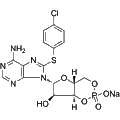
Synonyms: 8-CPT-cAMP sodium; 8-(p-Chlorophenylthio)-cAMP sodium
8-CPT-Cyclic AMP sodium is a selective activator of cyclic AMP-dependent protein kinase (PKA), crucial for regulating various cellular processes. This compound also exhibits potent inhibition of cyclic GMP-specific phosphodiesterase (PDE VA) with an IC50 of 0.9 μM, as well as inhibiting PDE III and PDE IV. Additionally, 8-CPT-Cyclic AMP sodium acts as a strong activator of exchange protein directly activated by cyclic AMP (Epac), making it valuable for studying signaling pathways and cellular responses related to PKA and Epac activation in biochemical research.
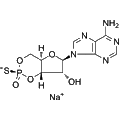
Sp-cAMPS sodium salt is a potent activator of both cAMP-dependent protein kinase A (PKA I and PKA II). It serves as a valuable tool for investigating PKA signaling pathways due to its ability to enhance cAMP levels. Additionally, Sp-cAMPS sodium salt acts as a competitive inhibitor of phosphodiesterase 3A (PDE3A) with a Ki value of 47.6 µM, and it interacts with the PDE10 GAF domain, exhibiting an EC50 of 40 µM. This reagent is useful for research applications in cellular signaling and pharmacology.
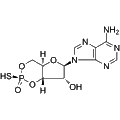
Sp-cAMPS is a cAMP analog that functions as a potent activator of protein kinase A (PKA) I and PKA II. Its ability to enhance PKA activity makes it a valuable tool for studying cAMP signaling pathways. Additionally, Sp-cAMPS acts as a competitive inhibitor of phosphodiesterase 3A (PDE3A) with a Ki value of 47.6 µM and binds to the GAF domain of PDE10 with an EC50 of 40 µM, further extending its utility in biochemical research applications.
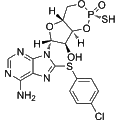
Sp-8-CPT-cAMPS is a potent and selective activator of cAMP-dependent protein kinase A (PKA), specifically targeting PKA I and PKA II. This cAMP analog demonstrates a remarkable 153-fold selectivity for Site A of RI over Site A of RII and a 59-fold selectivity for Site B of RII over Site B of RI. Its ability to effectively modulate PKA activity makes it a valuable tool for research in signaling pathways and cellular responses associated with cAMP.
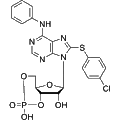
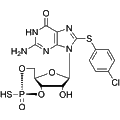
Synonyms: 8-(4-Chlorophenylthio)-N6-phenyl-cAMP
8-CPT-6-Phe-cAMP is a potent activator of protein kinase A (PKA), functioning as an analogue of the signaling molecule cyclic adenosine monophosphate (cAMP). This compound is widely utilized in research to study PKA-mediated pathways and cellular responses related to various physiological processes. Its ability to effectively modulate PKA activity makes it an essential tool for investigating signal transduction mechanisms and pharmacological interventions.
Out of stock
All 3 sizes
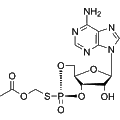
Sp-cAMPS-AM is a cell-permeable analog of cyclic AMP (cAMP) that functions as a potent activator of Protein Kinase A (PKA). Upon cellular uptake, it releases its parent compound, Sp-cAMPS, which subsequently promotes PKA activation and CREB phosphorylation. This reagent is valuable for research applications in signaling pathways involving cAMP and PKA, facilitating studies on gene expression and cellular response mechanisms.
Out of stock
All 3 sizes
Sp-8-pCPT-cGMPS is a potent activator of protein kinase G (PKG) and protein kinase A (PKA) with significant cell membrane permeability and phosphodiesterase stability. This cyclic guanosine monophosphate analog effectively engages PKG types I α, I β, and II, making it invaluable for research in signal transduction pathways. It is utilized to investigate the role of cGMP in neural plasticity, synaptic transmission, and other physiological processes influenced by these kinases.
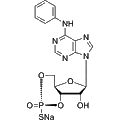
Sp-6-Phe-cAMPS is a potent, selective activator of cAMP-dependent protein kinase (PKA) that exhibits membrane permeability. This compound uniquely does not directly activate exchange factors that are normally stimulated by cAMP, serving as a useful negative control for Epac studies. Sp-6-Phe-cAMPS is valuable in research focusing on neurodegenerative diseases, facilitating investigations into PKA signaling pathways and their implications in these conditions.
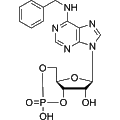
Synonyms: N6-Benzyladenosine-3',5'-cyclic monophosphate
6-Bn-cAMP is a potent site-selective activator of cAMP-dependent protein kinase (PKA), specifically designed not to activate Epac. This compound demonstrates enhanced hydrolytic stability against phosphodiesterases, esterases, and amidases, along with significantly improved membrane permeability compared to standard cAMP. It is widely utilized in research applications aimed at elucidating PKA signaling pathways and their biological implications.
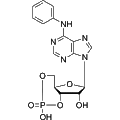
Synonyms: N6-Phenyladenosine-3',5'-cyclic monophosphate
6-Phe-cAMP is a potent and membrane-permeant activator of protein kinase A (PKA), specifically targeting site A of both PKA isozymes. This compound demonstrates strong selectivity, making it an invaluable tool for studying PKA-mediated signaling pathways. Additionally, 6-Phe-cAMP is amenable to phosphorothioate modification, facilitating further research applications in cellular and molecular biology.