Dopamine Receptors

Dopamine receptor agonists and antagonists act on the five G protein-coupled receptors that respond to dopamine. The receptors form two groups, with D1 and D5 in the D1-like class and D2, D3 and D4 in the D2-like class. D1-like receptors stimulate adenylyl cyclase, whereas D2-like receptors inhibit it and lower cyclic adenosine monophosphate (cAMP) levels. Dopamine signaling controls movement, reward, motivation and hormone release, and is studied in Parkinson's disease and psychiatric research. Ligands here include the agonist rotigotine HCl, the D2 antagonists L-741626 and domperidone, and the D3-preferring ligand BP897.

4 Items

  • C-DIM12
    Cat. No.
    A15936

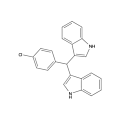
    C-DIM12

    C-DIM12 is a novel synthetic activator of Nurr1. C-DIM12 induces dopaminergic gene expression and protects against 6-hydroxydopamine neurotoxicity in vitro.

    5 mg
    $20.00
    10 mg
    $35.00
    All 7 sizes
  • ETH-LAD
    Cat. No.
    A29431

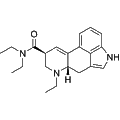
    ETH-LAD

    Synonyms: N-Ethyl-nor-LSD

    ETH-LAD (N-Ethyl-nor-LSD) is a selective activator of the 5-HT2A receptor, exhibiting a binding affinity with a Ki value of 5.1 nM. Additionally, it demonstrates affinity for dopamine receptors D1 and D2, with Ki values of 22.1 nM and 4.4 nM, respectively. ETH-LAD is utilized in research exploring psychoactive effects and receptor pharmacology in various models, including rat studies.

    0.5 mg
    $475.00
    1 mg
    $920.00
    All 3 sizes
  • BB-22
    Cat. No.
    A59314

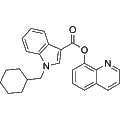
    BB-22

    BB-22 is a potent CB1 receptor ligand that acts as a dopamine activator. It exhibits a high affinity for CB1 receptors with a Ki value of 0.11 nM and demonstrates effective activation with an EC50 value of 2.9 nM. This compound may be valuable in studying the roles of endocannabinoid and dopaminergic systems in various neurological and psychiatric disorders.

    1 mg
    $120.00
    5 mg
    $300.00
    All 7 sizes
  • Methalthiazide
    Cat. No.
    A67415

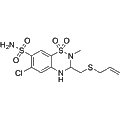
    Methalthiazide

    Methalthiazide is an antipsychotic agent that enhances the activity of natural stimulators of AMPA receptors. Its primary mechanism involves modulating glutamatergic signaling, making it a valuable tool in schizophrenia research. This compound can be utilized to explore the underlying mechanisms of psychotic disorders and assess potential therapeutic strategies.

    Out of stock

    All 3 sizes

4 Items

Added to your cart

View Cart Checkout

    Loading...