- Cat. No.
- A11034
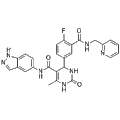
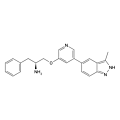
A-674563
A-674563 is a B/Akt inhibitor with an IC50 of 14 nM and also shows inhibitory activity against PKA and CDK2 with IC50 of 16 and 46 nM, respectively.
Search by product name, CAS, target or catalog number. Press Down Arrow to reach product suggestions, Tab to move between links, and Escape to close suggestions.
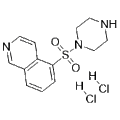
Protein kinase A (PKA) inhibitors and activators act on the main kinase that relays cyclic nucleotide signals in cells. PKA was described in 1968 as an adenosine 3',5'-monophosphate-dependent protein kinase from rabbit skeletal muscle. The inactive enzyme is a tetramer of two regulatory and two catalytic subunits, and cyclic adenosine monophosphate (cAMP) binding releases the catalytic subunits. H 89 2HCl is a salt of H-89, an isoquinolinesulfonamide inhibitor reported in 1990. PKI 14-22 amide, myristoylated, is a cell-permeable peptide derived from the endogenous protein kinase inhibitor. Bucladesine sodium, a dibutyryl cAMP analog, activates PKA in intact cells instead. AT13148 inhibits PKA along with related kinases such as Akt, and further relatives are listed under Protein Kinase C (PKC).
A-674563 is a B/Akt inhibitor with an IC50 of 14 nM and also shows inhibitory activity against PKA and CDK2 with IC50 of 16 and 46 nM, respectively.
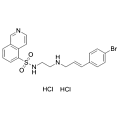
H 89 dihydrochloride is a cell-permeable, selective, reversible, ATP-competitive and potent inhibitor of protein kinase.
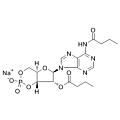
Synonyms: Dibutyryl cAMP sodium; DBcAMP sodium
Dibutyryl-cAMP is a cell-permeable PKA activator by mimicing the action of endogenous cAMP.
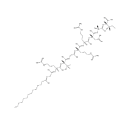
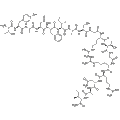
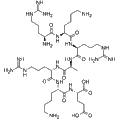
Synonyms: PKI (14-22) amide (myristoylated)
PKI 14-22 amide, myristoylated is a useful heat stable cAMP-dependent protein kinase inhibitor. This is often used to study PKA in cellular systems in-vitro.
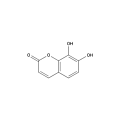
Synonyms: 7,8-dihydroxycoumarin
Daphnetin is a coumarin analog that acts as an inhibitor of several protein kinases. It inhibits EGFR kinase (IC50 = 7.67 μM), PKA (IC50 = 9.33 μM), and PKC (IC50 = 25 μM), in vitro. The inhibition of EGFR kinase by daphnetin was competitive to ATP and non-competitive to the peptide substrate. Also acts as a potent antioxidant and anti-malarial agent.
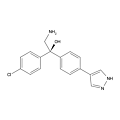
AT13148 is a novel oral multi-AGC kinase inhibitor with potent pharmacodynamic and antitumor activity, which shows a distinct mechanism of action from other AKT inhibitors.
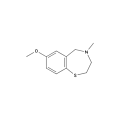
S107 is a RyR-selective 1,4-benzothiazepine derivative that stabilizes RyR2 channels by enhancing the binding affinity of calstabin2 to mutant and/or PKA-phosphorylated channels.
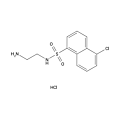
A-3 Hydrochloride is an inhibitor of PKA (cAMP-dependent protein kinase, Ki=4.3μM) and cGMP-dependent protein kinase, Ki=3.8μM, PKC (protein kinase C, Ki=47μM), casein kinase I and II, and MLCK (myosin light chain kinase) ( Ki=7.4μM).
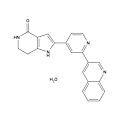
MK-2 Inhibitor III (compound 16) is an orally active, selective, and ATP-competitive MAPKAP-K2 (MK-2) inhibitor with an IC50 of 0.85 nM.
PKA inhibitor fragment (6-22) amide is a synthetic peptide that acts as a protein kinase inhibitor.
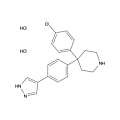
Synonyms: AT-7867 dihydrochloride
AT7867 dihydrochloride is a potent ATP-competitive inhibitor of Akt1/2/3 and p70S6K/PKA with IC50 of 32 nM/17 nM/47 nM and 85 nM/20 nM, respectively, little activity outside the AGC kinase family.
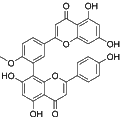
Bilobetin acts as a PPARα activator, enhancing lipid metabolism and insulin sensitivity. It effectively reduces blood lipid levels by promoting hepatic lipid uptake and oxidation, while decreasing triglyceride secretion and accumulation in tissues. Additionally, Bilobetin stimulates the phosphorylation and nuclear translocation of PPARα, resulting in increased cAMP levels and PKA activity. This compound is significant for research in metabolic disorders, particularly those related to insulin resistance and lipid regulation.
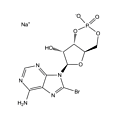
Synonyms: 8-Bromo-cAMP; sodium salt
8-Bromo-cAMP is a cell perbeable cyclic AMP (cAMP) analog and a PKA activator.
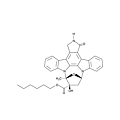
KT 5720 is prepared by a modificiation of K-252a (sc-200517), which is synthesized by the fungus Nocardiopsis sp.
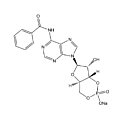
6-Bnz-cAMP is a PKA-selective activator. It regulates the PKA dependent signaling pathways.
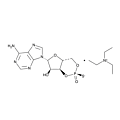
Synonyms: Rp-cAMPS
Rp-cAMPS is a cell-permeable and reversible inhibitor of PKA (protein kinase A) (Ki = 11 uM). Rp-cAMPS is resistant to hydrolysis by phosphodiesterases and is noncompetitive with respect to ATP.
Synonyms: PKG Inhibitor
cGMP Dependent Kinase Inhibitor Peptid is a specific cGKI (cyclic GMP-dependent protein kinase) inhibitor. Data indicates that it does not block cyclic GMP-dependent protein kinase phosphorylation of intact histones and has been used to study Plasmodium falciparum.
CCG215022 is a potent GRK2 and GRK5 inhibitor. CCG215022 exhibited nanomolar IC50 values against both GRK2 and GRK5 and good selectivity against other closely related kinases such as GRK1 and PKA.
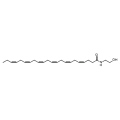
Synonyms: Docosahexaenoyl ethanolamide
Synaptamide is a potent mediator for neurogenic differentiation of NSCs acting through PKA/CREB activation.
Out of stock
All 3 sizes
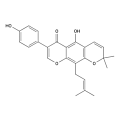
Synonyms: Scandenolone
Warangalone is a prenylated isoflavone from the insecticidal plant Derris scandens that acts as a powerful inhibitor of protein kinase A.
Synonyms: HA100
HA-100 is an isoquinoline compound with an added piperazinylsulfonyl group that acts as an inhibitor of protein kinases (PKs), including PKA, PKC, and PKG (IC50 = 8, 12, and 4 μM, respectively).
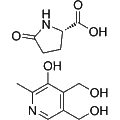
Metadoxine is a potent inhibitor of protein kinase A (PKA), specifically disrupting the PKA-cAMP response element binding protein (CREB) pathway. This compound is effective in blocking adipocyte differentiation, making it valuable for research into metabolic disorders and obesity-related pathways. Its ability to modulate PKA activity demonstrates potential applications in studying cellular signaling and metabolic regulation.
Synonyms: 7-epi-Hydroxystaurosporine
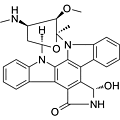
UCN-02 (7-epi-Hydroxystaurosporine) is a selective protein kinase C (PKC) inhibitor produced by Streptomyces strain N-12, with IC50s of 62 nM and 250 nM for PKC and protein kinase A (PKA), respectively.
Synonyms: 7-CN-7-C-Ino
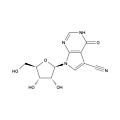
Jaspamycin (7-CN-7-C-Ino) is a potent activator of PKA, binding to the R site (PKAR), with an EC50 of 6.5 nM and Kd of 8 nM in Trypanosoma brucei. Jaspamycin (7-CN-7-C-Ino) does not bind with purified human PKARIα. Anti-parasite activity.