- Cat. No.
- A20658
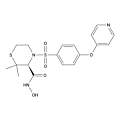
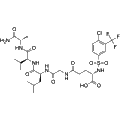
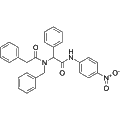
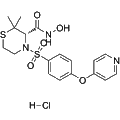
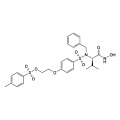
BR351 precursor
Synonyms: BR 351
BR351 precursor is a precursor of BR351. BR351 is a brain penetrant MMP inhibitor with IC50s of 4, 2, 11, 50 nM for MMP2, MMP8, MMP9 and MMP13, respectively.
Search by product name, CAS, target or catalog number. Press Down Arrow to reach product suggestions, Tab to move between links, and Escape to close suggestions.
Matrix metalloproteinase (MMP) inhibitors block zinc endopeptidases that degrade collagen and other matrix proteins. The first such activity, a collagenase, was detected in amphibian tissue culture in 1962. MMPs remodel tissue during development and wound repair, and they help tumor cells invade surrounding matrix. Membrane type 1 MMP (MT1-MMP, MMP-14), described in 1994, is anchored on the surface of invasive tumor cells. Batimastat, marimastat and GM 6001 are hydroxamate compounds that chelate the catalytic zinc and inhibit a wide range of MMPs. More selective tools include NSC 405020 for MT1-MMP and T-26c for MMP-13. Metalloproteases of the related ADAM family are listed in the neighboring ADAMs category.
Synonyms: BR 351
BR351 precursor is a precursor of BR351. BR351 is a brain penetrant MMP inhibitor with IC50s of 4, 2, 11, 50 nM for MMP2, MMP8, MMP9 and MMP13, respectively.
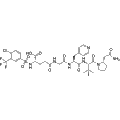
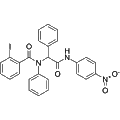
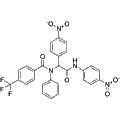
XL-784 is a selective matrix metalloproteinases (MMP) inhibitor, with IC50s of ~1900, 0.81, 120, 10.8, 18, 0.56 nM for MMP-1, MMP-2, MMP-3, MMP-8, MMP-9, MMP-13 respectively.
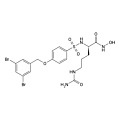
PNU-248686A is a novel matrix metalloproteinase (MMP) inhibitor.
Synonyms: AG3340; KB-R9896
Prinomastat (AG3340) is a broad spectrum, potent, orally active metalloproteinase (MMP) inhibitor with IC50s of 79, 6.3 and 5.0 nM for MMP-1, MMP-3 and MMP-9, respectively.
PythiDC is a selective inhibitor of collagen prolyl 4-hydroxylase.
MMP-7-IN-2 (comp 16) is a selective MMP7 inhibitor, with an IC50 of 16 nM.
MMP-7-IN-3 is a potent and selective inhibitor of MMP-7. MMP-7-IN-3 suppresses kidney fibrosis progression in a mouse model with unilateral ureteral obstruction.
JG26 is a potent ADAM inhibitor with IC50 values of 12 nM for ADAM8, 1.9 nM for ADAM17, and 150 nM for ADAM10. It also inhibits MMP-12 with an IC50 of 9.4 nM. JG26 suppresses AngII-induced EGFR transactivation and ERK activation, upregulates ACE2 expression, inhibits CD23 shedding, and reduces SARS-CoV-2 infection. Additionally, JG26 demonstrates anti-metastatic effects in colorectal cancer and holds research potential in Hodgkin lymphoma and vascular diseases.
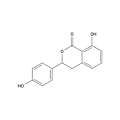
Hydrangenol is an orally active antiphotoaging compound isolated from *Hydrangea serrata* leaves. It prevents wrinkle formation by downregulating matrix metalloproteinases (MMPs) and inflammatory cytokines, while upregulating moisturizing factors and antioxidant gene expression, making it a promising agent for skin health and anti-aging research.
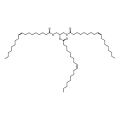
Triolein is a symmetric triacylglycerol composed of three oleic acid molecules esterified to glycerol. It exhibits strong antioxidant and anti-inflammatory properties and has been shown to reduce the upregulation of matrix metalloproteinase-1 (MMP-1), a key enzyme involved in tissue remodeling and inflammation. These activities make triolein a compound of interest in research related to inflammatory diseases and oxidative stress.
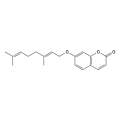
Auraptene is an orally active geranyloxycoumarin compound naturally found in plants of the *Brassicaceae* family. It exhibits a wide range of biological activities, including antibacterial, anti-pathogenic, antioxidant, anti-tumor, and neuroprotective effects. Auraptene has shown therapeutic potential in the management of various chronic conditions such as hypertension and cystic fibrosis, making it a valuable compound for pharmacological and nutraceutical research.
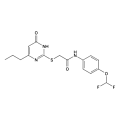
MMP-9-IN-1 is a selective inhibitor of matrix metalloproteinase-9 (MMP-9) that specifically targets the hemopexin (PEX) domain of MMP-9, without affecting other MMP family members.
SM-7368 is a potent NF-κB inhibitor that acts downstream of MAPK p38 activation. It suppresses TNF-α-induced upregulation of MMP-9 and is suitable for research on chemotherapeutic strategies targeting TNF-α-mediated tumor invasion and metastasis.
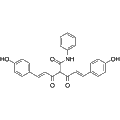
Synonyms: Ras/MMPs Inhibitor; TRB-N0224
CMC2.24 (TRB-N0224) is an orally active tricarbonylmethane compound that exhibits antitumor activity in pancreatic cancer models by inhibiting Ras activation and downstream ERK1/2 signaling. It is also a potent inhibitor of zinc-dependent matrix metalloproteinases (MMPs), with IC₅₀ values ranging from 2.0 to 69 μM. Additionally, CMC2.24 has therapeutic potential in osteoarthritis, where it restores cartilage homeostasis and reduces chondrocyte apoptosis through modulation of the NF-κB/HIF-2α pathway.
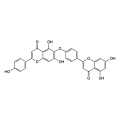
Hinokiflavone is a naturally occurring biflavonoid isolated from plants, recognized as a novel modulator of pre-mRNA splicing. It exhibits diverse biological activities, including anti-inflammatory, antitumor, and antiviral effects. Mechanistically, Hinokiflavone acts as a potent inhibitor of matrix metalloproteinases (MMPs) and suppresses the virulence of methicillin-resistant Staphylococcus aureus (MRSA) by targeting caseinolytic protease P (ClpP) with an IC₅₀ of 34.36 µg/mL. In cancer models, Hinokiflavone triggers apoptosis through a reactive oxygen species (ROS)-dependent, mitochondria-mediated pathway and suppresses tumor cell migration and invasion. Additionally, it functions as a SUMO protease inhibitor, effectively blocking sentrin-specific protease 1 (SENP1) activity.
MMP-9-IN-3 is a potent MMP-9 inhibitor, exhibiting an IC50 value of 5.56 nM, and forms hydrogen bonds with the target enzyme. Additionally, it inhibits AKT activity with an IC50 of 2.11 nM. MMP-9-IN-3 demonstrates cytotoxic effects on cells and induces apoptosis, making it valuable for cancer research applications.
MMP-9-IN-5 is a potent MMP-9 inhibitor, with an IC50 of 4.49 nM, that binds to MMP-9 through hydrogen bonding. Additionally, it exhibits inhibition of AKT activity with an IC50 of 1.34 nM. MMP-9-IN-5 demonstrates cytotoxic effects on cells and induces apoptotic processes. This compound is applicable in cancer research, aiding in the exploration of therapeutic strategies targeting tumor progression and metastasis.
MMP-9-IN-4 is a highly potent inhibitor of matrix metalloproteinase 9 (MMP-9), exhibiting an IC50 value of 7.46 nM, and it demonstrates strong H-π interactions with the target. Additionally, MMP-9-IN-4 inhibits AKT activity with an IC50 of 8.82 nM, contributing to its biological profile. This compound displays cytotoxic effects and induces apoptosis in various cell lines, making it a valuable reagent in cancer research applications, particularly in studies focused on tumor progression and metastasis.
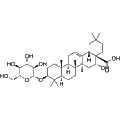
Ecliptasaponin A is a pentacyclic triterpenoid saponin that functions as a robust inhibitor of matrix metalloproteinases (MMPs). It demonstrates significant anti-tumor properties by activating the ASK1/JNK pathway, leading to apoptosis and autophagy in lung cancer cells. Additionally, Ecliptasaponin A exerts anti-inflammatory and anti-fibrotic effects by inhibiting the HMGB1/TLR4/NF-κB signaling pathway, impacting COX-2 and MMP-9 expression. Its chondroprotective effects are attributed to the downregulation of MMP13 and modulation of inflammatory factors, while it also promotes ovarian function by enhancing ESR1 receptor expression.
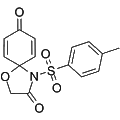
MMP2-IN-1 is a moderate potency inhibitor of matrix metalloproteinase 2 (MMP2), with an IC50 value of 6.8 µM. This compound displays significant antiproliferative effects on specific cancer cell lines by disrupting cell cycle progression and promoting apoptotic cell death. MMP2-IN-1 is valuable for research applications aimed at investigating the role of MMP2 in cancer biology and developing therapeutic strategies targeting tumor metastasis.
Synonyms: AG3340 hydrochloride; KB-R9896 hydrochloride
Prinomastat hydrochloride is a potent, orally active metalloproteinase (MMP) inhibitor that targets various MMPs, demonstrating IC50 values of 79 nM for MMP-1, 6.3 nM for MMP-3, and 5.0 nM for MMP-9. It exhibits high affinity, with Kis of 0.05 nM for MMP-2, 0.3 nM for MMP-3, 0.03 nM for MMP-13, and 0.26 nM for MMP-9, making it a broad-spectrum inhibitor. Notably, Prinomastat hydrochloride is capable of crossing the blood-brain barrier and has demonstrated antitumor activity, making it valuable for cancer research and therapeutic studies targeting MMP-related pathways.
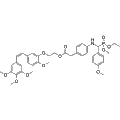
Tubulin/MMP-IN-2 is a dual inhibitor targeting both tubulin and matrix metalloproteinases (MMPs). It effectively inhibits tubulin polymerization, leading to induced apoptosis in cancer cells. Additionally, Tubulin/MMP-IN-2 demonstrates inhibitory activity against MMP-2, MMP-3, and MMP-9, with IC50 values of 24.95 μM, 31.60 μM, and 22.37 μM, respectively. This compound is valuable for research focused on cancer biology and therapeutic development.
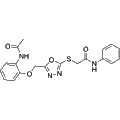
Anticancer agent 183 is a potent matrix metalloproteinase-9 (MMP-9) inhibitor that demonstrates over 75% inhibition of MMP-9 activity at a concentration of 100 μg/mL. It exhibits significant anticancer effects with an IC50 value of less than 0.14 μM against the A549 lung cancer cell line. Additionally, Anticancer agent 183 promotes apoptosis, making it a valuable reagent for research in cancer biology and therapeutic applications.
Out of stock
All 3 sizes
Synonyms: BEM
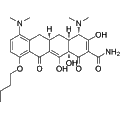
10-Butyl Ether Minocycline is a derivative of Minocycline that functions as an inhibitor of matrix metalloproteinases MMP-8 and MMP-9, exhibiting IC50 values of 69.4 µM and 47.0 µM, respectively. This compound effectively suppresses lipopolysaccharide-induced microglial activation, inhibits VEGF-induced endothelial cell migration, and reduces L-Glutamine-induced reactive oxygen species levels. Additionally, 10-Butyl Ether Minocycline is shown to significantly decrease alcohol consumption in the Chronic Intermittent Ethanol mouse model of alcohol dependence, making it a valuable reagent for research into neuroimmune-inflammatory diseases and alcohol use disorder.
Out of stock
All 3 sizes
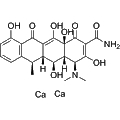
Doxycycline calcium is a broad-spectrum antibiotic that serves as a metalloproteinase (MMP) inhibitor. This compound demonstrates antibacterial properties and inhibits cancer cell proliferation, making it valuable in cancer research. Additionally, doxycycline calcium can be utilized in constructing gene expression regulation models, providing insights into gene modulation and environmental response mechanisms.
Out of stock
All 3 sizes