Proteasome

Proteasome inhibitors block the 26S proteasome, the protease complex that degrades ubiquitin-tagged proteins. Its 20S core carries caspase-like, trypsin-like and chymotrypsin-like active sites on β subunits with an N-terminal threonine. In 1994, peptide aldehydes including MG-132 were shown to block degradation of most cell proteins. The same inhibitors prevented generation of peptides for major histocompatibility complex (MHC) class I molecules. Lactacystin, a Streptomyces metabolite, modifies the catalytic threonine of specific subunits. Later chemotypes include the boronates bortezomib and ixazomib and the epoxyketones carfilzomib and epoxomicin, which bind irreversibly. ONX-0914 prefers low molecular mass polypeptide 7 (LMP7), a subunit of the immunoproteasome.

Items 126-150 of 152

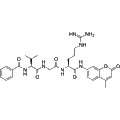
  • Bz-VGR-AMC
    Cat. No.
    A77358

    Bz-VGR-AMC

    Bz-VGR-AMC is a synthetic substrate specifically designed for the trypsin-like activity of the 20S proteasome. This compound enables the quantification of β2 activity within the proteasome, serving as a valuable tool for researching proteasomal function and regulation. Its application is particularly relevant in studies investigating cellular protein degradation, signaling pathways, and disease mechanisms associated with proteasomal dysregulation.

    Out of stock

    All 3 sizes
  • A-933548
    Cat. No.
    A77359

    A-933548

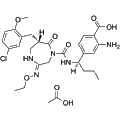
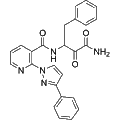
    A-933548 is a highly potent and selective inhibitor of calpain, demonstrating a Ki value of 18 nM. This compound's ability to modulate calpain activity makes it a valuable tool for research into neurodegenerative disorders, particularly Alzheimer's disease. Its specificity for calpain allows for detailed studies of calpain-mediated pathways and potential therapeutic interventions.

    25 mg
    $1,405.00
    50 mg
    $1,790.00
    All 3 sizes
  • Z-Gly-Pro-Phe-Leu-CHO
    Cat. No.
    A77361

    Z-Gly-Pro-Phe-Leu-CHO

    Synonyms: Z-GPFL-CHO

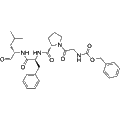
    Z-Gly-Pro-Phe-Leu-CHO is a tetrapeptide aldehyde that serves as a highly selective and potent inhibitor of the proteasome. It demonstrates significant inhibition with Ki values of 1.5 µM for branched-chain amino acid-preferring activities, 2.3 µM for small neutral amino acid-preferring activities, and 40.5 µM for chymotrypsin-like activities, with an IC50 of 3.1 µM for peptidyl-glutamyl peptide hydrolyzing activity. This compound is valuable for research applications focusing on proteasomal functions and related pathways in cellular processes.

    Out of stock

    All 3 sizes
  • NC-002
    Cat. No.
    A77362

    NC-002

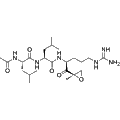
    NC-002 is a cell-permeable trypsin-like proteasome inhibitor that selectively targets the proteasome while sparing lysosomal cysteine proteases. This epoxyketone derivative of Leupeptin enhances the sensitivity of myeloma cells to Bortezomib and Carfilzomib, making it a valuable tool for cancer research. NC-002's unique mechanism offers potential insights into proteasome-related pathways and therapeutic strategies in oncology.

    Out of stock

    All 3 sizes
  • (+)-Catechin 3-gallate
    Cat. No.
    A77363

    (+)-Catechin 3-gallate

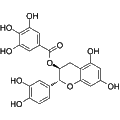
    (+)-Catechin 3-gallate is a polyphenolic compound that functions as a non-selective proteasome inhibitor. It demonstrates antitumor activity by inducing apoptosis and decreasing the levels of inflammatory cytokines. This agent is of significant interest in cancer research, particularly for breast and prostate cancers, as well as in the study of neurodegenerative diseases such as Alzheimer's.

    Out of stock

    All 3 sizes
  • Z-Leu-Leu-Tyr-COCHO
    Cat. No.
    A77364

    Z-Leu-Leu-Tyr-COCHO

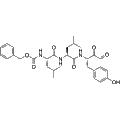
    Z-Leu-Leu-Tyr-COCHO is a potent proteasome inhibitor that specifically targets chymotrypsin-like activity, exhibiting a Ki value of 3.0 nM. This compound is effective in the modulation of protein degradation pathways, making it a valuable tool in studies related to cancer research and cellular stress responses. Its ability to inhibit proteasome activity provides insights into various biological processes and therapeutic mechanisms.

    Out of stock

    All 3 sizes
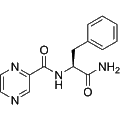
  • Bortezomib-pinanediol
    Cat. No.
    A77365

    Bortezomib-pinanediol

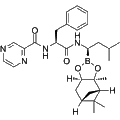
    Bortezomib-pinanediol is a prodrug of Bortezomib, functioning primarily as a proteasome inhibitor. This compound effectively inhibits cell growth and is utilized in research focused on multiple myeloma. Its ability to modulate proteasomal activity makes it a valuable tool for investigating cancer cell regulation and therapeutic responses.

    25 mg
    $30.00
    50 mg
    $40.00
    All 6 sizes
  • JBIR-22
    Cat. No.
    A77366

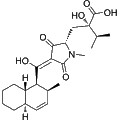
    JBIR-22

    JBIR-22 is a proteasome inhibitor that specifically targets the homodimer of the proteasome assembly factor 3, disrupting its protein-protein interactions. This disruption leads to significant cytotoxic effects on human cervical cancer cell lines, demonstrating its potential as a therapeutic agent in oncology research. The stereochemical structure of JBIR-22 has been elucidated through total synthesis, supporting its further investigation in cancer studies.

    25 mg
    $2,285.00
    50 mg
    $2,935.00
    All 3 sizes
  • MeOSuc-Gly-Leu-Phe-AMC
    Cat. No.
    A77367

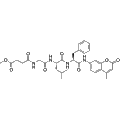
    MeOSuc-Gly-Leu-Phe-AMC

    MeOSuc-Gly-Leu-Phe-AMC is a peptide substrate specifically designed for proteasomal activity assays. This compound facilitates the study of proteasome function by serving as a sensitive probe for proteolytic activity. It is particularly useful in research areas focused on protein degradation pathways and cellular regulation mechanisms, providing insights into various biological processes and potential disease states.

    Out of stock

    All 3 sizes
  • SAP2-IN-1
    Cat. No.
    A77368

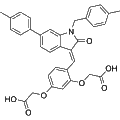
    SAP2-IN-1

    SAP2-IN-1 is a potent inhibitor of secreted aspartic protease 2 (SAP2), characterized by an IC50 value of 0.92 μM. This compound serves as a virulence factor inhibitor, making it valuable for studying the role of SAP2 in pathogenesis. Due to its unique mechanism, SAP2-IN-1 can be utilized in research focused on infectious diseases and the mechanisms of microbial virulence.

    25 mg
    $1,275.00
    50 mg
    $1,625.00
    All 3 sizes
  • Az-NC-002
    Cat. No.
    A77369

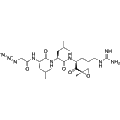
    Az-NC-002

    Az-NC-002 is a β2/β2i-specific active probe designed to selectively target the proteasome's trypsin-like site. This compound exhibits minimal off-target effects, demonstrating negligible inhibition of Cathepsin D, thus providing a highly specific tool for probing proteasome activity. Az-NC-002 is ideal for biochemical assays and research applications focused on proteasome function and regulation in various pathological conditions.

    Out of stock

    All 3 sizes
  • INVA8001
    Cat. No.
    A77370

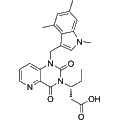
    INVA8001

    Synonyms: ASB17061

    INVA8001 is a highly selective and orally active chymase inhibitor, demonstrating significant potency with IC50 values of 0.02 μM for human chymase and 0.03 μM for mouse mast cell proteinase 4 (mMCP-4). This compound exhibits remarkable selectivity over related serine proteases, with IC50 values of 3.4 μM for bovine α-chymotrypsin and 32.1 μM for human cathepsin G, showcasing over 1000-fold selectivity. INVA8001 has been shown to inhibit mast cell activity in a mouse model of primary sclerosing cholangitis (PSC), leading to improved bile duct pathology and reduced bile stasis, thus highlighting its potential anti-inflammatory and anti-fibrotic applications in research.

    Out of stock

    All 3 sizes
  • Isomoreollic acid
    Cat. No.
    A77371

    Isomoreollic acid

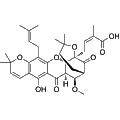
    Isomoreollic acid is a cage xanthonoid that targets proteasome inhibition, exhibiting cytotoxic effects on colon cancer cells with an IC50 greater than 10 μM. Derived from the stem bark of Garcinia lateriflora, isomoreollic acid serves as a valuable reagent for colon cancer research, enabling studies on its mechanisms and potential therapeutic applications.

    Out of stock

    All 3 sizes
  • LMP7/LMP2-IN-1
    Cat. No.
    A77372

    LMP7/LMP2-IN-1

    LMP7/LMP2-IN-1 is a potent inhibitor of the immunoproteasome subunits LMP7 and LMP2, exhibiting IC50 values of 257 nM and 10 nM, respectively. This compound effectively reduces antibody production and downregulates B cells in the germinal centers of the spleen as well as plasma cells in NP-OVA-immunized mice. LMP7/LMP2-IN-1 is valuable for research into autoimmune diseases and the modulation of immune responses.

    Out of stock

    All 3 sizes
  • Phepropeptin B
    Cat. No.
    A77373

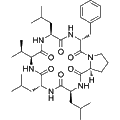
    Phepropeptin B

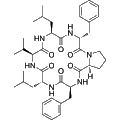
    Phepropeptin B is a proteasome inhibitor that demonstrates a potent inhibitory effect with an IC50 of 11 μg/mL. This microbial secondary metabolite plays a crucial role in the regulation of protein degradation, making it a valuable tool in studies related to cancer research and cellular processes involving proteostasis. Its application extends to exploring the mechanisms of diseases where proteasome activity is dysregulated.

    Out of stock

    All 3 sizes
  • Cerpegin
    Cat. No.
    A77374

    Cerpegin

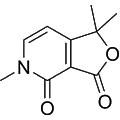
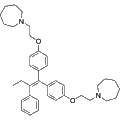
    Cerpegin is a potent inhibitor of the 20S proteasome, which plays a critical role in the degradation of ubiquitinated proteins. This compound exhibits significant biological activities including anti-inflammatory, analgesic, and antiulcer effects, making it a valuable tool in research focused on proteasome-related pathways and therapeutic applications. Its mechanism of action allows for exploration in models of neuroprotection and various inflammatory conditions.

    Out of stock

    All 3 sizes
  • Phepropeptin D
    Cat. No.
    A77375

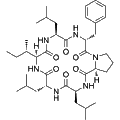
    Phepropeptin D

    Phepropeptin D is a microbial secondary metabolite that functions as a proteasome inhibitor, exhibiting an IC50 of 7.8 μg/mL. This compound plays a significant role in the regulation of protein degradation pathways, making it valuable for studies related to cellular proteostasis and cancer research. Its ability to modulate proteasome activity positions Phepropeptin D as a useful tool for investigating therapeutic strategies targeting proteasome-mediated pathways.

    Out of stock

    All 3 sizes
  • Bortezomib impurity A
    Cat. No.
    A77376

    Bortezomib impurity A

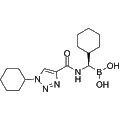
    Bortezomib impurity A is a metabolite of the 20S proteasome inhibitor Bortezomib, functioning as a key control for proteasome activity. This compound is useful in research applications focused on the mechanisms of proteasome inhibition and related signaling pathways. Its characterization aids in the development and quality assessment of proteasome-targeted therapeutics.

    5 mg
    $90.00
    10 mg
    $150.00
    All 5 sizes
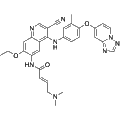
  • JBJ-08-178-01
    Cat. No.
    A77377

    JBJ-08-178-01

    JBJ-08-178-01 is a selective tyrosine kinase inhibitor targeting mutant forms of the human epidermal growth factor receptor 2 (HER2). It demonstrates significant antitumor activity by reducing both the kinase activity and protein levels of HER2 through the induction of proteasomal degradation. This compound holds potential for research applications in non-small-cell lung cancer, providing insights into therapeutic mechanisms against HER2-driven malignancies.

    25 mg
    $1,275.00
    50 mg
    $1,625.00
    All 3 sizes
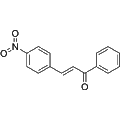
  • 4-Nitrochalcone
    Cat. No.
    A77378

    4-Nitrochalcone

    Synonyms: 2-(4-Nitrobenzylidene)acetophenone

    4-Nitrochalcone serves as a proteasome inhibitor, specifically targeting the proteasomal degradation pathway. It effectively inhibits the activity of NF-κB induced by TNFα, making it a valuable tool for studying inflammatory processes and signaling pathways. This compound is utilized in research focused on cancer, neurodegenerative diseases, and other conditions where proteasome activity plays a critical role.

    Out of stock

    All 3 sizes
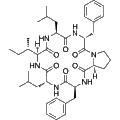
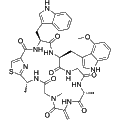
  • Argyrin A
    Cat. No.
    A77379

    Argyrin A

    Argyrin A is a cyclical peptide that functions as a potent antitumoral agent through its ability to inhibit the proteasome. This inhibition results in increased levels of endogenous p27kip1 by blocking protein turnover, thereby contributing to its antitumor activity. Argyrin A is valuable for research applications focusing on cancer biology and therapeutic development targeting proteasomal pathways.

    Out of stock

    All 3 sizes
  • Phepropeptin A
    Cat. No.
    A77380

    Phepropeptin A

    Phepropeptin A is a microbial secondary metabolite that functions as a potent proteasome inhibitor, exhibiting an IC50 of 21 μg/mL. This compound is valuable for research applications focusing on the regulation of protein degradation pathways. Phepropeptin A can be utilized in studies aimed at understanding the role of proteasomal inhibition in cellular processes and disease models, particularly in cancer research and neurodegenerative disorders.

    Out of stock

    All 3 sizes
  • Phepropeptin C
    Cat. No.
    A77381

    Phepropeptin C

    Phepropeptin C is a proteasome inhibitor with a reported IC50 of 12.5 μg/mL. This microbial secondary metabolite disrupts protein degradation pathways, leading to the accumulation of regulatory proteins and altered cellular responses. Its ability to modulate proteasome activity makes it a valuable tool for research into cancer biology and other diseases characterized by dysregulated protein homeostasis.

    Out of stock

    All 3 sizes
  • BI-1942
    Cat. No.
    A77382

    BI-1942

    BI-1942 is a potent chymase inhibitor with an IC50 of 0.4 nM for human chymase. This chemical probe is primarily utilized in research related to ophthalmic diseases, enabling the exploration of chymase's role in ocular pathologies. Its selective inhibition provides a valuable tool for investigating the therapeutic potential in conditions where chymase is implicated.

    Out of stock

    All 3 sizes
  • RID-F
    Cat. No.
    A77383

    RID-F

    Synonyms: Ridaifen-F

    RID-F (Ridaifen-F) is a nonpeptidic proteasome inhibitor that targets the human 20S proteasome. It demonstrates significant inhibitory activity with IC50 values of 0.64 µM for caspase-like (CT-L), 0.34 µM for trypsin-like (T-L), and 0.43 µM for post-glutamyl (PGPH) activities. RID-F is utilized in research focused on cellular degradation pathways, cancer biology, and therapeutic approaches targeting proteasome dysfunction.

    25 mg
    $1,275.00
    50 mg
    $1,625.00
    All 3 sizes

Items 126-150 of 152

Added to your cart

View Cart Checkout

    Loading...