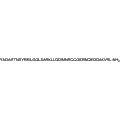
GHSR

Ghrelin receptor agonists and antagonists act on the growth hormone secretagogue receptor (GHSR). The receptor was cloned in 1996 from pituitary and hypothalamus as the target of synthetic growth hormone secretagogues. Its endogenous ligand, ghrelin, was identified in 1999 as an acylated stomach peptide that releases growth hormone. GHSR signaling links growth hormone release with appetite and energy balance, which makes the receptor a frequent subject in metabolism research. Anamorelin, capromorelin and ulimorelin are small-molecule GHSR agonists, and des-Gln14-Ghrelin is a natural ghrelin variant. PF-5190457 acts as an inverse agonist, while liver-expressed antimicrobial peptide 2 (LEAP-2) antagonizes the receptor.

Items 51-57 of 57

  • GHRF, ovine
    Cat. No.
    A60575

    GHRF, ovine

    GHRF, ovine is a growth hormone-releasing factor that specifically stimulates the secretion of pituitary growth hormone (GH). It plays a crucial role in the physiological response to hypoglycemia, enhancing GH release to regulate metabolic processes. This reagent is utilized in research focused on growth hormone regulation, metabolic disorders, and endocrine system studies.

    Out of stock

    All 3 sizes
  • L-692429 hydrochloride
    Cat. No.
    A60576

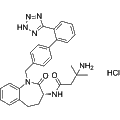
    L-692429 hydrochloride

    Synonyms: MK-0751 hydrochloride

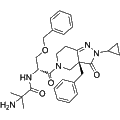
    L-692429 hydrochloride is a nonpeptidyl growth hormone secretagogue (GHS) agonist and a benzolactam derivative, primarily targeting the growth hormone secretagogue receptor. With a binding affinity characterized by a Ki of 63 nM, this compound effectively stimulates growth hormone release, making it valuable for studies in endocrine regulation and metabolic research. Its applications extend to investigating the physiological roles of growth hormone and exploring therapeutic avenues for growth-related disorders.

    Out of stock

    All 3 sizes
  • GSK894281
    Cat. No.
    A60577

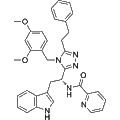
    GSK894281

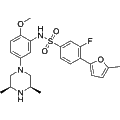
    GSK894281 is a highly potent ghrelin receptor agonist exhibiting a pEC50 of

    25 mg
    $1,275.00
    50 mg
    $1,625.00
    All 3 sizes
  • JMV 3002
    Cat. No.
    A60578

    JMV 3002

    JMV 3002 is a potent antagonist of the growth hormone secretagogue receptor (GHSR). It exhibits significant biological activity by inhibiting hexarelin-stimulated food intake in rat models, achieving up to 98% reduction at a dose of 80 μg/kg. JMV 3002 does not induce release of growth hormone on its own, nor does it inhibit hexarelin-stimulated growth hormone secretion in infant rats at a dose of 160 μg/kg. This compound is valuable for research focused on energy homeostasis and the regulation of appetite.

    0.1 mg
    $105.00
    0.5 mg
    $455.00
    All 4 sizes
  • GHSR-1a agonist-1
    Cat. No.
    A60579

    GHSR-1a agonist-1

    GHSR-1a agonist-1 is a potent agonist of the human growth hormone secretagogue receptor 1a (GHSR-1a), exhibiting an EC50 value of 0.49 nM. This compound effectively stimulates the release of endogenous growth hormone, making it valuable for investigating growth and developmental processes. In preclinical studies, oral administration at a dosage as low as 0.1 mg/kg led to significant increases in body weight and length in 4-week-old rats, supporting its potential applications in addressing growth and development retardation in pediatric research.

    Out of stock

    All 3 sizes
  • JMV 3008
    Cat. No.
    A60580

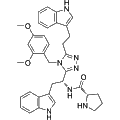
    JMV 3008

    JMV 3008 is a GHS-R1a antagonist with an IC50 of 5.6 nM, effectively inhibiting the growth hormone secretagogue receptor 1a. This compound demonstrates potential in the study of metabolic disorders, including diabetes and obesity, by modulating appetite and energy homeostasis. Research involving JMV 3008 can contribute valuable insights into therapeutic strategies targeting these diseases.

    25 mg
    $1,275.00
    All 1 sizes
  • KwFwLL-NH2
    Cat. No.
    A60582

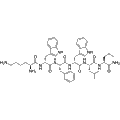
    KwFwLL-NH2

    KwFwLL-NH2 is a hexapeptide that functions as an inverse agonist at the growth hormone secretagogue receptor (GHSR). This compound demonstrates moderate potency with an EC50 of 45.6 nM, making it a valuable tool for investigating the role of ghrelin signaling in various biological processes. It is applicable in research focused on appetite regulation, metabolic disorders, and potential therapeutic interventions targeting the ghrelin pathway.

    Out of stock

    All 3 sizes

Items 51-57 of 57

Added to your cart

View Cart Checkout

    Loading...