
- Cat. No.
- A13193
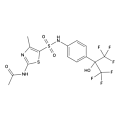
SR1001
SR1001 is a selective ROR-alpha and ROR-gamma inverse agonist; suppresses TH17 cell differentiation and inhibits autoimmunity.
In stock
View Details
Search by product name, CAS, target or catalog number. Press Down Arrow to reach product suggestions, Tab to move between links, and Escape to close suggestions.
ROR modulators target retinoic acid receptor-related orphan receptors (RORs), a family of nuclear receptors. The family has three members, RORα, RORβ and RORγ, which bind ROR response elements in target genes and are active without an added ligand. RORα contributes to circadian clock regulation, and the immune isoform RORγt directs the differentiation of interleukin-17 (IL-17)-producing T helper (Th17) cells. In 2011 the synthetic RORα/γ ligand SR1001 was shown to suppress Th17 differentiation and autoimmunity in mice. SR-2211 and XY101 act on RORγ, whereas SR3335 is selective for RORα. SR1078 is used as an agonist of RORα and RORγ in studies of target gene expression. Related receptors without well-defined ligands are listed under Orphan Nuclear Receptor.
SR1001 is a selective ROR-alpha and ROR-gamma inverse agonist; suppresses TH17 cell differentiation and inhibits autoimmunity.
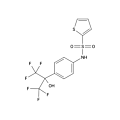
Synonyms: ML-176
SR3335 is a selective RORα synthetic ligand, directly binds to RORα, but not other RORs, and functions as a selective partial inverse agonist of RORα in cell-based assays.
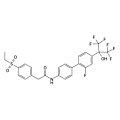
XY101 is a potent, selective, metabolically stable and orally available RORγ inverse agonist with an IC50 of 30 nM and a Kd of 380 nM.
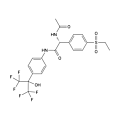
ROR agonist-1 is a potent and orally bioavailable inverse agonist of the retinoic acid receptor-related orphan receptor C2 (RORC2), inhibition of IL-17A production from human primary TH 17 cells with a pIC50 of 7.5.
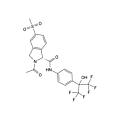
Synonyms: AZD0284.
AZD-0284 is a potent, selective, inverse agonist of the nuclear receptor RORγ for the potential treatment of Plaque psoriasis.
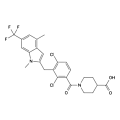
A-9758 is a RORγ ligand and a potent, selective RORγt inverse agonist (IC50=5 nM), and exhibits robust potency against IL-17A release.
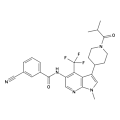
PF-06747711 is a potent, selective, and orally active retinoic acid receptor-related orphan C2 (RORC2, also known as RORγt) inverse agonist, with an IC50 of 4.1 nM. Anti-skin inflammatory activity.
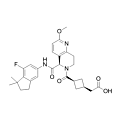
TAK-828F is a potent, selective, and orally available retinoic acid receptor-related orphan receptor γt (RORγt) inverse agonist (binding IC50=1.9 nM, reporter gene IC50=6.1 nM).

Synonyms: TMP 778??TMP-778
(Rac)-TMP778 is the racemate of TMP778. TMP778 is a potent and selevtive RORγt inverse agonist, with an IC50 of 7 nM in FRET assay.
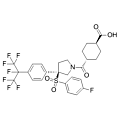
RORγt Inverse agonist 2 is a selective, orally active RORγt inverse agonist with an EC50 of 119 nM.
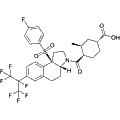
BMS-986251 is a selective RORγt inverse agonist with an EC50 of 12 nM in RORγt GAL4 assays. It effectively inhibits IL-17 production with an EC50 of 24 nM in human whole blood assays. BMS-986251 exhibits significant efficacy in preclinical models of psoriasis, including mouse acanthosis and Imiquimod-induced models, making it a valuable tool for research in autoimmune and inflammatory diseases.
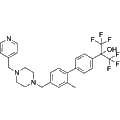
SR-1903 is an inverse agonist of RORγ and PPARγ, exhibiting IC50 values of approximately 100 nM and 209 nM for these targets, respectively. This compound demonstrates significant anti-inflammatory and anti-diabetic properties, making it valuable in models of collagen-induced arthritis and diet-induced obesity. SR-1903's unique mechanism of action positions it as a useful reagent in researching metabolic disorders and inflammatory diseases.
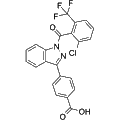
MRL-871 is a potent allosteric inverse agonist of the retinoic acid receptor-related orphan receptor γt (RORγt), exhibiting an IC50 of 12.7 nM. This compound is characterized by its unique isoxazole chemotype and demonstrates significant efficacy in reducing IL-17a mRNA production in EL4 cells. MRL-871 is useful for research applications focused on immune response modulation and studying the role of RORγt in autoimmune diseases.
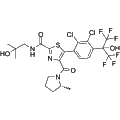
JNJ-61803534 is a potent RORγt inverse agonist, exhibiting an IC50 of 9.6 nM. This compound demonstrates significant anti-inflammatory activity by inhibiting the production of IL-17A in human CD4+ T cells during Th17 differentiation. JNJ-61803534 is valuable for research in autoimmune disease and inflammation pathways, facilitating the study of RORγt as a therapeutic target.
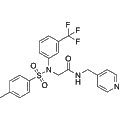
RORγ inverse agonist 1 is an inverse agonist of the retinoic acid receptor-related orphan receptor gamma (RORγ). This compound modulates RORγ activity, negatively regulating its transcriptional activity. It is primarily utilized in research related to immune responses and inflammation, offering insights into potential therapeutic strategies targeting autoimmune diseases and related disorders.
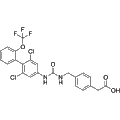
RORγt inverse agonist 13 is a selective inverse agonist targeting the RORγt receptor with an IC50 of 63.8 nM. This compound demonstrates potent biological activity, making it suitable for research applications focusing on autoimmune diseases and T cell differentiation. Its improved agent-like properties enhance its utility in preclinical studies investigating the modulation of RORγt signaling pathways.
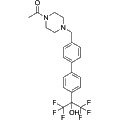
SR1555 is a specific inverse agonist of the retinoic acid receptor-related orphan nuclear receptor γ (RORγ), exhibiting an IC50 value of 1 μM. This compound is known to effectively inhibit TH17 cell development and function while promoting an increase in T regulatory cell frequency and downregulating IL-17 expression. SR1555 is valuable for investigating mechanisms in autoimmune disease research.
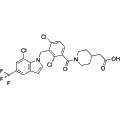
Synonyms: ABBV-157
Cedirogant is an orally active inverse agonist of the retinoic acid receptor-related orphan receptor gamma-t (RORγt). It demonstrates significant potential in modulating immune responses, particularly in the context of psoriasis research. This compound serves as a valuable tool for investigating therapeutic strategies targeting autoimmune and inflammatory conditions.
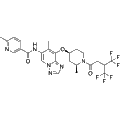
RORγt Inverse Agonist 10 is a potent inverse agonist targeting the retinoic acid receptor-related orphan nuclear receptor gamma t (RORγt), with an IC50 of 51 nM. This compound effectively suppresses the expression of key genes involved in the pathogenesis of psoriasis, including IL-17A, IL-22, and IL-23R. It is suitable for research applications exploring the mechanisms of autoimmune diseases and the development of novel therapeutics for psoriasis.
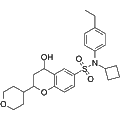
RORγt inverse agonist 23 is a potent and selective inverse agonist targeting the retinoic acid receptor-related orphan receptor gamma t (RORγt). This compound demonstrates significant biological activity as an immunomodulator, making it valuable in the investigation of autoimmune diseases and inflammatory disorders. Its oral bioavailability enhances its utility in preclinical studies and therapeutic research applications.
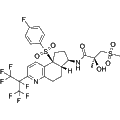
RORγt inverse agonist 14 is a selective inverse agonist targeting the retinoic acid receptor-related orphan receptor gamma t (RORγt) with an EC50 of 2.5 nM. This compound exhibits significant anti-inflammatory properties, making it suitable for research into autoimmune conditions such as rheumatoid arthritis and psoriasis. Its oral bioavailability facilitates in vivo studies, contributing valuable insights into RORγt modulation in therapeutic contexts.
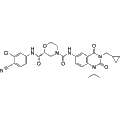
RORγt Inverse Agonist 6 is designed to inhibit the RORγt receptor, a key regulator in Th17-driven autoimmune diseases. This compound effectively suppresses IL-17A gene expression following IL-23 stimulation in vivo, making it a valuable tool for exploring therapeutic strategies against inflammatory conditions. Its application is essential for researchers investigating the role of Th17 cells in various autoimmune disorders.
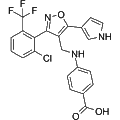
FM26 is a potent allosteric inverse agonist of the retinoic acid receptor-related orphan receptor γt (RORγt), exhibiting an IC50 of 264 nM. This compound effectively downregulates IL-17a mRNA expression in EL4 cells, making it a valuable tool for studying Th17 cell differentiation and related immunological responses. FM26 is suitable for research applications focusing on autoimmune diseases and inflammation.
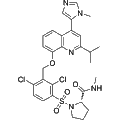
RORγt Inverse Agonist 3 is a selective and orally bioavailable inverse agonist of RORγ, exhibiting potent activity with EC50 values of 0.22 μM for human RORγ and 0.15 μM for RORγt in human IL-17 cells. This compound is useful for investigations into the regulation of immune responses and the role of RORγt in inflammatory diseases. Its ability to inhibit RORγt activity makes it a valuable tool for research into conditions such as autoimmune disorders and cancer.
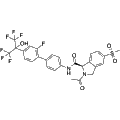
RORγt inverse agonist 26 is a potent inverse agonist of the RORγt receptor, crucial for modulating Th17 cell differentiation. This compound effectively inhibits the production of interleukin-17 (IL-17), making it valuable for research into inflammation and autoimmune disorders. Delving into RORγt functionality, this reagent is instrumental in therapeutic development and understanding immune system regulation.