- Cat. No.
- A17268
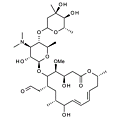
Kitasamycin
Synonyms: Turimycin; Leucomycin V; Selectomycin
Turimycin is a macrolide antibiotic that is effective against a wide spectrum of pathogens.
Search by product name, CAS, target or catalog number. Press Down Arrow to reach product suggestions, Tab to move between links, and Escape to close suggestions.
Anti-infectives brings together compounds that act on bacteria, fungi and viruses in microbiology research. They are used to study microbial growth, drug resistance and host-pathogen interactions. Its seven subcategories are Antibiotic, Bacterial, Fungal, Mycobacterium tuberculosis, HIV (human immunodeficiency virus), Dengue Virus and Flavivirus. Antibacterial examples include the oxazolidinone linezolid, the carbapenems imipenem and meropenem, and the glycylcycline tigecycline. Bedaquiline, a diarylquinoline, and pretomanid, a nitroimidazole, are used in Mycobacterium tuberculosis research. Among the antivirals, nelfinavir inhibits HIV-1 protease, an enzyme required for viral maturation. Compounds for a single viral enzyme or virus, such as reverse transcriptase or influenza virus, also have their own Microbiology categories.
Synonyms: Turimycin; Leucomycin V; Selectomycin
Turimycin is a macrolide antibiotic that is effective against a wide spectrum of pathogens.
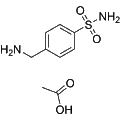
Mafenide Acetate is a potent sulfonamide antimicrobial agent primarily targeting bacterial infections. It exhibits significant antibacterial activity against Staphylococcus aureus and Pseudomonas aeruginosa, as well as antifungal activity against filamentous fungi, including Lichtheimia and Aspergillus flavus. This compound is valuable in research applications related to skin grafts on burn wounds, post-traumatic invasive fungal infections, and the treatment of bacterially contaminated wounds.
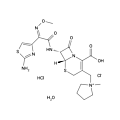
Synonyms: Cefepime Hydrochloride; Cefepime HCl; Cefepime hydrochloride monohydrate; Quadrocef; Elan.
Cefepime Dihydrochloride Monohydrate is a broad-spectrum cephalosporin with enhanced coverage against Gram-positive and Gram-negative bacteria.
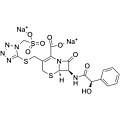
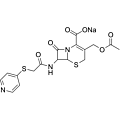
Cefsulodin sodium salt hydrate is a third generation β lactam antibiotic and member of the cephems subgroub of antibiotics.
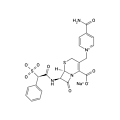
Cefonicid sodium is a broadspectrum cephalosporin antibiotic which inhibits the formation of the bacterial cell wall.
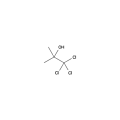
Synonyms: Acetochlorone; Chlortran; Methaform
Chlorobutanol (trichloro-2-methyl-2-propanol) is a preservative, sedative, hypnotic and weak local anesthetic similar in nature to chloral hydrate.
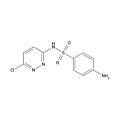
Synonyms: Sulfachlorpyridazine; Sonilyn; Cluricol; Durasulf; Ba 10370
Sulfachlorpyridazine, also known as Sonilyn, Cluricol, Durasulf, and Ba 10370, is an antibacterial agent typically used in agricultural practices.
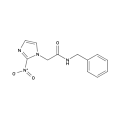
Synonyms: NSC 299972; Radanil; Ro 07-1051; Ro 71051.
Benznidazol (Ro 07-1051) is an antiparasitic medication, with an IC50 of 20.35 μM for Colombian T. cruzi strains, and has been used in the treatment of Chagas disease.
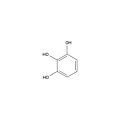
Synonyms: 2,3-Dihydroxyphenol; Benzene-1,2,3-triol; C.I. 76515; Fouramine Brown AP; NSC 5035.
Pyrogallol is a polyphenol compound, which has anti-fungal and anti-psoriatic properties. Pyrogallol is a reductant that is able to generate free radicals, in particular superoxide anions.
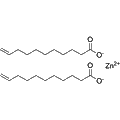
Synonyms: Zinc undecylenate
10-Undecenoic acid zinc salt is an antifungal agent that targets various fungal pathogens. It demonstrates biological activity by inhibiting Aβ oligomerization, scavenging reactive oxygen species (ROS), and inhibiting μ-calpain activity, contributing to its neuroprotective properties. Additionally, this compound has anticancer effects against multiple tumor types and effectively inhibits biofilm formation by C. albicans as well as infections from MRSA. Furthermore, 10-Undecenoic acid zinc salt disrupts quorum sensing signals in Bacillus subtilis and Pseudomonas aeruginosa, highlighting its broad-spectrum antimicrobial potential.
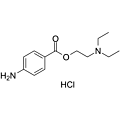
Synonyms: Procaine hydrochloride; Novocain; Novocaine
Procaine hydrochloride is a local anesthetic of the ester type that has a slow onset and a short duration of action. It is mainly used for infiltration anesthesia, peripheral nerve block, and spinal block.
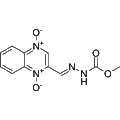
Carbadox is a quinoxaline-di-N-oxide antibiotic that functions as a bacterial inhibitor. It is primarily used in veterinary medicine to control enteric infections in nursery-age pigs, enhancing feed efficiency and promoting overall health. Its antibacterial properties make it valuable for research applications focused on veterinary pharmacology and microbiology in the study of antibiotic efficacy and resistance mechanisms.
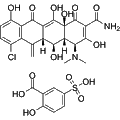
Meclocycline Sulfosalicylate Salt is a tetracycline antibiotic that acts as a bacterial inhibitor through the inhibition of protein synthesis. It exhibits broad-spectrum antibacterial activity, making it effective against various skin infections, including acne vulgaris. This reagent is valuable for research into antibiotic resistance and the mechanisms of bacterial infection.
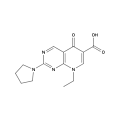
Synonyms: Acidum piromidicum [INN-Latin]; Actrun C; Bactramyl; BRN 0625004; EINECS 243-161-4; Enterol; Gastrurol; Panacid; PD 93; Pirodal; Piromidic acid.
Piromidic acid is antibacterial against mainly gram negative organisms. It is used for urinary tract and intestinal infections.
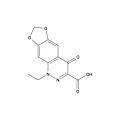
Synonyms: Cinobac; Compound 64716; Cinoxacine; Cinoxacino; Cinoxacinum; Acid; Azolinic; Azolinic Acid
Cinoxacin was an older synthetic antimicrobial related to the quinolone class of antibiotics with activity similar to oxolinic acid and nalidixic acid.
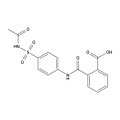
Synonyms: Enteramide; Ftalicetimida; Kalacet; NSC 163977; TSC-80
Phthalylsulfacetamide is an antibiotic sulfonamide used as a leprostatic agent to treat urinary tract infections.
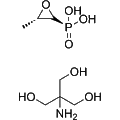
Synonyms: MK-0955 tromethamine
Fosfomycin tromethamine is a broad-spectrum antibiotic that acts by irreversibly inhibiting an early stage of bacterial cell wall synthesis. This compound effectively penetrates the blood-brain barrier and demonstrates significant antibacterial activity against various strains, including multidrug-resistant (MDR), extensively drug-resistant (XDR), and pan-drug-resistant (PDR) bacteria. It is utilized in research applications aimed at understanding bacterial resistance mechanisms and evaluating novel therapeutic strategies.
Synonyms: Cefapirin sodium; Cephap; BL P 1322; BLP 1322. NSC 179171
Cephapirin Sodium is the sodium salt form of cephapirin, a semi-synthetic, broad-spectrum, first-generation cephalosporin antibiotic. It is beta-lactam with bactericidal activity. Cephalosporin antibiotic is effective against gram-negative and gram-positive organisms. Cephapirin sodium inhibits bacterial cell wall synthesis by inhibiting the final transpeptidation step of peptidoglycan synthesis and subsequent cross-linking of peptidoglycan units.
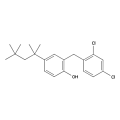
Clofoctol is a bacteriostatic antibiotic. It is used in the treatment of respiratory tract and ear, nose and throat infections caused by Gram-positive bacteria. It is only functional against Gram-positive bacteria, It penetrates into human lung tissue.
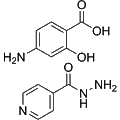
Synonyms: Paraniazide; Pasiniazide; Isonicotinic acid hydrazide p-aminosalicylate
Pasiniazid is a complex formed by the combination of isoniazid and para-aminosalicylic acid in a 1:1 molar ratio, acting primarily as an antibacterial agent targeting Mycobacterium tuberculosis. Upon administration, Pasiniazid decomposes rapidly in the gastrointestinal tract, releasing isoniazid, which exhibits a bactericidal effect, while para-aminosalicylic acid prolongs the acetylation of isoniazid. This compound is valuable for research applications related to tuberculosis and the development of effective treatment regimens.
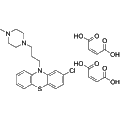
Prochlorperazine dimaleate is an orally active dopamine D2 receptor (D2R) antagonist. It demonstrates notable anti-cancer activity in vitro against a range of cancer cell lines, with IC50 values of 6.4 μM for NOX1, 4.5 μM for NOX2, and 2.3 μM for NOX5. Additionally, prochlorperazine dimaleate exhibits antedesmosidic activity against the dengue virus (DENV). This compound is valuable for research aimed at understanding and treating conditions such as nausea, vomiting, migraine, and schizophrenia.
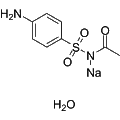
Synonyms: Sulphacetamide sodium monohydrate
Sulfacetamide sodium monohydrate is a sulfonamide antibiotic primarily targeting bacterial infections. It exhibits both antifungal and antibacterial activities, making it valuable for studying ocular infections. This reagent is useful in research applications that explore mechanisms of infection and treatment efficacy in ophthalmology.
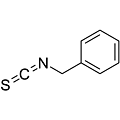
Synonyms: Tromacaps
Benzyl isothiocyanate is a member of natural isothiocyanates with antimicrobial activity. Benzyl isothiocyanate potent inhibits cell mobility, migration and invasion nature and matrix metalloproteinase-2 (MMP-2) activity of murine melanoma cells.
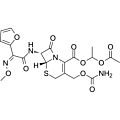
Synonyms: SN 407
Cefuroxime axetil is a second generation cephalosporin antibiotic with a broad spectrum activity against Gram positive and Gram negative bacteria.
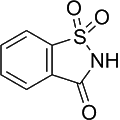
Saccharin is a non-caloric artificial sweetener that primarily exhibits bacteriostatic properties. It is recognized for its ability to inhibit bacterial growth and modulate the microbiome. This compound is utilized in various research applications aimed at studying microbial dynamics and the effects of sweeteners on bacterial populations.