- Cat. No.
- A10472
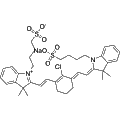
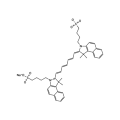
Indocyanine green
Synonyms: Cardiogreen; IR-125
Indocyanine green is a cyanine dye used in medical diagnostics. It is used for determining cardiac output, hepatic function, and liver blood flow, and for ophthalmic angiography.
Search by product name, CAS, target or catalog number. Press Down Arrow to reach product suggestions, Tab to move between links, and Escape to close suggestions.
Browse cyanine dyes and derivatives identified in product-specific catalog or supplier evidence. Compare the exact reagent form, specifications and available package sizes.
Family membership does not establish a shared wavelength, permeability, conjugation chemistry or biological application. Select the exact product for your intended experiment.
Synonyms: Cardiogreen; IR-125
Indocyanine green is a cyanine dye used in medical diagnostics. It is used for determining cardiac output, hepatic function, and liver blood flow, and for ophthalmic angiography.
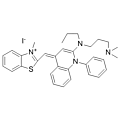
Dye 937, substituted unsymmetrical cyanine dyes with selected permeability, useful in the detection of DNA in electrophoretic gels.
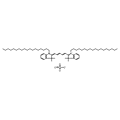
DiD perchlorate is a lipophilic cyanine dye.shown to stain HSCs.
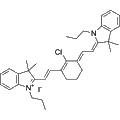
IR780 is a prototypic near-infrared (NIR) heptamethine cyanine dye with a high molar extinction coefficient. It exhibits a maximum excitation wavelength of 777–780 nm and a maximum emission wavelength of 798–823 nm. IR780 is widely used in cancer research for photothermal therapy (PTT), photodynamic therapy (PDT), and imaging applications.
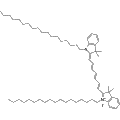
Synonyms: Cy7 DiC18
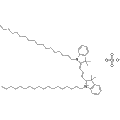
DiR is a long-chain carbocyanine dye commonly used for labeling and tracking biological structures. As a member of the Di series of dyes, DiR is particularly suited for labeling cells, organelles, liposomes, viruses, and lipoproteins due to its strong membrane affinity and near-infrared fluorescence properties.
Synonyms: 3,3'-Dioctadecyloxacarbocyanine perchlorate; DiOC18(3)
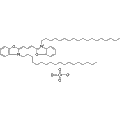
DiO is a long-chain carbocyanine dye commonly used for labeling cells, organelles, liposomes, viruses, and lipoproteins. As a member of the Di-series carbocyanine dyes, DiO integrates into lipid membranes, enabling effective fluorescent tracking in various biological systems.
Synonyms: DiIC18(3)
DiI is a long-chain lipophilic carbocyanine dye commonly used for fluorescent labeling of biological membranes. Due to its strong affinity for lipid bilayers, DiI efficiently integrates into cell membranes, making it ideal for tracing cells, organelles, liposomes, viruses, and lipoproteins. It exhibits bright fluorescence, high photostability, and minimal cytotoxicity, enabling long-term imaging and tracking in both fixed and live-cell applications.
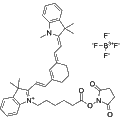
Cyanine7 NHS ester tetrafluoroborate is a near-infrared fluorescent dye designed for biological conjugation applications. It exhibits strong fluorescence properties, making it ideal for imaging and labeling studies in fluorescence microscopy and flow cytometry. This reagent is particularly useful in labeling proteins and other biomolecules for enhanced visualization in various research contexts.
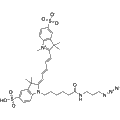
Sulfo-Cy5-N3 is a versatile fluorescent dye featuring an azide group that enables its use in click chemistry applications. Primarily utilized for imaging, this red fluorescent label (Excitation/Emission=642/670 nm) facilitates the visualization of biomolecules through the copper-catalyzed azide-alkyne cycloaddition (CuAAc) method when paired with alkyne-containing compounds. Additionally, it can participate in the ring strain-promoted alkyne-azide cycloaddition (SPAAC) with DBCO or BCN groups, making it suitable for a variety of biological and chemical research applications.
pH Receptor Probe is a pH-sensitive cyanine derivative that functions as an environmental-sensitive fluorophore. It exhibits a maximal absorption at 644 nm and emission at 664 nm, making it suitable for sensitive pH measurements. This probe has been effectively utilized as a pH sensor in lysosomal compartments, facilitating the study of cellular environments and processes.
Synonyms: Cyanine 5.5 carboxylic acid
Cy5.5-COOH is a fluorescent dye that emits light at 710 nm when excited at 650 nm. This compound features outstanding spectral characteristics, including a narrow absorption spectrum, high sensitivity, and exceptional stability. Cy5.5-COOH is ideal for applications in bioimaging and disease diagnosis, facilitating precise visualization and analysis in research settings.
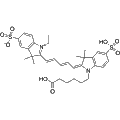
Synonyms: Sulfo-Cyanine3
CY3 (Sulfo-Cyanine3) is a fluorescent dye characterized by its orange emission (λex=554, λem=568). This dye is widely utilized for labeling proteins and nucleic acids in various biological assays. Its strong fluorescent properties make it an ideal choice for applications in fluorescence microscopy, flow cytometry, and in situ hybridization. CY3 facilitates the visualization and analysis of molecular interactions within complex biological systems.
Synonyms: Sulfo-Cyanine5.5
Cy5.5 is a cyanine fluorescent dye known for its long-wavelength absorption and emission properties. It features a high extinction coefficient and good water solubility, making it suitable for a variety of biological applications. Cy5.5 is commonly utilized for the labeling of proteins, antibodies, and small molecules, facilitating applications such as fluorescence microscopy, flow cytometry, and in vivo imaging. The straightforward labeling process through simple mixing reactions enhances its utility in various research settings.
Synonyms: Sulfo-Cyanine5
CY5 is a reactive dye that belongs to the Cyanine family, characterized by its long wavelength absorption and emission properties. Its high extinction coefficient and excellent water solubility make it ideal for bioconjugation applications. Commonly utilized for labeling proteins, antibodies, and small molecular compounds, CY5 enables efficient visualization and tracking in various biological assays. The labeling process can be performed through a straightforward mixing reaction, facilitating its use in diverse research settings.
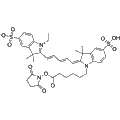
Synonyms: Cy5 NHS Ester; Sulfo-Cyanine5 Succinimidyl Ester
CY5-SE (Cy5 NHS Ester) is a reactive dye specifically designed for the labeling of amino groups in peptides, proteins, and oligonucleotides. This reagent facilitates efficient labeling reactions in the presence of minimal organic co-solvents, such as DMF or DMSO. CY5-SE is particularly suitable for cost-effective labeling of soluble proteins, peptides, and oligonucleotides, as well as for labeling small molecules in organic solvents. With an excitation wavelength of 649 nm and an emission wavelength of 670 nm, this dye is valuable for a range of fluorescence-based assays and applications in biochemical research.
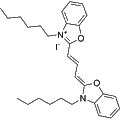
Synonyms: DiOC6(3) iodide
3,3'-Dihexyloxacarbocyanine iodide is a carbocyanine fluorescent dye primarily used for the assessment of mitochondrial membrane potential. This dye exhibits significant fluorescence characteristics, making it an effective tool for studying mitochondrial dynamics and function in various cellular processes. It is widely utilized in research applications involving cell viability, apoptosis studies, and mitochondrial health assessments.
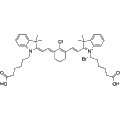
Synonyms: IR-808
MHI-148 is a near-infrared heptamethine cyanine dye that selectively targets tumors, making it ideal for cancer detection and diagnosis. This compound demonstrates preferential accumulation in the lysosomes and mitochondria of tumor cells, allowing for enhanced visualization. Its unique properties facilitate research applications in tumor biology and imaging studies, enabling more effective monitoring and understanding of cancer progression.
Stains-All is a cationic carbocyanine dye that serves as an effective probe for investigating the structural characteristics of individual calcium-binding sites within calmodulin (CaM) and other related calcium-binding proteins (CaBP). This dye facilitates the study of calcium-binding interactions, making it an invaluable tool in cellular and molecular biology research focused on calcium signaling pathways and protein interactions.
Synonyms: ADS 780WS
IR-783 is a near-infrared heptamethine cyanine fluorescent probe that serves as an effective tool for tumor imaging and tracking. It demonstrates significant inhibitory effects on tumor growth and induces apoptosis in the MDA-MB-231 xenograft model, making it valuable for breast cancer research. Its fluorescence properties allow for enhanced visualization of tumor dynamics in various biological studies.
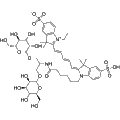
CBO-P11 is a tumor vascular targeting agent that specifically binds to the vascular endothelial growth factor receptor 2 (VEGFR-2). This compound is designed for applications in tumor angiogenesis research, allowing for the targeted delivery of therapeutic agents. CBO-P11 is functionalized with a near-infrared cyanine dye containing an alkyne moiety, enabling efficient "click" chemistry with azide-modified nanoparticles and facilitating fluorescence labeling for imaging studies.
Out of stock
All 3 sizes
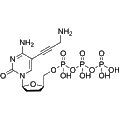
5-Propargylamino-ddCTP is a nucleoside molecule designed for the synthesis of cyanine dye-nucleotide conjugates, enabling effective nucleic acid labeling and sequence analysis. This reagent facilitates the incorporation of fluorescent tags into nucleic acids, enhancing their detection and quantification in various molecular biology applications. Its versatility makes it suitable for studies involving DNA and RNA visualization.
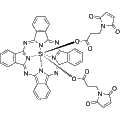
Mal-Pc is a molecular photosensitizer combining phthalocyanine and maleimide motifs, targeting oxidative stress pathways in cells. It effectively interacts with glutathione (GSH), leading to GSH depletion and reduced aggregation. This mechanism enhances the production of reactive oxygen species (ROS), thereby improving the efficacy of photodynamic therapy (PDT) in cancer treatment applications.
Out of stock
All 3 sizes
MR2-cy5 is a fluorescent dye specifically designed to target CD206, a receptor expressed on macrophages. This reagent enables precise tracking of CD206+ macrophages in various biological samples, facilitating studies in immunology and cellular biology. MR2-cy5 is ideal for applications such as flow cytometry and imaging, contributing to the understanding of macrophage function and behavior in health and disease.
Out of stock
All 3 sizes
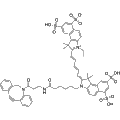
Cy5.5 DBCO is a cycloalkyne-based click chemistry reagent featuring a cyanine 5.5 fluorophore. The presence of the DBCO moiety facilitates copper-free, biocompatible click reactions characterized by rapid kinetics and enhanced stability. This reagent is widely utilized in bioconjugation applications, enabling efficient labeling of biomolecules for imaging and detection in various biological studies.
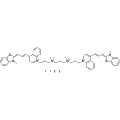
TOTO-3 is a multifunctional dye that serves as a vital tool in biological experiments. Its key biological activity includes the ability to visualize and differentiate cellular structures, track biomolecules, and assess cell functions. TOTO-3 is widely used in various research applications, including cell type differentiation, biomolecule detection, tissue pathology studies, and microbial monitoring. Additionally, this dye has potential uses in emerging fields such as functional textiles, food pigments, and dye-sensitized solar cells.