Search by product name, CAS, target or catalog number. Press Down Arrow to reach product suggestions, Tab to move between links, and Escape to close suggestions.
USD – US Dollar✓Current currency
Account
Lipid & Lipid Droplet Stains
Choose a lipid stain according to the structure you want to visualize and the detection method you plan to use. The examples below include fluorescent lipid-droplet staining and a color-based Oil Red O method. [1][2][3] Compare the documented target, readout and preparation sequence, and check the exact reagent form. A lipid-droplet staining result should not be treated as a direct measurement of every lipid species. [3]
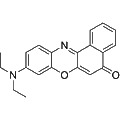
Nile red (Nile blue oxazone) is a lipophilic stain. Nile red has environment-sensitive fluorescence. Nile red is intensely fluorescent in a lipid-rich environment while it has minimal fluorescence in aqueous media. Nile red is an excellent vital stain for the detection of intracellular lipid droplets by fluorescence microscopy and flow cytof uorometry. Nile red stains intracellular lipid droplets red. The fluorescence wavelength is 559/635 nm.
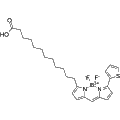
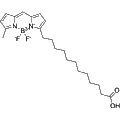
BODIPY 558/568 C12 is a fluorescent lipid probe based on the BODIPY (boron-dipyrromethene) dye structure. BODIPY dyes are small-molecule fluorophores characterized by strong ultraviolet-visible absorption, sharp fluorescence emission peaks, high quantum yields, and remarkable photostability. They are largely insensitive to environmental polarity and pH, maintaining consistent fluorescence under various physiological conditions.
BODIPY 558/568 C12, due to its lipophilic alkyl chain, readily permeates cell membranes and specifically localizes to neutral lipid compartments, enabling selective staining of lipid droplets in both live and fixed cells. It serves as a reliable fluorescent marker for studying lipid metabolism, lipid droplet dynamics, and cellular lipid distribution. The dye exhibits maximum excitation and emission wavelengths at 558 nm and 568 nm, respectively.
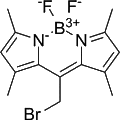
BODIPY493/503 methyl bromide is a BODIPY dye. BODIPY dye is a small molecule dye with strong ultraviolet absorption ability, its fluorescence peak is relatively sharp, and the quantum yield is high. They are relatively insensitive to the polarity and pH of the environment and are relatively stable under different physiological conditions. Due to its structural asymmetry, BODIPY derives a variety of structural products. BODIPY lipid droplet dyes can well pass through the cell membrane into the cell, and localize the neutral lipids in the cell to specifically stain the lipid droplets, which can be used for labeling of live cells and fixed cells. Maximum excitation/emission wavelength: 493/503 nm.
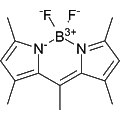
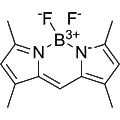
BODIPY 493/503 is a member of the BODIPY (boron-dipyrromethene) family of small-molecule fluorescent dyes, characterized by strong absorption in the ultraviolet-visible range, narrow and well-defined emission spectra, and high fluorescence quantum yields. These dyes exhibit minimal sensitivity to environmental polarity and pH, maintaining stable photophysical properties under a wide range of physiological conditions.
Due to the structural versatility of the BODIPY core, numerous derivatives with tailored properties can be generated. BODIPY-based lipid droplet probes readily permeate cellular membranes and selectively localize to neutral lipid compartments, enabling specific staining of intracellular lipid droplets. This makes them suitable for both live-cell imaging and fixed-cell applications.
Maximum excitation/emission wavelengths: 493/503 nm.
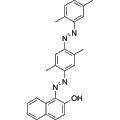
Oil Red O is a fat-soluble diazol dye that primarily targets neutral lipids and cholesteryl esters, exhibiting maximum absorption at 518 nm. This reagent is widely utilized for the detection and quantification of hepatic steatosis in mouse liver biopsies, allowing for the visualization of significant metabolic changes in tissues. Oil Red O staining serves as an essential tool for researchers studying metabolic diseases and their progression.
BODIPY 505/515 is a lipophilic fluorescent dye with a strong ultraviolet absorption capacity and sharp fluorescence peak, offering a high quantum yield. This compound exhibits stability across various physiological conditions and is relatively insensitive to environmental polarity and pH. BODIPY 505/515 effectively penetrates cell membranes, allowing specific labeling of neutral lipids within lipid droplets in both live and fixed cells. It is ideal for applications in cellular imaging, studying lipid metabolism, and analyzing cellular lipid storage. Maximum excitation and emission wavelengths are 505 nm and 515 nm, respectively.
BODIPY 500/510 C1, C12 is a fluorescent dye characterized by strong ultraviolet absorption and high quantum yield. It features a sharp fluorescence peak and remains stable across various physiological conditions, demonstrating minimal sensitivity to polarity and pH variations. This dye effectively penetrates cell membranes, allowing for the specific localization of neutral lipids within lipid droplets in both live and fixed cells. It is widely utilized for cellular imaging and lipid droplet labeling applications. Maximum excitation and emission wavelengths are 500 nm and 510 nm, respectively. Protect from light and store at -20°C.
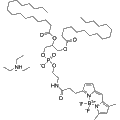
BODIPY FL-DHPE is a green-fluorescent phospholipid probe targeting lipid bilayers. It labels 1,2-dihexadecanoyl-sn-glycero-phosphoethanolamine (DHPE), facilitating the study of membrane dynamics through membrane fusion processes. This reagent is ideal for investigating membrane structure and function in various cellular contexts, as well as analyzing lipid interactions in live cell imaging applications. The excitation and emission wavelengths are λex=505 nm and λem=511 nm, respectively.
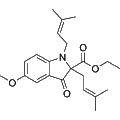
LipidGreen 2 is a highly sensitive lipid imaging probe designed for the selective visualization of neutral lipids within cellular contexts. This second-generation small molecule exhibits enhanced fluorescence properties, enabling improved detection and analysis of lipid accumulation in live organisms, such as zebrafish. LipidGreen 2 serves as a valuable tool for researchers studying lipid metabolism, storage diseases, and related biological processes.
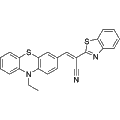
PTZ-LD is a phenothiazine-derived fluorescent probe specifically designed for the detection of lipid droplets (LDs). This probe exhibits strong fluorescence within LDs, with excitation and emission wavelengths of 488 nm and 570-620 nm, respectively. PTZ-LD is a valuable tool for investigating lipid droplet dynamics and has applications in research related to diabetic cataracts.
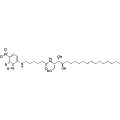
C6 NBD Phytoceramide is a fluorescently labeled short-chain ceramide analog that specifically targets GlcCer synthase (GCS) in mammalian cells. This compound is useful for studying ceramide metabolism and its role in various biological processes, offering insights into glycosphingolipid biosynthesis. Its fluorescent properties also facilitate tracking and visualization studies in cellular and molecular research applications.
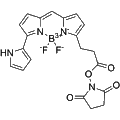
Py-BODIPY-NHS ester is a fluorescent energy transfer probe that utilizes the properties of BODIPY dye, featuring strong ultraviolet absorption and high quantum yield. This compound exhibits remarkable stability and insensitivity to environmental pH and polarity, making it suitable for diverse applications in biological research. Py-BODIPY-NHS ester effectively penetrates cell membranes, allowing for specific staining of lipid droplets in live and fixed cells, thereby facilitating the study of lipid metabolism and cellular dynamics.
SMCy5.5 is a lipid droplet labeling dye functioning primarily through fluorescent imaging (ex. 638 nm; em. 705 nm). Its high brightness enables effective tracking and visualization of lipid droplet dynamics in adipocytes. This reagent is suitable for studies focused on lipid metabolism and cellular lipid storage, facilitating advanced research in adipocyte biology.
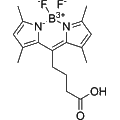
BODIPY 505/515-8-C3-COOH is a fluorescent dye that targets lipid droplets, exhibiting strong green fluorescence. This reagent is ideal for imaging applications in nannochloropsis and provides significant utility in flow cytometric high-throughput screening and cell sorting. Its distinctive fluorescence properties make it valuable for studying lipid metabolism and related cellular processes.
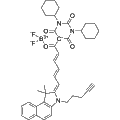
Liptracker-Green is a cell-permeable fluorochrome that specifically targets polar lipids. This probe enables the visualization of lipid droplets and other lipid-rich compartments in both live and fixed cells through fluorescent microscopy. Its ability to selectively label lipid structures makes it a valuable tool for studying lipid metabolism and cellular lipid dynamics.
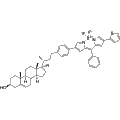
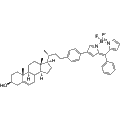
BODIPY-cholesterol conjugate-3 is a cholesterol analogue featuring a fluorescent BODIPY moiety, designed to target cholesterol localization within cellular membranes. This compound enables the visualization of various cholesterol pools in live cells, predominantly associating with the plasma membrane. It serves as a valuable tool for researchers studying lipid dynamics and membrane organization in cellular processes.
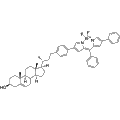
BODIPY-cholesterol conjugate-1 is a fluorescent probe that facilitates the visualization of intracellular cholesterol pools while enabling the monitoring of cholesterol efflux to extracellular acceptors. With excitation at 541 nm and emission at 615 nm, this compound is suitable for experiments involving cellular cholesterol dynamics and lipid metabolism research. Its ability to provide real-time insights makes it an invaluable tool for studying lipid-related processes in various biological systems.
BODIPY-cholesterol conjugate-2 is a fluorescent probe designed for the visualization of intracellular cholesterol pools, utilizing its unique BODIPY moiety. This compound enables the monitoring of cholesterol efflux from cells to extracellular acceptors, contributing to studies on lipid metabolism and cellular cholesterol dynamics. Optimal excitation and emission wavelengths are 589 nm and 638 nm, respectively, making it suitable for various fluorescent microscopy applications in biochemical research.
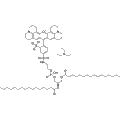
Sulforhodamine 101 DHPE is a fluorescent probe that targets endogenous metabolites through its unique conjugation of the phospholipid 1,2-dipalmitoyl-sn-glycero-3-PE with sulforhodamine 101, a red fluorescent dye exhibiting excitation/emission maxima of 586/605 nm. This reagent is well-suited for applications including imaging of solid-supported lipid bilayers, detection of protein-ligand interactions on bilayer surfaces, and monitoring the colocalization of lipid probes in liposomes using resonance energy transfer (RET) techniques. Its ability to integrate into phospholipid bilayers enhances its utility in membrane biophysics research.
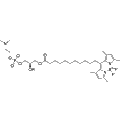
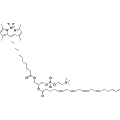
BODIPY 505/515 11:0 Lyso PC functions as a fluorescent lipid targeting lipid nanoparticle (LNP) formulation. This compound exhibits key biological activity by enabling the visualization and tracking of LNPs in biological systems. It is widely used in research applications focusing on drug delivery mechanisms, lipid metabolism studies, and cellular imaging.
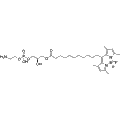
BODIPY 505/515 11:0 Lyso PE is a fluorescent lipid that serves as an effective component for the preparation of lipid nanoparticles (LNPs) in drug delivery applications. This compound enables the visualization and tracking of LNPs, facilitating studies on lipid assembly and cellular uptake. Its unique properties make it suitable for research into lipid-based formulations and their interactions within biological systems.
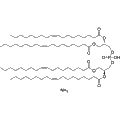
18:1 BDP (S,S) ammonium is a bis(monoacylglycero)phosphate (BMP) that targets lipid signaling pathways. This compound exhibits key biological activities related to membrane dynamics and cellular lipid metabolism. It is utilized in research applications focusing on lipid biology, membrane structure, and the role of BMPs in health and disease.
TopFluor-20:4 PC - IsoPure is an isomerically pure mixed-acyl glycerophospholipid that serves as a valuable tool for studying lipid dynamics and membrane biology. This compound exhibits key biological activity in the formation of lipid bilayers and incorporation into cellular membranes. It is commonly used in research applications focused on lipid metabolism, membrane fluidity, and cellular signaling pathways.
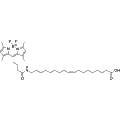
BODIPY 505/515-C3-CONH-Oleic acid is a lipid used primarily for the formulation of lipid nanoparticles (LNPs), enhancing the efficacy of drug delivery systems. This compound exhibits distinct fluorescence properties, making it valuable for tracking and imaging applications in biological studies. Its ability to integrate into lipid membranes supports a variety of research applications, particularly in the fields of drug formulation and cellular uptake analysis.
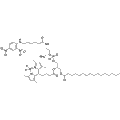
16:0 C4-BODIPY 505/515 DNP Cap PE ammonium is a fluorescently labeled lipid that serves as a vital component in the formulation of lipid nanoparticles (LNPs) for targeted drug delivery systems. This compound exhibits excellent fluorescence properties, enabling real-time visualization and tracking of LNPs in biological assays. It is widely used in research applications focusing on lipid-based therapeutic delivery and cellular uptake studies.
Standard BODIPY 493/503 has a published neutral-lipid-droplet protocol. Nile Red fluorescence depends on a hydrophobic environment and the detection channel; interpret it in the context of the sample and acquisition settings. [1][3]
Distinguish processing steps.
The cited Oil Red O protocol fixes adipocytes with formalin, uses isopropanol during washing and staining preparation, and later extracts the dye for absorbance measurement. These are different operations; alcohol use alone does not establish that the staining is invalid. [2]
Match the exact material.
The standard dye and methyl-bromide product are separate catalog materials. The latter comparison uses a paper that specifies HY-D1614, matched through the existing material record. The paper abbreviates the reagent name and does not independently verify the derivative structure. Do not transfer the parent-dye protocol to it. [4]
Representative Reagent Comparison
Selected examples for this topic; independent of the current product page or filters.
Representative reagents and selection considerations
Color staining for bright-field imaging; separate dye extraction for absorbance.
The method distinguishes formalin fixation, isopropanol washing/staining solvent and later extraction. It is not a universal tissue-preparation protocol. [2]
Standard BODIPY 493/503, CAS 121207-31-6. The A498-cell microscopy method stains before PFA fixation; its sequence should not be reversed by assumption. [3]
Lipid-droplet staining in the cited granulosa-cell study.
Fluorescence microscopy and flow cytometry.
Material correspondence is through the paper’s HY-D1614 catalog number. The paper uses the shortened name “BODIPY 493/503” without a CAS or derivative structure; this is not evidence of equivalence to the standard dye. [4]
Color staining for bright-field imaging; separate dye extraction for absorbance.
Sample / material boundary
The method distinguishes formalin fixation, isopropanol washing/staining solvent and later extraction. It is not a universal tissue-preparation protocol. [2]
Standard BODIPY 493/503, CAS 121207-31-6. The A498-cell microscopy method stains before PFA fixation; its sequence should not be reversed by assumption. [3]
Lipid-droplet staining in the cited granulosa-cell study.
Detection mode
Fluorescence microscopy and flow cytometry.
Sample / material boundary
Material correspondence is through the paper’s HY-D1614 catalog number. The paper uses the shortened name “BODIPY 493/503” without a CAS or derivative structure; this is not evidence of equivalence to the standard dye. [4]
Match the exact material, lipid target and processing sequence. Literature examples describe their experimental conditions and do not constitute Adooq experimental validation.