Search by product name, CAS, target or catalog number. Press Down Arrow to reach product suggestions, Tab to move between links, and Escape to close suggestions.
USD – US Dollar✓Current currency
Account
Fluorescent Labeling Dyes
Begin with the molecule you want to label and the functional group available for reaction. The examples below compare the free-acid and succinimidyl-ester forms of 5(6)-TAMRA using documented coupling examples. [1][2] Check whether activation is required and whether the reaction partner matches the method. Treat general coupling chemistry as a planning principle, not a promise of performance, and assess the resulting conjugate separately from the starting dye. [2][3]
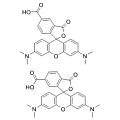
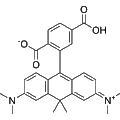
5(6)-TAMRA contains a carboxylic acid that can be used to react with primary amines via carbodiimide activation of the carboxylic acid; bright, orange-fluorescent dye produces conjugates with absorption/emission maxima of ~555/580 nm.
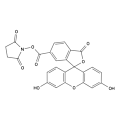
5(6)-FAM SE is an amine-reactive green fluorescent dye widely used for labeling proteins or other molecules that contain a primary or secondary aliphatic amine.
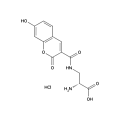
HADA hydrochloride (HCC-Amino-D-alanine hydrochloride) is a blue-emitting (λem ≈ 450 nm) fluorescent D-amino acid (FDAA) used for labeling bacterial cell walls. FDAAs are incorporated into peptidoglycan (PG) at sites of active biosynthesis through the action of native transpeptidases, enabling specific and covalent labeling of growing bacterial cells with minimal disruption to normal physiology.
HADA hydrochloride provides high spatial and temporal resolution for visualizing bacterial growth dynamics, cell wall synthesis, and morphogenesis in live-cell imaging studies, making it a powerful tool in microbiology and antibiotic mechanism research.
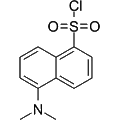
Dansyl chloride is a fluorescent labeling reagent that reacts with primary and secondary amines to form stable blue or blue-green fluorescent sulfonamide adducts. It readily labels aliphatic and aromatic amines through reaction with amino groups, making it a valuable tool for biochemical analysis. Dansyl chloride is widely used for amino acid derivatization, protein sequencing, and amino acid composition analysis, enabling sensitive fluorescence-based detection and quantification of amine-containing biomolecules.
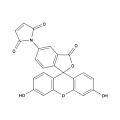
Fluorescein-5-maleimide (N-(5-Fluoresceinyl)maleimide) is a thiol-reactive fluorescent dye widely used for covalent labeling of proteins, peptides, and other biomolecules containing cysteine residues. By forming stable thioether bonds with sulfhydryl groups, it enables precise detection and quantification of thiol-containing targets.
Fluorescein-5-maleimide is employed to monitor the redox state of thiols in eukaryotic cells, label peptides or actin for protein–protein interaction studies—such as investigations of actin binding to cardiac myosin-binding protein C (cMyBP-C)—and to detect negatively charged nanoparticles. It also serves as a tool for screening mutant proteins containing cysteine residues. The dye exhibits strong fluorescence with excitation and emission maxima at 494 nm and 519 nm, respectively, making it highly suitable for fluorescence microscopy, flow cytometry, and biochemical assays.
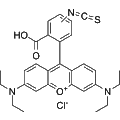
Rhodamine B isothiocyanate (RBITC) is a reactive fluorescent dye widely used for covalent labeling of biomolecules in imaging and analytical applications. The isothiocyanate functional group readily reacts with primary amines on proteins, peptides, and other biomolecules to form stable thiourea linkages, enabling durable fluorescent tagging.
RBITC emits bright orange-red fluorescence upon green light excitation, providing strong signal intensity and excellent photostability for visualization in complex biological systems. Owing to its high sensitivity, chemical stability, and compatibility with diverse assay conditions, RBITC is extensively utilized in cell biology, immunology, neurobiology, and fluorescence microscopy studies for tracking molecular localization and dynamics.
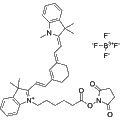
Cyanine7 NHS ester tetrafluoroborate is a near-infrared fluorescent dye designed for biological conjugation applications. It exhibits strong fluorescence properties, making it ideal for imaging and labeling studies in fluorescence microscopy and flow cytometry. This reagent is particularly useful in labeling proteins and other biomolecules for enhanced visualization in various research contexts.
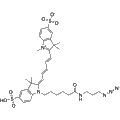
Sulfo-Cy5-N3 is a versatile fluorescent dye featuring an azide group that enables its use in click chemistry applications. Primarily utilized for imaging, this red fluorescent label (Excitation/Emission=642/670 nm) facilitates the visualization of biomolecules through the copper-catalyzed azide-alkyne cycloaddition (CuAAc) method when paired with alkyne-containing compounds. Additionally, it can participate in the ring strain-promoted alkyne-azide cycloaddition (SPAAC) with DBCO or BCN groups, making it suitable for a variety of biological and chemical research applications.
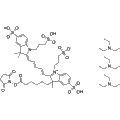
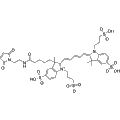
AF647-NHS ester triTEA is a fluorescent dye with an excitation wavelength of 635 nm, suitable for conventional fluorescence detection, and 620 nm for instantaneous detection. The NHS ester functionality enables covalent binding to amine-containing molecules, including proteins and antibodies, facilitating targeted labeling. This reagent is ideal for a variety of applications in fluorescence microscopy, flow cytometry, and other research techniques requiring precise visualization of biomolecules.
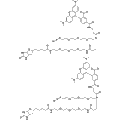
TAMRA-Azide-PEG-biotin is a dye derivative that incorporates an azide functional group, enabling copper-catalyzed azide-alkyne cycloaddition (CuAAc) with alkyne-containing molecules. Additionally, it facilitates strain-promoted alkyne-azide cycloaddition (SPAAC) reactions with DBCO or BCN modified compounds. This reagent is valuable for labeling and tracking biomolecules in various biological assays, enhancing visualization and detection in chemical biology research.
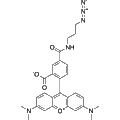
TAMRA azide, 5-isomer is an azide-containing dye that serves as a versatile linker for the orange fluorophore TAMRA. This compound facilitates copper-catalyzed azide-alkyne cycloaddition (CuAAc) with alkyne-bearing molecules and can also participate in strain-promoted alkyne-azide cycloaddition (SPAAC) with DBCO or BCN-reactive partners. Its ability to efficiently form stable conjugates makes it an important tool for a wide range of applications, including bioconjugation, imaging, and cellular labeling in chemical biology research.
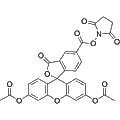
5-Carboxyfluorescein diacetate N-succinimidyl ester is a cell-permeable fluorescent dye with an excitation wavelength of 492 nm and an emission wavelength of 517 nm. It covalently labels intracellular proteins, enabling the tracking of lymphocyte migration and proliferation in biological research. This reagent is particularly useful for studying immune responses and cellular dynamics in various experimental settings.
Alexa Fluor 647 maleimide is a far-red-emitting fluorescent dye designed for the selective labeling of protein thiol groups, particularly cysteine residues (Ex/Em = 656/670 nm). This reagent facilitates the attachment of the AF 647 fluorophore to various biomolecules, including proteins, peptides, and thiol-containing oligonucleotides. Its exceptional brightness makes it valuable for applications in cell biology, neuroscience, and disease diagnostics, enabling advanced fluorescence imaging and analysis.
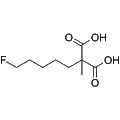
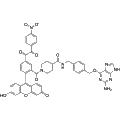
ML-10 is a small molecule apoptosis probe that selectively targets apoptotic cells. Its unique structural features allow for radiolabeling with 18F isotopes, making it suitable for positron emission tomography (PET) imaging studies of apoptosis. ML-10 is preferentially taken up by cells undergoing apoptosis, while remaining excluded from live or necrotic cells, and its accumulation is associated with key apoptotic markers, including caspase activation, Annexin-V binding, and changes in mitochondrial membrane potential. This compound facilitates research into apoptosis and provides insights into cell death mechanisms.
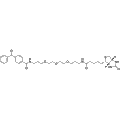
Biotin-PEG3-benzophenone is a biotin-conjugated photosensitizer targeting nucleic acids. This compound is known to induce nucleobase oxidation, leading to DNA damage such as cyclobutane-pyrimidine dimers, single-strand breaks, and DNA-protein cross-links. Its properties make it valuable for investigating photo-induced DNA lesions and understanding pathologies related to nucleic acids in various biological and chemical research applications.
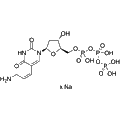
AA-dUTP sodium salt is a fluorescent dye that serves as a valuable tool for labeling cDNA in molecular biology research. This compound facilitates the detection and visualization of nucleic acids through fluorescence microscopy and other imaging techniques. Its application is critical for studies involving gene expression, cDNA synthesis, and various nucleic acid-based assays.
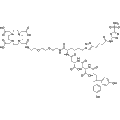
DOTA-XYIMSR-01 is a molecular probe specifically designed to target carbonic anhydrase IX (CAIX). Upon labeling with 177Lu, this compound facilitates the inhibition and localization of malignant gliomas, demonstrating a tumor uptake of 6.19% of the injected dose per gram and a tumor-to-muscle uptake ratio of 20.14 in U87MG tumor models. In an orthotopic glioma setting, co-administration with Temozolomide significantly enhances overall survival and suppresses tumor progression. DOTA-XYIMSR-01 presents considerable potential for advancing research in cancer therapeutics.
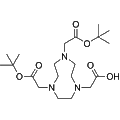
NOTA-bis(tBu)ester serves as a precursor for PET imaging agents, specifically designed for radiolabeling with 68Ga. Upon conjugation with ZD2, it forms ZD2-(68Ga-NOTA), enabling targeted PET imaging studies of pancreatic cancer. This compound is vital for enhancing the visualization of tumor pathology and monitoring treatment response in preclinical and clinical research settings.
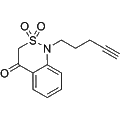
BTD probe-1 is a benzothiazine-based chemoselective probe specifically designed for the selective labeling of protein S-sulfenic acids in vitro. This reagent enables the modification of sulfenic acid residues within proteins, providing valuable insights into oxidative stress responses and the dynamics of redox signaling. BTD probe-1 is an essential tool for researchers studying the role of post-translational modifications in cellular processes and disease mechanisms.
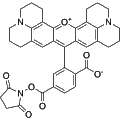
6-Carboxy-X-rhodamine, succinimidyl ester is a fluorescent dye specifically designed for oligonucleotide labeling. This compound exhibits high stability and fluorescence intensity, making it suitable for applications in automated DNA sequencing and molecular biology research. It enables effective visualization of nucleic acids in various assays, improving the accuracy and efficiency of genetic analyses.
NBzF-BG is a H2O2-specific fluorescent probe that exhibits visible absorption centered at 505 nm and displays weak fluorescence with an emission peak at 525 nm. When conjugated covalently and selectively with the SNAP-tag protein, it forms a fluorophore-protein conjugate (SNAP-NBzF) that rapidly reacts with hydrogen peroxide. This reaction leads to a significant enhancement in fluorescence, making NBzF-BG a valuable tool for studying oxidative stress and hydrogen peroxide dynamics in biological systems.
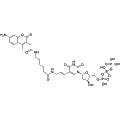
AMCA-6-dUTP is a labeling dye specifically designed for enzymatic labeling of DNA and cDNA. This nucleotide analog incorporates the fluorescent AMCA moiety, facilitating the detection and quantification of nucleic acids in various molecular biology applications. It is ideal for studies involving in situ hybridization, PCR, and other techniques requiring sensitive visualization of DNA and cDNA.
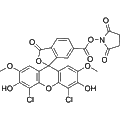
6-JOE, SE is an amine-reactive fluorescent dye designed for the specific labeling of amino-modified oligonucleotides. This reagent enables the sensitive detection and visualization of nucleic acids, facilitating various applications in molecular biology and genomics. Its ability to form stable conjugates makes it an essential tool for researchers involved in DNA and RNA studies.
610CP is a novel actin labeling dye that operates by binding to Bromo-des-methyl-Jasplakinolide. It exhibits fluorescence with excitation and emission wavelengths between 609 and 634 nm when dissolved in DMSO. This dye effectively penetrates living cells, allowing for high-resolution stain of actin structures. 610CP is ideal for applications requiring low background fluorescence in cellular imaging studies.
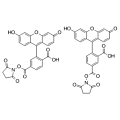
The free acid and succinimidyl ester are different reagents. A study coupled 5(6)-TAMRA-COOH to a cyclic beta-tripeptide using PyBOP-mediated activation. A separate study used 5(6)-succinimidyl TAMRA with cystamine. These examples establish specific reactions, not universal labeling conditions. [1][2]
Identify the reaction partner.
For amine coupling, distinguish activation of a carboxylic acid from reaction of an already activated ester. For azide chemistry more generally, copper-catalyzed and strain-promoted azide–alkyne routes have different partner and catalyst requirements. These are general principles, separate from the specific examples in the table. [3]
Evaluate the product of labeling.
TAMRA derivative formation changed optical behavior in the cited dimer study. Do not assign a conjugate’s reported fluorescence to the starting reagent or transfer performance between different isomer forms. [2]
Representative Reagent Comparison
Selected examples for this topic; independent of the current product page or filters.
Representative reagents and selection considerations
Attachment to an amine-bearing cyclic beta-tripeptide scaffold.
The reported synthesis used PyBOP and DIEA for coupling. This is an activation-dependent example, not a ready-made NHS ester or a universal biomolecule-labeling recipe. [1]
Reaction with cystamine hydrochloride to prepare a TAMRA disulfide dimer.
Already supplied as an activated ester. The paper supports this specific derivatization; the dimer’s optical properties should not be assigned to the starting ester. [2]
Attachment to an amine-bearing cyclic beta-tripeptide scaffold.
Activation / selection boundary
The reported synthesis used PyBOP and DIEA for coupling. This is an activation-dependent example, not a ready-made NHS ester or a universal biomolecule-labeling recipe. [1]
Reaction with cystamine hydrochloride to prepare a TAMRA disulfide dimer.
Activation / selection boundary
Already supplied as an activated ester. The paper supports this specific derivatization; the dimer’s optical properties should not be assigned to the starting ester. [2]
Check the reagent form, reaction partner and method requirements before labeling. These examples do not promise labeling efficiency or compatibility with every sample.