Cell Membrane Stains

Browse dyes with product-specific evidence for membrane labeling or staining. Compare the individual reagent forms and specifications before choosing a product for your experiment.

This selection concerns membrane labeling. Cell permeability, staining of intracellular lipid droplets and membrane-potential measurement alone do not establish the same application. Live-cell, fixed-cell and protocol compatibility must be checked for each product.

Items 1-25 of 34

  • DiR
    Cat. No.
    A24505

    DiR (Cy7 DiC18)

    Synonyms: Cy7 DiC18

    DiR is a long-chain carbocyanine dye commonly used for labeling and tracking biological structures. As a member of the Di series of dyes, DiR is particularly suited for labeling cells, organelles, liposomes, viruses, and lipoproteins due to its strong membrane affinity and near-infrared fluorescence properties.

    5 mg
    $27.00
    10 mg
    $47.00
    All 4 sizes
  • FM4-64
    Cat. No.
    A24516

    FM4-64

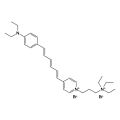
    FM4-64 is a highly lipophilic, water-soluble styryl dye that selectively binds to the plasma membrane and internal membrane-bound organelles, producing bright fluorescence. It is widely used as a marker for endocytic and exocytic membrane structures in live-cell imaging studies.

    1 mg
    $225.00
    5 mg
    $675.00
    All 4 sizes
  • DiO
    Cat. No.
    A24537

    DiO (DiOC18(3))

    Synonyms: 3,3'-Dioctadecyloxacarbocyanine perchlorate; DiOC18(3)

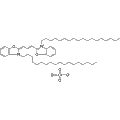
    DiO is a long-chain carbocyanine dye commonly used for labeling cells, organelles, liposomes, viruses, and lipoproteins. As a member of the Di-series carbocyanine dyes, DiO integrates into lipid membranes, enabling effective fluorescent tracking in various biological systems.

    5 mg
    $27.00
    10 mg
    $47.00
    All 4 sizes
  • PKH 67
    Cat. No.
    A24613

    PKH 67

    PKH 67 is a green fluorescent dye primarily used for staining cell membranes. With an excitation/emission range of 490/502 nm, it enables precise labeling of cells to facilitate studies of cell proliferation in vitro and tracking of cells in both in vitro and in vivo environments. This dye is commonly employed alongside the non-specific red fluorescent dye PKH26 to enhance multi-color cell analysis.

    100 mg
    $255.00
    All 1 sizes
  • Octadecyl Rhodamine B chloride
    Cat. No.
    A24926

    Octadecyl Rhodamine B chloride

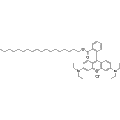
    Octadecyl Rhodamine B chloride is a versatile amphiphilic fluorescent probe targeting cell membranes. This compound effectively stains cell membranes and is instrumental in membrane biology research. It exhibits fluorescence properties, with a maximum absorption and emission wavelength of 565 nm and 585 nm, respectively, when in Triton X-100. In aqueous solutions, the compound forms aggregates that shift absorption peaks to 524 nm and 574 nm, resulting in notable fluorescence quenching.

    1 mg
    $50.00
    5 mg
    $135.00
    All 6 sizes
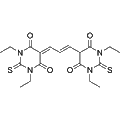
  • DiSBAC2(3)
    Cat. No.
    A24998

    DiSBAC2(3)

    DiSBAC2(3) is an anionic dye that serves as a membrane potential indicator. This compound is highly sensitive to changes in plasma membrane potential, enabling the assessment of cell health, viability, and physiological function. DiSBAC2(3) is commonly utilized in fluorescence-based studies to investigate cellular processes linked to membrane depolarization and hyperpolarization.

    5 mg
    $60.00
    10 mg
    $100.00
    All 5 sizes
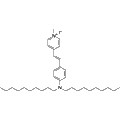
  • 4-Di-10-ASP
    Cat. No.
    A25001

    4-Di-10-ASP

    4-Di-10-ASP is a fluorescent lipophilic tracer that primarily targets phospholipid membranes with its excitation wavelength at 485 nm and emission at 620 nm. This compound is utilized for specific staining of cellular membranes, aiding in studies of membrane dynamics and organization. Its application is particularly valuable in cellular biology and neuroscience research, where visualization of lipid membrane structures is essential.

    5 mg
    $230.00
    10 mg
    $380.00
    All 5 sizes
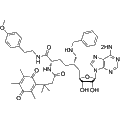
  • SKI-73
    Cat. No.
    A26558

    SKI-73

    SKI-73 is a chemical probe that targets CARM1, functioning as a prodrug with the ability to penetrate cell membranes and be converted into active inhibitors. This compound has demonstrated significant inhibitory effects on the invasion of breast cancer cells, making it a valuable tool for cancer research. SKI-73 is useful for investigating the role of CARM1 in oncogenic processes and may aid in the development of therapeutic strategies against breast cancer.

    Out of stock

    All 3 sizes
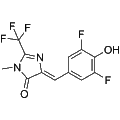
  • DFHBI-2T
    Cat. No.
    A43701

    DFHBI-2T

    DFHBI-2T is a membrane-permeable fluorescence probe that activates upon binding to RNA aptamers, exhibiting excitation and emission maxima at 500 nm and 523 nm, respectively. This compound is useful for imaging RNA within live cells, enabling researchers to study RNA dynamics and localization in real time. Its application in fluorescence microscopy facilitates investigations into RNA-related biological processes and interactions.

    5 mg
    $395.00
    10 mg
    $670.00
    All 5 sizes
  • Endoplasmic reticulum dye 1
    Cat. No.
    A43703

    Endoplasmic reticulum dye 1

    Endoplasmic Reticulum Dye 1 is a specialized live cell imaging agent that targets the endoplasmic reticulum, enabling the detection of exocytotic events at the plasma membrane. This dye exhibits low cytotoxicity and strong resistance to photobleaching, making it suitable for both short- and long-duration imaging studies in cellular research applications. Its properties facilitate detailed observation and analysis of dynamic cellular processes.

    5 mg
    $410.00
    10 mg
    $690.00
    All 3 sizes
  • DiOC5(3)
    Cat. No.
    A43740

    DiOC5(3)

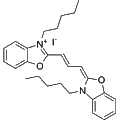
    Synonyms: 3,3′-Dipentyloxacarbocyanine iodide

    DiOC5(3) is a membrane potential-modifying fluorochrome that exhibits strong fluorescence properties. This compound is widely utilized in diagnostic imaging to assess membrane potential dynamics in cellular systems. DiOC5(3) serves as a valuable tool for researchers studying cellular physiology, apoptosis, and the evaluation of mitochondrial function. Its unique fluorescent characteristics allow for effective visualization and analysis of cellular processes.

    2 mg
    $25.00
    5 mg
    $40.00
    All 7 sizes
  • Flipper-TR 5
    Cat. No.
    A43794

    Flipper-TR 5

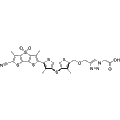
    Flipper-TR 5 is a Flipper probe characterized by a terminal carboxylate, allowing for effective retention on the plasma membrane. This reagent selectively labels the plasma membrane, demonstrating exceptional mechanosensitivity while exhibiting negligible cytotoxicity and manageable phototoxicity. Flipper-TR 5 is suitable for various research applications involving membrane dynamics and mechanosensation studies.

    Out of stock

    All 3 sizes
  • 3,3'-Dipropylthiacarbocyanine iodide
    Cat. No.
    A43798

    3,3'-Dipropylthiacarbocyanine iodide

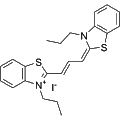
    3,3'-Dipropylthiacarbocyanine iodide is a versatile dye primarily used for fluorescence applications in biological research. This compound enables the visualization and analysis of cellular structures, tracking of biomolecules, and distinguishing between different cell types. Its broad applications extend from basic research to clinical diagnostics and tissue pathology studies, making it a valuable tool in various fields, including functional textiles and dye-sensitized solar cells.

    25 mg
    $40.00
    50 mg
    $60.00
    All 3 sizes
  • TMR Biocytin
    Cat. No.
    A43831

    TMR Biocytin

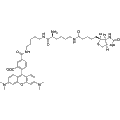
    TMR Biocytin is a polar membrane tracer that facilitates the study of cell-cell and cell-liposome fusions, as well as membrane permeability and cellular uptake processes such as pinocytosis. This reagent can be effectively detected using streptavidin and serves as a valuable tool for neuronal tracing in live tissues, with excitation at 544 nm and emission at 571 nm. Its unique properties make it suitable for various applications in cellular and membrane biology research.

    Out of stock

    All 3 sizes
  • DiOC3(3)
    Cat. No.
    A43851

    DiOC3(3)

    Synonyms: 3,3'-Dipropyloxacarbocyanine iodide

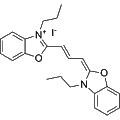
    DiOC3(3) (3,3'-Dipropyloxacarbocyanine iodide) is a lipophilic fluorescent dye that targets cell membranes due to its high membrane permeability. This green fluorescent compound is widely used for staining cell membranes and other lipid-soluble biological structures, making it a valuable tool in cellular biology and membrane studies. Its application extends to various research areas, including live cell imaging and analysis of membrane dynamics.

    5 mg
    $55.00
    10 mg
    $90.00
    All 5 sizes
  • Chol-N3
    Cat. No.
    A44361

    Chol-N3

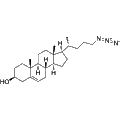
    Chol-N3 is a bioorthogonal chol probe that targets cholesterol molecules in cellular membranes. Its primary mechanism involves click chemistry, facilitating the copper-catalyzed azide-alkyne cycloaddition (CuAAc) and strain-promoted alkyne-azide cycloaddition (SPAAC) reactions. Chol-N3 enables the direct visualization of nanoscale lipid heterogeneity using super-resolution fluorescence microscopy (SRM), making it a valuable tool for investigating cellular lipid dynamics and membrane organization in live cells. This reagent is essential for research applications focused on lipid biology, membrane structure, and cellular signaling.

    1 mg
    $1,320.00
    5 mg
    $3,360.00
    All 2 sizes
  • 4-Di-16-ASP
    Cat. No.
    A44437

    4-Di-16-ASP

    Synonyms: DiA

    4-Di-16-ASP is a lipophilic aminostyryl probe that serves as a green fluorescent membrane dye. Its broad emission spectrum allows for detection using green, orange, or red filters, making it versatile for various imaging applications. This compound is particularly effective for neuronal membrane tracing due to its rapid diffusion properties, outpacing traditional dyes such as DiO. It is suitable for studies focusing on membrane dynamics and cellular morphology.

    2 mg
    $80.00
    5 mg
    $100.00
    All 5 sizes
  • TBD–anchor
    Cat. No.
    A44601

    TBD–anchor

    TBD–anchor is a water-soluble, positively charged AIE photosensitizer that targets bacterial membranes. It efficiently generates singlet oxygen (1O2), exhibiting potent bactericidal activity against a range of bacteria while maintaining good biocompatibility. This compound is valuable for research applications focused on bacterial infections and the development of antimicrobial strategies.

    Out of stock

    All 3 sizes
  • NR12S
    Cat. No.
    A44641

    NR12S

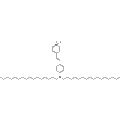
    NR12S is a fluorescence probe designed to investigate lipid dynamics within biomembranes. This compound effectively labels cholesterol and monitors lipid order, offering insights into membrane structure and function. Its application is particularly relevant in studies of membrane biophysics and cellular processes influenced by lipid composition.

    0.1 mg
    $230.00
    0.5 mg
    $465.00
    All 3 sizes
  • FM1-43
    Cat. No.
    A44782

    FM1-43

    FM1-43 is a lipophilic styrene dye that targets cell membranes and inner membrane organelles, generating fluorescence. It is extensively utilized to study endocytosis and exocytosis, serving as a vital marker for membrane dynamics. This reagent is instrumental in understanding membrane trafficking and cellular uptake processes in various biological systems.

    1 mg
    $90.00
    5 mg
    $235.00
    All 5 sizes
  • FM 1-43FX
    Cat. No.
    A44933

    FM 1-43FX

    FM 1-43FX is a fluorescent membrane probe that functions primarily as a fluorochrome, capable of staining cellular membranes. This reagent features an aliphatic amine that reacts with aldehyde-based fixatives, enabling effective fluorescence imaging. FM 1-43FX is widely used in neurobiology and cell biology research to visualize membrane dynamics and monitor cellular processes.

    1 mg
    $310.00
    5 mg
    $805.00
    All 3 sizes
  • Pyrromethene 650
    Cat. No.
    A45021

    Pyrromethene 650

    Synonyms: PM650

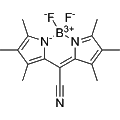
    Pyrromethene 650 is a green-fluorescent polar tracer dye that serves as a valuable fluorochrome. It is primarily utilized in research related to membrane fusion, cellular lysis, and gap-junctional communication. Additionally, this compound is effective for monitoring volume changes in cells or liposomes, providing insights into cellular dynamics and interactions.

    5 mg
    $25.00
    10 mg
    $45.00
    All 5 sizes
  • Pyrromethene 556
    Cat. No.
    A45022

    Pyrromethene 556

    Synonyms: PM556

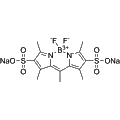
    Pyrromethene 556 (PM556) is a green-fluorescent polar tracer dye utilized for studying membrane dynamics and cellular interactions. Its primary applications include investigations into membrane fusion, lysis, and gap-junctional communication, as well as the detection of volume changes in cells or liposomes. PM556 serves as a valuable tool for researchers in cell biology and biophysics, facilitating the analysis of membrane behavior and cellular responses.

    2 mg
    $25.00
    5 mg
    $45.00
    All 4 sizes
  • 12-(1-Pyrenyl)dodecanoic acid
    Cat. No.
    A45104

    12-(1-Pyrenyl)dodecanoic acid

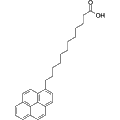
    12-(1-Pyrenyl)dodecanoic acid is a fluorescence probe that targets lipid membranes. This compound exhibits strong fluorescent properties, making it useful for studying membrane dynamics and interactions in various biological systems. Its application extends to membrane biophysics, cell imaging, and the analysis of lipid bilayer organization.

    1 mg
    $40.00
    All 1 sizes
  • DiOC16(3)
    Cat. No.
    A45347

    DiOC16(3)

    Synonyms: 3,3'-Dihexadecyloxacarbocyanine

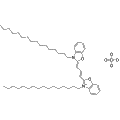
    DiOC16(3) (3,3'-Dihexadecyloxacarbocyanine) is a lipophilic carbocyanine dye primarily used for fluorescent imaging applications. This reagent is effective in tracking membrane potential changes and studying membrane fluidity in various cell types. Its ability to readily integrate into lipid membranes makes it a valuable tool in cellular physiology and membrane dynamics research.

    Out of stock

    All 3 sizes

Items 1-25 of 34

Added to your cart

View Cart Checkout

    Loading...