- Cat. No.
- A10472
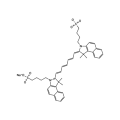
Indocyanine green
Synonyms: Cardiogreen; IR-125
Indocyanine green is a cyanine dye used in medical diagnostics. It is used for determining cardiac output, hepatic function, and liver blood flow, and for ophthalmic angiography.
Search by product name, CAS, target or catalog number. Press Down Arrow to reach product suggestions, Tab to move between links, and Escape to close suggestions.
All Dyes is the single product list for the Fluorescent Dyes, Probes & Stains section. Many dyes here have no application or dye-family subcategory, so the list is the broadest way to browse the range. It suits searches by product name when the required dye is already known. Examples range from the near-infrared cyanine indocyanine green and the ratiometric calcium indicator Fura-2 pentapotassium to the nucleic acid stains Hoechst 33258 trihydrochloride and SYBR Green II. Classical stains such as hematoxylin, reactive labeling dyes and enzyme substrates are listed alongside them. For selection by task or by core structure, the parent Fluorescent Dyes, Probes & Stains page groups dyes by application and dye family.
Synonyms: Cardiogreen; IR-125
Indocyanine green is a cyanine dye used in medical diagnostics. It is used for determining cardiac output, hepatic function, and liver blood flow, and for ophthalmic angiography.
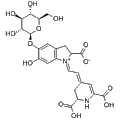
Betanin is a red glycosidic food dye obtained from beets
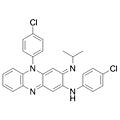
Synonyms: NSC-141046
Clofazimine is a rhimophenazine dye, originally developed for the treatment of tuberculosis, it has both antimicrobial and antiinflammatory activity, postulated mechanisms of action include intercalation of clofazimine with bacterial DNA and increasing levels of cellular phospholipase A2.
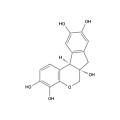
Synonyms: Natural Black 1; C.I. 75290; Hydroxybrazilin
Haematoxylin is extracted from the heartwood of the logwood tree.When oxidized it forms haematein, a compound that forms strongly coloured complexes with certain metal ions, the most notable ones being Fe(III) and Al(III) salts. Metal-haematein complexes are used to stain cell nuclei prior to examination under a microscope.
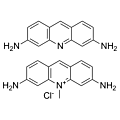
Acriflavine is a fluorescent dye for labeling high molecular weight RNA. It is also a topical antiseptic.
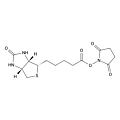
Synonyms: N-hydroxysuccinimido biotin; Biotin N-hydroxysuccinimide ester; Biotin-OSU; Biotin NHS; Biotin SE
NHS-Biotin compound is membrane-permeable and useful for intracellular labeling.
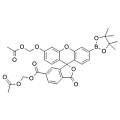
Synonyms: Peroxyfluor-6 AM
PF6-AM is a new selective fluorescent indicator for hydrogen peroxide (H(2)O(2)), a tool to help discover new redox chemistry in biological systems.
Out of stock
All 3 sizes
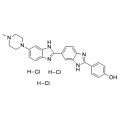
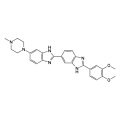
Synonyms: bisBenzimide H 33258; H 33258; Hoechst33258
Hoechst 33258 trihydrochloride is a cell dye for DNA quantitation.
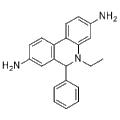
Synonyms: PD-MY 003; Hydroethidine
Dihydroethidium is a cell-permeable blue fluorescent dye.
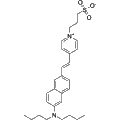
Di-4-ANEPPS is a voltage-sensitive dye that targets voltage-gated ion channels, primarily inhibiting sodium currents. This compound alters fluorescence properties in response to changes in membrane potential, facilitating the examination of ion channel function. It is useful in cardiovascular research, particularly in studies involving electrophysiology of cardiomyocytes, myocardial ischemia, and investigating drug effects on cardiac cells. Di-4-ANEPPS is instrumental in assessing drug cardiotoxicity and elucidating the mechanisms underlying arrhythmias.
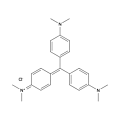
Synonyms: Gentian violet; Methyl Violet 10B; hexamethyl pararosaniline chloride; pyoctanin(e)
Crystal violet is a triarylmethane dye. The dye is used as a histological stain and in Gram’s method of classifying bacteria.
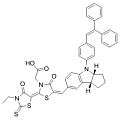
Synonyms: D149; Indoline dye D149
D149 Dye is an indoline-based dye, which is a high-extinction-coefficient metal-free organic sensitizer.
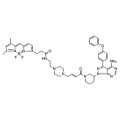
PCI-33380 is an irreversible Bruton's Tyrosine Kinase (BTK) inhibitor (fluorescent probe).
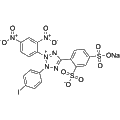
WST-3 is a water-soluble tetrazolium dye that serves as a fluorescent probe for cellular activity. Upon reduction by NADH in the presence of an electron mediator, WST-3 is converted to WST-3 formazan, which exhibits a maximum absorption at 433 nm. This dye is widely utilized in cell viability assays and metabolic activity studies, making it a valuable tool for various biological and pharmaceutical research applications.
Synonyms: Cyanine3 NHS ester
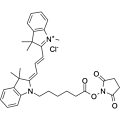
Cy3 NHS (Cyanine3 NHS ester) is a water-soluble and yellow emitting fluorescent dye for labeling amino-groups in biomolecules. Used to label soluble proteins, peptides, and oligonucleotides/DNA.
Synonyms: Pentacarboxybenzene
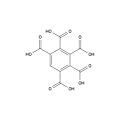
Benzenepentacarboxylic acid (BA), a novel fluorescent probes to detect and scavenge HO-.
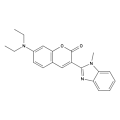
Synonyms: Coumarin-30,Coumarin30
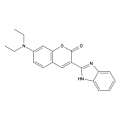
Coumarin 30 is useful as laser dye. Efficient laser dye for pulsed and CW operation.
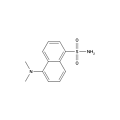
Dansyl amide is a fluorescent dye that is used in biochemistry and chemistry to label substances with the fluorescent dansyl group.
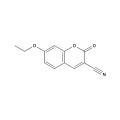
Synonyms: 7-Ethoxycoumarin-3-carbonitrile
3-Cyano-7-ethoxycoumarin is a fluorogenic substrate suitable for the continuous determination of cytochrome P450 mixed-function monooxygenases. It is a fluorescent probe useful in microsomal dealkylase studies.
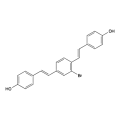
K114, a fluorescent Congo Red analogue, binds tightly to amyloid fibrils with an EC50 of 20-30 nM. K114 is an efficient detector of semen-derived enhancer of virus infection (SEVI).
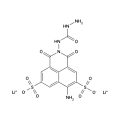
Lucifer Yellow CH dilithium salt is a highly fluorescent dye that is useful in marking nerve cells.
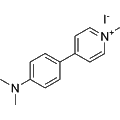
IDT307 is a fluorescent substrate targeting the dopamine transporter (DAT). As an analog of the organic cation MPP+, it exhibits specific fluorescent properties that enable the visualization of DAT activity in various biological contexts. This compound is valuable for research applications focusing on dopamine signaling, drug interactions, and neurodegenerative disease models.
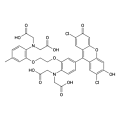
Synonyms: Fluo 3,Fluo3
Fluo-3 is a fluorescent indicator for calcium used in flow cytometry. Fluorescence intensity increases about 40-fold after calcium binding.