Search by product name, CAS, target or catalog number. Press Down Arrow to reach product suggestions, Tab to move between links, and Escape to close suggestions.
USD – US Dollar✓Current currency
Account
Histological & Cytological Stains
Explore selected stains, counterstains and related staining reagents for histological and cytological workflows. Choose by the specimen, structure of interest and complete staining method, rather than by dye color alone. Check whether the exact reagent requires preparation, a companion reagent or a defined processing sequence. This collection is not a claim that all listed materials work with every fixation or imaging method.
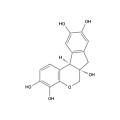
Synonyms: Natural Black 1; C.I. 75290; Hydroxybrazilin
Haematoxylin is extracted from the heartwood of the logwood tree.When oxidized it forms haematein, a compound that forms strongly coloured complexes with certain metal ions, the most notable ones being Fe(III) and Al(III) salts. Metal-haematein complexes are used to stain cell nuclei prior to examination under a microscope.
Thioflavine S is a fluorescent histochemical marker that specifically targets dense core senile plaques associated with Alzheimer's disease. This reagent is widely utilized in Alzheimer’s research to facilitate the visualization and study of amyloid deposits, contributing valuable insights into the pathophysiology of neurodegenerative disorders.
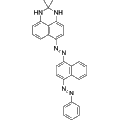
Sudan Black B is a fat-soluble diazo dye used primarily as a histochemical stain. This reagent effectively stains neutral triglycerides and lipids, making it a valuable tool in the identification and analysis of adipose tissues and lipid-containing structures in biological samples. Its applications extend to research in lipid metabolism, pathology, and histological studies.
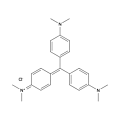
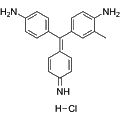
Synonyms: Magenta base monohydrochloride; Basic Fuchsin monohydrochloride; Rosaniline Base monohydrochloride
Fuchsine base monohydrochloride is a triaminotriphenylmethane dye known for its application as a magenta dye. It exhibits notable bactericidal, fungicidal, and anesthetic properties, making it valuable in various biological studies. This reagent can effectively stain collagen, muscle tissue, mitochondria, and is particularly useful in highlighting tuberculosis during microscopy. Additionally, Fuchsine base monohydrochloride serves as a reliable counterstain in Gram staining procedures, enhancing the differentiation of microbial cell walls.
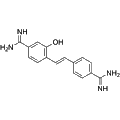
Hydroxystilbamidine is a versatile DNA and RNA binding dye that acts as a potent inhibitor of cellular ribonucleases. This compound serves as a retrograde fluorescent tracer and is utilized in histochemical staining applications, making it valuable for research related to nucleic acid detection and cellular analysis. Its unique properties facilitate investigation into nucleolytic processes and aid in the visualization of RNA and DNA in various biological samples.
Giemsa stain is a composite dye that functions primarily as a histological stain. This reagent effectively stains chromatin, nuclear membranes, specific cytoplasmic components, and microorganisms, facilitating detailed examination of cellular structures. Giemsa stain is widely utilized in cytological research and parasitological studies, allowing for enhanced visualization and analysis of cellular morphology and pathogen identification.
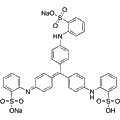
Methyl Blue is a triaminotriphenylmethane dye known for its antiseptic properties. It is commonly employed in histological and microbiological staining procedures, particularly within the polychrome staining technique. Additionally, Methyl Blue serves as a model compound for researching the effects of various catalysts on the photodegradation of dyes, facilitating studies in environmental chemistry and dye degradation pathways.
Mucicarmine is a specialized histological stain used for the visualization of acid mucopolysaccharides in tissue sections. This reagent effectively identifies mucin, producing a deep rose coloration, which is critical in the diagnosis of mucin-positive tumors, including liver carcinoma. Mucicarmine is an essential tool in pathological studies and cancer research, aiding in the assessment of tumor characteristics and the evaluation of disease progression.
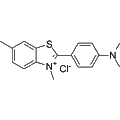
Thioflavin T is a cationic benzothiazole dye that selectively binds to β-amyloid fibrils, resulting in a significant increase in fluorescence. The dye exhibits an excitation maximum at approximately 385 nm when unbound and around 450 nm when bound to amyloid, with emission maxima of approximately 445 nm and 485 nm, respectively. It is widely used in research to detect and study amyloid deposition in tissues, contributing to the understanding of neurodegenerative diseases such as Alzheimer's.
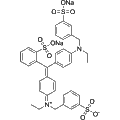
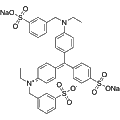
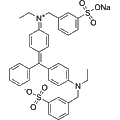
Brilliant Blue FCF is a synthetic dye that functions as an aromatic hydrocarbon colorant. It exhibits maximum absorption at 628 nm and is commonly utilized in food products and other applications where vibrant color is desired. This reagent is widely used in biochemical assays and histological staining, providing a reliable marker for various research applications.
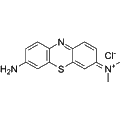
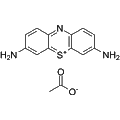
Thionin acetate is a cationic histological dye known for its metachromatic properties. It exhibits antibacterial activity and is commonly used in biological staining applications. This compound is effective in visualizing cell structures and can be applied in various histological and cytological studies.
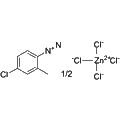
Fast Red TR Salt Hemi (Zinc Chloride) is a diazonium dye known for its vivid red coloration. This reagent is primarily utilized in histochemical staining applications, enabling the visualization of target molecules in biological samples. Its unique properties make it suitable for various research applications, including immunohistochemistry and molecular biology studies.
Light Green SF Yellowish, also known as Acid Green 5, is a triarylmethane dye primarily utilized for histological staining. It selectively targets mitochondria and collagen, making it an essential component in Papanicolaou staining protocols. Additionally, Light Green SF Yellowish demonstrates notable biological activity by inhibiting growth in Osborne-Mendel rats and inducing injection-site fibrosarcomas with prolonged subcutaneous administration. Its application extends to studies investigating pulmonary tumorigenesis, where it has been shown to improve survival rates and increase total lung tumor incidence in C3HeB/FeJ mice.
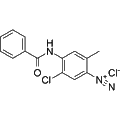
Fast Red Violet LB is a specialized dye for the histological staining of tartrate-resistant acid phosphatase (TRAP). This reagent is also capable of staining for alkaline phosphatase (ALP) activity, making it valuable in studies involving bone and immune cell research. Its precise application allows for clear visualization and assessment of phosphatase activity in various tissue samples.
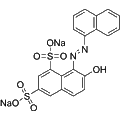
Crystal Ponceau 6R is a red azo dye that primarily targets proteins for staining applications. It is commonly used in histology, particularly for staining fibrin in the Martius, Scarlet, and Blue (MSB) Trichrome stain protocol. This reagent plays a crucial role in visualizing tissue structures and protein localization in various biological specimens. Its application in histological analysis enhances the clarity and contrast of fibrous tissue components.
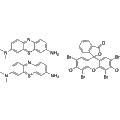
Azure A eosinate is a histological dye primarily utilized in hematological applications. This compound exhibits strong staining properties, making it valuable for visualizing cellular structures in tissue samples. Additionally, Azure A eosinate serves as a novel photosensitizer prototype, demonstrating potential for assessing growth inhibition in Candida albicans, thereby aiding research in microbiology and antifungal drug development.
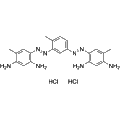
Bismarck Brown R is a basic dye primarily used for staining biological tissues and cellular components in histology and cytology. This compound facilitates the visualization of structures by imparting a rich brown color to target cells, aiding in the microscopic examination of samples. Its applications extend to research involving cell differentiation, morphology studies, and the identification of various cellular types in medical and biological research.
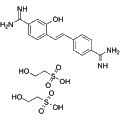
Hydroxystilbamidine diisethionate is a DNA and RNA-binding dye that selectively inhibits cellular ribonucleases. This compound serves as a retrograde fluorescent tracer and is utilized in histochemical staining applications to visualize nucleic acids in various biological samples. Its dual function as a dye and an inhibitor makes it valuable for research in molecular biology and cellular assays.
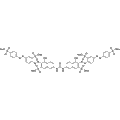
Direct Red 80 is a polyazo dye primarily employed in histological staining techniques for collagen and amyloid detection. This reagent exhibits low toxicity and does not release benzidine upon degradation, making it a safer alternative to traditional direct dyes. It is extensively utilized in biological research for visualizing extracellular matrix components and pathological deposits.
Acid Green 3 is a biological stain known for its ability to selectively bind to cellular components. This organic compound is utilized in various life science research applications, including microscopy and histology, to visualize and differentiate cellular structures. Its strong affinity for proteins and nucleic acids makes Acid Green 3 an essential tool for enhancing the contrast in biological samples.
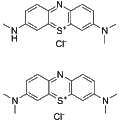
Azure II is a vital nuclear stain utilized in histological and cytological applications. This synthetic dye primarily binds to nucleic acids, facilitating the visualization of cellular structures under a microscope. Its strong affinity for nuclei makes it invaluable for studying cellular morphology and identifying cellular abnormalities in various tissue samples. Azure II is commonly employed in research focused on cell biology, pathology, and histochemistry.
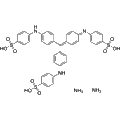
Aniline blue diammonium is a vital dye commonly utilized in histological staining techniques, specifically for collagen fibers. It effectively stains collagen blue in tissue sections through Masson's trichrome protocol and is also employed for selective staining of callose in plant specimens. Additionally, Aniline blue diammonium is used in Gomori's one-step trichrome stain and Mallory's connective tissue stain, aiding in the assessment of nuclear maturity through histone staining in various tissues, including kidney and intestine.