Search by product name, CAS, target or catalog number. Press Down Arrow to reach product suggestions, Tab to move between links, and Escape to close suggestions.
USD – US Dollar✓Current currency
Account
Intracellular pH Indicators
Browse reagents with product-specific evidence for intracellular pH measurement. Review each product's properties and experimental requirements before selecting an indicator.
General pH sensitivity or solution-phase pH measurement alone is insufficient for this selection. Loading, calibration, usable pH range and compatibility with a particular cell system require product-specific assessment.
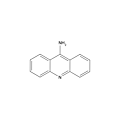
Aminoacridine is a highly fluorescent dye used as a topical antiseptic. It is sometimes used experimentally as a mutagen due to its interaction with DNA. It is also used as an intracellular pH indicator.
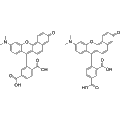
Carboxy-SNARF 1 (5/6-mixture) is a pH-sensitive fluorescent probe utilized for the measurement of intracellular and environmental pH changes. It exhibits a significant emission shift from yellow-orange (Em: 580 nm) at acidic pH to deep red fluorescence (Em: 640 nm) in basic conditions, making it particularly useful for dynamic pH monitoring in biological systems. This probe is valuable in various research applications, including studying cellular metabolism, enzyme activity, and membrane potential.
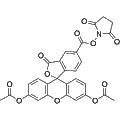
5-Carboxyfluorescein diacetate N-succinimidyl ester is a cell-permeable fluorescent dye with an excitation wavelength of 492 nm and an emission wavelength of 517 nm. It covalently labels intracellular proteins, enabling the tracking of lymphocyte migration and proliferation in biological research. This reagent is particularly useful for studying immune responses and cellular dynamics in various experimental settings.
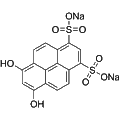
DHPDS disodium salt is a pH-sensitive fluorescent dye that enables the measurement of intracellular pH (pHi). This compound is particularly useful in experimental setups involving isolated perfused rat liver, where it facilitates the assessment of pH variations through surface fluorescence. Its application extends to various biological studies requiring precise pH measurements in living cells.
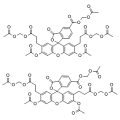
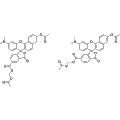
Carboxy SNARF-1, acetoxymethyl ester (5/6-mixture) is a fluorescent probe that targets intracellular pH variations through pH-sensitive fluorescence. This compound enables the real-time measurement of intracellular pH changes, making it valuable for research applications in cell biology and physiology. Its versatility allows for use in various live cell imaging studies to monitor cellular processes influenced by pH.
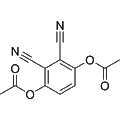
1,4-Diacetoxy-2,3-dicyanobenzene is a cell-permeable fluorescent probe that targets cytosolic esterases. Upon penetrating the cell membrane, it is cleaved to yield the fluorescent pH indicator 2,3-dicyano-hydroquinone (DCH). This compound is useful for monitoring intracellular pH changes, making it a valuable tool in cellular biology and biochemical research.
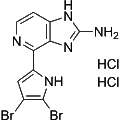
Ageladine A dihydrochloride is a potent matrix metalloproteinase (MMP) inhibitor derived from the marine sponge Agelas nakamurai, exhibiting anti-angiogenic properties. It effectively targets multiple MMPs, including MMP-1, MMP-2, MMP-8, MMP-9, MMP-12, and MMP-13, with varying IC50 values indicating strong inhibitory effects. Additionally, Ageladine A dihydrochloride functions as a pH-sensitive, membrane-permeable fluorescent dye, emitting blue-green fluorescence upon UV excitation, making it a valuable tool for monitoring intracellular pH changes in biological research.
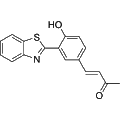
(E)-HBT-O is a fluorescent probe designed to detect and monitor subtle pH changes within living cells. Its unique isomeric structure affords high sensitivity and specificity, making it an invaluable tool for real-time cellular studies. This compound is particularly useful in applications that require precise measurement of intracellular pH dynamics and can contribute to research in cell biology and biochemistry.