
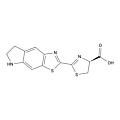
Bioluminescence: Luciferins & Luciferase
This category includes luciferin substrates, luciferase enzymes and luciferase modulators for laboratory research. The selection covers D-luciferin and its salts, luciferin analogs, coelenterazine and its derivatives, firefly and bacterial luciferases, and luciferase inhibitors and an activator. These products are listed for bioluminescence and reporter-assay research. Check each product record for its intended enzyme system, substrate requirements and supporting references.
-
-
- Cat. No.
- A13789
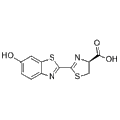
D-Luciferin
Synonyms: Firefly Luciferin
D-Luciferin is a popular bioluminescent substrate of luciferase in the presence of ATP, used in luciferase-based bioluminescence imaging and cell-based high-throughput screening applications.
In stock View Details -
- Cat. No.
- A15897
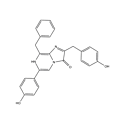
Coelenterazine
Synonyms: CLZN
Coelenterazine is a luminescent enzyme substrate, used for monitoring reporter genes in BRET, ELISA and HTS techniques.
In stock View Details -
- Cat. No.
- A16939
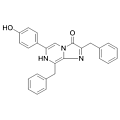
Coelenterazine H
Synonyms: CLZN-h; 2-deoxy Coelenterazine; Luciferin (Renilla)
Coelenterazine h is a derivative of Coelenterazine. Coelenterazine h is more sensitive to Ca2+ than is the native complex, thus providing a valuable tool for measuring small changes in Ca2+ concentrations.
In stock View Details -
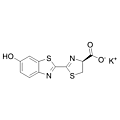
- Cat. No.
- A21476
D-Luciferin potassium salt
D-Luciferin potassium salt is the substrate of luciferases that catalyze the production of light in bioluminescent insects.
In stock View Details -
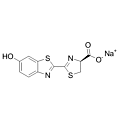
- Cat. No.
- A21760
D-Luciferin sodium salt
Synonyms: D-(-)-Luciferin sodium salt; Firefly luciferin sodium salt
D-Luciferin sodium salt is the substrate of luciferases that catalyze the production of light in bioluminescent insects.
In stock View Details -
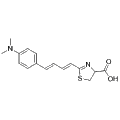
- Cat. No.
- A22152
Aka Lumine
Aka Lumine, a luciferin analogue, is a luciferase substrate emitting red, green, and blue light. The longest emission wavelength of Aka Lumine is recorded at 675 nm, which is within the NIR region.
In stock View Details -
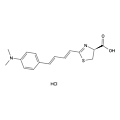
- Cat. No.
- A24215
AkaLumine hydrochloride
AkaLumine hydrochloride is a luciferin analogue with a Km of 2.06 μM for recombinant firefly luciferase (Fluc) protein. It is commonly used in bioluminescence imaging and reporter assays for enhanced sensitivity and signal stability.
In stock View Details -
- Cat. No.
- A38841
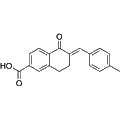
Firefly luciferase-IN-1
Firefly luciferase-IN-1 is a highly potent and reversible inhibitor of firefly luciferase, exhibiting an IC50 value of 0.25 nM. This compound is valuable for studying luciferase activity and its applications in bioluminescent assays. Its ability to modulate luciferase function makes it an important tool for researchers investigating gene expression and protein interactions in various biological contexts.
In stock View Details -
- Cat. No.
- A39002
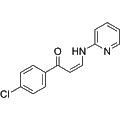
Luciferase-IN-4
Luciferase-IN-4 is a potent inhibitor of luciferase, exhibiting an IC50 of 4.1 μM against the enzyme. Specifically, it demonstrates effective inhibition of purified luciferase from Photinus pyralis, with a lower IC50 value of 2.0 μM. This compound is valuable for research applications involving luciferase activity modulation in various biological assays.
In stock View Details -
- Cat. No.
- A39063
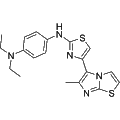
Luciferase activator-1
Luciferase activator-1 is a potent activator of luciferase, enhancing luciferase activity by 1.04-fold at a concentration of 50 nM. This reagent is valuable for applications in bioluminescence assays and studying gene expression, where increased luciferase activity is crucial for sensitive detection. Utilizing this compound can aid researchers in optimizing experimental conditions and improving the sensitivity of their assays.
In stock View Details -
- Cat. No.
- A43890
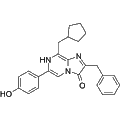
Coelenterazine hcp
Coelenterazine hcp is a luciferin analogue that serves as a sensitive probe for calcium ion (Ca2+) detection. Its high sensitivity to Ca2+ makes it an effective tool for monitoring intracellular calcium fluctuations. This compound is widely used in research applications involving calcium signaling, cellular processes, and bioluminescence imaging.
In stock View Details -
- Cat. No.
- A44454
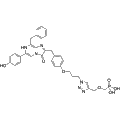
CoelPhos
CoelPhos is a cell-impermeable coelenterazine derivative that specifically targets extracellular Gaussia luciferase (GLuc) to produce luminescent signals. This reagent serves as an effective bioluminescent tool for monitoring exocytic processes, including cell surface membrane fusion. Its ability to generate measurable luminescence makes it valuable for various biological studies involving cellular dynamics and membrane interactions.
Out of stock
All 3 sizes -
- Cat. No.
- A44455
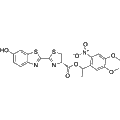
DMNPE-caged D-luciferin
DMNPE-caged D-luciferin is a caged fluorescent dye that serves as a natural substrate for luciferase, an enzyme pivotal for monitoring cellular activity. Upon deprotection, this compound's luminescent properties allow for the emission of yellow-green light at a peak wavelength of approximately 530 nm, contingent on the presence of ATP. Its ability to permeate cell membranes enhances its utility in various biological research applications, including live-cell imaging and bioluminescence-based assays.
Out of stock
All 3 sizes -
- Cat. No.
- A44463
Luciferase (bacterial)
Luciferase (bacterial) is an enzyme that catalyzes the oxidation of long-chain aldehydes in the presence of reduced flavin mononucleotide, resulting in bioluminescence. This enzyme plays a critical role in the luminescent metabolism of certain bacteria, providing protection against oxidative stress. Luciferase (bacterial) is widely utilized in molecular biology research, particularly in studies involving gene expression, bioluminescence imaging, and biosensor development.
In stock View Details -
- Cat. No.
- A44493
Luciferase, firefly
Luciferase, firefly is a light-emitting enzyme that catalyzes the bioluminescent reaction in fireflies and click beetles. This enzyme utilizes D-luciferin as its substrate to produce visible light, making it a valuable tool in various research applications, including gene expression studies, bioluminescent imaging, and cellular assays. Its ability to generate light in response to specific biological interactions provides researchers with a sensitive and non-invasive method for monitoring biological processes in real time.
In stock View Details -
- Cat. No.
- A44496
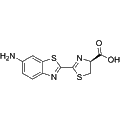
6′-Amino-D-luciferin
6'-Amino-D-luciferin is a luciferin derivative featuring an amino group substitution at the 6-position. This compound serves as a natural substrate for luciferase, facilitating enhanced bioluminescence assays. It is particularly valuable for in vivo imaging applications in cell and animal studies, allowing for effective monitoring of biological processes.
In stock View Details -
- Cat. No.
- A44507
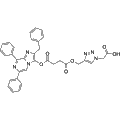
ETZ
Synonyms: C3-CA-DTZ
ETZ (C3-CA-DTZ) is a novel luciferase substrate that acts as a prosubstrate activated in vivo by nonspecific esterases. This activation enhances the delivery of luciferin to the brain, facilitating advanced bioluminescent imaging studies. ETZ is particularly useful for applications in neurological research and monitoring cellular processes in live tissues.
In stock View Details -
- Cat. No.
- A45302
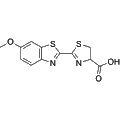
D-Luciferin 6'-methyl ether
D-Luciferin 6'-methyl ether is an inhibitor of firefly luciferase, targeting the enzyme responsible for bioluminescence in fireflies. This compound serves as a valuable tool in the study of luciferase activity and its regulatory mechanisms. It is particularly useful in research applications involving bioluminescence assays and the investigation of dinucleoside polyphosphate synthesis.
In stock View Details -
- Cat. No.
- A45396
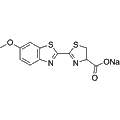
(Rac)-Luciferin 6′-methyl ether sodium
Synonyms: (Rac)-6′-Methoxyluciferin sodium
(Rac)-Luciferin 6′-methyl ether sodium is a potent inhibitor of the firefly luciferase derived from Photinus pyralis (PpyLuc), exhibiting an IC50 of 0.1 μM. This analog of D-luciferin demonstrates non-specific interactions at both ATP- and luciferin-binding sites within the PpyLuc active site. It is utilized in research applications involving bioluminescence assays and studies on enzyme kinetics, providing insights into luciferase activity and inhibition.
Out of stock
All 3 sizes -
- Cat. No.
- B11016
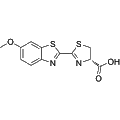
D-Luciferin 6′-methyl ether (6′-Methoxyluciferin)
Synonyms: 6′-Methoxyluciferin
D-Luciferin 6'-methyl ether is a potent inhibitor of the Photinus pyralis luciferase (PpyLuc), with an IC50 value of 0.1 µM. This D-luciferin analog exhibits non-specific interactions at the ATP and luciferin-binding sites within the active site of PpyLuc. It is utilized in various research applications, particularly in studying bioluminescence and enzyme kinetics related to luciferase activity.
In stock View Details -
- Cat. No.
- B11020
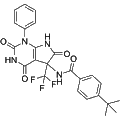
Firefly luciferase-IN-3
Firefly luciferase-IN-3 is a potent inhibitor of ATP-dependent luciferase, specifically targeting Firefly luciferase and exhibiting nanomolar inhibitory activity against NanoLuc with a pIC50 of 7.5. This compound is valuable for research applications involving bioluminescence assays, allowing for the detailed study of luciferase activity and its biological implications. Its specificity and efficacy make it a crucial tool for investigating cellular processes and signal transduction pathways mediated by luciferases.
In stock View Details -
- Cat. No.
- B11064
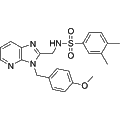
Firefly luciferase-IN-5
Firefly luciferase-IN-5 is a potent inhibitor of ATP-dependent luciferase, specifically targeting Firefly luciferase. It demonstrates nanomolar-level inhibitory activity against various luciferase variants, including GRLuc (pIC50 = 8.5), RLuc8 (pIC50 = 7.5), and RLuc (pIC50 = 5.5). This inhibitor is valuable for research applications involving luciferase-based assays, enabling precise modulation of bioluminescent signaling and facilitating studies in gene expression, signal transduction, and molecular imaging.
In stock View Details -
- Cat. No.
- B11073
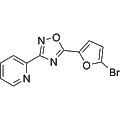
Luciferase-IN-3
Luciferase-IN-3 is an inhibitor of ATP-dependent luciferase, specifically targeting the firefly luciferase enzyme. It effectively inhibits Phrixotrichus pyralis luciferase with an IC50 value of 3.2 μM, demonstrating its potential as a tool for studying bioluminescent processes. This compound is primarily used in research applications focusing on bioluminescence assays and related biochemical studies. Its minimal inhibitory effect on R. reniformis luciferase allows for specificity in experimental design involving firefly luciferase.
In stock View Details -
- Cat. No.
- B11082
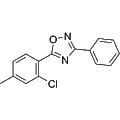
Firefly luciferase-IN-2
Firefly luciferase-IN-2 is a selective inhibitor of ATP-dependent luciferase, specifically targeting the P. pyralis luciferase enzyme, a crucial component of bioluminescence in fireflies. With an IC50 value of 0.15 μM, this compound demonstrates potent inhibitory activity against P. pyralis luciferase, while exhibiting negligible effect on R. reniformis luciferase. Firefly luciferase-IN-2 is valuable for research applications involving bioluminescence, enzyme activity studies, and the exploration of cellular signaling pathways.
In stock View Details