- Cat. No.
- A14115
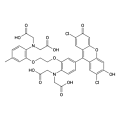
Fluo-3
Synonyms: Fluo 3,Fluo3
Fluo-3 is a fluorescent indicator for calcium used in flow cytometry. Fluorescence intensity increases about 40-fold after calcium binding.
Search by product name, CAS, target or catalog number. Press Down Arrow to reach product suggestions, Tab to move between links, and Escape to close suggestions.
Browse reagents with product-specific evidence for calcium detection, measurement or staining. The selection includes different reporting formats; consult each product for its intended use and experimental conditions.
Calcium-sensitive fluorescent indicators and calcium-detection or staining reagents are not interchangeable. This page does not imply that every product measures free intracellular calcium. Indicator precursors, calcium-channel pharmacology and probes made by subsequent conjugation are outside this selection without evidence for the exact reagent.
Synonyms: Fluo 3,Fluo3
Fluo-3 is a fluorescent indicator for calcium used in flow cytometry. Fluorescence intensity increases about 40-fold after calcium binding.
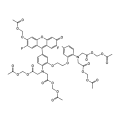
Fluo-4 AM is a fluorescent dye (λex=494 nm, λem=516 nm).
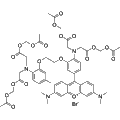
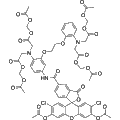
Rhod-2 AM is a high-affinity fluorescent probe specifically designed for the detection of intracellular calcium ions (Ca2+). As an acetyl methyl ester derivative, it possesses cell membrane permeability, allowing it to readily enter cells. Inside the cell, Rhod-2 AM is hydrolyzed by lactesterase to release Rhod-2, which retains its fluorescent properties for monitoring Ca2+ dynamics. This probe exhibits maximum excitation and emission wavelengths of 549 nm and 578 nm, respectively, making it suitable for a variety of cellular studies related to calcium signaling pathways.
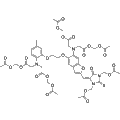
Fura Red AM is a fluorescent dye specifically designed for visualizing Ca2+ distribution within the cytoplasm of undifferentiated cells. This probe exhibits optimal excitation at 488 nm, making it suitable for various fluorescence microscopy applications. Fura Red AM is essential for studies exploring calcium signaling and cellular dynamics in live cell imaging.
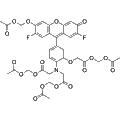
Mag-Fluo-4 AM is a fluorescent calcium ion indicator that exhibits a high affinity for Ca²⁺. This compound enables the specific detection of intracellular calcium ions with exceptional sensitivity and minimal cytotoxicity. Upon entering the cell, it is hydrolyzed by intracellular esterases, allowing it to bind calcium ions and emit strong fluorescence. Mag-Fluo-4 AM is widely applicable in studies involving calcium signaling and cellular functions.
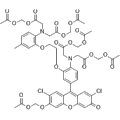
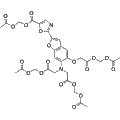
Synonyms: Fluo-3-pentaacetoxymethyl ester
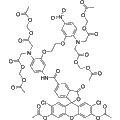
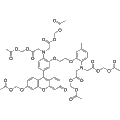
Fluo-3 AM is a fluorescent calcium indicator that effectively chelates Ca2+ ions with high affinity. It is designed for the sensitive detection of intracellular calcium fluctuations, making it a valuable tool for monitoring cellular calcium dynamics. Due to its low cytotoxicity and efficient cellular uptake facilitated by the acetoxymethyl ester moiety, Fluo-3 AM is cleaved intracellularly, allowing for sustained binding to calcium ions and robust fluorescence output. This compound is widely used in studies related to signal transduction, muscle contraction, and various calcium-dependent cellular processes.
Calcein (mixture of isomers) is a calcium-dependent fluorescent dye that enables the visualization of calcium ions in biological systems. This reagent is commonly utilized in studies of bone metabolism and is effective for staining specific cellular regions in vitro. Additionally, Calcein can be employed in fluorometric assays and for the titration of calcium ions using EDTA, making it a versatile tool for various research applications.
Calcium Green 1AM is a cell-permeant fluorescent calcium indicator that targets calcium ions within cells. Upon cellular uptake, it is converted by intracellular esterases into its active form, facilitating precise measurement of calcium fluctuations. This reagent is widely utilized in cell physiology studies, calcium signaling research, and live-cell imaging applications.
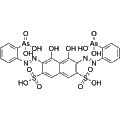
Arsenazo III is a metallochromic dye that functions as a chelating agent and cation complexing agent. This compound forms stable 1:1 complexes with various cations, including Ca2+, Mg2+, Sr2+, Ba2+, K+, and Na+, with binding affinity influenced by pH and alkali metal cation concentration. Arsenazo III is widely utilized as a colorimetric indicator for the detection of micromolar levels of ionized calcium in cellular studies, making it a valuable tool in biochemical and physiological research.
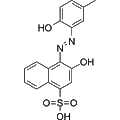
Calmagite is a complexometric indicator that selectively binds to calcium and magnesium ions, facilitating their detection in various samples. Its chromogenic properties enable clear visualization, making it an essential tool in analytical chemistry. Calmagite is widely employed in environmental analysis, clinical laboratories, and biochemistry research to quantify and monitor metal ion concentrations.
Fura-2 pentapotassium is a cell-impermeable fluorescent dye designed for intracellular calcium imaging, targeting Ca2+ ions. It exhibits an emission wavelength of 510 nm, with excitation wavelengths at 340 nm and 380 nm. The fluorescence intensity ratio of 340 nm to 380 nm is directly proportional to intracellular Ca2+ levels, making it a valuable tool for studies related to calcium signaling and cellular physiology.
Fura-FF pentapotassium is a low-affinity fluorescent dye designed for calcium detection. It exhibits distinctive fluorescence properties with excitation and emission wavelengths of 365/514 nm in the absence of calcium, shifting to 339/507 nm in the presence of high calcium concentrations. This dye is widely used in cellular and molecular biology research to study calcium dynamics and signaling pathways in live cells.
Calcium Green-5N AM is a potent Ca2+-sensitive fluorescent probe designed for monitoring intracellular calcium levels. Upon binding calcium ions (Ca2+), it exhibits a significant increase in fluorescence intensity, allowing for precise detection of free Ca2+ in neuronal cells. This probe is particularly valuable in studies of calcium signaling and neuronal activity.
Out of stock
All 3 sizes
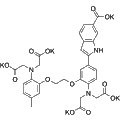
INDO 1 pentapotassium is a cell-impermeant fluorescent calcium indicator that specifically binds to Ca2+ ions, facilitating the detection of calcium levels within biological systems. Upon binding, the compound exhibits a significant fluorescence shift, with the maximum emission wavelength changing from 485 nm to 410 nm. This property makes INDO 1 pentapotassium a valuable tool for studying calcium signaling and dynamics in various research applications.
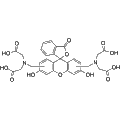
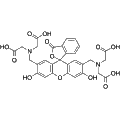
Synonyms: Fluorexon
Calcein is a fluorescent dye primarily used for assessing lipid vesicle leakage and as a complexometric indicator for calcium ion titration with EDTA. This compound is valuable for fluorometric determination of calcium levels within biological samples. Due to its inability to cross intact cell membranes, Calcein serves as a model compound for evaluating drug delivery systems, facilitating research on drug efficiency and bioavailability.
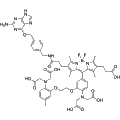
BOCA-1-BG is a BODIPY-labeled SNAP tag fluorescence probe designed for the detection of intracellular Ca2+ concentration. This compound functions as a highly sensitive fluorescent indicator for Ca2+, enabling real-time monitoring of calcium levels in various biological research applications. It is suitable for use in studies involving calcium signaling pathways and cellular responses to calcium fluctuations.
Out of stock
All 3 sizes
Calcium green-5N hexapotassium is a cell-impermeant Ca2+-sensitive fluorescent probe designed for the detection of calcium ions. Upon binding to Ca2+, this compound exhibits a significant enhancement in fluorescence intensity, allowing for precise monitoring of free Ca2+ levels in neuronal cells. This reagent is ideal for research applications involving calcium signaling and neuronal activity studies.
Synonyms: Fluo-2 acetoxymethyl ester; Fluo-2 ha; Fluo-2 high affinity
Fluo-2 AM is a fluorescent dye that targets intracellular calcium ions through its conversion into the active form, Fluo-2, by cellular esterases. It exhibits strong fluorescence upon binding to calcium ions, making it an essential tool for real-time measurements of intracellular calcium concentrations. Fluo-2 AM is widely used in cell physiology studies, calcium imaging, and pharmacological research involving calcium signaling pathways.
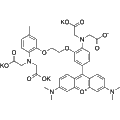
Rhod-2 potassium is a cell-impermeant, red fluorescent calcium ion probe designed for monitoring intracellular calcium levels. Upon calcium binding, Rhod-2 potassium exhibits a notable increase in fluorescence intensity, with excitation maxima at 552 nm and emission maxima at 581 nm when bound to calcium. This reagent provides a reliable alternative to UV-excitable indicators, offering researchers the ability to track calcium dynamics without the associated spectral shifts. It is ideal for applications in neurobiology and cell signaling studies.
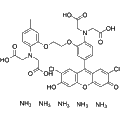
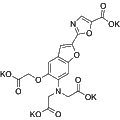
Fluo-3 pentaammonium is a cell-impermeable calcium ion (Ca2+) indicator that exhibits increased fluorescence upon calcium binding, with an excitation/emission wavelength of 488/525 nm. This reagent is crucial for the detection and quantification of intracellular calcium levels, making it instrumental in studies of calcium signaling pathways, cellular excitability, and various physiological processes involving calcium ions.
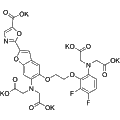
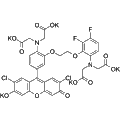
Fluo-3FF pentapotassium is a cell-impermeant fluorescent calcium indicator that targets cytosolic calcium levels. As a di-fluorinated analog of Fluo-3, Fluo-3FF exhibits a significantly lower calcium affinity (Kds=42 μM) compared to Fluo-3, making it suitable for applications involving compartments with elevated calcium concentrations, such as the endoplasmic reticulum. This unique characteristic allows researchers to monitor and study luminal fluctuations in these high-calcium environments with greater sensitivity.
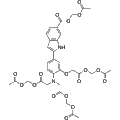
Mag-Fura-2 AM is a fluorescent indicator specifically designed for the detection of intracellular calcium ions. This probe exhibits high sensitivity and low cytotoxicity, allowing for effective imaging of calcium dynamics within live cells. Once inside the cell, Mag-Fura-2 AM is hydrolyzed by intracellular esterases, resulting in a calcium-bound complex that emits strong fluorescence. It is widely utilized in research applications focusing on calcium signaling, providing insights into physiological and pathological processes.
Mag-indo-1/AM is a cell-permeable fluorescent indicator primarily designed for the detection of magnesium ions (Mg2+) and calcium ions (Ca2+) with an excitation wavelength range of 340-390 nm and emission range of 410-490 nm. This reagent enables researchers to assess intracellular concentrations of Mg2+ and Ca2+, making it a valuable tool for studies involving cellular signaling, ion homeostasis, and other physiological processes. Its fluorescence properties facilitate real-time monitoring of ion dynamics in live cells.
Out of stock
All 3 sizes
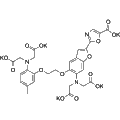
Mag-Fura-2 tetrapotassium is a cell-impermeant fluorescent indicator designed to selectively measure magnesium (Mg2+) and calcium (Ca2+) ion concentrations. It exhibits UV-excitable fluorescence with excitation wavelengths between 334-360 nm and emission at 510 nm. This reagent is widely utilized in cellular and molecular biology research for monitoring intracellular ion levels, aiding in the understanding of various physiological processes and signaling pathways.
Out of stock
All 3 sizes
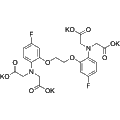
5,5'-Difluoro BAPTA tetrapotassium is a calcium (Ca2+) probe that exhibits significant ^19F NMR chemical shifts upon the chelation of divalent cations. It demonstrates high selectivity for Ca2+, making it an effective tool for studying calcium dynamics in various biological systems. Additionally, 5,5'-Difluoro BAPTA tetrapotassium can inhibit the growth of pollen tubes, highlighting its potential applications in plant physiology and signaling research.
Out of stock
All 3 sizes