
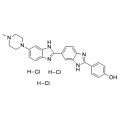
- Cat. No.
- A15106
Hoechst 33258 trihydrochloride
Synonyms: bisBenzimide H 33258; H 33258; Hoechst33258
Hoechst 33258 trihydrochloride is a cell dye for DNA quantitation.
Search by product name, CAS, target or catalog number. Press Down Arrow to reach product suggestions, Tab to move between links, and Escape to close suggestions.
DNA stains are fluorescent dyes that bind double-stranded DNA to label cell nuclei and chromatin. The listed products are mainly bisbenzimide dyes of the Hoechst family, which bind the minor groove of DNA at adenine-thymine (A-T) rich sequences. Bound dye fluoresces blue under ultraviolet excitation, so nuclei stand out clearly against the surrounding cytoplasm. Hoechst dyes stain both fixed and living cells without permeabilization. They serve as nuclear counterstains in fluorescence microscopy and as DNA content probes in cell cycle analysis. Condensed, brightly stained chromatin also helps to identify apoptotic nuclei. Hoechst 33258 trihydrochloride is the parent dye, listed with the related bisbenzimide HOE 33187 and related compounds such as Hoechst 33258 analog.
Synonyms: bisBenzimide H 33258; H 33258; Hoechst33258
Hoechst 33258 trihydrochloride is a cell dye for DNA quantitation.
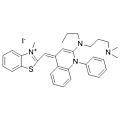
Dye 937, substituted unsymmetrical cyanine dyes with selected permeability, useful in the detection of DNA in electrophoretic gels.
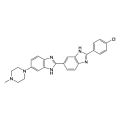
HOE 32020 is a Hoechst stain, which is a blue fluorescent dyes used to stain DNA.
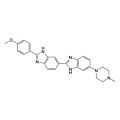
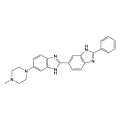
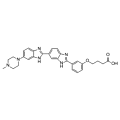
Hoechst 33258 analog is a cell dye for DNA quantitation.
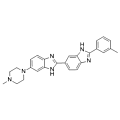
Hoechst 33258 analog 2 is a cell dye for DNA quantitation.
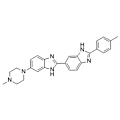
Hoechst 33258 analog 3 is a cell dye for DNA quantitation.
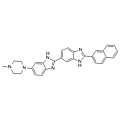
Hoechst 33258 analog 5 is a analog of Hoechst stains, which are part of a family of blue fluorescent dyes used to stain DNA.
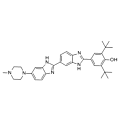
Hoechst 33258 analog 6 is a anglog of Hoechst stains(Hoechst 33258), which are part of a family of blue fluorescent dyes used to stain DNA.
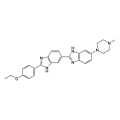
Synonyms: bisBenzimide H 33342; HOE 33342
Hoechst 33342 is a cell dye for DNA.
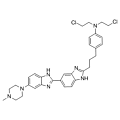
Hoechst 33342 analog is a nalog of Hoechst stains, which are part of a family of blue fluorescent dyes used to stain DNA.
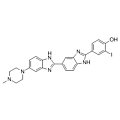
Hoechst 33342 analog 2 is a anglog of Hoechst stains, which are part of a family of blue fluorescent dyes used to stain DNA.
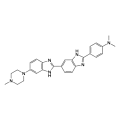
Synonyms: HOE 34580; Proamine
Hoechst 34580 is a cell dye for DNA.
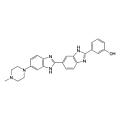
Synonyms: meta-Hoechst
HOE-S 785026 is a cell dye for DNA.
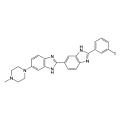
Synonyms: iodoHoechst 33258
Hoechst stains are part of a family of blue fluorescent dyes used to stain DNA.
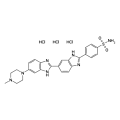
Nuclear yellow exhibits excitation/emission maxima ~335/495 nm when bound to DNA.
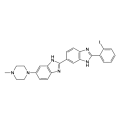
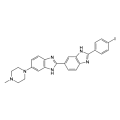
Synonyms: iodoHoechst 33258
Hoechst stains are part of a family of blue fluorescent dyes used to stain DNA. Hoechst 33258 is a cell dye for DNA quantitation.
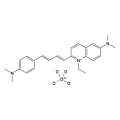
LDS 751 is a cell-permeable fluorescent nucleic acid dye that can be used to label double-stranded DNA (dsDNA) within live or dead cells.
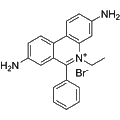
Synonyms: EtBr; Homidium bromide
Ethidium bromide is a fluorescent intercalating agent widely used in molecular biology as a nucleic acid stain. It inserts between DNA base pairs, allowing visualization of DNA and RNA under ultraviolet (UV) light during techniques such as agarose gel electrophoresis. Due to its high sensitivity and strong fluorescence, Ethidium bromide is a standard tool for nucleic acid detection, though it is handled with caution because of its mutagenic properties.
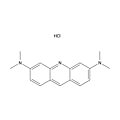
Acridine Orange hydrochloride is a cell-permeable fluorescent dye that binds to nucleic acids, resulting in an altered spectral emission.
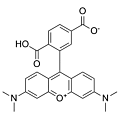
Synonyms: 6-Carboxytetramethylrhodamine
6-TAMRA has been a widely used fluorophore for preparing bioconjugates, especially fluorescent antibody and avidin derivatives used in immunochemistry.
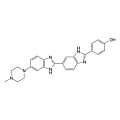
Hoechst 33258 is a fluorescent dye that emits blue fluorescence when bound to dsDNA.
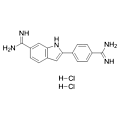
Synonyms: 4',6-Diamidino-2-phenylindole dihydrochloride
DAPI Dihydrochloride is a cell-permeable fluorescent probe used to stain DNA and chromosomes, with a preference for adenine and thymine rich DNA.