- Cat. No.
- A19707
Fluorescein di(β-D-galactopyranoside)
Synonyms: FDG
Fluorescein di(β-D-galactopyranoside) is a fluorogenic substrate for β-galactosidase (λex=485 nm, λem=535 nm).
Search by product name, CAS, target or catalog number. Press Down Arrow to reach product suggestions, Tab to move between links, and Escape to close suggestions.
Browse fluorescein dyes and derivatives supported by product-specific catalog or supplier information. Review the exact chemical form and product specifications before selecting a reagent.
A fluorescein-family relationship does not establish intracellular pH sensing, calcium detection or labeling compatibility for every derivative. These applications require their own product-specific evidence.
Synonyms: FDG
Fluorescein di(β-D-galactopyranoside) is a fluorogenic substrate for β-galactosidase (λex=485 nm, λem=535 nm).
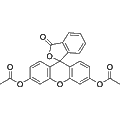
Synonyms: 3,6-Diacetoxyfluoran; Di-O-acetylfluorescein
Fluorescein diacetate is a fluorogenic substrate that functions as a cell-permeable esterase substrate. Upon cleavage by cellular esterases, it yields fluorescein, which is highly fluorescent and allows for the visualization of viable cells. This compound is particularly useful in studies involving hGSTP1-1 and can be applied in assays for cell viability and drug response.
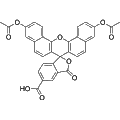
5(6)-Carboxynaphthofluorescein diacetate is a specific fluorescent substrate utilized in esterase assays. It is cleaved by intracellular esterases, leading to the production of red fluorescence, which can be quantitatively measured to assess enzyme activity. This compound is instrumental in various biological and biochemical research applications, including monitoring esterase activity in live cells.
Out of stock
All 3 sizes
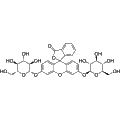
Fluorescein Di-β-D-Glucopyranoside acts as a specific substrate for β-glucocerebrosidase. This fluorogenic compound is primarily utilized in studies involving lysosomal enzyme activity, particularly intralysosomal β-galactosidase. Its structural properties enable effective detection and quantification of enzyme activity, making it a valuable tool in enzyme assays and research related to lysosomal storage disorders.
Out of stock
All 3 sizes
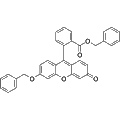
Synonyms: DBF
Dibenzylfluorescein is a fluorogenic probe that serves as a substrate for specific cytochrome P450 isoforms, notably CYP3A4, CYP2C8, CYP2C9, CYP2C19, and aromatase (CYP19). This compound, with optimal usage near its Km value of 0.87-1.9 μM (Ex=485 nm, Em=535 nm), is instrumental in assessing alterations in CYP catalytic activity resulting from pharmaceuticals or pathological conditions. Dibenzylfluorescein is widely utilized in drug metabolism studies and toxicity assessments, providing insights into enzyme function in biochemical and pharmacological research.
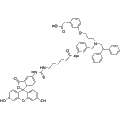
FITC-GW3965 is a fluorescence-labeled agonist of liver X receptor beta (LXRβ), designed to facilitate the study of LXRβ functions in biological systems. The compound is synthesized by replacing the trifluoromethyl group of GW3965 with an amide linkage to incorporate the FITC dye. FITC-GW3965 is valuable for research applications involving the exploration of lipid metabolism, cholesterol homeostasis, and gene regulation mediated by LXRβ.
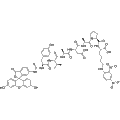
FITC-YVADAPK(Dnp) is a fluorogenic substrate primarily used to study caspase-1 activity. Upon cleavage by caspase-1, the fluorescence intensity increases, allowing for quantitative analysis of enzyme activity in various biological samples. This reagent is suitable for applications in apoptosis research and the investigation of inflammatory responses.
Out of stock
All 3 sizes