Search by product name, CAS, target or catalog number. Press Down Arrow to reach product suggestions, Tab to move between links, and Escape to close suggestions.
USD – US Dollar✓Current currency
Account
Lipid & Lipid Droplet Stains
Choose a lipid stain according to the structure you want to visualize and the detection method you plan to use. The examples below include fluorescent lipid-droplet staining and a color-based Oil Red O method. [1][2][3] Compare the documented target, readout and preparation sequence, and check the exact reagent form. A lipid-droplet staining result should not be treated as a direct measurement of every lipid species. [3]
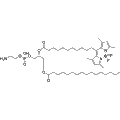
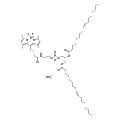
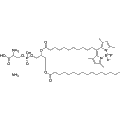
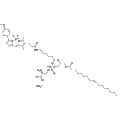
BODIPY 505/515 PE is a fluorescent lipid used for the preparation of lipid nanoparticles (LNPs), facilitating targeted drug delivery applications. This reagent offers robust fluorescence properties, making it ideal for in vitro and in vivo imaging of lipid-based formulations. Researchers can utilize BODIPY 505/515 PE to study lipid metabolism, drug encapsulation efficiency, and the biodistribution of LNPs in various biological systems.
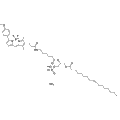
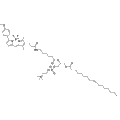
BODIPY TMR Lyso PA ester ammonium is a lipid compound that serves as an effective precursor for the formulation of lipid nanoparticles (LNPs). Its fluorescent properties enable real-time tracking and analysis of drug delivery mechanisms in biological systems. This reagent is particularly useful in studies focused on nanocarrier design, enabling researchers to explore pharmaceutical applications and cellular interactions.
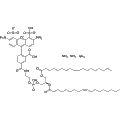
18:1 PE-BODIPY 505/515 AF488 ammonium is a fluorescent lipid utilized primarily for the formulation of lipid nanoparticles (LNPs) in drug delivery applications. This compound serves as a vital component for the visualization and tracking of lipid assemblies in various biological systems. Its fluorescent properties facilitate studies in cellular uptake, distribution, and metabolism of lipid formulations, making it an essential reagent for researchers investigating nanomedicine and lipid-based therapies.
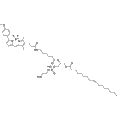
BODIPY TMR Lyso PE ester is a fluorescently labeled lipid primarily used for the preparation of lipid nanoparticles (LNPs). This compound serves as a valuable tool in drug delivery and cellular imaging research, facilitating the visualization and tracking of lipid bilayers. Its unique fluorescence properties enable applications in the study of membrane dynamics and lipid metabolism.
18:1 BODIPY 505/515 PE ammonium is a fluorescent lipid that serves as a key component in the formation of lipid nanoparticles (LNPs) for drug delivery applications. Its unique properties enable efficient encapsulation and delivery of therapeutic agents while allowing for visualization through fluorescence. This reagent is particularly useful in the development of novel drug delivery systems and studies involving cellular uptake and biodistribution of nanoparticles.
BODIPY TMR Lyso PC ester targets lipid structures and serves as a critical component in the preparation of lipid nanoparticles (LNPs) for drug delivery applications. This compound exhibits strong fluorescence, facilitating the visualization and tracking of lipid-based systems in biological studies. It is particularly useful in research focused on nanomedicine, drug formulation, and cellular imaging.
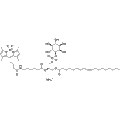
BODIPY-butyramide-C5-COO-Lyso PI ammonium is a fluorescent lipid that targets cellular membranes. This compound exhibits enhanced fluorescence properties, making it suitable for live-cell imaging and lipid research. It can be utilized in studies involving lipid dynamics, membrane potential, and cellular localization, providing valuable insights into lipid-related biological processes.
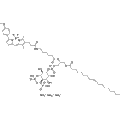
BODIPY TMR PI(4,5)P2 ester ammonium is a fluorescent lipid compound that serves as a probe for phosphoinositide lipid signaling. It is utilized in the formulation of lipid nanoparticles (LNPs) for enhanced drug delivery and targeting applications. This reagent enables the study of lipid interactions and cellular processes associated with membrane dynamics and signaling pathways.
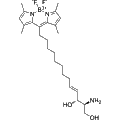
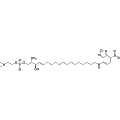
BODIPY-C8-sphingosine is a lipid compound utilized for the formation of lipid nanoparticles (LNPs) in drug delivery applications. With its unique fluorescent properties, this reagent enables tracking and visualization of lipid-based formulations. It is particularly useful in research focused on lipid metabolism, cellular uptake, and the development of innovative drug delivery systems.
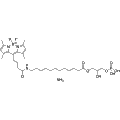
BODIPY 505/515 Lyso PA is a fluorescent lipid that serves as a vital component for the formulation of lipid nanoparticles (LNPs) in drug delivery applications. Its unique optical properties enable effective tracking and characterization of lipid-based drug delivery systems. This reagent is instrumental for researchers developing targeted therapies and studying lipid interactions in cellular environments.
BODIPY 505/515 PS ammonium is a fluorescent lipid that primarily targets lipid membranes and is utilized in the formation of lipid nanoparticles (LNPs). This reagent is essential for drug delivery applications, enabling researchers to effectively track and analyze the cellular uptake and distribution of therapeutics. Its unique fluorescent properties facilitate in vitro and in vivo studies, enhancing the understanding of lipid nanoparticle behavior in biological systems.
BODIPY TMR Lyso PI ester ammonium is a fluorescent lipid derivative that serves as a vital component in the formulation of lipid nanoparticles (LNPs) for drug delivery applications. Its fluorescent properties enable precise tracking of lipid-based delivery systems in biological research. This reagent is instrumental in studies focused on nanocarrier optimization and the evaluation of drug encapsulation efficiency.
BODIPY TMR Lyso PS ester ammonium is a fluorescent lipid targeting lipid nanoparticle (LNP) formulation. This compound exhibits significant biological activity by enhancing the visualization and tracking of LNPs in cellular studies. It is primarily utilized in drug delivery research, facilitating the development of targeted therapies and improving the efficiency of nucleic acid transport within various biological systems.
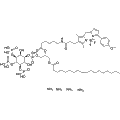
BODIPY 505/515 TMR PI(3,4,5)P3 ammonium is a fluorescently-labeled phospholipid that specifically targets phosphatidylinositol (3,4,5)-trisphosphate (PI(3,4,5)P3). This compound exhibits strong fluorescence, making it a valuable tool for studying lipid signaling pathways and cellular processes associated with PI(3,4,5)P3. Its applications include live-cell imaging, fluorescence microscopy, and flow cytometry to investigate cellular mechanisms related to cell growth, differentiation, and metabolism.
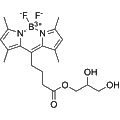
C4 BODIPY 505/515 MG is a fluorescently labeled glycerolipid that exhibits excitation and emission maxima at 495 nm and 503 nm, respectively. This compound is primarily used as a fluorescent lipid probe for studying membrane dynamics and lipid interactions in biological systems. Its bright fluorescence allows for effective visualization in various biological research applications, including live-cell imaging and lipid metabolism studies.
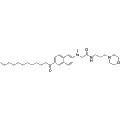
Lyso-laurdan is a fluorescent lipid probe that targets lysosomal membranes. It features a morpholine group that enables its accumulation in lysosomes through protonation, allowing it to adopt a cationic form in the acidic environment of these organelles. This localization facilitates the investigation of lysosomal membrane properties and dynamics, making it a valuable tool for researchers studying lysosomal function and related cellular processes.
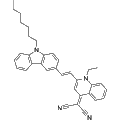
AIE-Cbz-LD-C7 is an aggregation-induced emission (AIE) probe that incorporates quinoline-malononitrile (QM) and carbazole. This probe exhibits excellent specificity for lipid droplets (LDs), making it suitable for visualizing dynamic changes in LD morphology. It is useful for investigating the interactions between lipid droplets and cellular organelles such as lysosomes and the endoplasmic reticulum (ER), thus facilitating the study of lipid metabolism and cellular homeostasis.
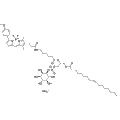
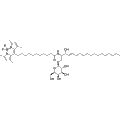
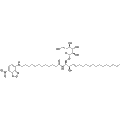
C11-BODIPY 505/515 Galactosyl ceramide is a fluorescent lipid labeled with C11-BODIPY 505/515, functioning primarily as a probe for lipid-based studies. This compound exhibits key biological activity by enabling visualization and tracking of galactosyl ceramide within cellular membranes. It is particularly useful in research applications related to drug delivery systems and the assessment of lipid nanoparticle formulations.
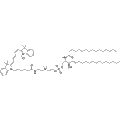
C16 Cy5 SM chloride is a fluorescently labeled lipid that targets lipid-based formulations. It is utilized in the preparation of lipid nanoparticles (LNPs) for drug delivery applications. The incorporation of this compound enhances the visualization and tracking of LNPs in various biological contexts, facilitating research in drug formulation and delivery mechanisms.
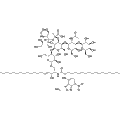
C18:0 (2-NBD)-GM1 ammonium is a fluorescently labeled ganglioside that targets cellular membranes. This compound serves as a valuable tool for studying lipid dynamics and ganglioside metabolism in various biological systems. Its fluorescent properties enable visualization and quantification of lipid interactions, making it suitable for applications in cell biology and biochemistry research.
C12-NBD Glucosyl ceramide is a sphingolipid that serves as a fluorescent probe for studying glycosphingolipid metabolism. Its primary mechanism involves targeting specific cellular compartments, allowing researchers to visualize and track lipid dynamics in live cells. This compound is valuable in various applications, including studies on lipid signaling, membrane biology, and sphingolipid-related diseases.
NBD Lyso SM is a fluorescently labeled sphingolipid that serves as a valuable tool for studying lipid dynamics and cellular membrane interactions. Its unique properties allow for visualization and tracking of lipid distribution within biological systems. This reagent is commonly applied in research exploring sphingolipid metabolism, membrane biology, and cellular signaling pathways.
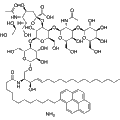
12:0 Pyrene GM1 ammonium is a sphingolipid derivative featuring a pyrene conjugate. This compound is primarily utilized in lipid research, particularly in studies examining membrane dynamics and cellular signaling processes. Its fluorescent properties allow for effective visualization in various biological applications, enabling investigations into lipid raft formation and membrane interaction studies.
Standard BODIPY 493/503 has a published neutral-lipid-droplet protocol. Nile Red fluorescence depends on a hydrophobic environment and the detection channel; interpret it in the context of the sample and acquisition settings. [1][3]
Distinguish processing steps.
The cited Oil Red O protocol fixes adipocytes with formalin, uses isopropanol during washing and staining preparation, and later extracts the dye for absorbance measurement. These are different operations; alcohol use alone does not establish that the staining is invalid. [2]
Match the exact material.
The standard dye and methyl-bromide product are separate catalog materials. The latter comparison uses a paper that specifies HY-D1614, matched through the existing material record. The paper abbreviates the reagent name and does not independently verify the derivative structure. Do not transfer the parent-dye protocol to it. [4]
Representative Reagent Comparison
Selected examples for this topic; independent of the current product page or filters.
Representative reagents and selection considerations
Color staining for bright-field imaging; separate dye extraction for absorbance.
The method distinguishes formalin fixation, isopropanol washing/staining solvent and later extraction. It is not a universal tissue-preparation protocol. [2]
Standard BODIPY 493/503, CAS 121207-31-6. The A498-cell microscopy method stains before PFA fixation; its sequence should not be reversed by assumption. [3]
Lipid-droplet staining in the cited granulosa-cell study.
Fluorescence microscopy and flow cytometry.
Material correspondence is through the paper’s HY-D1614 catalog number. The paper uses the shortened name “BODIPY 493/503” without a CAS or derivative structure; this is not evidence of equivalence to the standard dye. [4]
Color staining for bright-field imaging; separate dye extraction for absorbance.
Sample / material boundary
The method distinguishes formalin fixation, isopropanol washing/staining solvent and later extraction. It is not a universal tissue-preparation protocol. [2]
Standard BODIPY 493/503, CAS 121207-31-6. The A498-cell microscopy method stains before PFA fixation; its sequence should not be reversed by assumption. [3]
Lipid-droplet staining in the cited granulosa-cell study.
Detection mode
Fluorescence microscopy and flow cytometry.
Sample / material boundary
Material correspondence is through the paper’s HY-D1614 catalog number. The paper uses the shortened name “BODIPY 493/503” without a CAS or derivative structure; this is not evidence of equivalence to the standard dye. [4]
Match the exact material, lipid target and processing sequence. Literature examples describe their experimental conditions and do not constitute Adooq experimental validation.