Cell Membrane Stains

Browse dyes with product-specific evidence for membrane labeling or staining. Compare the individual reagent forms and specifications before choosing a product for your experiment.

This selection concerns membrane labeling. Cell permeability, staining of intracellular lipid droplets and membrane-potential measurement alone do not establish the same application. Live-cell, fixed-cell and protocol compatibility must be checked for each product.

Items 26-34 of 34

  • Oxonol V
    Cat. No.
    A45360

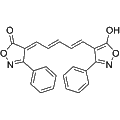
    Oxonol V

    Oxonol V is a fluorochrome that serves as a sensitive probe for assessing cellular membrane potential. Its slow-response kinetics allow for precise measurements, making it an invaluable tool in studies of cellular physiology and membrane dynamics. Researchers can utilize Oxonol V for analyses related to cell signaling, ion channel function, and various aspects of membrane biophysics.

    Out of stock

    All 3 sizes
  • DiSBAC10
    Cat. No.
    A45362

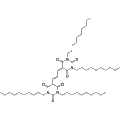
    DiSBAC10

    DiSBAC10 is a voltage-sensitive fluorochrome designed to monitor electrical activity across cell membranes in Förster Resonance Energy Transfer (FRET) assays. When cells are in a polarized state, DiSBAC10 localizes to the outer leaflet of the membrane, facilitating energy transfer from excited fluorescein-labeled proteins, resulting in photon re-emission at a longer wavelength. Upon cell depolarization, DiSBAC10 translocates to the inner leaflet, increasing the spatial separation between fluorophores and thereby decreasing the FRET signal, making it an essential tool for studying membrane potential dynamics.

    1 mg
    $125.00
    5 mg
    $875.00
    All 3 sizes
  • MPSD
    Cat. No.
    A57579

    MPSD

    Synonyms: MARCKS-ED

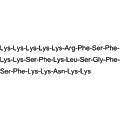
    MPSD (MARCKS-ED) is a 25-amino acid peptide that serves as a membrane curvature probe through its interaction with phosphatidylserine. Its design is based on the effector domain of the myristoylated alanine-rich C-kinase substrate (MARCKS), enabling it to effectively detect changes in membrane shape and lipid composition. This peptide is useful for research applications focused on membrane dynamics and the study of lipid-enriched domains in cellular biology.

    Out of stock

    All 3 sizes
  • RX-055
    Cat. No.
    A90132

    RX-055

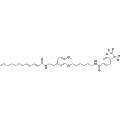
    RX-055 is a diazirine-containing photoaffinity probe designed to study protein interactions in biological systems. This compound irreversibly inhibits the membrane transport of endocannabinoids, allowing for the investigation of their signaling pathways. RX-055 is particularly useful in examining site-specific anxiolytic effects within the brain, making it a valuable tool for research in neuroscience and pharmacology.

    Out of stock

    All 3 sizes
  • 4-Phosphonooxy-tempo
    Cat. No.
    A94968

    4-Phosphonooxy-tempo

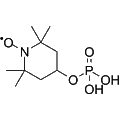
    4-Phosphonooxy-tempo is an anionic nitroxide spin probe that targets biomembranes. This compound can traverse the membrane via band 3 proteins and subsequently react with reductants within the cytosol. 4-Phosphonooxy-tempo is primarily utilized as a functional probe for studying anion channel activity in biomembranes and exploring redox processes in cellular environments.

    Out of stock

    All 3 sizes
  • 4-Azidophlorizin
    Cat. No.
    B11218

    4-Azidophlorizin

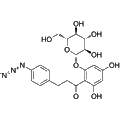
    4-Azidophlorizin serves as a high-affinity photoaffinity probe targeting glucose transporters located in brush border membranes. This reagent is equipped with an azide group, enabling it to participate in copper-catalyzed azide-alkyne cycloaddition (CuAAc) with alkyne-bearing molecules, as well as strain-promoted alkyne-azide cycloaddition (SPAAC) with DBCO or BCN-containing compounds. Its unique properties facilitate the investigation of glucose transport mechanisms and the development of bioorthogonal labeling techniques in chemical biology.

    2.5 mg
    $1,545.00
    All 1 sizes
  • C-6 NBD-dihydro-Ceramide
    Cat. No.
    B11224

    C-6 NBD-dihydro-Ceramide

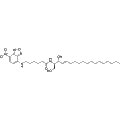
    C-6 NBD-dihydro-Ceramide is a membrane-permeable fluorescent analog of short-chain ceramides, primarily targeting ceramide metabolism. This compound exhibits key biological activity in promoting ceramide signaling pathways, making it a valuable tool for studying ceramide-related cellular processes and lipid metabolism. It is widely utilized in research applications focused on cell signaling, apoptosis, and lipid biology.

    1 mg
    $1,485.00
    All 1 sizes
  • PSMA-1092
    Cat. No.
    B11268

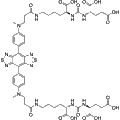
    PSMA-1092

    PSMA-1092 is a fluorescence probe specifically designed to target prostate-specific membrane antigen (PSMA), exhibiting a Ki value of 80 pM. This compound is valuable for tumor localization and imaging applications, particularly in the context of prostate cancer research. Its high specificity and sensitivity make it an essential tool for monitoring PSMA expression in various studies related to cancer diagnostics and therapy.

    Out of stock

    All 3 sizes
  • U-104067
    Cat. No.
    B11315

    U-104067

    U-104067 functions as a molecular probe primarily targeting lipid membranes. This compound is instrumental in investigating a range of physical phenomena, including lipid membrane transfer, phase partitioning, and interactions between lipid carriers and target membranes. Its sensitive fluorescence anisotropy and quantum yield responses make U-104067 an effective reporter for studying tilt/ripple phase transitions, enhancing understanding of membrane dynamics in biological systems.

    Out of stock

    All 3 sizes

Items 26-34 of 34

Added to your cart

View Cart Checkout

    Loading...