Rhodamine Dyes

Explore rhodamine dyes and derivatives with product-specific family evidence. Compare individual reagent forms, specifications and package options.

Derivatives can have different properties and uses. Family membership alone does not establish membrane staining, calcium indication or biomolecule-labeling suitability.

Items 76-100 of 113

  • Rhodamine B hexyl ester perchlorate
    Cat. No.
    A45352

    Rhodamine B hexyl ester perchlorate

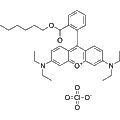
    Rhodamine B hexyl ester perchlorate is a cell-permeant fluorochrome that specifically labels mitochondria with an orange fluorescence. This compound is widely used in cellular imaging studies to assess mitochondrial function and distribution. Its fluorescence properties make it an ideal tool for visualizing mitochondrial dynamics in a variety of biological contexts.

    Out of stock

    All 3 sizes
  • ROX NHS ester, 6-isomer
    Cat. No.
    A45354

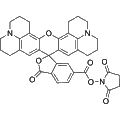
    ROX NHS ester, 6-isomer

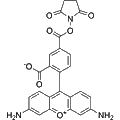
    ROX NHS ester, 6-isomer is a highly fluorescent rhodamine dye that serves as a valuable fluorochrome for a variety of applications. This reactive dye is specifically designed for the labeling of amino groups in peptides, proteins, and amino-oligonucleotides, making it ideal for use in quantitative PCR (qPCR) assays, where it can be detected in the dedicated ROX channel of qPCR instruments. It is supplied as a pure single isomer, ensuring consistent performance in fluorescence-based research.

    Out of stock

    All 3 sizes
  • ATTO 647
    Cat. No.
    A45372

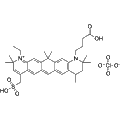
    ATTO 647

    ATTO 647 is a carborhodamine fluorophore that labels membrane glycoproteins, specifically targeting N-acetyl-β-D-glucosaminyl and sialic acid residues when conjugated to wheat germ agglutinin. This compound is utilized as a fluorescent probe for single-molecule tracking studies, enabling researchers to investigate glycoprotein diffusion and cell membrane structure. Notably, ATTO 647 demonstrates enhanced photostability and fluorescence stabilization across various mounting media, making it suitable for advanced confocal microscopy and fluorescence studies. The stability of ATTO 647 in different experimental conditions facilitates its application in detailed molecular imaging and tracking assays.

    Out of stock

    All 3 sizes
  • (5)6-Carboxytetramethylrhodamine
    Cat. No.
    A45384

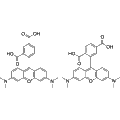
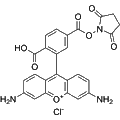
    (5)6-Carboxytetramethylrhodamine

    (5)6-Carboxytetramethylrhodamine is a fluorescent dye designed for use in bioconjugation. Its carboxylic acid functionality allows for specific reactions with primary amines through carbodiimide activation, facilitating the formation of conjugates. This dye exhibits bright orange fluorescence, with absorption and emission maxima of approximately 555 nm and 580 nm, respectively, making it suitable for various applications in cellular imaging and molecular biology assays.

    5 mg
    $40.00
    10 mg
    $65.00
    All 2 sizes
  • Tetrabromorhodamine 123 bromide
    Cat. No.
    A45414

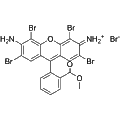
    Tetrabromorhodamine 123 bromide

    Tetrabromorhodamine 123 bromide is a potent photosensitizer utilized primarily in photodynamic therapy (PDT) applications. This compound demonstrates significant ability to generate reactive oxygen species upon light irradiation, making it valuable in cancer research. Its efficacy in selectively targeting and destroying tumor cells supports its use in investigating novel therapeutic strategies for cancer treatment.

    Out of stock

    All 3 sizes
  • Sulforhodamine G
    Cat. No.
    A45415

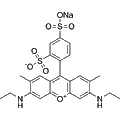
    Sulforhodamine G

    Sulforhodamine G is a fluorescent stain that exhibits a broad dynamic range, making it suitable for diverse applications in biological research. This compound is primarily utilized for protein staining, enabling sensitive detection and quantification of proteins in various samples. Its robust fluorescence properties make it an essential tool in studies involving cell biology, biochemistry, and molecular biology.

    Out of stock

    All 3 sizes
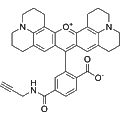
  • BODIPY TMR-X alkyne
    Cat. No.
    A45433

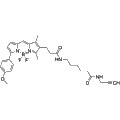
    BODIPY TMR-X alkyne

    BODIPY TMR-X alkyne is an alkyne-modified fluorescent dye that exhibits strong orange fluorescence. It is designed to react with azides through the copper-catalyzed click reaction, enabling specific labeling and tracking in biological systems. With its stable properties across various pH conditions, BODIPY TMR-X alkyne is suitable for a range of applications in live-cell imaging, chemical biology, and other research requiring fluorescent tagging and detection.

    Out of stock

    All 3 sizes
  • BODIPY TMR C5-maleimide
    Cat. No.
    A45434

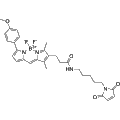
    BODIPY TMR C5-maleimide

    BODIPY TMR C5-maleimide is a fluorescent dye characterized by a high quantum yield, making it suitable for various imaging applications. This compound can efficiently couple with peptides, enabling visualization of biomolecules in biochemical assays and cellular studies. Its properties make it a valuable tool for researchers in the fields of biochemistry and molecular biology, particularly for tracking and studying protein interactions and dynamics in live-cell imaging.

    1 mg
    $155.00
    5 mg
    $395.00
    All 2 sizes
  • Biotin-PEG4-Dde-TAMRA-PEG3-Azide
    Cat. No.
    A45504

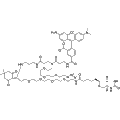
    Biotin-PEG4-Dde-TAMRA-PEG3-Azide

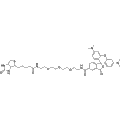
    Biotin-PEG4-Dde-TAMRA-PEG3-Azide is a fluorescent dye modified with a cleavable biotin group, designed for efficient labeling and detection. This compound features an azide functional group, enabling it to participate in copper-catalyzed azide-alkyne cycloaddition (CuAAc) and strain-promoted alkyne-azide cycloaddition (SPAAC) reactions with alkyne-containing molecules. Its applications include bioconjugation, fluorescence imaging, and protein labeling in various biological research settings.

    Out of stock

    All 3 sizes
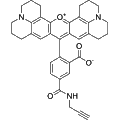
  • Dde Biotin-PEG4-TAMRA-PEG4 Alkyne
    Cat. No.
    A45505

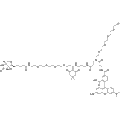
    Dde Biotin-PEG4-TAMRA-PEG4 Alkyne

    Dde Biotin-PEG4-TAMRA-PEG4 Alkyne is a dye derivative of TAMRA designed for fluorescent applications, featuring a cleavable biotin moiety. This compound contains alkyne groups that facilitate copper-catalyzed azide-alkyne cycloaddition (CuAAc), enabling its use in a variety of conjugation strategies. It is ideal for research applications involving biomolecular labeling and tracking in cellular and molecular studies.

    Out of stock

    All 3 sizes
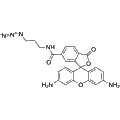
  • TAMRA-PEG4-methyltetrazine
    Cat. No.
    A45507

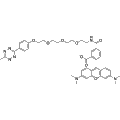
    TAMRA-PEG4-methyltetrazine

    TAMRA-PEG4-methyltetrazine is a fluorescent dye derivative that features a tetrazine moiety for selective labeling applications. The presence of four polyethylene glycol (PEG) units enhances solubility and stability. This compound is designed to undergo inverse electron demand Diels-Alder (iEDDA) reactions with trans-cyclooctene (TCO) partners, making it suitable for bioconjugation and imaging studies in chemical biology research.

    Out of stock

    All 3 sizes
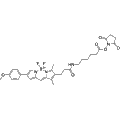
  • TAMRA-PEG4-Alkyne
    Cat. No.
    A45508

    TAMRA-PEG4-Alkyne

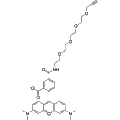
    TAMRA-PEG4-Alkyne is a fluorescent dye derivative of TAMRA that incorporates four PEG units, enhancing its solubility and biocompatibility. This compound features alkyne functional groups, enabling it to participate in copper-catalyzed azide-alkyne cycloaddition (CuAAC) reactions with azide-containing molecules. Its unique properties make it valuable for various biological applications, including the labeling of biomolecules and the study of cellular processes through fluorescence imaging.

    5 mg
    $215.00
    10 mg
    $355.00
    All 5 sizes
  • TAMRA-PEG3-biotin
    Cat. No.
    A45509

    TAMRA-PEG3-biotin

    TAMRA-PEG3-biotin is a fluorescent dye derivative of TAMRA featuring a polyethylene glycol (PEG) spacer with three units. This compound is conjugated with biotin, facilitating its use in bioconjugation applications. It is ideal for labeling proteins or nucleic acids, enhancing visualization in various biochemical assays, including fluorescence microscopy and flow cytometry.

    Out of stock

    All 3 sizes
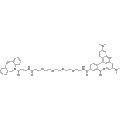
  • 5-Carboxyrhodamine 110 NHS ester
    Cat. No.
    A45519

    5-Carboxyrhodamine 110 NHS ester

    5-Carboxyrhodamine 110 NHS ester is a fluorescent dye known for its bright and photostable green fluorescence, with excitation and emission maxima at approximately 502 nm and 527 nm, respectively. This amine-reactive dye is ideal for creating highly fluorescent bioconjugates and is preferred for applications requiring exceptional photostability and pH insensitivity within a range of 4 to 9. Its single isomer form facilitates improved resolution in HPLC purification, making it suitable for labeling proteins, peptides, and nucleotides in various biochemical research applications.

    Out of stock

    All 3 sizes
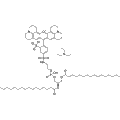
  • TAMRA DBCO, 5-isomer
    Cat. No.
    A45530

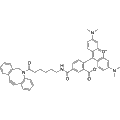
    TAMRA DBCO, 5-isomer

    TAMRA DBCO, 5-isomer is a fluorescent dye derivative of tetramethylrhodamine (TMR) featuring a dibenzocyclooctyne (DBCO) moiety. It enables rapid and efficient labeling of azide-containing biomolecules through a sterically promoted azide-alkyne cycloaddition (SPAAC) reaction, eliminating the need for copper catalysts. This compound is suitable for a wide range of applications, including the labeling of proteins, peptides, and nucleic acids, facilitating advanced studies in biochemistry and cellular imaging.

    Out of stock

    All 3 sizes
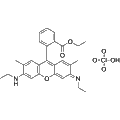
  • 5(6)-Carboxyrhodamine 110 NHS ester
    Cat. No.
    A45531

    5(6)-Carboxyrhodamine 110 NHS ester

    5(6)-Carboxyrhodamine 110 NHS Ester is a fluorescent dye characterized by its amine-reactive functionality, enabling the formation of highly luminous and photostable green-fluorescent bioconjugates. With excitation and emission maxima at approximately 502 nm and 527 nm, respectively, this dye is particularly suited for applications in Fluorescence Correlation Spectroscopy (FCS). Its properties make it an excellent choice for studies requiring sensitive and reliable fluorescence detection in biological research.

    Out of stock

    All 3 sizes
  • ROX alkyne, 6-isomer
    Cat. No.
    A45541

    ROX alkyne, 6-isomer

    ROX alkyne, 6-isomer is an alkyne derivative of the red-emitting fluorescent dye ROX (Rhodamine X, Rhodamine 101), known for its high quantum yield. This compound is particularly useful for fluorescent labeling of azide-containing biomolecules through copper-catalyzed click chemistry. Its applications include quantitative PCR and microscopy, making it an essential reagent for advanced imaging and detection in biochemical research.

    Out of stock

    All 3 sizes
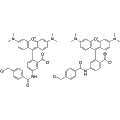
  • 4-(5)-(((4-ChloroMethyl)Benzoyl)AMino)TetraMethylrhodaMine
    Cat. No.
    A45562

    4-(5)-(((4-ChloroMethyl)Benzoyl)AMino)TetraMethylrhodaMine

    4-(5)-(((4-ChloroMethyl)Benzoyl)AMino)TetraMethylrhodaMine is a multifunctional dye that serves as a vital tool in biological research. It facilitates the observation and analysis of cell structures, tracking of biomolecules, assessment of cell functions, and differentiation of cell types. Additionally, this dye is valuable for detecting biomolecules, studying tissue pathology, and monitoring microorganisms. Its versatile applications extend from fundamental scientific studies to clinical diagnostics, as well as in industrial areas such as textile dyeing and emerging technologies like dye-sensitized solar cells.

    0.05 mg
    $110.00
    All 1 sizes
  • 5-ROX-alkyne
    Cat. No.
    A45783

    5-ROX-alkyne

    5-ROX-alkyne is a rhodamine-based fluorescent dye designed for the labeling of DNA fragments. It exhibits strong fluorescence, facilitating the visualization of results in capillary electrophoresis genotyping and gel shift assays. This reagent is essential for applications in nucleic acid analysis and characterization, enabling researchers to obtain precise and reliable data in molecular biology experiments.

    5 mg
    $185.00
    10 mg
    $300.00
    All 2 sizes
  • R110 azide, 6-isomer
    Cat. No.
    A45791

    R110 azide, 6-isomer

    R110 azide, 6-isomer is a fluorescent dye featuring an azide functional group, allowing for the selective labeling of DNA fragments. This compound is particularly useful in visualizing results from capillary electrophoresis genotyping and gel shift assays, facilitating the study of nucleic acid interactions and dynamics. Its unique structure enhances fluorescent properties, making it a valuable tool in molecular biology and genetic research applications.

    1 mg
    $130.00
    5 mg
    $325.00
    All 4 sizes
  • BODIPY TMR NHS ester
    Cat. No.
    A45792

    BODIPY TMR NHS ester

    BODIPY TMR NHS ester is a highly luminescent fluorescent dye that exhibits excitation and emission maxima at 544 nm and 570 nm, respectively. This NHS ester derivative facilitates efficient conjugation to proteins, antibodies, and amine-modified oligonucleotides by targeting primary amines (R-NH2). Its robust fluorescence properties make it suitable for various applications in cellular imaging, biochemical assays, and protein labeling studies.

    Out of stock

    All 3 sizes
  • DBCO-PEG4-TAMRA
    Cat. No.
    A54573

    DBCO-PEG4-TAMRA

    DBCO-PEG4-TAMRA is a PEG-conjugated TAMRA dye featuring a dibenzocyclooctyne (DBCO) moiety, facilitating efficient Click Chemistry through strain-promoted alkyne-azide cycloaddition (SPAAC) with azide-containing molecules. This reagent is crucial for oligonucleotide labeling and is widely utilized in automated DNA sequencing applications. Its bioconjugation capabilities enhance the specificity and sensitivity of various research techniques, making it a valuable tool in molecular biology and biochemical studies.

    1 mg
    $280.00
    5 mg
    $780.00
    All 3 sizes
  • Sulforhodamine 101 DHPE
    Cat. No.
    A72492

    Sulforhodamine 101 DHPE

    Sulforhodamine 101 DHPE is a fluorescent probe that targets endogenous metabolites through its unique conjugation of the phospholipid 1,2-dipalmitoyl-sn-glycero-3-PE with sulforhodamine 101, a red fluorescent dye exhibiting excitation/emission maxima of 586/605 nm. This reagent is well-suited for applications including imaging of solid-supported lipid bilayers, detection of protein-ligand interactions on bilayer surfaces, and monitoring the colocalization of lipid probes in liposomes using resonance energy transfer (RET) techniques. Its ability to integrate into phospholipid bilayers enhances its utility in membrane biophysics research.

    1 mg
    $340.00
    All 1 sizes
  • Rhodamine 6G perchlorate
    Cat. No.
    A89617

    Rhodamine 6G perchlorate

    Rhodamine 6G perchlorate is a fluorescent dye commonly used as a biochemical assay reagent. It exhibits exceptional photostability and high fluorescence intensity, making it suitable for applications in cellular imaging and the study of biological processes. This compound facilitates the visualization of cellular structures and interactions, providing valuable insights in life science research.

    50 mg
    $30.00
    100 mg
    $45.00
    All 3 sizes
  • Rhodamine B NHS ester
    Cat. No.
    B11007

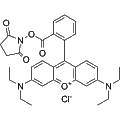
    Rhodamine B NHS ester

    Synonyms: N-Hydroxysuccinimidyl rhodamine B ester

    Rhodamine B NHS ester is an amine-reactive fluorescent probe that efficiently labels amine-containing biomolecules. With excitation and emission wavelengths of 564 nm and 589 nm, respectively, it is widely utilized in various biological applications, including protein tagging and cellular imaging. This reagent can specifically react with primary amines, enabling researchers to study protein interactions and localization in live cells and complex biological systems.

    5 mg
    $235.00
    10 mg
    $335.00
    All 4 sizes

Items 76-100 of 113

Added to your cart

View Cart Checkout

    Loading...