- Cat. No.
- A12832
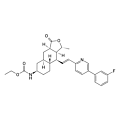
Vorapaxar (SCH 530348)
Synonyms: SCH530348; MK-5348
Vorapaxar (SCH 530348) is a potent and orally active thrombin receptor (PAR-1) antagonist with Ki of 8.1 nM.
Search by product name, CAS, target or catalog number. Press Down Arrow to reach product suggestions, Tab to move between links, and Escape to close suggestions.
Protease-activated receptor (PAR) ligands act on G protein-coupled receptors switched on by proteolytic cleavage. In 1991 cloning of the thrombin receptor, now PAR1, revealed a new mechanism of receptor activation. Thrombin cuts the N-terminal extracellular domain, and the newly exposed sequence binds the receptor itself as a tethered ligand. A second family member, PAR2, was cloned in 1994 and responds to trypsin. PAR1 and PAR4 carry thrombin signals in human platelets and endothelium, while PAR2 is studied in inflammation and pain. Vorapaxar and ML 161 inhibit PAR1, and BMS-986120 is a PAR4 antagonist. GB-88 and AZ3451 are PAR2 antagonists, whereas AC-264613 is a small-molecule PAR2 agonist.
Synonyms: SCH530348; MK-5348
Vorapaxar (SCH 530348) is a potent and orally active thrombin receptor (PAR-1) antagonist with Ki of 8.1 nM.
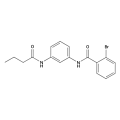
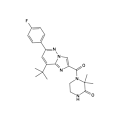
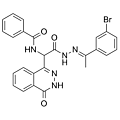
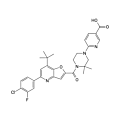
BMS-986120 is a first-in-class oral and reversible protease-activated receptor 4 (PAR4) antagonist, with IC50s of 9.5 nM and 2.1 nM in human and monkey blood, respectively.
AC-264613 is a potent and selective protease-activated receptor 2 (PAR2) agonist (pEC50 = 7.5).
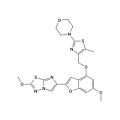
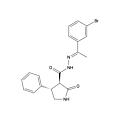
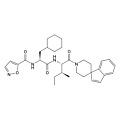
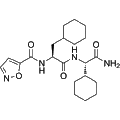
ML-161 is an inhibitor of protease-activated receptor 1 (PAR1)-mediated platelet activation (IC50 = 0.26 μM for the inhibition of platelet P-selectin expression on human platelets).
Synonyms: TRAP-5
Thrombin Receptor Activator for Peptide 5 (TRAP-5), coagulation factor II (thrombin) receptor is a G protein-coupled receptor involved in the regulation of thrombotic response.
I-191 is a potent, selective protease-activated receptor 2 (PAR2) antagonist.
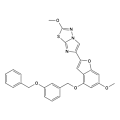
GB110 is a Novel potent non-peptide PAR2 agonist. GB-110 selectively induces PAR2-mediated intracellular Ca2+ release in HT29 cells with an EC50 of 0.28 μM.
GB-88 is a novel selective, orally available PAR2 antagonist, inhibits PAR2 activated Ca2+ release with an IC50 of 2 µM.
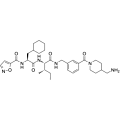
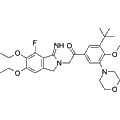
UDM-001651 is a potent , selective and orally active Protease-Activated Receptor 4 (PAR4) Antagonist with in Vivo Antithrombotic Efficacy (IC50 = 2.4 nM).
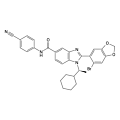
AZ3451 is a potent protease-activated receptor-2 (PAR2) antagonist with IC50 of 23 nM.
AC-55541 is a highly selective protease-activated receptor 2 (PAR2) agonist (pEC50=6.7), displays no activity at other PAR subtypes or at over 30 other receptors involved in nociception and inflammation.
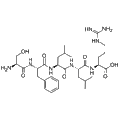
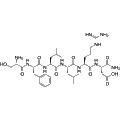
TRAP-6 amide is a PAR-1 thrombin receptor agonist peptide.
Protease-Activated Receptor-1, PAR-1 Agonist is a selective proteinase-activated receptor1 (PAR-1) agonist peptide. Protease-Activated Receptor-1, PAR-1 Agonist corresponds to PAR1 tethered ligand and which can selectively mimic theactions of thrombin via this receptor.
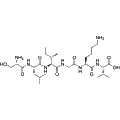
PAR-2 (1-6) (human) (SLIGKV), a peptide ligand, is a PAR-2 agonist.
Synonyms: iso-SFLLRN
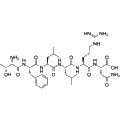
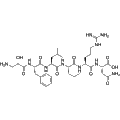
iso-TRAP-6 (iso-SFLLRN) is a PAR-1 agonist that can activate platelets. iso-TRAP-6 is an analog of TRAP-6 that refers to the use of isoserine instead of serine as first amino acid.
Synonyms: TRAP-6 (2-6)
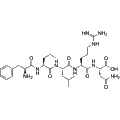
FLLRN is a biological active peptide. (PAR1-specific antagonist peptide)
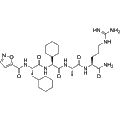
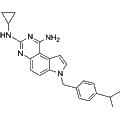
AY254 is an analogue of AY77. AY254 is ERK-biased PAR2 agonist with an EC50 of 2 nM. AY254 relieves cytokine-induced caspase 3/8 activation. AY254 also promotes scratch-wound healing and induced IL-8 secretion via PAR2-ERK1/2 signaling.
AY77 is a calcium-biased PAR2 agonist. AY77 shows an EC50 of 0.17 and 2 nM in PAR2-mediated the activation in the Gq pathway and recruitment of β-arrestin-2, respectively. AY77 potently induces intracellular Ca2+ release.
I-287 is an orally active and selective protease-activated receptor 2 (PAR2) inhibitor that functions as a negative allosteric modulator, specifically targeting Gαq and Gα12/13 signaling pathways and their downstream effectors. By disrupting PAR2-mediated signaling, I-287 effectively reduces inflammation in preclinical models, including Complete Freund's Adjuvant (CFA)-induced inflammation in mice.
SCH79797 is a potent and selective nonpeptide antagonist of protease-activated receptor 1 (PAR1). It effectively inhibits the binding of thrombin receptor-activating peptides with an IC50 of 70 nM and a Ki of 35 nM. Additionally, SCH79797 demonstrates significant inhibition of thrombin-induced platelet aggregation with an IC50 of 3 μM. Its biological activities include antiproliferative and pro-apoptotic effects, as well as the ability to mitigate myocardial ischemia/reperfusion injury in rat hearts, making it useful for research in vascular biology and cardiovascular therapeutics.
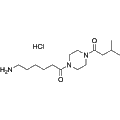
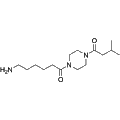
ENMD-1068 hydrochloride is a selective antagonist of protease-activated receptor 2 (PAR2). This compound effectively reduces hepatic stellate cell activation and collagen expression by inhibiting TGF-β1/Smad signaling pathways. Additionally, ENMD-1068 hydrochloride demonstrates the ability to inhibit the proliferation of endometrial cells and induce apoptosis in epithelial cells associated with lesions. This reagent is valuable for research applications in endometriosis and liver fibrosis.
Synonyms: E5555; ER-172594-00
Atopaxar is a selective and reversible antagonist of the thrombin receptor protease-activated receptor-1 (PAR-1). By inhibiting PAR-1 signaling, Atopaxar serves as an effective antiplatelet agent, disrupting platelet activation and aggregation. This compound is valuable for research applications related to atherothrombotic diseases, providing insights into the mechanisms of platelet-mediated thrombosis and potential therapeutic interventions.
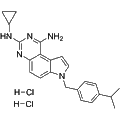
SCH79797 dihydrochloride is a highly selective nonpeptide antagonist of protease-activated receptor 1 (PAR1). It effectively inhibits the binding of thrombin receptor-activating peptide to PAR1 with an IC50 of 70 nM and a Ki of 35 nM. SCH79797 dihydrochloride demonstrates potent inhibition of thrombin-induced platelet aggregation, with an IC50 of 3 μM, and exhibits antiproliferative and pro-apoptotic effects. This compound also mitigates myocardial ischemia/reperfusion injury in rat cardiac models and prevents PAR1 activation in vascular smooth muscle, endothelial cells, and astrocytes, making it valuable for cardiovascular and neurobiological research applications.
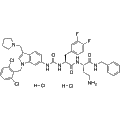
RWJ-56110 dihydrochloride is a potent, selective inhibitor of protease-activated receptor-1 (PAR-1) with an IC50 of 0.44 μM for PAR-1 activation. It effectively inhibits thrombin-induced human platelet aggregation with IC50 values of 0.34 μM, demonstrating strong specificity as it does not affect PAR-2, PAR-3, or PAR-4. Additionally, RWJ-56110 dihydrochloride has been shown to impede angiogenesis and inhibit new vessel formation in vivo, while also inducing apoptosis in target cells. This compound is valuable for research applications involving cardiovascular disease, angiogenesis, and cell signaling pathways.
ENMD-1068 is a selective antagonist of protease-activated receptor 2 (PAR2). It effectively reduces hepatic stellate cell activation and collagen expression by inhibiting the TGF-β1/Smad signaling pathway. Additionally, ENMD-1068 demonstrates inhibitory effects on endometrial cell proliferation and promotes apoptosis in epithelial cells associated with lesions. This compound is valuable for research applications focusing on endometriosis and liver fibrosis.