- Cat. No.
- A21378
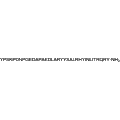
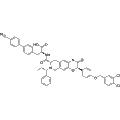
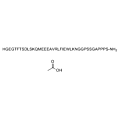
Exendin-4 Acetate
Synonyms: Exenatide acetate
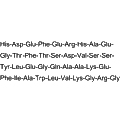
Exendin-4 Acetate (Exenatide acetate), a 39 amino acid peptide, is a long-acting glucagon-like peptide-1 receptor agonist with an IC50 of 3.22 nM.
Search by product name, CAS, target or catalog number. Press Down Arrow to reach product suggestions, Tab to move between links, and Escape to close suggestions.
Glucagon receptor antagonists block the receptor through which glucagon raises hepatic glucose output. The glucagon receptor (GCGR) is a class B G protein-coupled receptor (GPCR) expressed mainly in liver and kidney. Expression cloning of the rat receptor in 1993 described its signaling through cyclic adenosine monophosphate (cAMP) and intracellular calcium. Small-molecule antagonists in this list include MK 0893, adomeglivant and PF-06291874, which serve as tools in models of glucose homeostasis and type 2 diabetes. Glucagon (Human, Porcine) is included as the native peptide agonist for receptor activation assays. The set also contains related incretin tools for glucagon-like peptide 1 (GLP-1) research, such as Glucagon-Like Peptide 1 (7-36) Amide and GLP-1R Antagonist 1.
Synonyms: Exenatide acetate
Exendin-4 Acetate (Exenatide acetate), a 39 amino acid peptide, is a long-acting glucagon-like peptide-1 receptor agonist with an IC50 of 3.22 nM.
Synonyms: Exenatide
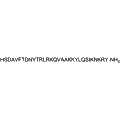
Exendin-4 (Exenatide), a 39 amino acid peptide, is a long-acting glucagon-like peptide-1 receptor agonist with an IC50 of 3.22 nM.
Synonyms: LY3437943
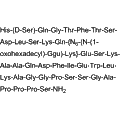
Retatrutide (LY3437943) is a triple agonist peptide of the glucagon receptor (GCGR), glucosedependent insulinotropic polypeptide receptor (GIPR), and glucagon-like peptide-1 receptor (GLP-1R). Retatrutide binds human GCGR, GIPR, and GLP-1R with EC50 values of 5.79, 0.0643 and 0.775 nM, respectively. Retatrutide can be used for the research of obesity.
Synonyms: PF-06882961
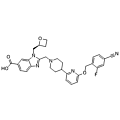
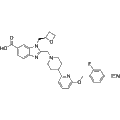
PF-06882961 is a potent, orally bioavailable agonist of the glucagon-like peptide-1 receptor agonist (GLP-1R)
Bay 55-9837 is a potent and highly selective agonist of VPAC2, with a Kd of 0.65 nM. Bay 55-9837 may be a useful therapy for the research of type 2 diabetes.
Synonyms: XW003
Ecnoglutide (XW003) is a glucagon-like peptide 1 (GLP-1) receptor agonist.
Synonyms: ZP1848
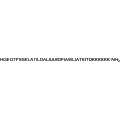
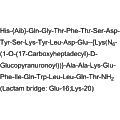
Glepaglutide (ZP1848) is a long-acting glucagon-like peptide-2 (GLP-2) analogue and a potent agonist of the GLP-2 receptor (GLP-2R). It enhances intestinal absorption, reduces faecal output, and alleviates small intestinal inflammation. Glepaglutide is a valuable agent for research in inflammatory bowel disease (IBD), including Crohn’s disease.
Synonyms: IBI-362; LY-3305677; OXM-3
Mazdutide is a long-acting synthetic analog of oxyntomodulin that functions as a dual agonist of the glucagon-like peptide-1 receptor (GLP-1R) and the glucagon receptor (GCGR). By binding to these targets with high affinity (Ki values of 17.7 nM for GCGR and 28.6 nM for GLP-1R in humans), Mazdutide promotes insulin secretion from mouse islets (EC50: 5.2 nM). This compound is primarily utilized in research addressing obesity and type 2 diabetes (T2D) to explore its therapeutic potential and metabolic effects.
Synonyms: BI 456906
Survodutide is a potent dual agonist of the glucagon receptor (GCGR) and GLP-1 receptor (GLP-1R), exhibiting EC50 values of 0.52 nM and 0.33 nM, respectively, in CHO-K1 cells. This 29-amino-acid acylated peptide, featuring a C18 fatty acid, demonstrates significant anti-obesity effects through mechanisms that enhance energy expenditure and reduce food intake. Survodutide is valuable for research into metabolic disorders and obesity management.
Synonyms: MEDI0382
Cotadutide is a potent dual agonist of glucagon-like peptide-1 (GLP-1) and glucagon receptor (GCGR), demonstrating EC50 values of 6.9 pM and 10.2 pM, respectively. This compound effectively promotes weight loss, enhances glycemic control, and alleviates fibrosis. Cotadutide is suitable for research applications focused on obesity and type 2 diabetes (T2D).
Synonyms: ITM077; R1583; BIM51077
Taspoglutide is a long-acting glucagon-like peptide 1 (GLP-1) receptor agonist that primarily targets the glucagon receptor (GCGR). It exhibits potent biological activity with an EC50 value of 0.06 nM. This compound is primarily investigated for its therapeutic potential in managing type 2 diabetes, promoting insulin secretion, and regulating glucose metabolism. Research applications include studying metabolic disorders and developing treatments for diabetes-related complications.
Synonyms: SAR425899
Bamadutide is a potent dual agonist of the glucagon-like peptide-1 receptor (GLP-1R) and the glucagon receptor (GCGR). This compound enhances β-cell function and slows glucose absorption, resulting in improved postprandial blood glucose control. Bamadutide is suitable for research applications focused on metabolic diseases, particularly type 2 diabetes.
Synonyms: GLP-1 (1-37) human
Glucagon-like peptide 1 (1-37), human is a potent agonist of the glucagon receptor (GCGR). This peptide plays a critical role in glucose metabolism and insulin signaling, making it valuable for research in diabetes and metabolic disorders. Its biological activity includes enhancing insulin secretion, inhibiting glucagon release, and promoting satiety, which are important for studies on obesity and diabetes therapies.
Synonyms: ALT-801
Pemvidutide is a dual agonist of GLP-1 receptor (GLP-1R) and glucagon receptor (GCGR), exhibiting significant effectiveness in promoting weight loss and reducing liver fat as well as serum lipids. It is primarily utilized in research focusing on non-alcoholic steatohepatitis (NASH) and obesity, making it a valuable tool for understanding metabolic disorders and developing therapeutic strategies.
GLP-1 receptor agonist 3 (compound (R)-4A-1) serves as a potent agonist of the glucagon-like peptide-1 (GLP-1) receptor, making it a valuable tool in diabetes research. This compound exhibits EC50 values of 1.1 nM and 13 nM in Clone H6 and Clone C6 cell line assays, respectively, demonstrating its efficacy in stimulating GLP-1 receptor activity. Its application in studying metabolic disorders and potential therapeutic strategies for diabetes highlights its significance in the field of endocrinology.
Neuropeptide Y, porcine, is a peptide found in porcine brain that acts as a GCGR agonist. This compound is known for its ability to inhibit secretin-stimulated pancreatic secretion, making it a valuable tool for studying pancreatic function and regulation. Its applications extend to research on energy homeostasis, appetite regulation, and potential therapeutic interventions in metabolic disorders.
Out of stock
All 3 sizes
GLP-1 receptor agonist 4 is a glucagon-like peptide-1 receptor (GLP-1R) agonist that serves as an effective activator of the GLP-1 receptor, exhibiting an EC50 of 64.5 nM. This compound plays a significant role in enhancing insulin secretion and promoting glucose homeostasis. GLP-1 receptor agonist 4 is primarily utilized in research focused on diabetes treatment and related metabolic disorders.
Out of stock
All 3 sizes