
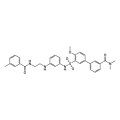
- Cat. No.
- A15982
Orexin 2 Receptor Agonist
A potent and selective Orexin2 receptor agonist.
In stock
View Details
Search by product name, CAS, target or catalog number. Press Down Arrow to reach product suggestions, Tab to move between links, and Escape to close suggestions.
Orexin receptor antagonists block orexin receptors 1 and 2 (OX1, OX2), which respond to orexin neuropeptides. Orexin A and orexin B were described in 1998 as hypothalamic peptides that act on these two G protein-coupled receptors. In 1999 a mutation in the orexin receptor 2 gene was found to cause canine narcolepsy. Mice lacking orexin showed a narcolepsy-like phenotype in the same year, linking the system to sleep and wakefulness. OX1 is also studied in reward, addiction and stress, and OX2 mainly in arousal. SB 334867, SB-408124 and GSK1059865 are OX1-selective antagonists, and MK-3697 targets OX2. Almorexant, TCS 1102 and nemorexant are dual antagonists that block both orexin receptors.
A potent and selective Orexin2 receptor agonist.
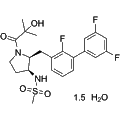
Synonyms: TAK-994
Firazorexton hydrate (TAK-994) is an orally active, brain-penetrant selective agonist of the orexin type 2 receptor (OX2R). It effectively promotes wakefulness by stimulating OX2R signaling, which plays a critical role in regulating the sleep–wake cycle. In preclinical studies, Firazorexton hydrate has demonstrated the ability to alleviate narcolepsy-like symptoms in mouse models, making it a promising therapeutic candidate for sleep disorders such as narcolepsy and excessive daytime sleepiness.
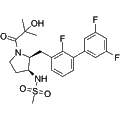
Firazorexton (TAK-994 free base) is an orally active, brain-penetrant, and highly selective agonist of the orexin type 2 receptor (OX2R). By activating OX2R, Firazorexton enhances wakefulness and has demonstrated efficacy in preclinical models, notably improving narcolepsy-like symptoms in mice. Its targeted action on the orexin system positions it as a promising therapeutic candidate for sleep disorders such as narcolepsy and excessive daytime sleepiness.
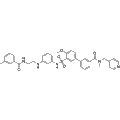
RTIOXA-43 is an orexin receptor agonist that exhibits potent activity with EC50 values of 24 nM for both OX1 and OX2 receptors. This compound is valuable for research applications related to sleep regulation, appetite control, and energy metabolism. By activating orexin receptors, RTIOXA-43 facilitates investigations into neurodegenerative diseases and sleep disorders.
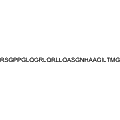
Hypocretin (70-98), human is a polypeptide that acts as an agonist for the orexin receptor OX1R. It plays a significant role in regulating appetite, energy homeostasis, and sleep-wake cycles. This reagent is valuable for research applications investigating the neurobiology of sleep disorders, metabolic diseases, and potential therapeutic strategies targeting the orexin system.
Out of stock
All 3 sizes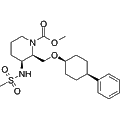
Synonyms: TAK-925
Danavorexton is an orexin receptor agonist with notable brain permeability. This compound selectively activates the OX2R receptor, demonstrating efficacy in enhancing wakefulness and alleviating symptoms of sleepiness in preclinical models. Danavorexton serves as a valuable tool for research into sleep disorders and the pharmacological modulation of the orexin system.
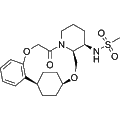
Synonyms: ALKS 2680 enantiomer
Alixorexton enantiomer is a selective, orally active agonist targeting the orexin-2 receptor. This compound is primarily investigated for its potential applications in the study of hypersomnias and related sleep disorders. Its ability to penetrate the blood-brain barrier makes it a valuable tool for exploring orexin system functioning and its implications in sleep regulation.
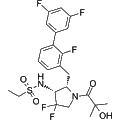
Synonyms: TAK-861
Oveporexton is a selective agonist of the orexin type 2 receptor (OX2R) with an EC50 of 2.5 nM and demonstrates a remarkable 3000-fold selectivity over the orexin type 1 receptor (OX1R). This compound is particularly relevant for research into hypersomnia disorders, including narcolepsy, providing insights into sleep regulation and potential therapeutic approaches. Its oral bioactivity enables convenient experimental application in various preclinical studies.
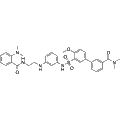
YNT-185 is a selective agonist of the orexin type-2 receptor (OX2R), exhibiting an EC50 of 0.028 μM for OX2R and 2.75 μM for OX1R. This nonpeptide compound has been shown to alleviate symptoms of narcolepsy-cataplexy in murine models, making it a valuable tool for researching sleep disorders and neurodegenerative conditions related to orexin signaling.
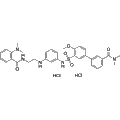
YNT-185 dihydrochloride is a selective agonist of the orexin type-2 receptor (OX2R), demonstrating an EC50 of 0.028 μM for OX2R and 2.75 μM for OX1R. This compound has shown efficacy in ameliorating symptoms associated with narcolepsy-cataplexy in murine models, making it a valuable tool for research in sleep disorders and related pathophysiologies. Its selectivity for OX2R positions YNT-185 dihydrochloride as a significant reagent for exploring orexin receptor mechanisms and therapeutic interventions.
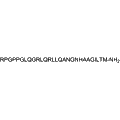
Synonyms: Rat orexin B; Orexin B (mouse)
Orexin B is an endogenous agonist for the orexin receptors, exhibiting a Ki of 420 nM for the OX1 receptor and 36 nM for the OX2 receptor. This peptide plays a crucial role in regulating various physiological processes, including energy homeostasis, sleep-wake cycles, and appetite. Orexin B is primarily utilized in research applications focused on neurobiology and metabolic diseases, providing insights into the mechanisms of sleep regulation and potential therapeutic targets for disorders like narcolepsy and obesity.
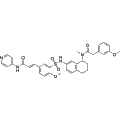
(R)-YNT-3708 is a selective agonist of the orexin 1 receptor (OX1R), exhibiting an EC50 of 7.48 nM. This compound demonstrates significant antinociceptive effects, making it a valuable tool for research in pain modulation and potential therapeutic applications in disorders related to orexin signaling.

Synonyms: INBRX-106; ES-102
Ordastobart is a hexavalent OX40 agonist antibody that enhances OX40 receptor clustering and signaling. This mechanism leads to increased proliferation and activation of CD4+ and CD8+ T cells both in vitro and in vivo. Ordastobart demonstrates anti-tumor activity and has been shown to improve survival in mouse models of cancers, such as fibrosarcoma and colorectal cancer. It is suitable for research applications focusing on cancer immunotherapy.
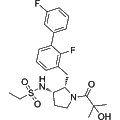
Suntinorexton is an Orexin Type 2 Receptor (OX2R) agonist that modulates neuropeptide signaling. This compound enhances respiratory function during sleep, making it valuable for research on sleep disorders and respiratory physiology. Suntinorexton can be utilized to investigate the role of the orexin system in regulating wakefulness, arousal, and metabolic processes.
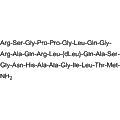
[Ala11,D-Leu15]-Orexin B (human) is a selective agonist of the orexin-2 receptor (OX2), exhibiting a significant 400-fold selectivity for OX2 with an EC50 of 0.13 nM compared to OX1 (52 nM). This compound plays a critical role in the regulation of arousal, sleep, and appetite. It is widely used in research applications aimed at understanding the neurobiology of sleep disorders and metabolic conditions.
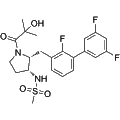
Synonyms: (2R,3R)-TAK-994 free base
(2R,3R)-Firazorexton is a selective agonist of the orexin type 2 receptor (OX2R), known for its potential to enhance wakefulness and alleviate symptoms associated with narcolepsy. As an isomer of Firazorexton, this compound exhibits the same brain-penetrating properties, making it suitable for research in sleep disorders and circadian rhythm regulation. Its biological activity supports investigations into therapeutic avenues for energy balance and long-term wakefulness.
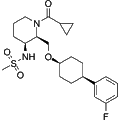
Orexin 2 Receptor Agonist 2 is a selective agonist of the orexin 2 receptor, facilitating the activation of this neuropeptide receptor involved in regulating arousal, appetite, and wakefulness. This compound is valuable for research applications related to sleep disorders, obesity, and neurodegenerative diseases. Its specificity for the orexin 2 receptor makes it a crucial tool for exploring the physiological and pharmacological roles of orexin signaling pathways.
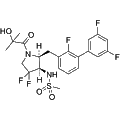
OX-201 is a potent OX2R agonist that effectively crosses the blood-brain barrier, exhibiting an EC50 of 8.0 nM. This compound stimulates OX2R, leading to increased wakefulness and neuronal activation. Additionally, OX-201 facilitates the release of activity-dependent tau protein from neurons into the interstitial fluid of hippocampal tissues. It is a valuable tool for research into Alzheimer's disease and tauopathies.
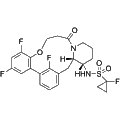
Cleminorexton is an orally active agonist of the orexin-2 receptor (OX2R), exhibiting a pEC50 value between 9 and 10.4. This compound is primarily utilized in research related to narcolepsy and other disorders characterized by orexin deficiency and excessive daytime sleepiness. Its modulation of OX2R activity makes it a valuable tool for studying sleep-wake regulation and potential therapeutic interventions.
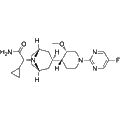
Ledasorexton is a potent oral agonist of the OX2 receptor (OX2R), exhibiting an EC50 of 0.99 nM. This compound has been demonstrated to induce wakefulness and promote alertness, making it a valuable tool for research into sleep regulation and associated disorders. Its specificity for the OX2R highlights its potential applications in studying neurobiology and pharmacology related to sleep and wakefulness.
Out of stock
All 3 sizes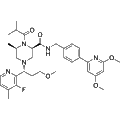
Orexin receptor activator-1 is an agonist for the orexin receptor. This compound exhibits biological activity by modulating orexin signaling pathways, making it valuable for studying orexin-related disorders such as narcolepsy and obesity. Its application extends to research on sleep regulation and energy homeostasis, contributing to the understanding of various neurophysiological processes.
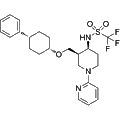
OX2R-IN-3 is a potent agonist of the type 2 orexin receptor (OX2R) with an EC50 value of less than 100 nM. This compound demonstrates significant biological activity in modulating orexin signaling pathways, making it a valuable tool for research in sleep disorders, energy homeostasis, and neurodegenerative diseases. OX2R-IN-3 can facilitate the exploration of OX2R-related functions in various physiological and pathological contexts.
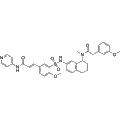
YNT-3708 is an orexin receptor (OXR) agonist that demonstrates selective activation of OX1R and OX2R. It has EC50 values of 14.6 nM for OX1R and 277 nM for OX2R, making it a valuable tool for studying orexin signaling pathways. This compound is primarily utilized in research applications related to sleep regulation, appetite control, and neurodegenerative diseases.
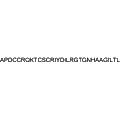
Xenopus orexin A acts as a potent agonist of the orexin receptor OX1R, functioning as a neuropeptide that binds to G-protein-coupled receptors. This endogenous ligand plays a critical role in modulating various physiological processes, including appetite regulation and arousal. Research applications of Xenopus orexin A include studying energy homeostasis, sleep-wake cycles, and potential implications in metabolic disorders.
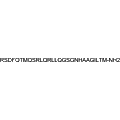
Xenopus orexin B is a neuropeptide that acts as an agonist for the orexin receptor, specifically OX2R. This compound plays a crucial role in regulating various physiological processes, including arousal, appetite, and energy homeostasis. Its ability to activate orexin receptors makes it a valuable tool for research investigating sleep-wake cycles, metabolic disorders, and neurodegenerative diseases.