- Cat. No.
- A13834
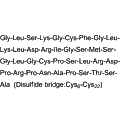
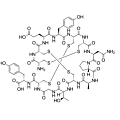
Linaclotide
Linaclotide is a peptide agonist of the guanylate cyclase 2C.
Search by product name, CAS, target or catalog number. Press Down Arrow to reach product suggestions, Tab to move between links, and Escape to close suggestions.
Guanylate cyclase stimulators and activators act on the enzymes that make the second messenger cGMP. These enzymes convert guanosine triphosphate into cyclic guanosine monophosphate (cGMP). Soluble guanylate cyclase (sGC) is the main receptor for nitric oxide (NO), whereas membrane-bound guanylate cyclase C (GC-C) binds peptide ligands. In 1990 GC-C was identified as the receptor for the heat-stable enterotoxin of Escherichia coli. BAY 41-2272 was described in 2001 as acting on an NO-independent regulatory site of sGC. Riociguat, vericiguat and praliciguat are further sGC stimulators, and YC-1 is an earlier sGC activator. Linaclotide is a peptide GC-C agonist used in studies of intestinal fluid secretion.
Linaclotide is a peptide agonist of the guanylate cyclase 2C.
Plecanatide acetate is a guanylate cyclase-C (GC-C) receptor agonist, with an EC50 of 190 nM in T84 cells. Plecanatide acetate shows anti-inflammatory activity in models of murine colitis.
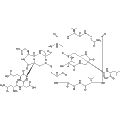
MM 419447, a linaclotide metabolite, is a guanylate cyclase-C agonist. MM 419447 has the potential for the research of the irritable bowel syndrome with constipation (IBS-C).
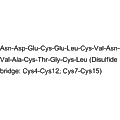
Plecanatide is a guanylate cyclase-C (GC-C) receptor agonist, functioning as an analogue of Uroguanylin. It effectively activates GC-C receptors, leading to the stimulation of cGMP synthesis, with an EC50 of 190 nM in T84 cell assays. Additionally, Plecanatide demonstrates anti-inflammatory activity in murine colitis models, making it useful for research into gastrointestinal disorders and related inflammatory conditions.
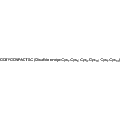
Dolcanatide is an orally active agonist of guanylate cyclase-C (GC-C). This compound exhibits laxative, anti-nociceptive, and anti-inflammatory properties, making it suitable for various experimental applications. Dolcanatide is particularly relevant in research focused on inflammatory bowel disease.
Cenderitide is a potent agonist of particulate guanylyl cyclase receptors (pGC). This natriuretic peptide, composed of C-type natriuretic peptide (CNP) fused to the C-terminus of Dendroaspis natriuretic peptide (DNP), activates pGC-A and pGC-B, leading to increased levels of the second messenger cGMP. Cenderitide effectively suppresses aldosterone production and helps preserve glomerular filtration rate (GFR) without causing a reduction in blood pressure. It is suitable for research applications focused on heart failure.
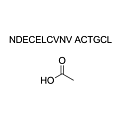
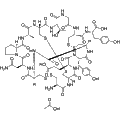
Linaclotide acetate is a potent and selective agonist of guanylate cyclase C, primarily involved in the regulation of intestinal fluid secretion. This compound enhances chloride and bicarbonate secretion, promoting gastrointestinal fluid accumulation and facilitating movement within the intestines. Linaclotide acetate is commonly utilized in research focused on gastrointestinal disorders, specifically for studying mechanisms and treatments related to constipation-predominant irritable bowel syndrome (IBS-C) and chronic constipation.
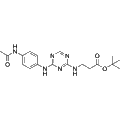
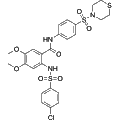
NPR-C activator 1 is a potent agonist of the natriuretic peptide receptor C (NPR-C), exhibiting an EC50 of approximately 1 μM. This compound enhances the activity of C-type natriuretic peptide (CNP), which plays a crucial role in the regulation of vascular homeostasis. NPR-C activator 1 is suitable for research applications focused on cardiovascular function and the therapeutic potential of modulating NPR-C signaling.
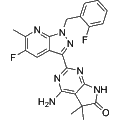
SGC Agonist 2 is a selective agonist of soluble guanylate cyclase (SGC), an essential enzyme in the nitric oxide (NO) signaling pathway that produces cyclic GMP (cGMP). This compound demonstrates significant biological activity in modulating vasodilation and has implications for research into cardiovascular diseases, including heart failure, pulmonary hypertension, angina, and myocardial infarction, as well as fibrotic conditions such as renal fibrosis and systemic sclerosis. Its utility in investigating these pathologies makes SGC Agonist 2 a valuable tool for advancing cardiovascular and fibrosis-related research.
S-3448 is a soluble guanylate cyclase (sGC) agonist that selectively activates both the heme-containing and heme-deficient forms of sGC, independent of nitric oxide and heme. This compound demonstrates significant biological activity in modulating intracellular signaling pathways related to vasodilation and cardiovascular function. S-3448 is valuable for research applications focused on cardiovascular diseases, including arterial hypertension and pulmonary hypertension, providing insights into potential therapeutic strategies.
Out of stock
All 3 sizes
SGC Agonist 1 is a potent agonist of soluble guanylate cyclase (SGC), enhancing intracellular signaling pathways. It is characterized by improved solubility and high cell permeability, making it suitable for in vitro and in vivo studies. SGC Agonist 1 holds potential for research applications in cardiovascular disease, aiding in the exploration of therapeutic strategies for related conditions.
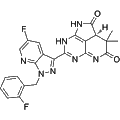
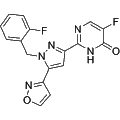
IWP-051 is an agonist for soluble guanylate cyclase, with an EC50 of 290 nM. It effectively stimulates the production of cyclic guanosine monophosphate (cGMP) and shows a synergistic effect with nitric oxide (NO). This compound is suitable for research focusing on cardiovascular function, smooth muscle relaxation, and other cGMP-related signaling pathways. Moreover, IWP-051 demonstrates favorable pharmacokinetic properties in rat models, making it a valuable tool for in vivo studies.