
- Cat. No.
- A16823
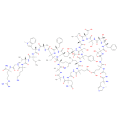
Albiglutide
Synonyms: Albugon; Naliglutide; Gsk 716155; Unii-5E7U48495e
Albiglutide is a glucagon-like peptide-1 agonist (GLP-1 agonist).
Search by product name, CAS, target or catalog number. Press Down Arrow to reach product suggestions, Tab to move between links, and Escape to close suggestions.
GLP-1 receptor agonists and modulators act on the receptor for glucagon-like peptide 1 (GLP-1), an incretin hormone. Intestinal L cells release GLP-1 after a meal, and the hormone enhances glucose-dependent insulin secretion from pancreatic beta cells. The receptor, a class B G protein-coupled receptor, was cloned from beta cells by expression cloning in 1992. Peptide agonists in this category include liraglutide and lixisenatide, while tirzepatide also acts at the glucose-dependent insulinotropic polypeptide (GIP) receptor. BETP is a small-molecule ligand that binds the GLP-1 receptor outside the peptide site. The set also includes dipeptidyl peptidase 4 (DPP-4) inhibitors such as linagliptin, which slow the breakdown of endogenous GLP-1.
Synonyms: Albugon; Naliglutide; Gsk 716155; Unii-5E7U48495e
Albiglutide is a glucagon-like peptide-1 agonist (GLP-1 agonist).


Synonyms: LY3298176
Tirzepatide (LY3298176, GIP/GLP-1 RA, TZP) is a dual GIP/GLP-1 receptor agonist. Tirzepatide differentially induces internalization of the GIP and GLP-1 receptors with EC50 values of 18.2 nM and 18.1 nM, respectively.
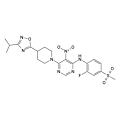
AR-231453 is a potent and selective small molecule agonis of GPR119 that enhances glucose dependent insulin secretion and glucagon like peptide-1 (GLP-1) release.
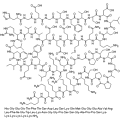
Synonyms: Lixisenatide Acetate
ixisenatide inhibit glucagon release, markedly reduce postprandial glucago. have a promoting effct in diabetes mellitus (T2DM).
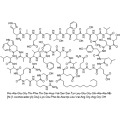
Synonyms: Victoza; Liraglutida; Liraglutidum; NN2211
Liraglutide is a long-acting glucagon-like peptide-1(GLP-1) receptor agonist.
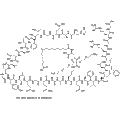
Semaglutide, a long-acting GLP-1 analogue, is a glucagon-like peptide-1 (GLP-1) receptor agonist that can be used in the treatment of type 2 diabetes.
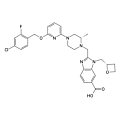
GLP-1 receptor agonist 2 is a glucagon-like peptide-1 receptor (GLP-1R) agonist.
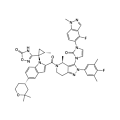
GLP-1 receptor agonist 1 is a glucagon-like peptide-1 (GLP-1) receptor agonist extracted from patent WO2018056453A1, Compound 67.

Synonyms: LY3437943
Retatrutide (LY3437943) is a triple agonist peptide of the glucagon receptor (GCGR), glucosedependent insulinotropic polypeptide receptor (GIPR), and glucagon-like peptide-1 receptor (GLP-1R). Retatrutide binds human GCGR, GIPR, and GLP-1R with EC50 values of 5.79, 0.0643 and 0.775 nM, respectively. Retatrutide can be used for the research of obesity.
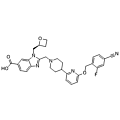
Synonyms: PF-06882961
PF-06882961 is a potent, orally bioavailable agonist of the glucagon-like peptide-1 receptor agonist (GLP-1R)
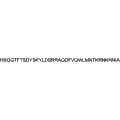
Synonyms: Glucagon-37 (bovine, porcine
Oxyntomodulin (bovine, porcine), a 37-amino acid peptide hormone, is a glucagon-like peptide 1 (GLP-1) receptor agonist.
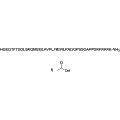
Lixisenatide acetate is a glucagon-like peptide-1 (GLP-1) receptor agonist that can be used in the treatment of type 2 diabetes mellitus (T2DM).

Synonyms: XW003
Ecnoglutide (XW003) is a glucagon-like peptide 1 (GLP-1) receptor agonist.
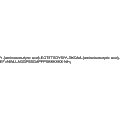
DA-JC4 is a dual GLP-1/GIP receptor agonist and can be used for the research of neurological disease and insulin signaling pathways.
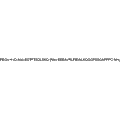
Synonyms: Polyethylene glycol loxenatide; PEX 168
Pegloxenatide is a long-acting glucagon-like peptide-1 receptor (GLP-1R) agonist. It exhibits various biological activities, including the reduction of blood glucose and lipids, weight management, anti-inflammatory effects, and promotion of wound healing, as well as providing protective effects on liver and heart tissues. Pegloxenatide is primarily utilized in research focused on type 2 diabetes and its associated complications.
Synonyms: AMG 133
Maridebart cafraglutide is a novel peptide-antibody conjugate that serves as a GLP-1 receptor agonist and GIP receptor antagonist. This compound exhibits potent agonistic activity against GLP-1 receptors across species, with EC50 values of 24.4 pM for human, 5.7 pM for cynomolgus monkey, 2.4 pM for rat, and 123 pM for mouse. Additionally, it shows antagonistic effects on GIP receptors with IC50 values of 46.4 nM in human, 26.5 nM in cynomolgus monkey, and 822.3 nM in rat models. Maridebart cafraglutide is primarily used for investigating mechanisms of obesity and type 2 diabetes.
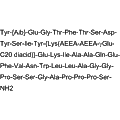
Ribupatide is a dual agonist targeting both gastric inhibitory polypeptide (GIP) and glucagon-like peptide 1 (GLP-1) receptors. It exhibits significant antidiabetic activity, making it a valuable compound for research applications focused on metabolic disorders and diabetes management. Its dual mechanism may provide insights into the intricate regulation of glucose metabolism.
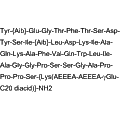
Synonyms: BG128
Relsipatide is a dual agonist of the gastric inhibitory polypeptide (GIP) and glucagon-like peptide-1 (GLP-1) receptors. This compound demonstrates significant potential in enhancing insulin secretion and reducing glucagon levels, making it a valuable tool in antidiabetic research. Its unique mechanism of action may contribute to improved glycemic control and metabolic regulation in diabetes studies.
Out of stock
All 3 sizes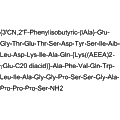
Enicepatide is a dual agonist for the gastric inhibitory polypeptide (GIP) and glucagon-like peptide-1 (GLP-1) receptors. This compound is primarily investigated for its antidiabetic properties, contributing to glucose metabolism regulation and insulin secretion enhancement. Research applications include exploring its potential role in treating metabolic disorders and obesity-related conditions.
Out of stock
All 3 sizes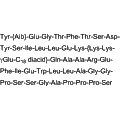
Astepatide is a dual agonist of the gastric inhibitory peptide (GIP) receptor and glucagon-like peptide-1 (GLP-1) receptor, which primarily influences glucose metabolism and insulin secretion. This compound demonstrates significant anti-diabetic activity, making it a valuable tool for research related to diabetes and metabolic disorders. Astepatide can aid in exploring mechanisms of action and therapeutic potential for obesity and type 2 diabetes.
Out of stock
All 3 sizes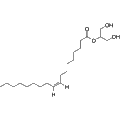
Synonyms: 2-OG
2-Oleoylglycerol is a GPR119 agonist that activates hGPR119 in transiently transfected COS-7 cells with an EC50 value of 2.5 μM. This lipid enhances the inflammatory response in macrophages and promotes fibrosis through the GPR119/TAK1/NF-κB/TGF-β1 signaling pathway. Additionally, 2-Oleoylglycerol stimulates glucagon-like peptide 1 (GLP-1) secretion in vivo. Its effects make it a valuable tool for research into non-alcoholic steatohepatitis (NASH) and related metabolic disorders.
Out of stock
All 3 sizes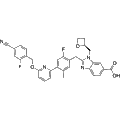
Synonyms: LY3549492
Naperiglipron is a potent agonist of the glucagon-like peptide-1 receptor (GLP-1R) with an EC50 of 1.14 nM for human GLP-1R. This compound has demonstrated significant efficacy in reducing blood glucose levels in GLP-1R knock-in mouse models, indicating its potential for managing type II diabetes mellitus (T2DM) and obesity. Additionally, Naperiglipron inhibits phosphodiesterase 10A1 activity with an IC50 of 7.43 μM and exhibits weak hERG inhibitory activity, making it relevant for various metabolic research applications.
Synonyms: Amycretin; NN 9487
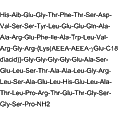
Zenagamtide is a GLP-1 and amylin receptor agonist that acts as a triple agonist also targeting the calcitonin receptor. It is a peptide comprising 68 amino acids and is capable of crossing the blood-brain barrier, making it effective in modulating appetite and reducing energy intake. Research suggests that Zenagamtide may lead to improvements in body weight, waist circumference, glycated hemoglobin, and lipid profiles, while also enhancing insulin sensitivity and ameliorating features of metabolic dysfunction-associated steatotic liver disease (MASLD). Its biological activity makes it valuable for investigating conditions related to overweight, obesity, and insulin resistance.
Out of stock
All 3 sizes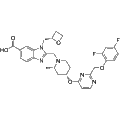
Synonyms: RO7795081; RG6652
CT-996 is an orally active GLP-1 receptor (GLP-1R) agonist with an EC50 of 0.49 nM, modulating glucose metabolism through its effects on β-arrestin recruitment and receptor internalization. This compound significantly lowers postprandial blood glucose levels in mice engineered to express human GLP-1 receptors and enhances glucose-stimulated insulin secretion (GSIS) in obese monkey models during intravenous glucose challenges. CT-996 serves as a valuable tool for research focused on type 2 diabetes and obesity.