
- Cat. No.
- A20689
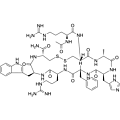
Setmelanotide
Synonyms: RM-493; BIM-22493; IRC-022493
Setmelanotide (RM-493; BIM-22493; IRC-022493) is a selective melanocortin 4 receptor (MC4R) agonist with EC50s of 0.27 nM and 0.28 nM for human and rat MC4R, respectively.
Search by product name, CAS, target or catalog number. Press Down Arrow to reach product suggestions, Tab to move between links, and Escape to close suggestions.
Melanocortin receptor agonists and antagonists act on MC1R to MC5R, five receptors for melanocortin peptides. These peptides derive from proopiomelanocortin and include α-melanocyte-stimulating hormone (α-MSH) and adrenocorticotropic hormone (ACTH). Genes for the MSH receptor (MC1R) and the ACTH receptor (MC2R) were cloned in 1992. MC1R controls skin and hair pigmentation, while MC4R in the hypothalamus regulates feeding and energy balance. In a 1997 study, mice with a targeted disruption of the MC4R gene became obese. The list holds α-MSH, the ACTH fragment tetracosactide, and the cyclic peptides melanotan II and bremelanotide acetate. Setmelanotide and PF-00446687 are MC4R agonists, and JNJ-10229570 blocks MC1R and MC5R. Melanogenesis inhibitors such as orcinol are included as well, for pigmentation studies.
Synonyms: RM-493; BIM-22493; IRC-022493
Setmelanotide (RM-493; BIM-22493; IRC-022493) is a selective melanocortin 4 receptor (MC4R) agonist with EC50s of 0.27 nM and 0.28 nM for human and rat MC4R, respectively.
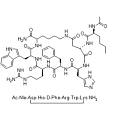
Melanotan II is a high affinity melanocortin receptor agonist (Ki values are 0.67, 6.6, 34 and 46 nM for MC1, MC4, MC3 and MC5 receptors respectively).
Out of stock
All 7 sizes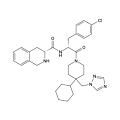
THIQ is a potent and selective melanocortin 4 (MC4) receptor agonist (IC50 values are 1.2, 761 and 2067 nM for human MC4, MC3 and MC1 receptors respectively).
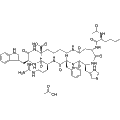
Synonyms: PT-141 Acetate
Bremelanotide Acetate (PT-141 Acetate), a synthetic peptide analogue of α-MSH, is an agonist at melanocortin receptors including the MC3R and MC4R for the treatment of sexual dysfunction.
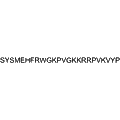
Synonyms: Tetracosactrin; ACTH(1–24)
Tetracosactide is a potent agonist of the melanocortin-4 receptor (MC4R), activating human MC4R with an EC50 of 0.65 nM. This synthetic analogue of adrenocorticotrophic hormone (ACTH) is known to stimulate the release of corticosteroids, including cortisol, from the adrenal gland. Tetracosactide is utilized in research investigating conditions such as ulcerative colitis, Crohn's disease, and various forms of arthritis, including juvenile and adult rheumatoid arthritis and osteoarthrosis.
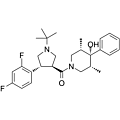
PF-00446687 is a potent, selective melanocortin-4 receptor (MC4R) agonist with EC50 of 12 ± 1 nM. Pf-446687 is brain penetrant.
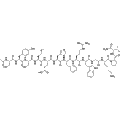
Synonyms: α-Melanocyte-Stimulating Hormone
α-MSH (α-Melanocyte-Stimulating Hormone), an endogenous neuropeptide, is an endogenous melanocortin receptor 4 (MC4R) agonist with anti-inflammatory and antipyretic activities. α-MSH is a post-translational derivative of pro-opiomelanocortin (POMC).
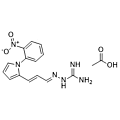
Synonyms: AP-1189; AP1189 acetate
AP1189 is a biased agonist at receptors MC1 and MC3. AP1189 reduced cytokine release, an effect reliant on both MC1 and MC3 as evident from the use of Mc1r(-/-) and Mc3r(-/-) macrophages.
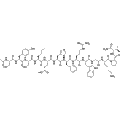
Synonyms: MT-I; [Nle4,D-Phe7]-α-MSH
Melanotan I is a potent non-selective melanocortin receptor (MCR) agonist. Melanotan I is a synthetic analogue of α-melanocyte stimulating hormone (α-MSH) that stimulates melanogenesis. Melanotan I can induce skin tanning by mimicking the actions of a-MSH on the melanocortin type 1 receptors (MC1R) of melanocytes. Melanotan I can be used for sunlight-induced skin cancers research.
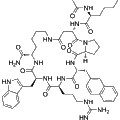
PG-901 is a selective agonist of the melanocortin receptor 5 (MC5R) with an EC50 value of 0.072 nM for human MC5R, displaying high affinity and efficacy. It acts as a full antagonist at the human MC3R and MC4R, with Kb values of 1.0 nM and 0.53 nM, respectively. PG-901 has demonstrated significant anti-inflammatory effects by reducing cytokines such as IL-1α, IL-1β, and IL-6, while also improving glucose tolerance, lowering blood glucose levels, and mitigating retinal damage. This compound is valuable for research in metabolic disorders and inflammatory diseases.
Out of stock
All 3 sizes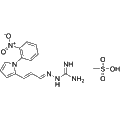
Synonyms: AP1189 methanesulfonate
Resomelagon methanesulfonate is a potent melanocortin receptor agonist that enhances ERK1/2 phosphorylation and mobilizes intracellular Ca2+. This compound demonstrates significant anti-inflammatory properties in preclinical models, such as mouse peritonitis. Resomelagon methanesulfonate is applicable in studies focused on obesity and chronic inflammatory conditions, providing valuable insights into metabolic and inflammatory pathways.
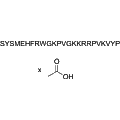
Synonyms: Tetracosactrin acetate; ACTH(1–24) acetate
Tetracosactide acetate is an agonist for the melanocortin-4 receptor (MC4R), activating it with an EC50 of 0.65 nM. This compound, an analogue of adrenocorticotrophic hormone (ACTH), stimulates the release of corticosteroids, including cortisol, from the adrenal gland. Tetracosactide acetate is utilized in research applications related to ulcerative colitis, Crohn's disease, and various forms of arthritis, including juvenile and adult rheumatoid arthritis and osteoarthrosis.
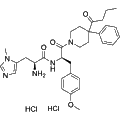
BMS-470539 dihydrochloride is a selective agonist of the melanocortin-1 receptor (MC-1R), exhibiting an IC50 of 120 nM and an EC50 of 28 nM. This compound demonstrates potent anti-inflammatory properties while showing no activation of MC-3R and minimal partial agonism at MC-4R and MC-5R. BMS-470539 dihydrochloride is utilized in research focused on inflammatory conditions and the modulation of skin pigmentation.
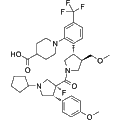
Synonyms: MT-7117
Dersimelagon is a selective agonist of the melanocortin 1 receptor (MC1R) with demonstrated efficacy in human (EC50 of 8.16 nM), cynomolgus monkey (3.91 nM), mouse (1.14 nM), and rat (0.251 nM) models. It exhibits strong binding affinity for hMC1R and hMC4R, with Ki values of 2.26 nM and 32.9 nM, respectively. This compound is primarily utilized in research focused on skin pigmentation and the modulation of melanin synthesis.
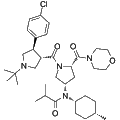
Synonyms: MC-4R Agonist 2
Bivamelagon is a selective agonist of the melanocortin 4 receptor (MC4R) with an EC50 of 0.562 nM in a luciferase assay and 36.5 nM in a cAMP assay, demonstrating its potent activity. This compound exhibits a Ki value of 65 nM, indicating strong binding affinity to its target. Bivamelagon is valuable for research into metabolic disorders, particularly in the context of obesity and diabetes, providing insights into potential therapeutic applications.
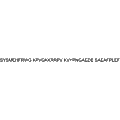
Synonyms: 1-39-Corticotropin (human)
Adrenocorticotropic Hormone (ACTH) (1-39), human is a potent melanocortin receptor agonist. It plays a critical role in stimulating cortisol release from the adrenal cortex and is involved in regulating stress responses, metabolism, and immune function. This peptide can be utilized in research focusing on adrenal function, neuroendocrine regulation, and related therapeutic studies.
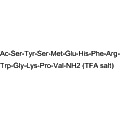
Synonyms: α-Melanocyte-Stimulating Hormone TFA
α-MSH TFA is a potent agonist of the melanocortin receptor 4 (MC4R). This endogenous neuropeptide exhibits anti-inflammatory and antipyretic properties, making it valuable for research into metabolic regulation and neuroinflammatory responses. As a post-translational derivative of pro-opiomelanocortin (POMC), α-MSH TFA serves as an important tool for studying the physiological roles of melanocortins in various biological processes.
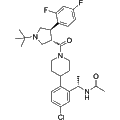
MK-0493 is an orally active agonist of the melanocortin-4 receptor (MC4R), known for its role in regulating appetite and energy balance. This compound is demonstrated to reduce food intake and suppress weight gain, while also elevating blood pressure at elevated doses. Additionally, MK-0493 displays preclinical activity in erectile function regulation, making it a valuable tool in obesity and metabolic disorder research.
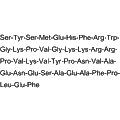
Synonyms: ACTH(1-39); rat
Adrenocorticotropic hormone (1-39), rat is a potent agonist of the melanocortin 2 (MC2) receptor. This peptide is crucial in regulating adrenal steroidogenesis and is significant for research in stress response and metabolism. Its use in studies can provide valuable insights into the functioning of the hypothalamic-pituitary-adrenal (HPA) axis and related endocrine disorders.
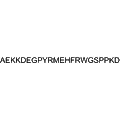
Synonyms: Beta-MSH (1-22) (human)
β-Melanocyte Stimulating Hormone (MSH), human, is a 22-residue peptide that functions as an endogenous agonist of the melanocortin-4 receptor (MC4-R). It plays a critical role in regulating energy homeostasis, appetite, and body weight. This compound is valuable for research applications focused on metabolic disorders, obesity, and neurobiology.
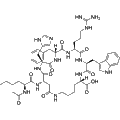
Synonyms: PT-141
Bremelanotide is a potent melanocortin receptor agonist that primarily targets the MC4R. It is known to enhance dopamine release, leading to the modulation of appetitive sexual behaviors, including female mounting behavior and repetitive self-grooming. This compound is valuable for investigating hypoactive sexual desire disorders and understanding the neurobiological mechanisms underlying sexual arousal and motivation.
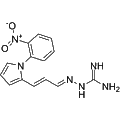
Synonyms: AP1189
Resomelagon is a potent orally active melanocortin receptor agonist, primarily targeting MC1 and MC3. This compound induces ERK1/2 phosphorylation and promotes calcium mobilization, showcasing significant anti-inflammatory properties. Resomelagon is predominantly employed in research focused on obesity and chronic inflammation, providing valuable insights into metabolic and inflammatory pathways.
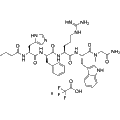
RO27-3225 TFA is a selective agonist of the melanocortin 4 receptor (MC4R), exhibiting an EC50 of 1 nM for MC4R and 8 nM for MC1R, demonstrating approximately 30-fold selectivity for MC4R over MC3R. This compound is recognized for its neuroprotective and anti-inflammatory properties, making it valuable in research related to metabolic regulation and inflammatory conditions. RO27-3225 TFA is suitable for studies focused on the role of MC4R in various physiological and pathological processes.
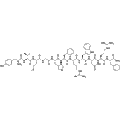
γ1-MSH is an agonist of the melanocortin MC3 receptor, exhibiting a Ki of 34 nM for the rat MC3 receptor. This compound demonstrates approximately 40-fold selectivity over the MC4 receptor, with a Ki of 1318 nM. γ1-MSH is valuable for research applications exploring the role of melanocortin receptors in metabolic processes and neuroendocrine regulation.
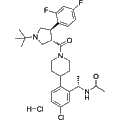
MK-0493 hydrochloride is a selective agonist of the melanocortin receptor 4 (MC4R), known for its potent and orally active properties. It has been shown to effectively reduce energy intake, making it a valuable tool for research in metabolic disorders and obesity. Its targeted mechanism of action facilitates the exploration of MC4R pathways in various biological studies.