- Cat. No.
- A11018
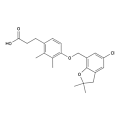
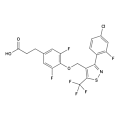
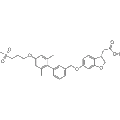
Fasiglifam (TAK-875)
Synonyms: TAK875
TAK-875 is a potent, selective, and orally bioavailable GPR40 agonist.
Search by product name, CAS, target or catalog number. Press Down Arrow to reach product suggestions, Tab to move between links, and Escape to close suggestions.
Free fatty acid receptor (FFAR) ligands act on G protein-coupled receptors (GPCRs) that sense fatty acids. FFAR1 and FFAR4, also called G protein-coupled receptors 40 and 120 (GPR40, GPR120), respond to medium- and long-chain fatty acids. FFAR2 and FFAR3 are GPCRs that instead bind short-chain fatty acids produced by gut bacteria. In 2003 GPR40 was shown to mediate fatty acid-stimulated insulin secretion from pancreatic beta cells. Two years later, GPR120 was linked to fatty acid-induced secretion of glucagon-like peptide 1 (GLP-1) in the gut. Fasiglifam, TUG-770 and LY2922470 are FFAR1 agonists, and GW-1100 is an FFAR1 antagonist. TUG-891 is an FFAR4 agonist, whereas GW9508 acts on both FFAR1 and FFAR4.
Synonyms: TAK875
TAK-875 is a potent, selective, and orally bioavailable GPR40 agonist.
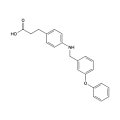
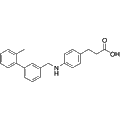
GW 9508 is a cell-permeable aminophenylpropanoate that acts as a potent and selective agonist for the G-protein coupled receptor (GPCR) GRP40/FFA1 receptor (EC50 ?50 nM) with reduced activity towards family members GRP120 (EC50 ?3.5 μM), GRP41/GRP43 (EC50 >50 μM), as well as a panel of eight other free fatty acid (FFA) and prostaglandin receptors.
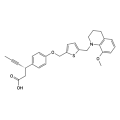
LY2922470 is a potent, selective and orally available agonist of the G protein-coupled receptor 40 (GPR40), with EC50s of 7 nM, 1 nM and 3 nM for human GPR40, mouse GPR40 and rat GPR40, respectively.
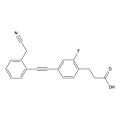
TUG-770 is a Highly Potent Free Fatty Acid Receptor 1 (FFA1/GPR40) Agonist for Treatment of Type 2 Diabetes.
Synonyms: AMG-837
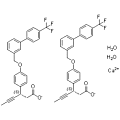
AMG-837 calcium hydrate is a potent, orally bioavailable GPR40 agonist.
GSK137647A is a selective FFA4 agonist, with pEC50 of 6.3, 6.2, and 6.1 for human, Mouse and Rat FFA4, respectively.
TUG-891 is a potent and selective agonist of the free fatty acid receptor 4 (FFA4/GPR120), which demonstrates both potential opportunity and possible challenges to therapeutic agonism.
TUG-1375 is an agonist of free fatty acid receptor 2 (FFA2/GPR43), with a pKi of 6.69. TUG-1375 is inactive on FFA3, FFA4, PPARα, PPARγ, PPARδ, LXRα or LXRβ.
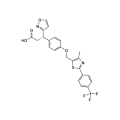
GPR40 agonist 1 is a potent and novel GPR40 full agonist with an EC50 of 2 nM and 17 nM for hGPR40 and rGPR40, respectively.
GPR120 Agonist 2 is a GPR120 agonist extracted from patent US 20110313003 A1, example 209.
GPR120 Agonist 1 is a potent and selective GPR120 agonist, and possesses promising antidiabetic effect and good safety profile to be a development candidate.
GPR40/FFAR1 modulator 1 is an agonist and an allosteric modulator for Gq-coupled free fatty acid receptor 1 (GPR40/FFAR1).
GPR120-IN-1 is a selective Gpr120 agonist with a logEC50 of ?7.62.
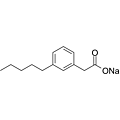
Synonyms: PBI-4050 sodium salt; PBI4050
Setogepram sodium salt (PBI-4050 sodium salt) acts as an orally active agonist for GPR40 and as an antagonist or inverse agonist for GPR84.
AMG 837 is a potent GPR40 agonist (EC50=13 nM) with a superior pharmacokinetic profile and robust glucose-dependent stimulation of insulin secretion in rodents.
AM-1638 is a potent and orally bioavailable GPR40/FFA1 full agonist with an EC50 of 0.16 μM.
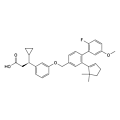
AM-4668 is a GPR40 agonist for type 2 diabetes. EC50s of 3.6 nM and 36 nM for GPR40 in A9 cells (GPR40 IP3 assay) and CHO cells (GPR40 aequorin assay), respectively.
Synonyms: AMG837
AMG 837 sodium salt is a potent GPR40 agonist(EC50=13 nM) with a superior pharmacokinetic profile and robust glucose-dependent stimulation of insulin secretion in rodents.
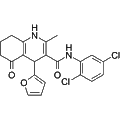
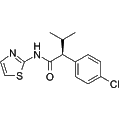
AR420626 is a selective agonist of free fatty acid receptor 3 (FFAR3, also known as GPR41), with an IC₅₀ of 117 nM. It demonstrates anti-inflammatory, antitumor, and antidiabetic activities. AR420626 improves neurogenic diarrhea by modulating neural pathways mediated by nicotinic acetylcholine receptors (nAChRs). In cancer models, it suppresses the growth of HepG2 xenografts and inhibits hepatoma cell proliferation through apoptosis induction. Additionally, AR420626 mitigates allergic asthma and eczema and enhances glucose uptake by activating FFAR3-mediated Ca²⁺ signaling, offering potential therapeutic benefits in metabolic disorders such as diabetes.
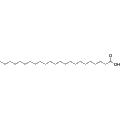
Tricosanoic acid is a natural agonist of the free fatty acid receptor FFAR1, primarily involved in stimulating hair growth. This long-chain saturated fatty acid also plays a significant role in enhancing cognitive function by modulating neuronal membrane fluidity, reducing neuroinflammation, and supporting myelination and energy metabolism in neurons. Notably, diminished levels of tricosanoic acid are observed in the prefrontal cortex of Alzheimer's disease models, with improved cognitive performance linked to elevated serum concentrations. Thus, tricosanoic acid has potential as a biomarker for conditions associated with cognitive decline.
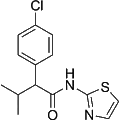
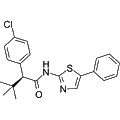
4-CMTB is a selective agonist for the free fatty acid receptor 2 (FFA2/GPR43), functioning as a positive allosteric modulator with a pEC50 of 6.38. This compound enhances receptor activity, making it valuable for studying metabolic processes and the regulation of inflammation. Its unique mechanism helps elucidate the role of FFA2 in various biological systems and potential therapeutic applications in metabolic diseases.
AMG7703 is a selective allosteric agonist of FFA2 (GPR43), a receptor that responds to short-chain fatty acids (SCFAs) such as acetate and propionate. This compound modulates FFA2 activity, making it a valuable tool for investigating its role in inflammatory and metabolic processes. Research applications include studying the physiological effects of SCFAs and their potential therapeutic implications in metabolic disorders.
TUG-469 is a selective agonist of the free fatty acid receptor 1 (FFA1/GPR40) with an EC50 value of 19 nM, demonstrating over 200-fold selectivity for FFA1 compared to FFA4. This compound has been shown to significantly enhance glucose tolerance in pre-diabetic mouse models. TUG-469 serves as a valuable tool for research into diabetes and metabolic disorders, advancing the understanding of FFA1 signaling in glucose homeostasis.
CFMB is a full agonist of FFAR2 and FFAR3, exhibiting EC50 values of 0.8 μM for human FFAR2 and 0.2 μM for rat FFAR2. This compound plays a significant role in mediating free fatty acid signaling, contributing to metabolic regulation and potential therapeutic strategies. CFMB is valuable in research applications aimed at exploring the physiological effects and signaling pathways associated with FFAR modulation.
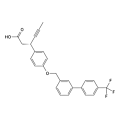
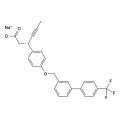
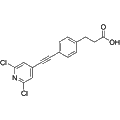
TUG-499 is a selective agonist of the free fatty acid receptor 1 (FFAR1 or GPR40), showcasing a pEC50 of 7.39. This compound demonstrates over 100-fold selectivity against related receptors, including FFA2, FFA3, and PPARγ, as well as other receptors, ion channels, and transporters. TUG-499 serves as a valuable tool in the investigation of type 2 diabetes and features an alkyne group, enabling its use in click chemistry applications through copper-catalyzed azide-alkyne cycloaddition (CuAAc).