- Cat. No.
- A12753
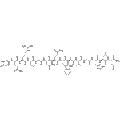
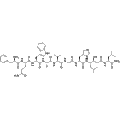
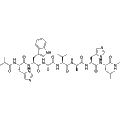
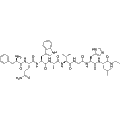
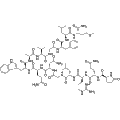
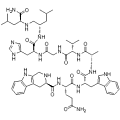
RC-3095
RC-3095 is a bombesin/gastrin-releasing peptide (BN/GRP) antagonist with potential anticancer activity.
Search by product name, CAS, target or catalog number. Press Down Arrow to reach product suggestions, Tab to move between links, and Escape to close suggestions.
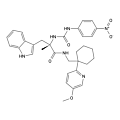
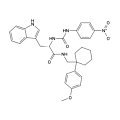
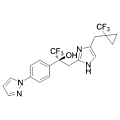
Bombesin receptor agonists and antagonists act on three related G protein-coupled receptors (GPCRs). Bombesin is a 14-amino-acid peptide first isolated from frog skin and is listed here itself. Its mammalian relatives, gastrin-releasing peptide (GRP) and neuromedin B (NMB), bind the GRP receptor (GRPR, BB2) and the NMB receptor (NMBR, BB1). Bombesin receptor subtype 3 (BRS-3, BB3) is an orphan receptor, and mice lacking it develop obesity and metabolic defects. Spinal GRPR mediates itch signaling, and many tumor cell types express GRPR. Listed ligands include the GRPR antagonist RC-3095, the BB1/BB2 antagonist PD176252, the BRS-3 agonist MK-5046 and the BRS-3 antagonist ML-18.
RC-3095 is a bombesin/gastrin-releasing peptide (BN/GRP) antagonist with potential anticancer activity.
Bombesin is a neuropeptide with many biological effects including hormone release, stimulation of pancreatic enzyme secretion, inhibition of gastric emptying and modulation of gastric acid secretion.
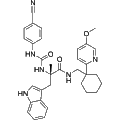
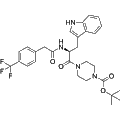
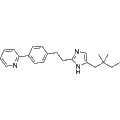
PD176252 is a potent antagonist of neuromedin-B preferring (BB1) and gastrin-releasing peptide-preferring (BB2) receptor with Kis of 0.17 nM and 1 nM for human BB1 and BB2 receptors, and 0.66 nM, 16 nM for Rat BB1 and BB2 receptors, respectively; PD176252 is also an agonist of N-Formyl peptide receptor1/2 (FPR1/FPR2), with EC50s of 0.31 and 0.66 μM in HL-60 cells.
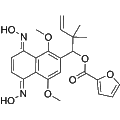
ML-18 is a non-peptide bombesin receptor subtype-3 (BRS-3) antagonist with an IC50 of 4.8 μM.
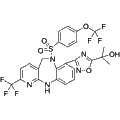
MK-5046 is a novel BRS-3 agonist, binds to BRS-3 with high affinity (mouse Ki = 1.6 nM, human Ki = 25 nM).
Kuwanon G is a flavonoid compound that acts as an antagonist of the bombesin receptor. It demonstrates significant biological activities, including bactericidal, anti-tumor, anti-inflammatory, antioxidant, anti-atherosclerotic, and neuroprotective effects. Kuwanon G exhibits potent antibacterial activity against oral pathogens, particularly cariogenic and periodontal bacteria. Additionally, it induces apoptosis while inhibiting the proliferation, migration, and invasion of tumor cells, making it valuable for research in gastric cancer and atherosclerosis.
DSO-5a is a potent and selective orally active BB3 agonist that enhances PPAR-γ activity via its action on the BB3 receptor. This compound promotes the phosphorylation of ERK1/2, contributing to its biological effects. DSO-5a is particularly relevant for research in diabetes and metabolic disorders, facilitating investigations into metabolic regulation and related therapeutic avenues.
Bombesin receptor antagonist-1 functions as a selective antagonist for the bombesin receptors, exhibiting Ki values of 0.17 nM for the neurotide B (NMB) receptor and 20 nM for the gastrin-releasing peptide (GRP) receptor. This compound is instrumental in the investigation of various pathophysiological conditions, including cancer, depression, and eating disorders. Its precise modulation of bombesin receptors provides valuable insights into receptor signaling pathways and potential therapeutic targets in related diseases.
Out of stock
All 3 sizes
MK-7725 is a selective agonist of the bradykinin receptor subtype 3 (BRS-3), demonstrating high affinity for human BRS-3 with an IC50 of 3 nM. This compound effectively activates mouse-derived BRS-3 with an EC50 of 22 nM, exhibiting robust agonistic activity. MK-7725 has been shown to significantly reduce body weight in obese rat and dog models, supporting its potential applications in obesity treatment and metabolic research.
Out of stock
All 3 sizes
Synonyms: RM26
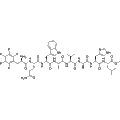
JMV594 is a potent gastrin-releasing peptide receptor (GRPR) antagonist. It demonstrates high affinity for the GRPR and exhibits significant inhibitory effects. JMV594 is utilized in cancer research, particularly in studies focused on prostate cancer, offering insights into GRPR-mediated signaling pathways and potential therapeutic interventions.
Out of stock
All 3 sizes
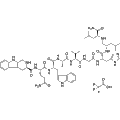
RC-3095 TFA is a selective antagonist of the bombesin/gastrin releasing peptide receptor (GRPR). This compound displays protective properties by mitigating gastric oxidative injury, demonstrated in studies using arthritic mouse models. RC-3095 TFA is valuable for research investigating the role of GRPR in gastrointestinal disorders and inflammation-related conditions.
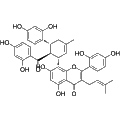
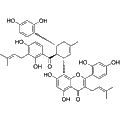
Kuwanon H is a flavonoid isolated from Morus alba that functions as a potent non-peptide antagonist of bombesin receptors. It selectively inhibits the binding of gastrin-releasing peptide to GRP-preferring receptors, exhibiting a Ki value of 290 nM in cellular assays. This compound is valuable for research applications involving cancer biology and neurobiology, particularly in studies focusing on receptor signaling pathways and their role in tumor growth and metastasis.
BIM-26226 is a selective antagonist of the gastrin-releasing peptide receptor (GRPR) and bombesin (BN) receptor, exhibiting an IC50 of 6 nM. This compound effectively inhibits BN- or GRP-stimulated amylase release with IC50 values of 0.3 nM and 0.2 nM, respectively. BIM-26226 shows high specificity for the GRP-preferring BN receptor subtype and does not interfere with the GRP receptor system. Additionally, it can induce the synthesis of somatostatin receptors while demonstrating no significant effect on tumor growth, making it valuable for research into neuropeptide signaling and related biological pathways.
ICI 216140 is a potent GRP/bombesin receptor 2 antagonist with an IC50 value of 2 nM. This compound effectively inhibits Bombesin-stimulated pancreatic amylase secretion and mitigates Bombesin-induced increases in blood pressure. ICI 216140 is valuable for research into the physiological roles of bombesin receptors and their implications in various pathophysiological conditions.
[Tyr4]-Bombesin is a selective ligand for the gastrin-releasing peptide receptor (GRPR), a critical target in oncology research. This analogue of Bombesin demonstrates significant biological activity, promoting GRPR-mediated signaling pathways. It is valuable for studying tumor metabolism, neuroendocrine functions, and the role of GRPR in cancer progression. Researchers can utilize [Tyr4]-Bombesin to explore GRPR-targeted therapies and diagnostic imaging in cancer studies.
NOTA-P2-RM26 is a Bombesin analog that functions as an antagonist of the gastrin-releasing peptide receptor (GRPR/BB2), making it a valuable tool for prostate cancer imaging. This compound is labeled with 111In and 68Ga, facilitating advanced imaging techniques such as PET and SPECT/CT. It is particularly useful in the visualization and research of prostate cancer, aiding in the development of targeted therapies and diagnostic strategies.
(R)-MK-5046 is the isomer of MK-5046 and serves as a valuable experimental control in research. This compound acts as a potent and selective allosteric agonist of the Bombesin receptor subtype-3 (BRS-3), exhibiting an IC50 value of 27 nM and an EC50 of 25 nM for human BRS-3. (R)-MK-5046 has been shown to inhibit food intake and reduce body weight in diet-induced obese mouse models, making it a useful tool for investigating mechanisms underlying obesity.
(D-Phe6,Leu-NHEt13,des-Met14)-Bombesin (6-14) is a potent bombesin (BBN) antagonist that selectively inhibits bombesin receptor signaling. This compound is valuable for research applications focused on cancer biology, particularly in the study of tumor growth and metastasis processes mediated by bombesin peptides. Its use provides insights into potential therapeutic approaches targeting bombesin-related pathways.
Out of stock
All 3 sizes
GRPR antagonist-1 is a potent antagonist of the gastrin releasing peptide receptor (GRPR), demonstrating cytotoxic effects in various cancer cell lines with IC50 values of 4.97 μM in PC3, 4.36 μM in Pan02, and 3.40 μM in HGC-27 cells. This compound disrupts HGC-27 cell viability by downregulating Bcl-2 and upregulating Bax, leading to apoptosis. Its mechanism and efficacy make it a valuable tool for cancer research, particularly in studies targeting GRPR signaling pathways.
Out of stock
All 3 sizes
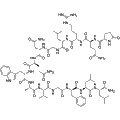
Ranatensin is an undecapeptide that acts as an agonist of the bombesin receptor. Isolated from amphibian skin, particularly from the frog Rana pipiens, ranatensin plays a crucial role in regulating blood pressure dynamics. It exhibits distinct biological activity without cross-tachyphylaxis with other peptides such as angiotensin amide, bradykinin, or norepinephrine, making it a valuable tool for cardiovascular research applications.
Out of stock
All 3 sizes
[D-Phe12,Leu14]-Bombesin is a potent antagonist of the Bombesin receptor. This compound exhibits key biological activity in blocking Bombesin-mediated signaling pathways, making it valuable for cancer research. It is utilized in studies focused on tumor growth and proliferation, particularly in neuroendocrine tumors and related conditions.
[D-Phe12]-Bombesin is a bombesin receptor antagonist with a Ki value of 4.7 μM. This compound effectively inhibits bombesin-induced amylase release, exhibiting an IC50 of 4 μM. It is valuable for research applications exploring the role of bombesin receptors in physiological and pathological processes, particularly in studies related to neuroendocrine signaling and cancer biology.
BRS-3 receptor agonist-2 is a potent agonist of the BRS-3 receptor, exhibiting an EC50 value of 2.5 nM in assays utilizing the mouse BRS-3 receptor. This compound is essential for studying the modulation of neuropeptide signaling pathways and is suitable for research applications involving appetite regulation, energy homeostasis, and neuroendocrine functions.
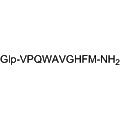
GRP (14-27) is a bombesin receptor ligand derived from human, porcine, and canine sources. This peptide displays specific binding properties to bombesin receptors, which is inhibited by guanosine triphosphate (GTP) and guanosine diphosphate (GDP), indicating a competitive mechanism of action. GRP (14-27) is useful in research applications focused on neuropeptide signaling and receptor interactions.
Out of stock
All 3 sizes
AMBA is a selective ligand for the gastrin-releasing peptide receptor (GRPR), exhibiting a human IC50 of 0.82 nM and a human Ki of 0.65 nM. With high affinity and specificity for GRPR, AMBA facilitates receptor-mediated endocytosis, allowing for the retention of attached radiometals within target cells. This reagent is particularly relevant in the study of prostate cancer, providing valuable insights into receptor-targeted therapies.
Out of stock
All 3 sizes