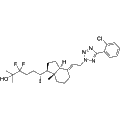
- Cat. No.
- A11230
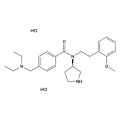
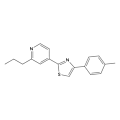
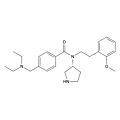
PF 429242
PF 429242 is a reversible, competitive inhibitor of sterol regulatory element-binding protein (SREBP) site 1 protease.
Search by product name, CAS, target or catalog number. Press Down Arrow to reach product suggestions, Tab to move between links, and Escape to close suggestions.
SREBP inhibitors block the transcription factors that switch on cholesterol and fatty acid synthesis. Sterol regulatory element-binding proteins (SREBPs) are made as inactive precursors in the endoplasmic reticulum (ER) membrane. When sterol levels fall, SREBP cleavage-activating protein (SCAP) escorts them to the Golgi, where two proteases release the active transcription factor. A 1997 review described this pathway as regulated proteolysis of a membrane-bound transcription factor. PF 429242 inhibits site-1 protease and was shown in 2008 to reduce SREBP processing and lipid synthesis. Fatostatin, reported in 2009, blocks SREBP activation and fat synthesis in cells. SREBP/SCAP-IN-1 and 4'-hydroxyflavanone are listed as further inhibitors of SREBP maturation in cells.
PF 429242 is a reversible, competitive inhibitor of sterol regulatory element-binding protein (SREBP) site 1 protease.
Synonyms: PF 429242
PF429242 dihydrochloride is a reversible and competitive S1P inhibitor with an IC50 of 175 nM.
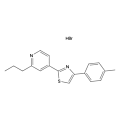
Synonyms: Fatostatin A
Fatostatin Hydrobromide is an inhibitor of sterol regulatory element-binding protein (SREBP).
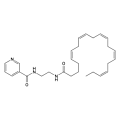
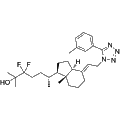
Nicodicosapent is a fatty acid niacin conjugate that is also an inhibitor of the sterol regulatory element binding protein (SREBP), a key regulator of cholesterol metabolism proteins such as PCSK9, HMG-CoA reductase, ATP citrate lyase, and NPC1L1.
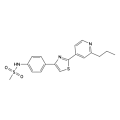
FGH10019 is a novel sterol regulatory element-binding protein (SREBP) inhibitor with IC50 of 1 μM.
Synonyms: 125B11
Fatostatin (125B11), a specific inhibitor of SREBP activation, impairs the activation of SREBP-1 and SREBP-2.
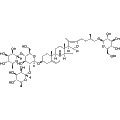
Pseudoprotodioscin is a furostanoside that inhibits Sterol Regulatory Element-Binding Proteins (SREBPs) and microRNA 33a/b. This inhibition leads to a reduction in the gene expression involved in cholesterol and triglyceride synthesis. Pseudoprotodioscin is valuable for research on lipid metabolism and related cardiovascular diseases.
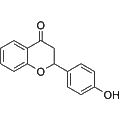
4'-Hydroxyflavanone is an inhibitor of SREBP maturation, impacting lipid synthesis. As a synthetic analogue of flavanone, it demonstrates potential in studies related to hepatic steatosis and dyslipidemia. This compound can be utilized to explore mechanisms of lipid metabolism and associated disorders.
SREBP/SCAP-IN-1 is a selective inhibitor of the SREBP/SCAP complex, which plays a crucial role in lipid metabolism and cellular cholesterol homeostasis. This compound effectively disrupts the signaling pathway involved in sterol regulatory element-binding protein activation, providing insight into lipid regulation mechanisms. Research applications include investigating metabolic disorders, cardiovascular diseases, and potential therapeutic strategies targeting cholesterol metabolism.
Out of stock
All 3 sizes
SREBP/SCAP-IN-2 is a selective inhibitor of the SREBP/SCAP complex, which plays a crucial role in lipid metabolism and cellular cholesterol homeostasis. This compound effectively interferes with the activation and function of SREBP, thereby modulating lipid biosynthesis pathways. SREBP/SCAP-IN-2 is valuable for research focusing on metabolic disorders, obesity, and cardiovascular diseases, providing insights into the regulatory mechanisms of lipid metabolism.
Out of stock
All 3 sizes